
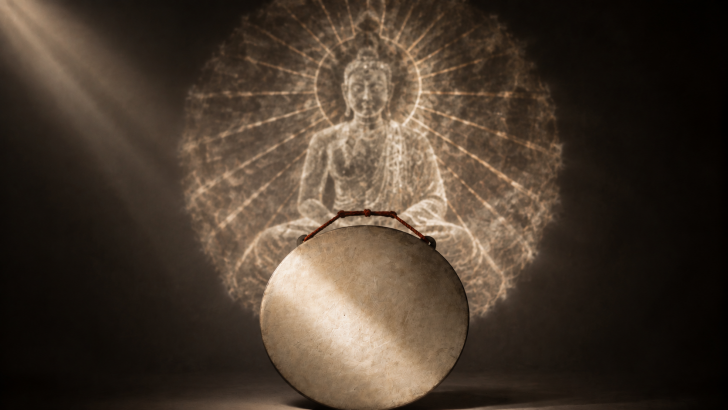
At first glance, there’s nothing especially miraculous about this round piece of bronze.
Its surface is tarnished, its colors have faded into shades of green and brown, and the side meant to function as a mirror no longer offers a particularly flattering reflection.
But direct a strong light at its polished face and aim the reflection toward a wall. Suddenly, the shadowy figure of a Buddha appears, surrounded by rays of light.
The image isn’t painted on the surface. It can’t be seen under ordinary conditions, and the bronze certainly isn’t transparent.
So where does the Buddha come from?
1. The Mirror Keeps Its Secret Remarkably Well
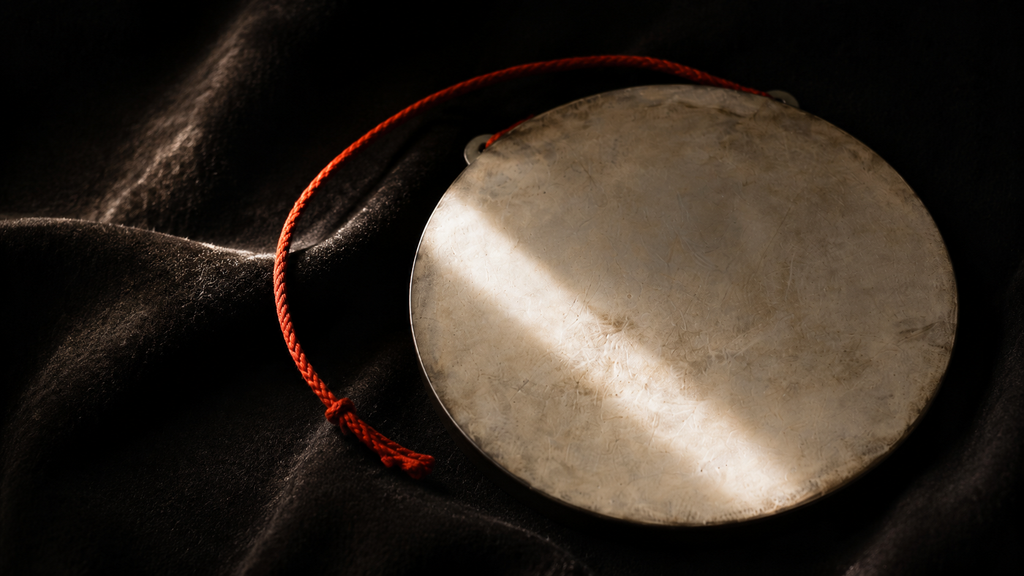
The object is known as the Buddhist Praying Mirror, and it belongs to the Cincinnati Art Museum.
According to the museum’s current description, it was made in Japan during the 14th or 15th century. It measures only 8½ inches across, making it small enough to carry or hang in a devotional space.
One side has a polished reflective surface. The other carries six Chinese characters arranged vertically down the center.
Nothing visible on either side shows the Buddha that eventually appears in the reflected light.
That’s important because traditional Chinese magic mirrors usually projected a visible design already decorating their reverse. This one does something considerably stranger.
Instead of repeating the inscription on its back, it produces a completely concealed image of Amitabha Buddha.
Even the object’s attribution has continued to develop.
Earlier museum publications described it as a 15th- or 16th-century work from either China or Japan. More recent Cincinnati Art Museum materials identify it as Japanese and date it to the 14th-15th century.
The mirror may have revealed its Buddha, but it hasn’t surrendered every part of its history.
2. The Hidden Image Went Unnoticed for Decades
The mirror had been connected to the museum since at least the early 20th century and was registered under its present number in 1961.
For decades, however, nobody appears to have realized exactly what it could do.
That changed in 2021, when East Asian Art curator Hou-mei Sung was researching objects associated with Amitabha Buddha.
She had found two Buddhist statues and was considering creating a small display centered on Pure Land Buddhism. The bronze mirror seemed relevant because of the religious inscription on its back.
Then Sung read about Buddhist magic mirrors.
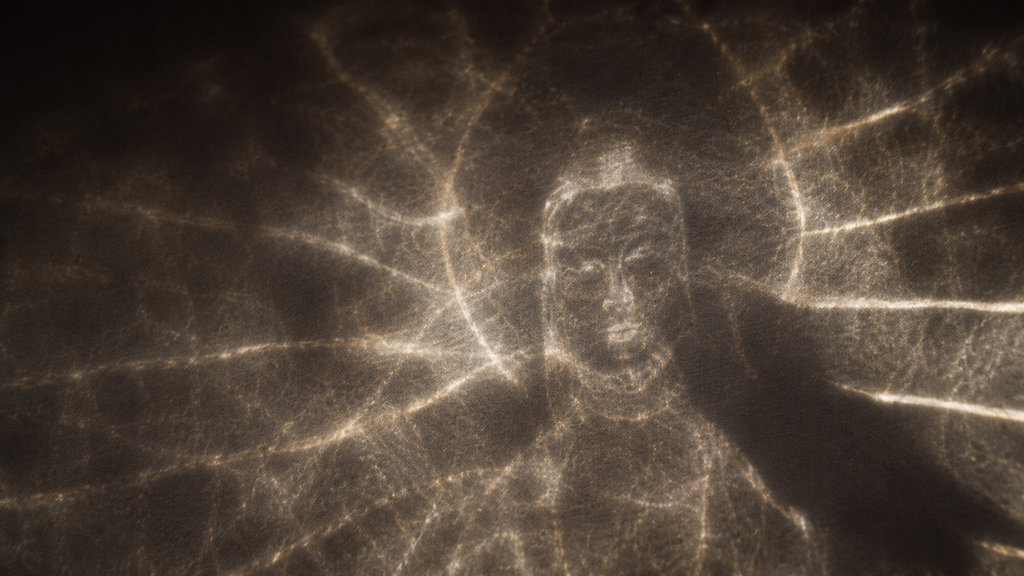
Out of curiosity, she asked an object conservator to test the museum’s mirror with a focused light. The first attempt produced an unusual texture in the reflection, so they tried again using a stronger and more concentrated beam.
This time, the Buddha appeared.
The discovery happened in a museum collection, where the object had already been studied, cataloged, and even displayed.
The Cincinnati Art Museum announced the discovery in 2022, finally presenting the mirror with the lighting needed to demonstrate its hidden ability.
3. The Bronze Doesn’t Actually Become Transparent
These objects are often called magic mirrors, transparent mirrors, or light-penetrating mirrors.
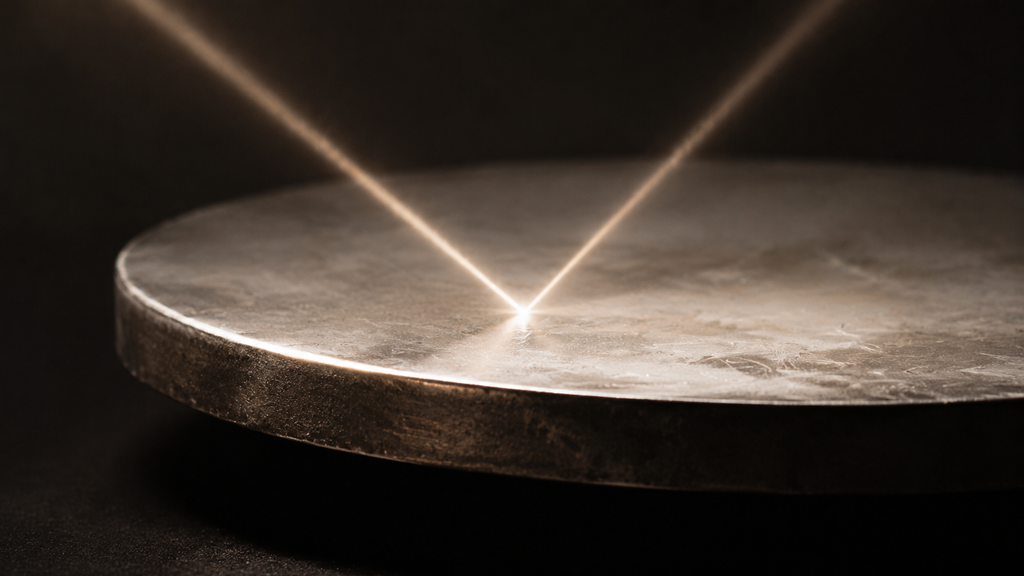
But sunlight doesn’t pass through the bronze. There’s no opening, transparent material, or concealed projector. The Buddha appears through reflection.
When a concentrated beam strikes the polished face, tiny surface variations redirect the light. They’re invisible on the mirror itself but form an image when reflected onto a wall or screen.
The museum’s 2023 scan revealed how this particular mirror works. It has two soldered metal plates, with the hidden Amitabha formed between the back plate and thin reflective surface.
During polishing, parts of the front plate were pressed against the interior design, creating nearly invisible distortions. Light reflects differently from those areas, allowing the Buddha to appear in projection.
The museum’s CT scan revealed the concealed figure in remarkable detail.
The image isn’t supernatural, of course, but creating a surface that hides a picture from the eye while revealing it through reflected light remains astonishing.
4. The Technology Began Much Earlier in China
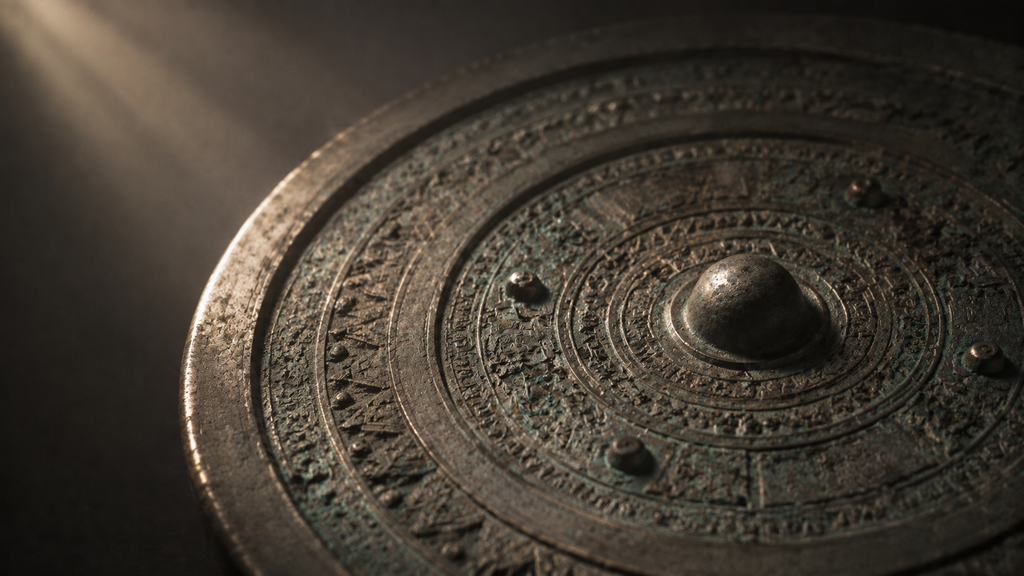
The Cincinnati mirror belongs to a tradition stretching back more than 2,000 years.
Early examples appeared in China and are commonly associated with the Han dynasty, which began in 202 BCE.
They were called tou guang jing, usually translated as light-penetrating or transparent mirrors.
Their polished fronts behaved like ordinary mirrors. Their backs carried decorative patterns, inscriptions, or symbols.
And when sunlight struck the front, the reflection could reproduce elements of the decoration on a nearby surface.
Because bronze is opaque, the effect made it look as though light had somehow traveled straight through the metal.
Chinese scholars were already trying to understand these mirrors by the Tang dynasty.
Their production remained notoriously difficult, however, and the knowledge appears to have been lost, revived, or altered at different points.
We should also be careful about treating every magic mirror as though it worked in exactly the same way.
Some relied on extremely subtle variations created during casting, cooling, grinding, and polishing. The Cincinnati mirror has a more complex layered construction with an image sealed inside.
That makes it part of the same larger tradition without making it identical to the earliest Chinese examples.
5. The Choice of Buddha Wasn’t Random
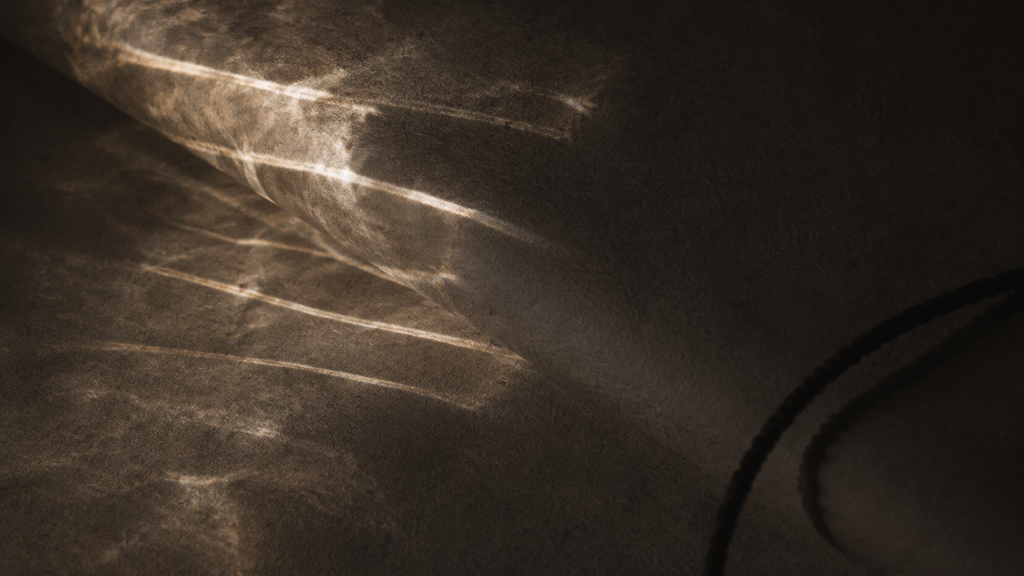
The six characters on the back read 南無阿彌陀佛.
They form an invocation commonly understood as “Homage to Amitabha Buddha,” known in Japan as Namu Amida Butsu.
Amitabha—or Amida in Japan—is the central Buddha of Pure Land Buddhism. Followers invoke his name while hoping for rebirth in the Pure Land, where enlightenment is possible beyond ordinary suffering and distraction.
Amitabha is an especially meaningful choice for this mirror because his name is often translated as the Buddha of Infinite Light.
When activated, the mirror reveals him surrounded by rays spreading from his body. The craftsmanship turns religious symbolism into a physical experience: light reveals the Buddha of Infinite Light.
The maker wasn’t just hiding an impressive image. The method of revealing it became part of its meaning.
Before modern electricity, a figure suddenly appearing in sunlight or lamplight may have felt less like an optical demonstration than a sacred appearance.
6. We Don’t Know Exactly How It Was Used

It’s tempting to picture a monk lifting the mirror during a ceremony and projecting Amitabha across a temple wall.
Something along those lines is possible, but the surviving evidence doesn’t allow us to reconstruct a specific ritual with certainty.
The mirror has loops that would have allowed it to be suspended. Sung has suggested that it may have hung inside a temple and been used alongside prayer.
She also compared its effect to Japanese raigō paintings, which show Amitabha descending from the Pure Land to receive a dying believer.
In those paintings, the Buddha approaches through light and cloud. In the mirror, he arrives through illumination.
It’s a compelling connection, especially because the inscription encourages the invocation of Amitabha’s name. But Sung has also acknowledged that no firm documentary evidence proves exactly how the mirror was used.
If anything, that uncertainty preserves part of its mystery.
We understand the mechanism better than ever, but we still don’t know who held it, where its light fell, or what the people watching believed they were witnessing.
7. Science Made the Mirror Even More Remarkable
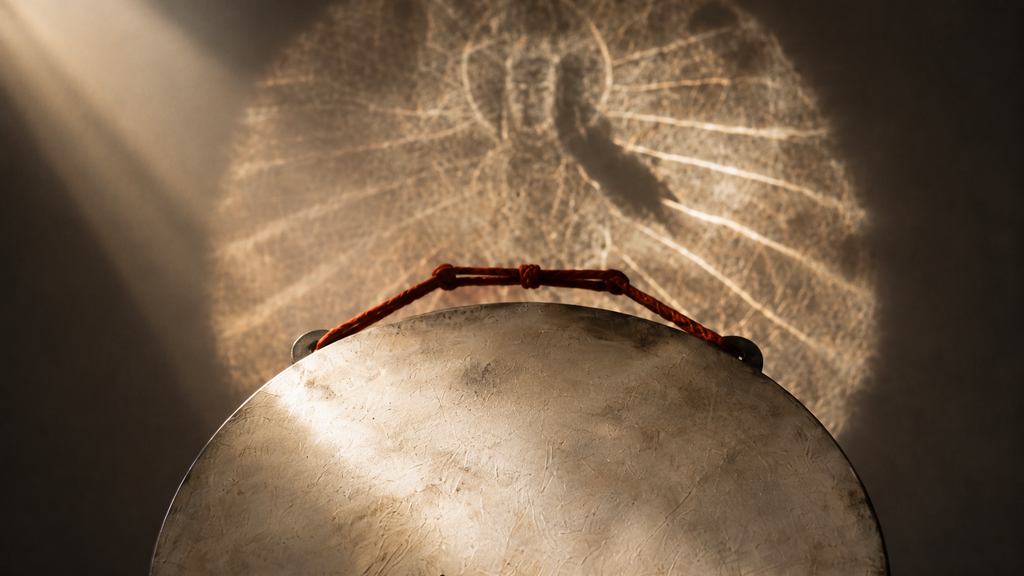
The CT scan didn’t explain the mirror away.
It revealed how much precision was required to create it.
A craftsperson had to join the bronze components, conceal the sacred image, shape the reflective face, and polish it until the Buddha vanished from ordinary view without disappearing from reflected light.
Too much grinding could destroy the effect. Too little could prevent a clear projection.
That difficulty helps explain why surviving examples are rare—and why other unidentified magic mirrors may still be waiting unnoticed in museum collections.
The tradition hasn’t vanished entirely. Craftsmen in Kyoto continue producing makyō, the Japanese name for magic mirrors, using skills passed down through generations.
Modern imaging can show us how these objects work, but the essential experience hasn’t changed.
You begin with a dark, solid piece of bronze. Add light, and something seemingly absent suddenly becomes visible.
That’s the real wonder of the Cincinnati mirror.
The Buddha was never projected from somewhere else. He was waiting inside the object the entire time.
