
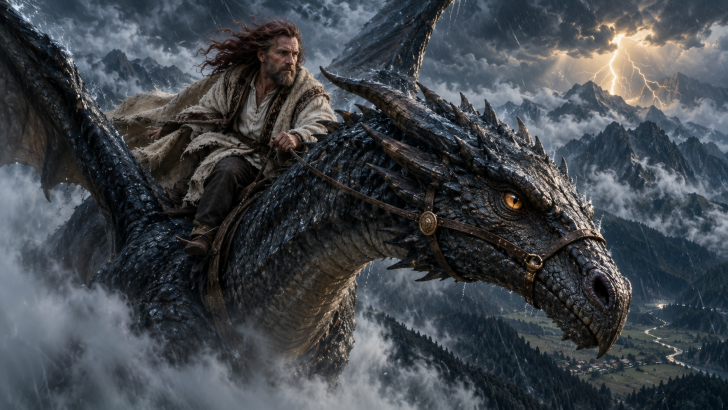
A ragged stranger comes to the village asking for milk. Someone turns him away. Someone else laughs.
By nightfall, hail is tearing through the fields—and somewhere inside the storm, people say the beggar is riding a dragon.
Romanian folklore gave these weather workers a name.
The Solomonari.
1. The Wizard Arrived as a Beggar
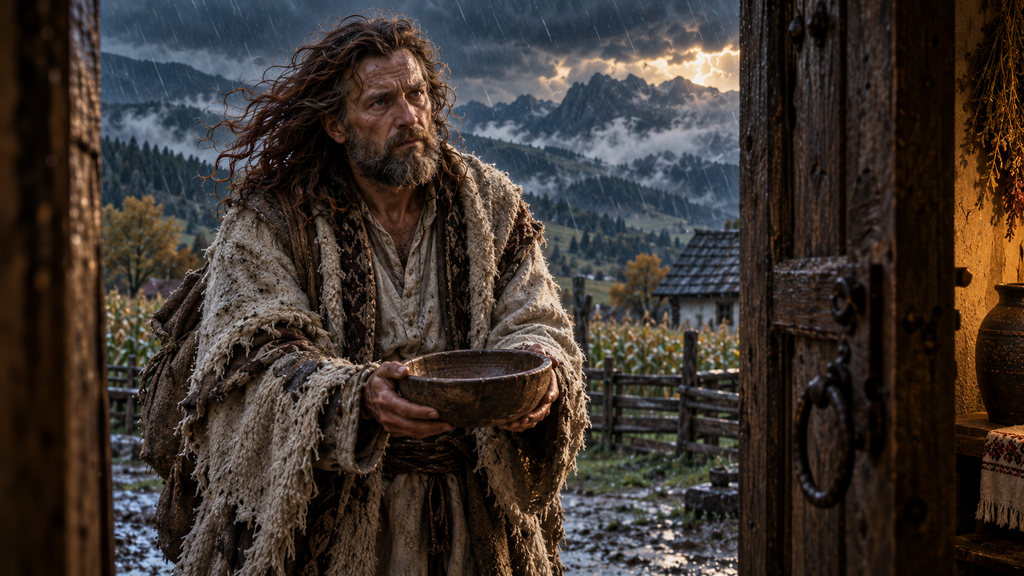
You wouldn’t have recognized a Solomonar by a pointed hat or a robe. He looked like someone you could easily miss in a crowd.
In many Romanian stories, the Solomonar wandered between villages dressed as a ragged beggar.
He asked at people’s doors for something simple, often milk or eggs, while also paying attention to how he was treated.
And that one small decision at the doorstep could follow the entire village into summer.
Folklorist Ion Taloș gathered numerous versions of these encounters in his 1976 study of the Solomonar.
A generous welcome could bring rain or protect a harvest, while mockery could bring the exact opposite.
One story describes a beggar asking a villager to mark his fields. Later, hail destroys the surrounding crops while leaving the marked land green.
The stranger was gone by then.
The Solomonar’s power was hidden inside someone who appeared to have none.
2. His Power Had to Be Learned
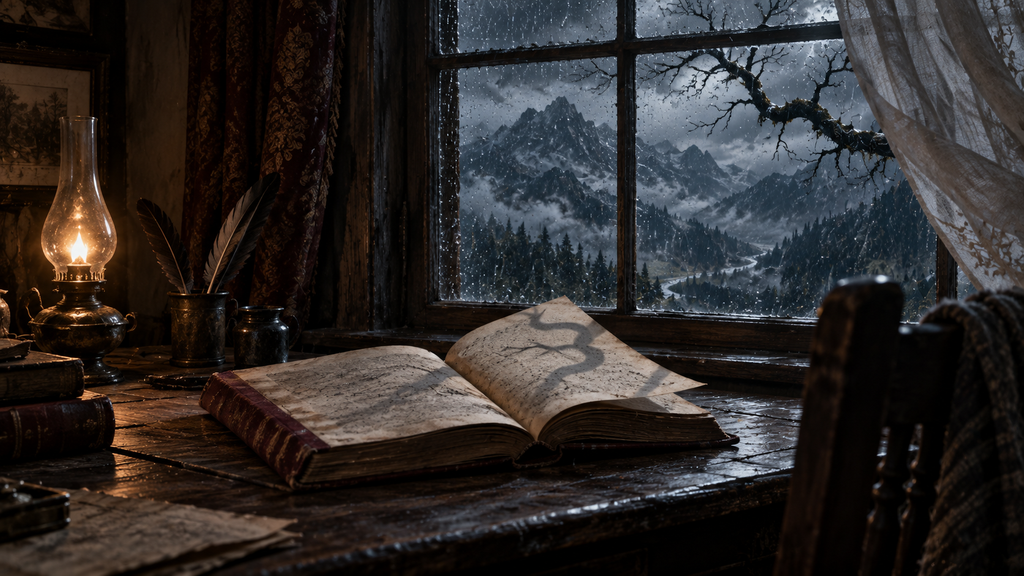
A Solomonar wasn’t always born with control over the weather. He studied for it.
Romanian accounts place his education inside a secret school, usually hidden underground or somewhere beyond reach. The details change depending on who tells the story. Some courses last three years. Others last seven.
The future Solomonar disappears from sunlight and ordinary human life while learning how to enter a world the rest of the village can’t see.
And at the center of that education is a book.
It contains the knowledge that lets him read the sky and call the dragon from the water. Without it, he’s no longer the master of the storm.
English readers came to know the school as the Scholomance through Emily Gerard’s 1885 essay “Transylvanian Superstitions”.
Gerard placed it somewhere in the mountains. Inside, the Devil taught his students the secrets of nature and the language of animals.
Her version became the famous one.
But Romanian folklore never agreed on one fixed location or curriculum. The school kept moving because nobody who returned could lead you back to its door.
3. The Devil Kept the Tenth Student
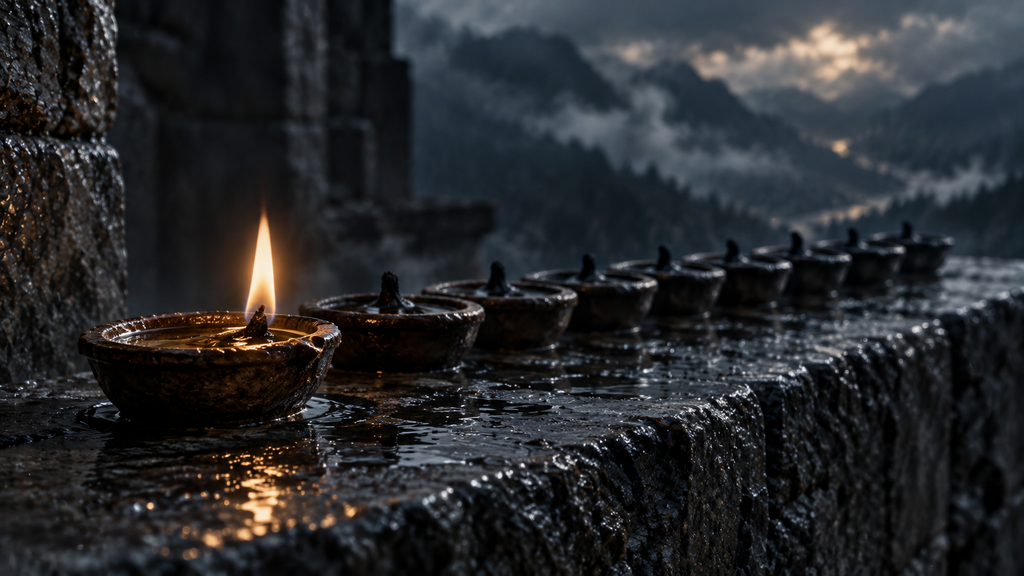
In Gerard’s account, the price of that education was horrifyingly precise.
Only ten students entered the Scholomance at one time.
When their training ended, nine returned home. The Devil kept the tenth as payment.
And he didn’t simply imprison him.
The final scholar became the Devil’s weather-maker. Mounted on a dragon, he entered the clouds and helped prepare the thunderbolts that fell across the landscape below.
Other folkloric versions alter the number of students or describe one member of the group disappearing without repeating Gerard’s exact arrangement.
There was never one official Solomonar biography shared across every Romanian region.
Still, the tenth student became the detail people remembered.
The student learns every secret the school can offer. Then, at the moment he should be free to use that knowledge, he discovers what it actually cost.
4. The Dragon Slept Beneath a Mountain Lake
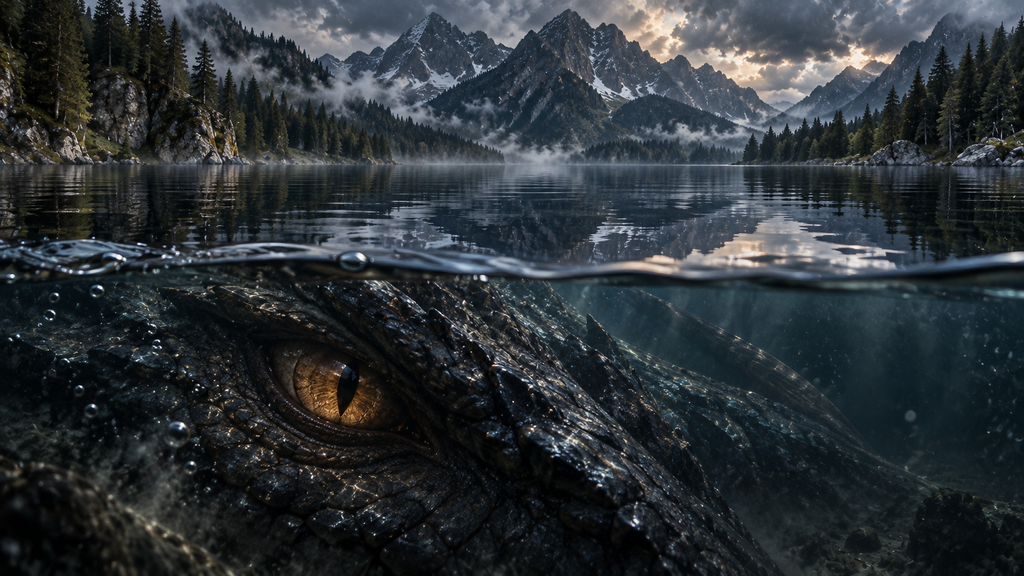
Then came the creature he was expected to ride.
Romanian stories often call it a balaur, a monstrous serpent or dragon closely connected with water and violent weather.
Gerard used the name Ismeju, an English rendering related to the Romanian zmeu.
The Solomonar had to bring it out of hiding.
One account begins beside a deep lake. The wizard reads from his book until the water freezes. He walks onto the ice, reaches the middle, and cuts through it with an enchanted axe.
The dragon rises from below. A bridle goes over its head, sometimes made from birch bark and sometimes described as gold. Then the two climb into the clouds.
In some versions, the ice follows them into the sky. There, it’s broken apart and thrown back to Earth as hail.
Gerard described another mountain lake south of Hermannstadt—the city now called Sibiu—where the dragon supposedly slept beneath the surface during calm weather.
Local people, she wrote, warned travelers not to throw stones into the water because one careless splash could wake it.
5. Hail Was Never Just Weather
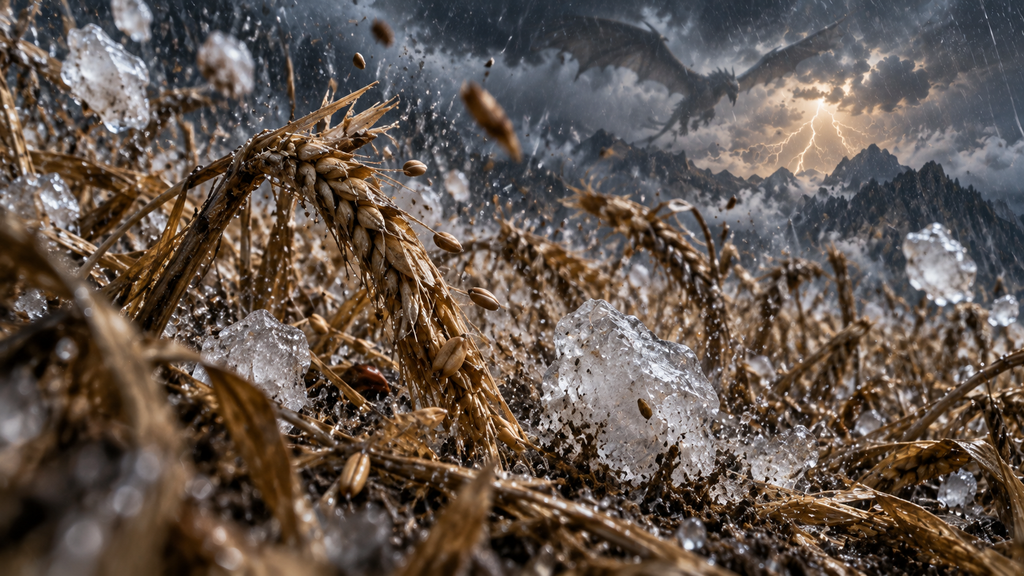
For a farming village, hail didn’t make an afternoon inconvenient.
It could destroy an entire year.
The Solomonar gave that disaster a mind. A storm arrived because someone had been insulted, some debt had gone unpaid, or a stranger had left the village hungry.
But the wizard wasn’t always the villain.
Taloș recorded traditions in which the dragon wanted to destroy human crops while the Solomonar secretly protected them.
The flying beast was said to be blind, so it had to ask its rider what lay beneath them.
When they passed over fields, the Solomonar told the dragon they were above empty mountains.
Then, once they reached a forest, he claimed they had finally found the village crops. The dragon released its hail where it could do far less harm.
So the same figure who punished one village could save another.
Some people remembered him as a servant of evil, while others treated him almost like a holy wanderer sent to test human kindness.
And between those two versions, the Solomonar became something far more interesting than a simple wicked sorcerer.
He was the uncertain figure holding the reins.
6. Another Wizard Could Turn the Storm Away
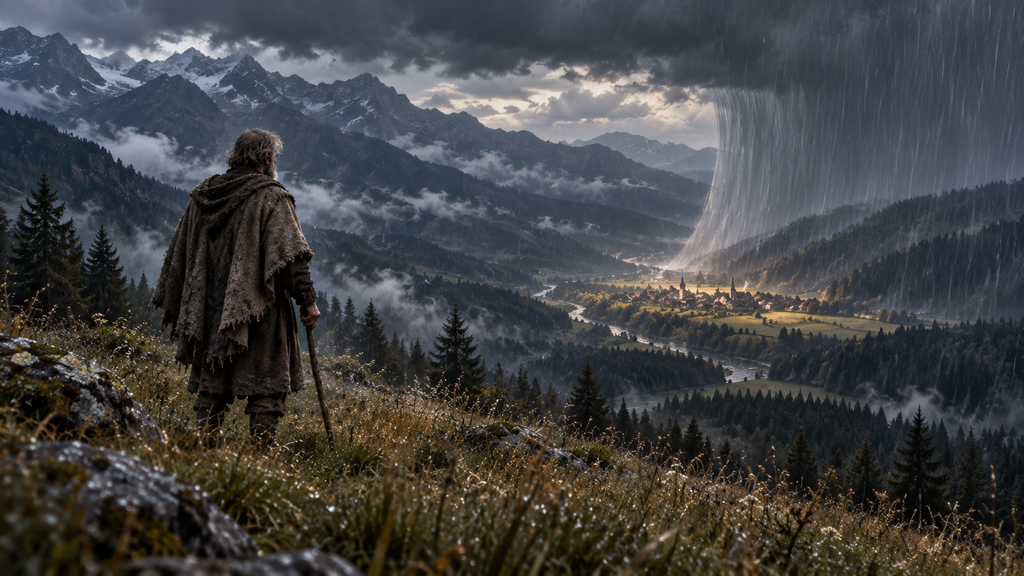
Villagers weren’t always helpless once the clouds appeared.
Some traditions gave them a contrasolomonar—a former Solomonar who knew how to fight the weather magic because he’d once practiced it himself.
He could stand below the storm and redirect the dragon with a hazel rod. The hail moved away from the village, following an invisible command into forests or empty ground.
Of course, moving a storm raised an uncomfortable question.
Where did it go next?
Saving one field could place another beneath the ice. Protection sometimes pushed that danger beyond the boundary where you could still see it.
A stranger version goes further. The contrasolomonar strikes the dragon and sends it crashing down. Where the creature lands, a spring of permanently cold water appears.
7. Then Dracula Entered the School
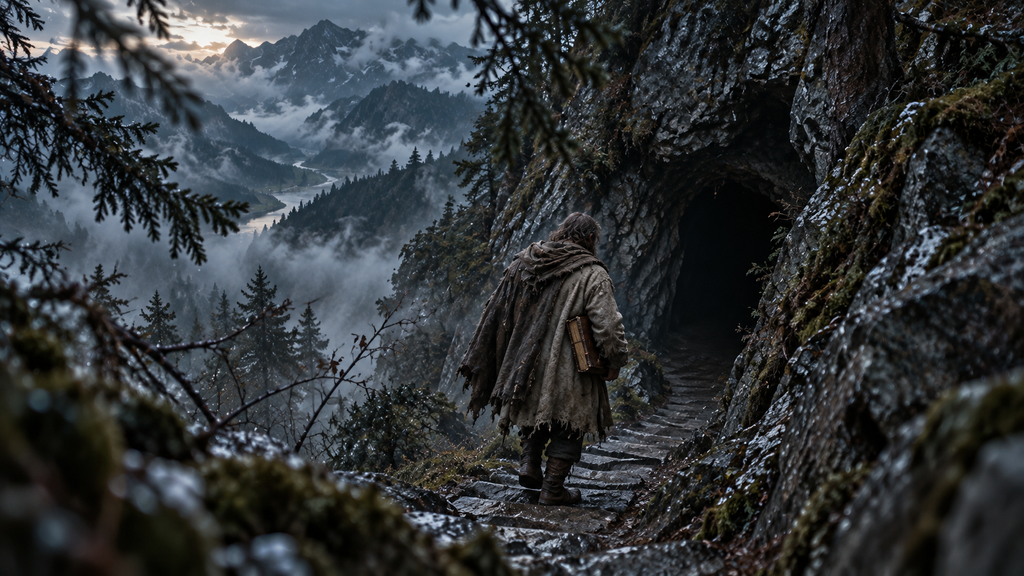
The Scholomance didn’t remain inside Romanian weather folklore.
Gerard published her account in Britain in 1885. Twelve years later, Bram Stoker placed the school inside Dracula.
Through Van Helsing, Stoker says the Draculas learned the Devil’s secrets there, “where the devil claims the tenth scholar as his due.”
The connection was Stoker’s creation. Romanian stories didn’t ordinarily present the Solomonari as members of Dracula’s family, and their secret school wasn’t originally a vampire academy.
But the association changed how the English-speaking world remembered it.
The Scholomance slowly drifted away from the village door and the threatened harvest. It entered Gothic fiction, then modern fantasy, carrying its sinister name long after the weather-making scholars were left behind.
Yet the older image is stranger than the school that replaced it.
A beggar walks away from a house with a book beneath his arm. Somewhere in the mountains, a golden bridle waits beside a lake that nobody should disturb.
Then the clouds close over the fields. And high above them, something begins to move.
