
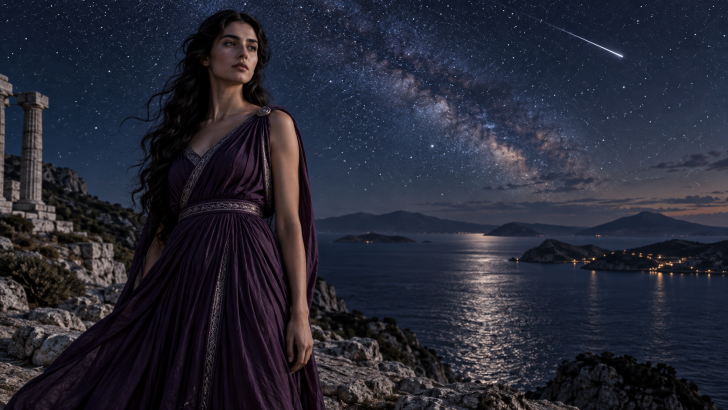
Greek mythology has plenty of goddesses connected with the sky, but Asteria feels different.
She is not a powerful Olympian ruling from a golden throne. She does not appear in dozens of famous myths, either.
Instead, Asteria seems to exist at the edges of the Greek mythological world, somewhere between the stars, dreams, prophecy, and the darkness of night.
Even her name feels celestial. It comes from the Greek word connected with stars, which is why Asteria is often described today as a goddess of falling or shooting stars.
When Zeus pursued her, Asteria escaped him by transforming herself and plunging into the sea.
Yet there is much about Asteria that remains uncertain. Here are eight mysteries surrounding one of Greek mythology’s most overlooked goddesses.
1. Was Asteria Really the Goddess of Falling Stars?

Search for Asteria today, and you will often find her introduced as the Greek goddess of falling stars.
It is a beautiful description. It is also a little more complicated than it sounds.
Asteria’s name is clearly connected with stars, and ancient sources identify her as a daughter of the Titans Coeus and Phoebe.
However, surviving Greek mythology does not give us a neat statement saying that Asteria had an official job controlling shooting stars.
The familiar connection probably developed from her name and celestial family. Still, the image fits her remarkably well.
Asteria literally falls from the heavens in her most famous myth when she escapes Zeus by plunging into the sea.
It is difficult not to notice the poetic similarity between her story and a star streaking downward through the night sky.
Whether ancient Greeks understood that moment in exactly this way is much harder to prove.
2. Why Did She Refuse Zeus?
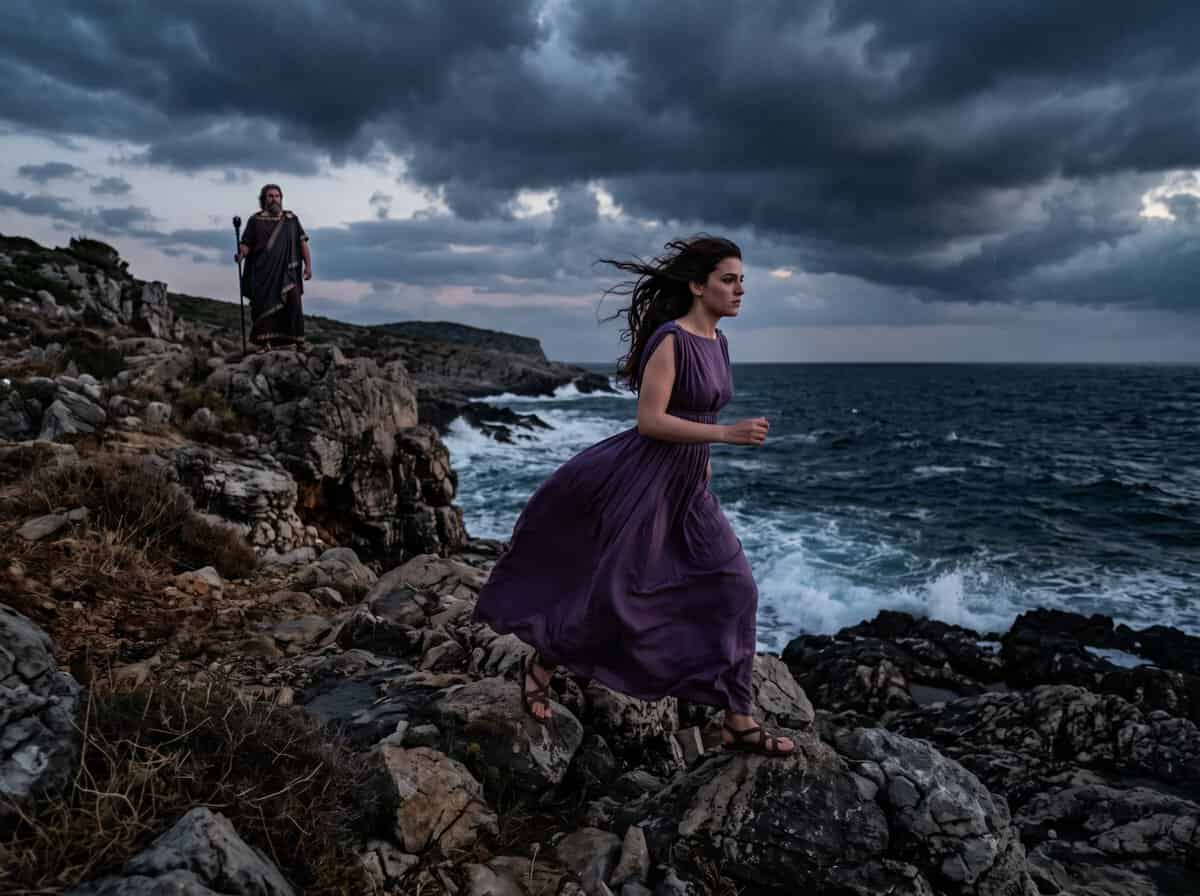
Zeus pursuing women is hardly unusual in Greek mythology. Asteria’s response makes her story stand out.
According to the ancient poet Callimachus, Zeus desired Asteria, but she did not want him. Rather than surrendering, she escaped by throwing herself into the sea.
Other versions describe her taking the form of a quail. The story is surprisingly dramatic for a goddess who receives relatively little attention elsewhere.
Why was her refusal so important? The surviving myth does not give us a long speech explaining what Asteria thought or felt. We simply know that she resisted and escaped.
That silence leaves her personality open to interpretation. Modern readers sometimes see Asteria as a symbol of independence.
Whatever meaning we give it today, her refusal becomes the decision that shapes almost everything that happens afterward.
3. Did Asteria Turn Into an Island?

This is where her mythology becomes wonderfully strange. After escaping Zeus, Asteria becomes associated with a floating island.
The island was called Asteria or Ortygia in different traditions and was said to drift across the sea rather than remaining fixed in one place.
Eventually, it became Delos. The idea of a goddess transforming into an entire island sounds extraordinary even by Greek mythological standards.
Yet transformation is everywhere in Greek mythology. People become trees, flowers, birds, stones, rivers, and constellations.
The natural landscape itself could carry the memory of a divine story. Asteria’s transformation is especially interesting because she does not simply disappear.
She becomes a place. And that place is about to become one of the most sacred locations in the Greek world.
Her attempt to escape one god unexpectedly prepares the setting for the birth of two others.
4. Why Was Asteria Connected With Prophetic Dreams?
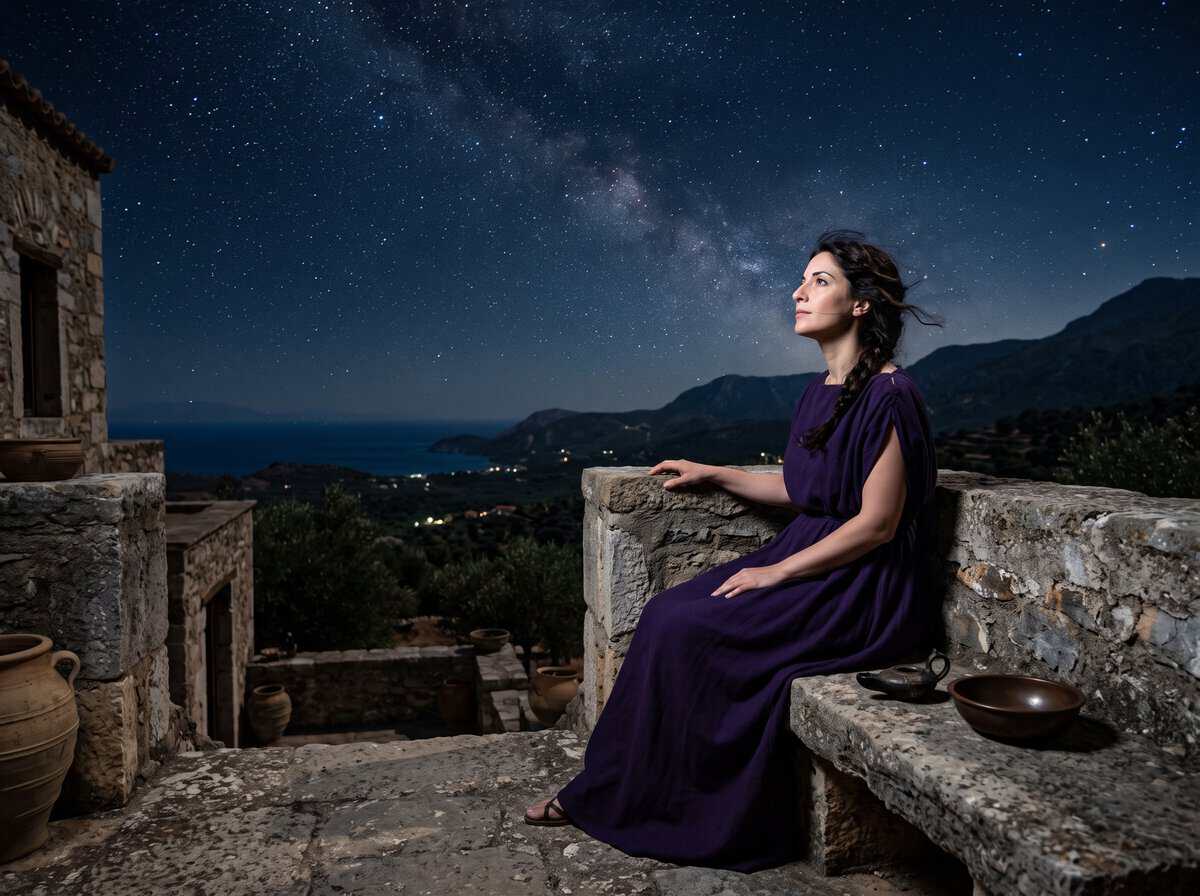
Stars are only one part of Asteria’s mysterious identity. Later traditions also connect her with nighttime divination, dreams, and prophecy.
This becomes much more interesting when we look at her family. Her mother was Phoebe, a Titan goddess associated in mythological tradition with prophecy and Delphi before Apollo.
Her father was Coeus, another Titan whose exact original character is difficult to reconstruct. Asteria’s sister was Leto.
The family therefore sits remarkably close to some of Greek mythology’s strongest prophetic and celestial themes.
Asteria herself became associated particularly with forms of divination connected with the night.
That gives her a different character from Apollo’s bright, famous oracle at Delphi. Her symbolic world is quieter.
A dream you cannot stop thinking about. A strange sign beneath the stars. A question asked when everyone else is asleep.
Perhaps that is partly why Asteria remains so intriguing. Her mythology feels as though it belongs to the hours when certainty becomes harder to find.
5. Was Hecate’s Mysterious Power Inherited From Asteria?
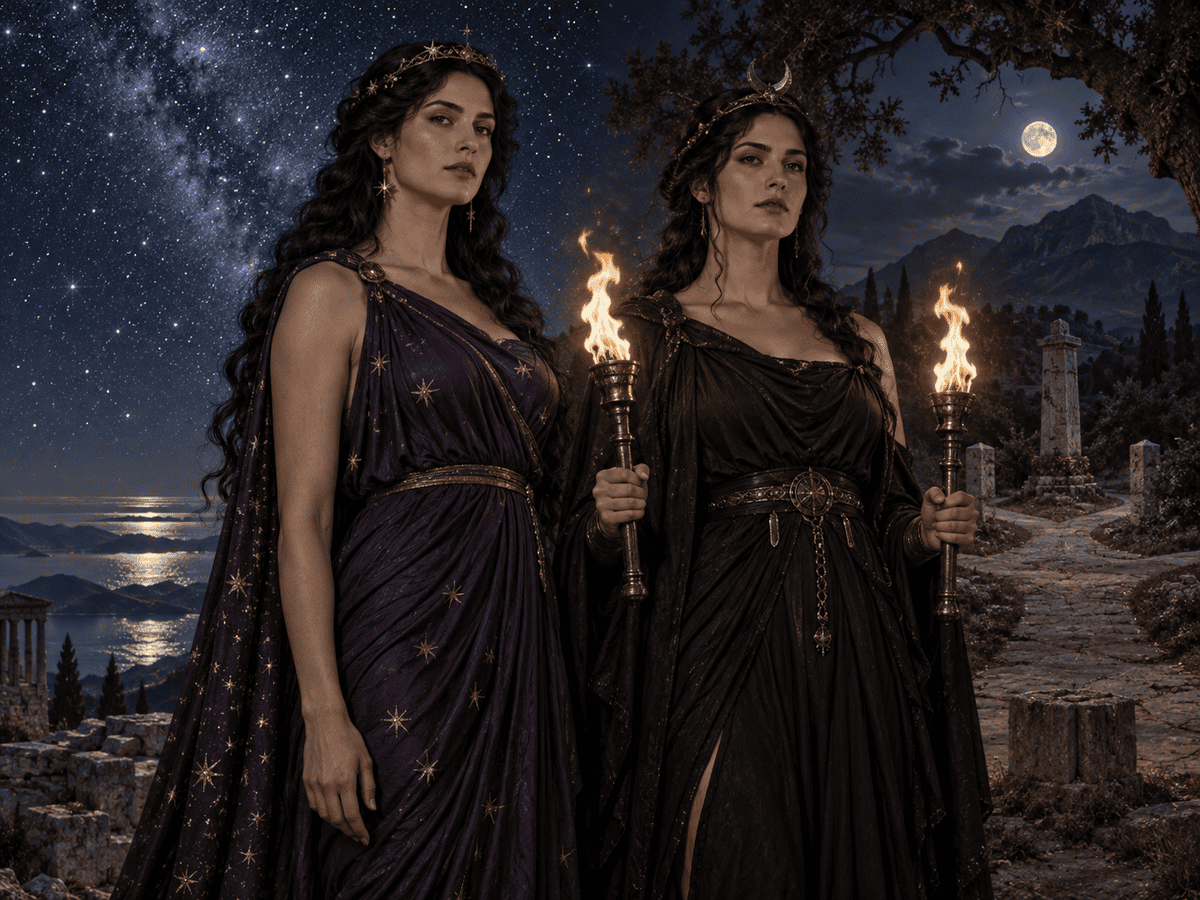
Asteria’s most famous child is far better known than she is. She became the mother of Hecate through her union with the Titan Perses.
Hecate would develop into one of Greek mythology’s most fascinating goddesses, associated with magic, crossroads, torches, night, ghosts, and other mysterious areas.
That immediately makes Asteria more interesting. Hecate did not appear from nowhere.
Her mother’s associations with stars, night, dreams, and divination create a surprisingly fitting background for the goddess she would become.
Was Hecate imagined as inheriting some of Asteria’s mysterious character?
Ancient mythology does not provide a simple explanation of divine traits being passed from mother to daughter.
Still, the connection is difficult to ignore. Asteria belongs to the hidden knowledge of night.
Hecate becomes one of the great goddesses of its mysteries.
The family resemblance may be symbolic rather than explicitly explained, but it is one of the most fascinating parts of Asteria’s story.
6. Why Did Asteria Help Her Sister Leto?
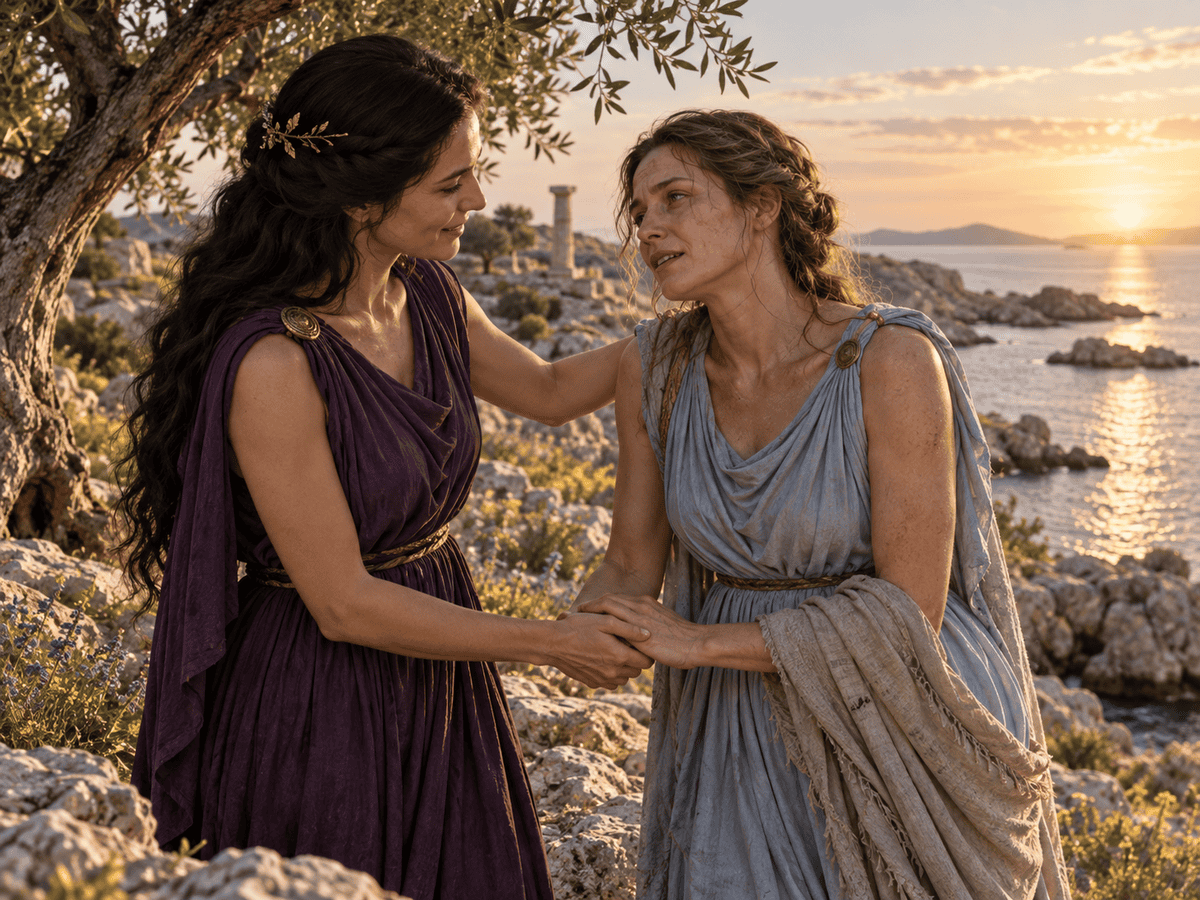
Asteria’s story eventually becomes intertwined with that of her sister. Leto became pregnant by Zeus with Apollo and Artemis.
According to famous versions of the myth, the jealous Hera made it extremely difficult for Leto to find somewhere she could safely give birth.
Place after place rejected her. Then she reached the floating island associated with Asteria.
Delos finally accepted her. There, Leto was able to give birth, and the previously wandering island became permanently established.
There is something almost beautifully circular about the story. Asteria had once fled Zeus.
Later, the land associated with Asteria shelters her sister, who is suffering because of her own relationship with Zeus.
The goddess who refused him becomes connected with the place that protects another woman caught in the consequences of his actions.
Whether ancient storytellers intended us to notice that emotional symmetry is impossible to know. But once you see it, it is difficult to forget.
7. Was the Quail More Important to Asteria Than We Realize?

One of the oddest details in Asteria’s mythology is the quail. Some traditions say she transformed into a quail while escaping Zeus.
The name Ortygia, associated with her island, is connected with the Greek word for quail.
To a modern reader, this can seem almost random. Why would a star goddess become such an ordinary bird?
The bird may have had religious, linguistic, geographical, or symbolic associations that made much more sense to ancient audiences than they do to us.
Greek mythology is full of details like this. A tiny element survives in a poem or place name, but the larger tradition explaining why it mattered disappears.
The quail may once have been an important part of how Asteria was understood.
Today, we are left with the bird, the island, and a story whose missing pieces we can only guess at.
8. Why Did Such an Important Goddess Almost Disappear From Myth?
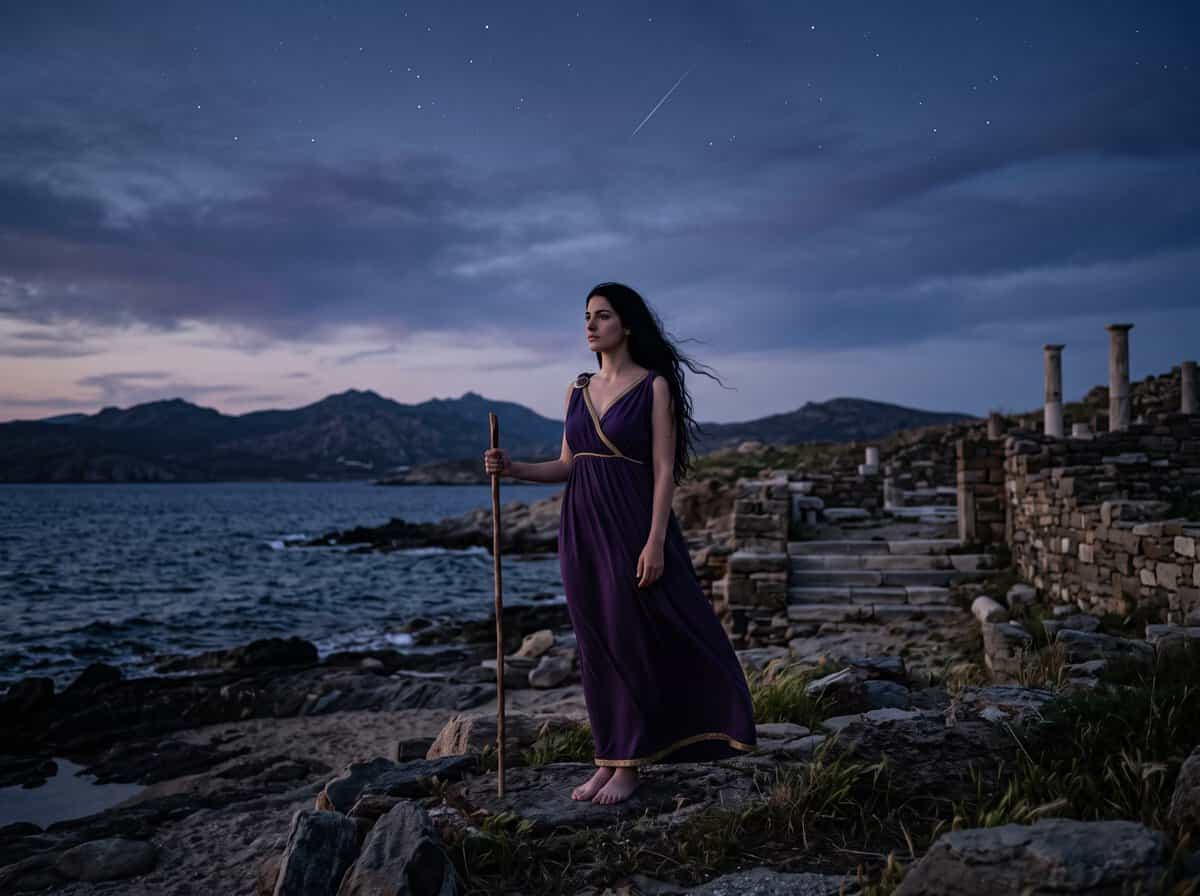
Perhaps the greatest mystery is why Asteria is not more famous. Look at her connections.
She is the daughter of Titans. She is the sister of Leto. She escapes Zeus.
She is the mother of Hecate. She becomes connected with Delos.
That same island becomes the birthplace of Apollo and Artemis.
Asteria is therefore linked directly to three enormously important Greek deities, yet she remains in the background of their stories.
Part of the reason is simply that relatively few myths about her survive.
Ancient Greek mythology was never one complete book containing every story about every god.
Traditions changed between places and periods, and enormous amounts of ancient storytelling were eventually lost.
Perhaps Asteria once had stories we will never recover. Or perhaps her mysterious, distant presence was always part of her character.
Either way, she occupies an extraordinary position in Greek mythology. Asteria does not need to dominate Olympus to matter.
She falls from the heavens, disappears into the sea, becomes an island, gives birth to Hecate, and quietly creates the refuge where Apollo and Artemis can enter the world.
For a goddess who spends so much of mythology in the shadows, she leaves an unexpectedly large trail of stars behind her.

Siempre sentí una fuerte conexión con lo Divino desde mi nacimiento. Como autora y mentora, mi misión es ayudar a los demás a encontrar el amor, la felicidad y la fuerza interior en los momentos más oscuros.