
Tarot has a reputation for being the spiritual equivalent of opening a mysterious old door and immediately discovering a skeleton. Certain cards have become especially notorious: Death, The Devil, The Tower, and the Ten of Swords are enough to make a beginner stare at a reading and wonder whether they should cancel all their plans for the next six months. Fortunately, tarot is rarely that literal. A card showing death does not mean someone is going to die, and a card featuring a devil does not mean Satan has personally entered the group chat.
Tarot is a symbolic system, and individual cards can have multiple interpretations depending on the question, surrounding cards, deck, and reading tradition. The cards below are often considered intimidating, but their traditional meanings can be much more nuanced—and sometimes surprisingly constructive. Here are the cards everyone fears and what they can actually represent.
1. Death
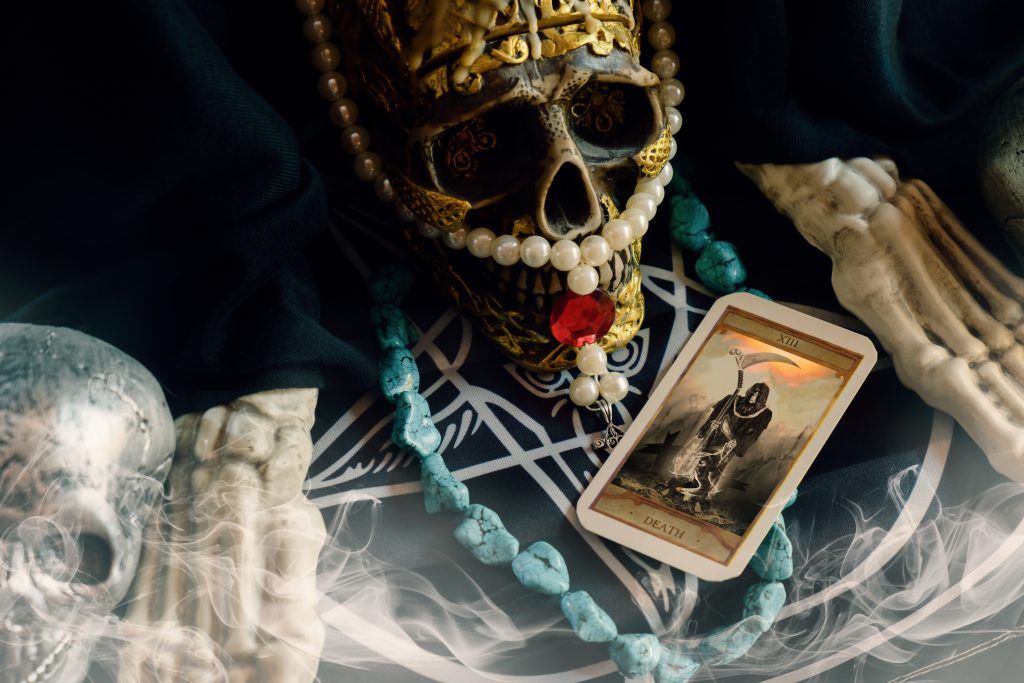
Few tarot cards have a more alarming name than Death. There is no subtlety here. The card doesn’t say “Change” or “New Chapter.” It says Muerte, and beginners can hardly be blamed for immediately assuming the worst. Fortunately, Death is generally not interpreted as a literal prediction of someone’s physical death.
In traditional tarot, Death is associated with endings, transformation, transition, and the closing of one chapter so another can begin. It can represent an old relationship, identity, habit, situation, or way of thinking reaching its natural conclusion. Essentially, Death is the tarot card that shows up when life is saying, “This version of the story has run its course.” That can certainly be uncomfortable, but it isn’t necessarily tragic.
In fact, Death can be one of the most liberating cards in a reading. It encourages you to stop dragging something around simply because you’ve already invested time in it. Sometimes the thing that needs to “die” is an outdated expectation, not a person. Dramatic? Absolutely. Literal? Usually not.
2. The Tower
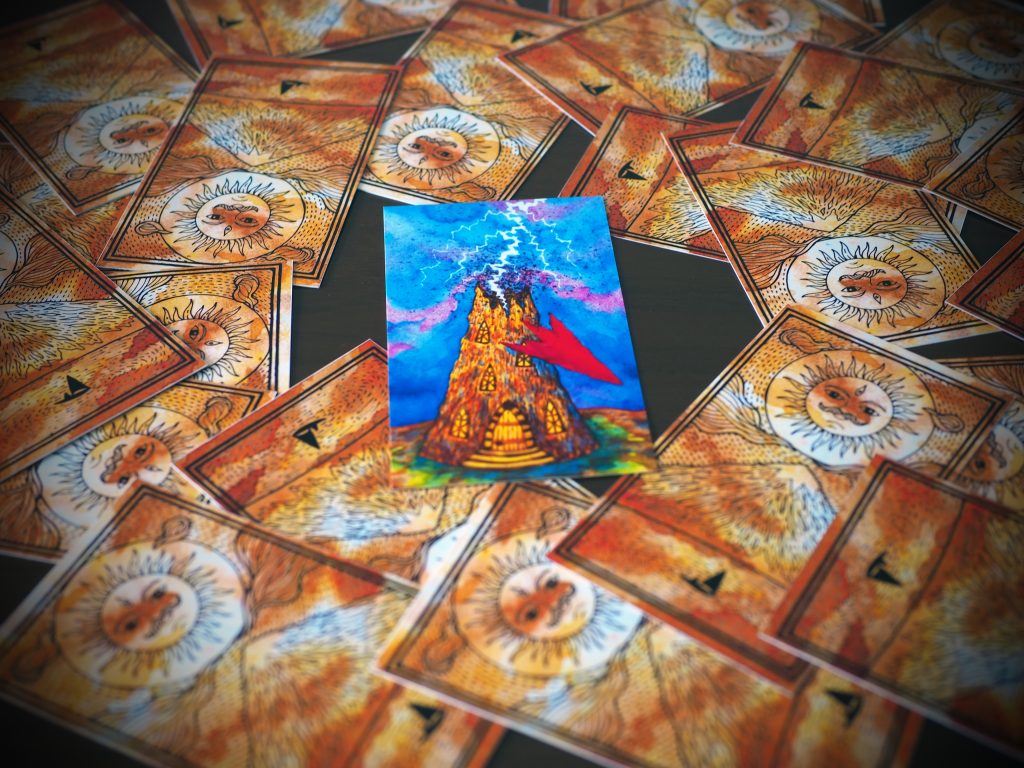
If Death sounds ominous, The Tower looks like it was specifically designed to make someone gasp. A tower is being struck by lightning, flames are everywhere, and people are dramatically falling from the structure. It is not exactly giving “everything is going according to plan.”
The Tower traditionally represents upheaval, sudden change, revelations, disruption, and the collapse of structures that are no longer stable. It can indicate an experience that forces someone to confront reality rather than continue relying on an illusion or unstable foundation. That might involve a relationship, career, belief system, financial situation, or personal assumption.
The important thing is that The Tower isn’t necessarily saying, “Your life is about to be destroyed.” It can instead describe the process of discovering that something wasn’t as secure as you believed. Sometimes that discovery is painful. Sometimes it’s incredibly freeing. If you’ve been building a five-story emotional mansion on a foundation made entirely of denial, The Tower may simply be the universe’s rather dramatic way of pointing that out. Not subtle, but memorable.
3. The Devil
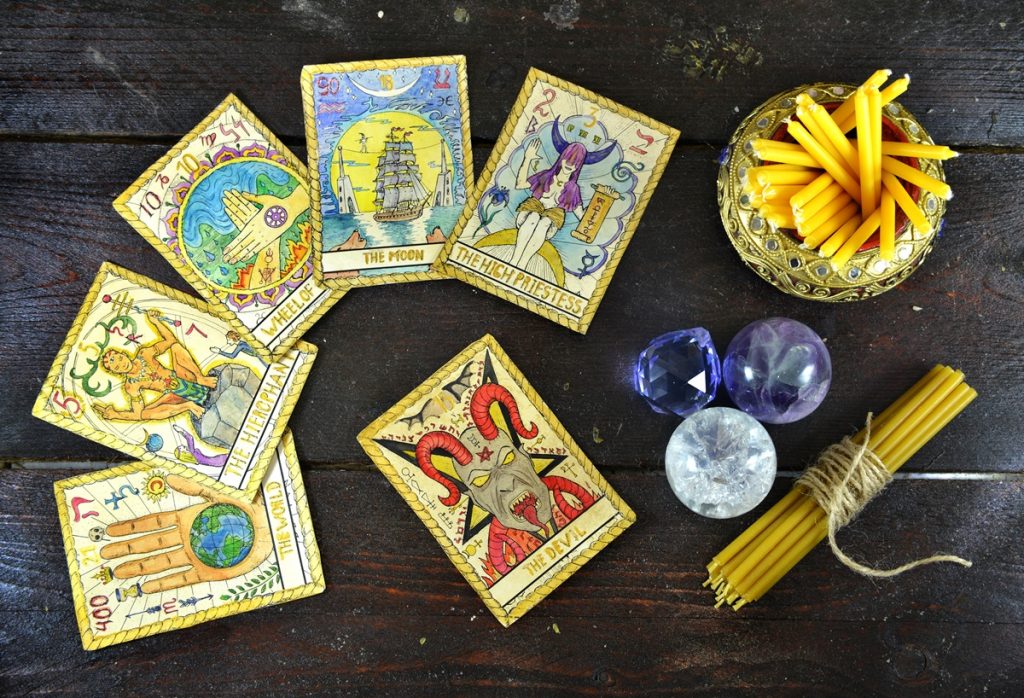
The Devil is another card that tends to send beginners directly into panic mode. There he is, sitting on his throne, looking like he has several questionable business opportunities available. But despite the imagery, The Devil doesn’t automatically mean evil, demonic activity, or supernatural danger.
Traditionally, The Devil can represent attachment, temptation, unhealthy patterns, materialism, obsession, fear, and feeling trapped. It often points toward something that has gained too much power over you. That might be a relationship, addiction, habit, insecurity, financial obsession, or even a belief that you’re incapable of changing.
Interestingly, The Devil can also be empowering because recognizing a chain is the first step toward removing it. In many versions of the card, the people standing beside the Devil are not as physically trapped as they initially appear. The symbolism suggests that some forms of bondage are maintained through perception, habit, or fear. So if The Devil appears in your reading, don’t assume you’re doomed. It may simply be asking what has you saying, “I could stop anytime,” while absolutely not stopping anytime.
4. Ten of Swords
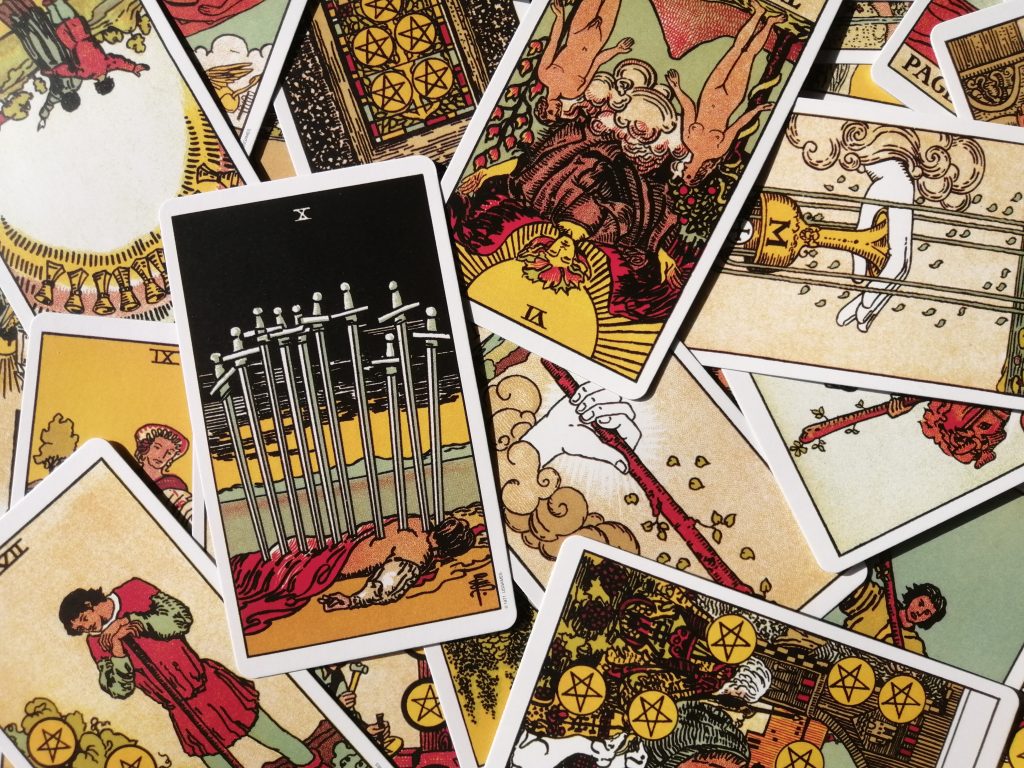
The Ten of Swords might win the award for “Most Visually Unnecessary Amount of Suffering.” The traditional image depicts a person lying face-down with ten swords dramatically sticking out of their back. If tarot wanted to communicate subtle disappointment, it apparently decided to bring ten separate weapons to the meeting.
The card is traditionally associated with endings, defeat, painful conclusions, betrayal, exhaustion, and the completion of a difficult cycle. It can certainly represent an unpleasant situation, but its position at the end of the suit is important. Tens often indicate completion or culmination.
That means the Ten of Swords can also suggest that something has reached its absolute limit. There may be nowhere else for the situation to go except toward recovery and renewal. In that sense, the card can be strangely hopeful. The worst part may already be over. Sometimes tarot’s message is essentially, “Yes, that was terrible. But you don’t have to keep doing it.” The imagery is dramatic, but the underlying message can involve acceptance, closure, and eventually getting back on your feet.
5. Three of Swords
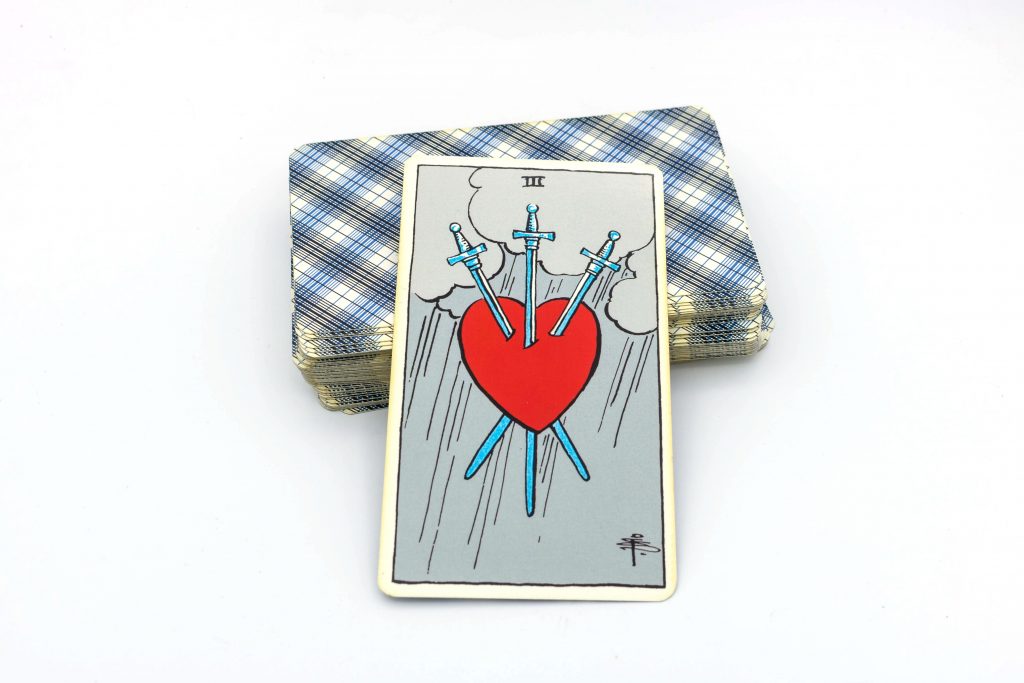
The Three of Swords has one of tarot’s simplest and most recognizable images: a heart pierced by three swords. Beginners generally don’t need a tarot dictionary to understand that something isn’t going wonderfully.
The card is commonly associated with heartbreak, grief, sorrow, disappointment, separation, and painful truths. Unlike some of the cards on this list, the Three of Swords really can indicate emotional pain. However, it still doesn’t automatically predict a breakup or romantic betrayal. The pain could involve friendship, family, disappointment, grief, or a difficult realization.
The card can also represent the importance of acknowledging pain rather than pretending everything is fine. Nobody enjoys receiving it, but there is value in recognizing what hurts. Ignored emotions have a funny habit of returning later with luggage. The Three of Swords can therefore be a reminder that healing begins with honesty. You cannot properly process heartbreak while insisting that your heart is perfectly fine and merely experiencing “a temporary technical issue.”
6. Five of Pentacles

The Five of Pentacles often frightens people because its traditional imagery depicts two people struggling outside in the cold, seemingly excluded from warmth and shelter. It can immediately look like the tarot equivalent of receiving a letter from your bank.
Traditionally, the card is associated with hardship, insecurity, financial difficulty, isolation, exclusion, and feeling unsupported. But one of its most important themes is perceived or actual lack. The card can describe someone who feels abandoned or believes they have no resources available to them.
That distinction matters because the imagery often includes a source of warmth or shelter nearby. The problem may be that the people outside don’t recognize the help available to them—or don’t believe they deserve it. In a reading, the Five of Pentacles can therefore encourage someone to ask for assistance rather than attempting to survive everything alone. Financially, it may suggest being cautious, but it doesn’t automatically predict disaster. Sometimes the card’s message is simply: “Please stop pretending you don’t need help.”
7. Nine of Swords
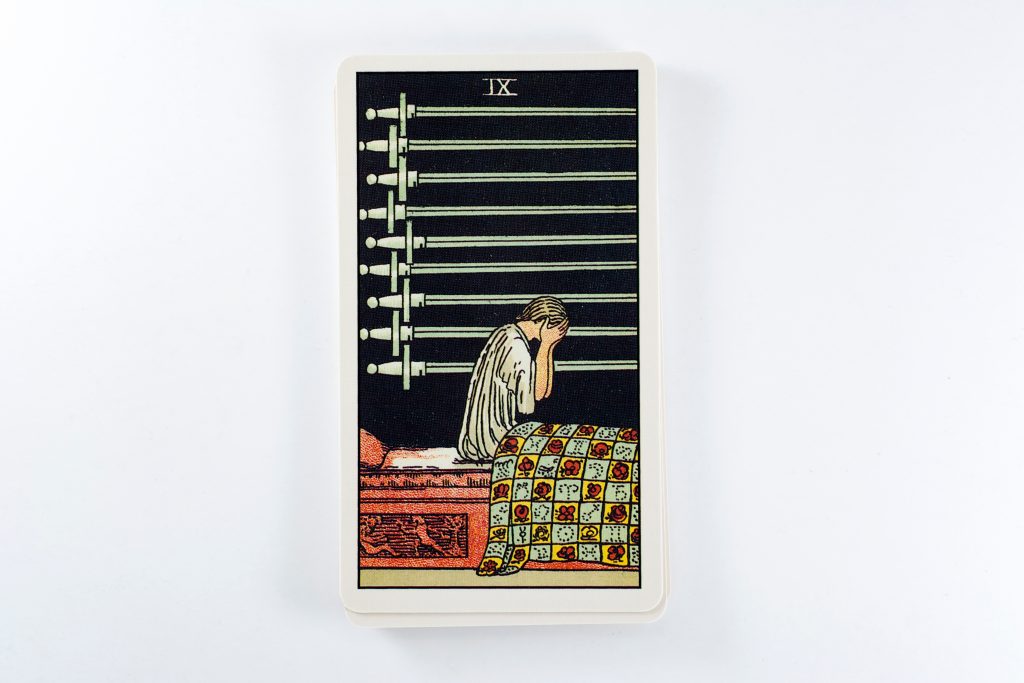
The Nine of Swords is essentially the tarot card of waking up at 3 a.m. and deciding to replay every embarrassing thing you’ve done since childhood. Its traditional imagery shows a person sitting upright in bed, surrounded by nine swords hanging ominously on the wall.
The card is associated with anxiety, worry, guilt, fear, nightmares, rumination, and mental distress. It can be one of the most psychologically intense cards in a reading. But importantly, it doesn’t necessarily predict that something terrible is about to happen. Instead, it often reflects what is happening inside someone’s mind.
That makes the Nine of Swords different from cards that represent external upheaval. Sometimes the biggest problem is the story someone is telling themselves about a situation. A fear can feel enormous at night and considerably less terrifying in daylight. The card encourages confronting worries rather than allowing imagination to turn them into monsters. Basically, the Nine of Swords is the tarot deck gently suggesting that doom-scrolling at midnight probably isn’t helping.
8. Five of Cups
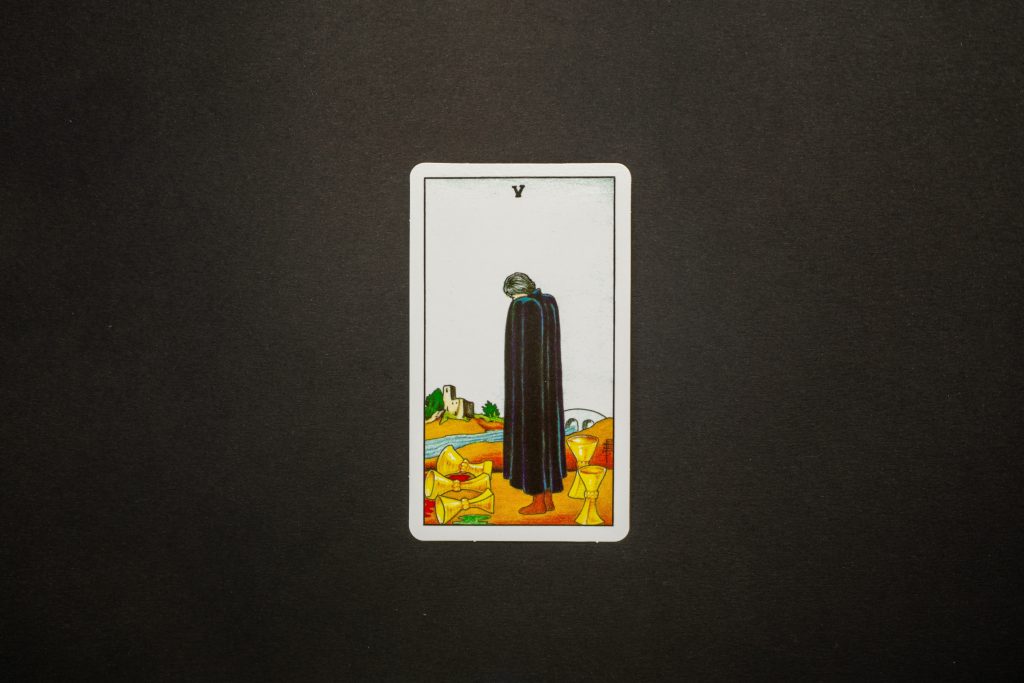
The Five of Cups isn’t visually cheerful either. A figure stands looking down at spilled cups while ignoring the cups that remain standing behind them. It’s basically the tarot equivalent of staring at the three things that went wrong while completely forgetting the two things that didn’t.
The card traditionally represents grief, disappointment, regret, loss, and focusing on what has gone wrong. It can appear when someone is struggling to move beyond an emotional disappointment or is so focused on the past that they cannot see what remains available in the present.
But that’s precisely where the card contains its hopeful element. The upright cups in the background symbolize what hasn’t been lost. The message isn’t that disappointment isn’t real; it’s that disappointment isn’t necessarily the entire story. Something may have ended, but not everything is gone. The Five of Cups can therefore encourage emotional honesty while also inviting someone to look up eventually. You are allowed to mourn the spilled wine. Just don’t forget there are still two perfectly good glasses behind you.
9. The Hanged Man
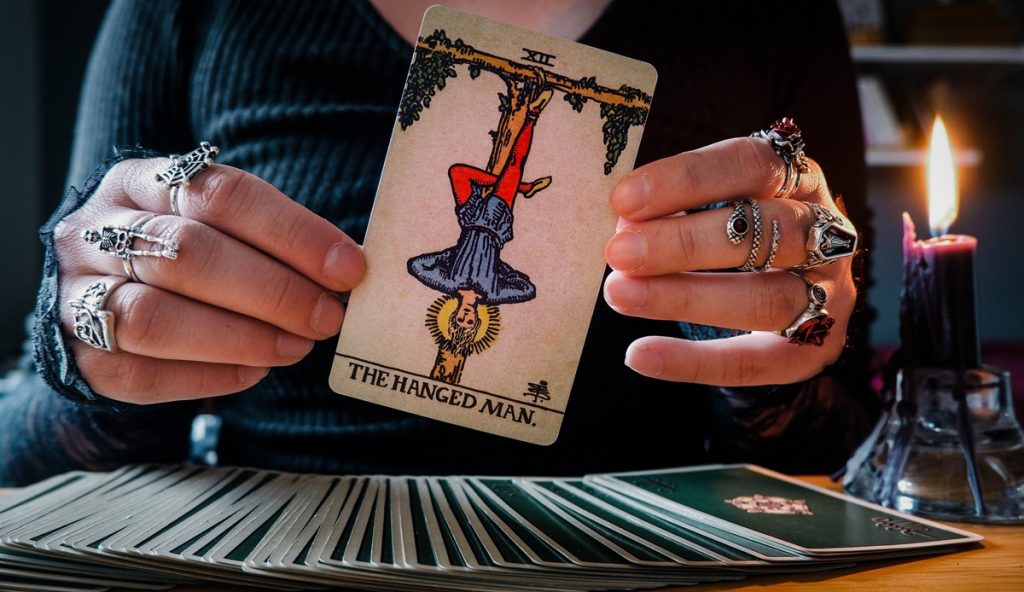
The Hanged Man is perhaps less terrifying than confusing. A person is literally hanging upside down from a tree, seemingly quite comfortable with the situation. Beginners may reasonably wonder whether tarot has decided that gravity is now optional.
Traditionally, The Hanged Man represents suspension, surrender, patience, sacrifice, and seeing something from a different perspective. It often appears when pushing harder isn’t necessarily the solution. Sometimes the best move is to pause and allow yourself to see the situation differently.
The card can also suggest voluntarily letting go of control. That’s particularly uncomfortable for people who believe every problem can be solved through sufficient effort, planning, and perhaps seventeen color-coded spreadsheets. The Hanged Man says that some situations require patience rather than action. It isn’t necessarily a card of failure or punishment. It can represent a temporary pause that creates insight. In other words, sometimes doing absolutely nothing for a moment is not procrastination. It is perspective.
10. The Moon
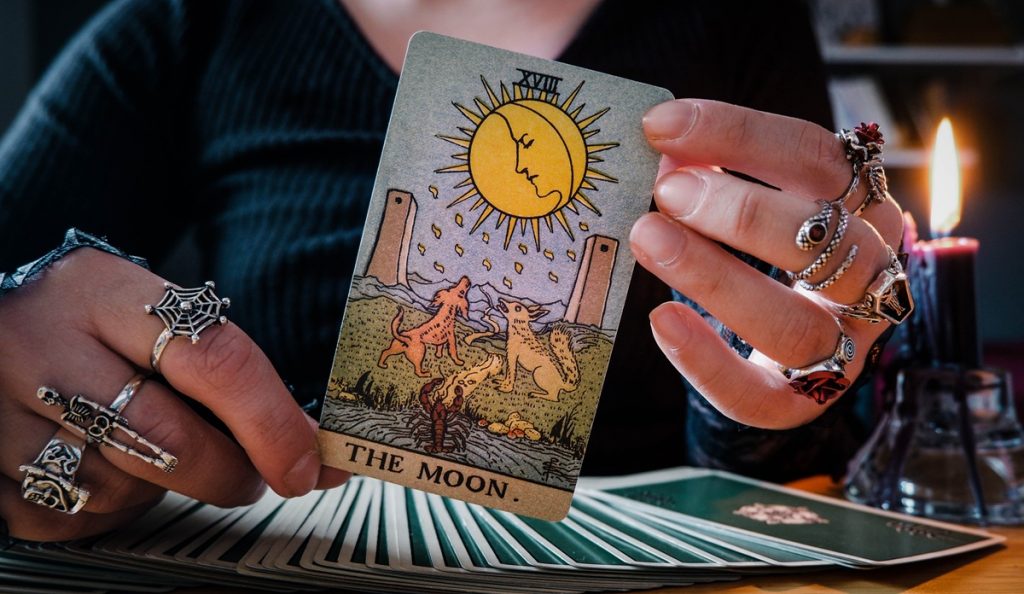
The Moon may not look as frightening as The Tower or Ten of Swords, but its symbolism can be considerably more unsettling. A moon shines over a strange landscape while a dog and wolf face each other, and a mysterious creature emerges from the water. The whole scene feels like the beginning of a dream you definitely won’t be able to explain tomorrow.
The Moon traditionally represents uncertainty, illusion, intuition, dreams, subconscious fears, confusion, and things that aren’t fully revealed. It can appear when you don’t have all the information necessary to understand a situation clearly.
Importantly, The Moon doesn’t necessarily mean someone is lying or that disaster is approaching. Sometimes it simply means you don’t know yet. Your intuition may be trying to tell you something, but fear and imagination can make it difficult to distinguish instinct from anxiety. The card encourages patience and careful observation rather than jumping to conclusions. Basically, The Moon says: “You can’t see the whole road yet, so maybe don’t floor the accelerator.” A surprisingly sensible message from a card featuring a lobster crawling out of a pool.
11. Ten of Wands
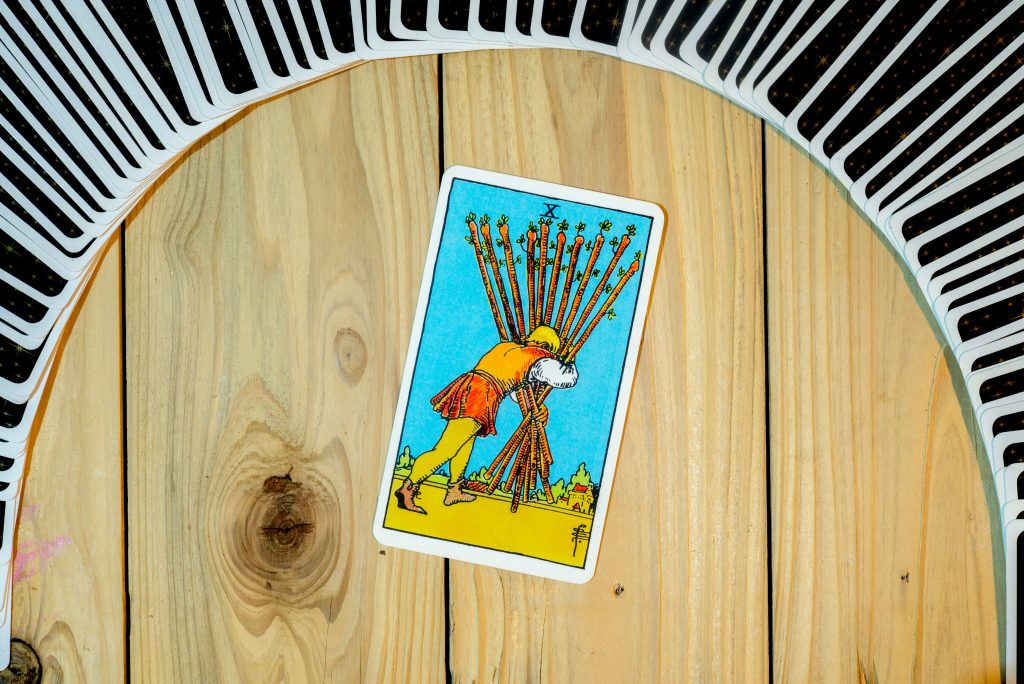
The Ten of Wands isn’t terrifying because it predicts some supernatural catastrophe. It’s terrifying because it is painfully relatable. The traditional image shows a person struggling to carry a huge bundle of ten wands. If you’ve ever said “I’ll just do it myself” and immediately regretted it, congratulations: you’ve met your tarot card.
The card is traditionally associated with burdens, responsibility, stress, overwork, and carrying more than you can reasonably manage. It often appears when someone has taken on too many obligations or refuses to delegate because apparently doing everything personally is a personality trait now.
The Ten of Wands can indicate that success itself has created a burden. You may have achieved something you wanted but discovered that maintaining it requires more energy than expected. The solution isn’t necessarily abandoning everything. It may involve deciding which responsibilities genuinely belong to you and which ones you’ve picked up unnecessarily. The card’s underlying message is straightforward: carrying ten wands doesn’t prove you’re strong. Sometimes it just proves that you haven’t put any of them down.
12. Judgement

Judgement sounds terrifying because the word itself suggests someone is about to stand over your life with a clipboard and start listing your mistakes. The card’s imagery doesn’t exactly soften the mood either: figures rise from coffins while an angel sounds a trumpet overhead.
Traditionally, Judgement represents awakening, evaluation, reflection, renewal, forgiveness, and answering a call. It is less about being punished and more about recognizing what has happened and deciding what comes next.
The card can appear during periods of major self-reflection when someone realizes that an old version of themselves no longer fits. It may involve confronting past choices, but the purpose isn’t necessarily condemnation. Instead, Judgement can suggest learning from the past without remaining imprisoned by it. Think of it as the cosmic performance review where the goal isn’t to fire you but to ask whether you’re ready for the next chapter. Slightly intimidating? Sure. But ultimately, Judgement can be one of tarot’s strongest cards for personal renewal.

Lover of good music, reading, astrology and making memories with friends and spreading positive vibes! 🎶✨I aim to inspire others to find meaning and purpose through a deeper understanding of the universe’s energies.