

Flowers and the Underworld may sound like complete opposites. One represents life.
The other belongs to death. But ancient mythology often placed the two surprisingly close together.
Flowers grew in stories about gods of the dead, grieving lovers, lost heroes, and people who crossed the boundary between life and death.
Some were said to grow in the Underworld itself. Others appeared when someone died.
A few became symbols of rebirth because they disappeared and returned with the seasons.
That connection makes sense. A flower blooms, fades, dies back, and sometimes returns again.
To ancient people, that cycle could easily become a symbol of the journey between life, death, and renewal.
Here are ten flowers with fascinating connections to the Underworld, death, and the world beyond.
1. Asphodel – The Flower of the Greek Dead
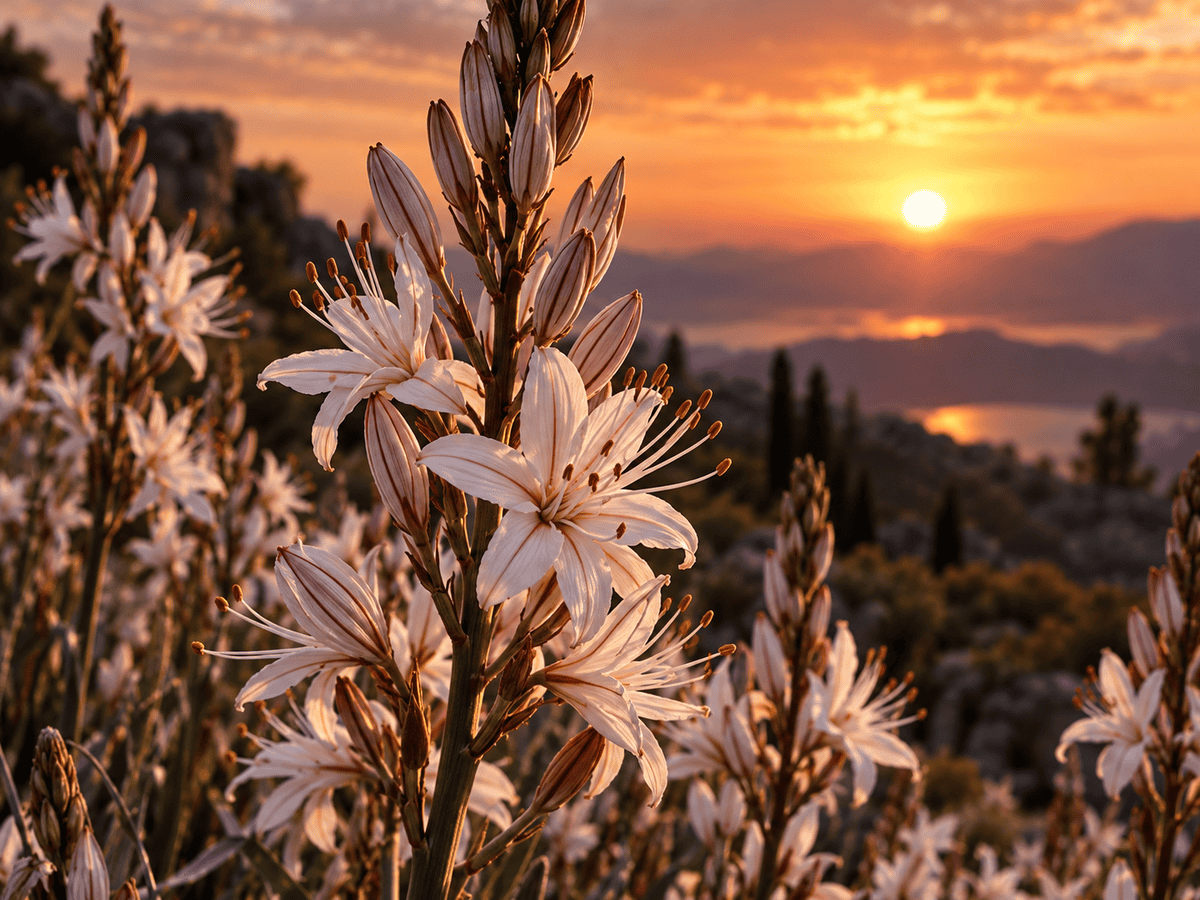
If the Greek Underworld had an official flower, it would probably be asphodel.
Ancient Greek literature describes the dead moving through an asphodel meadow.
In Homer’s Odyssey, the spirits of the dead are associated with this mysterious landscape.
That connection became so strong that asphodel is still remembered as an Underworld flower today.
Imagine an endless pale meadow filled with wandering souls. It is not the terrifying punishment of Tartarus.
It is quieter. Almost dreamlike. That makes asphodel different from flowers connected with violent death.
It represents the ordinary dead and the strange world they entered after life.
The flower itself grows naturally around the Mediterranean. But mythology gave it another home.
Somewhere beyond the living world, the fields of asphodel continue.
2. Narcissus – The Flower Persephone Picked Before Entering the Underworld
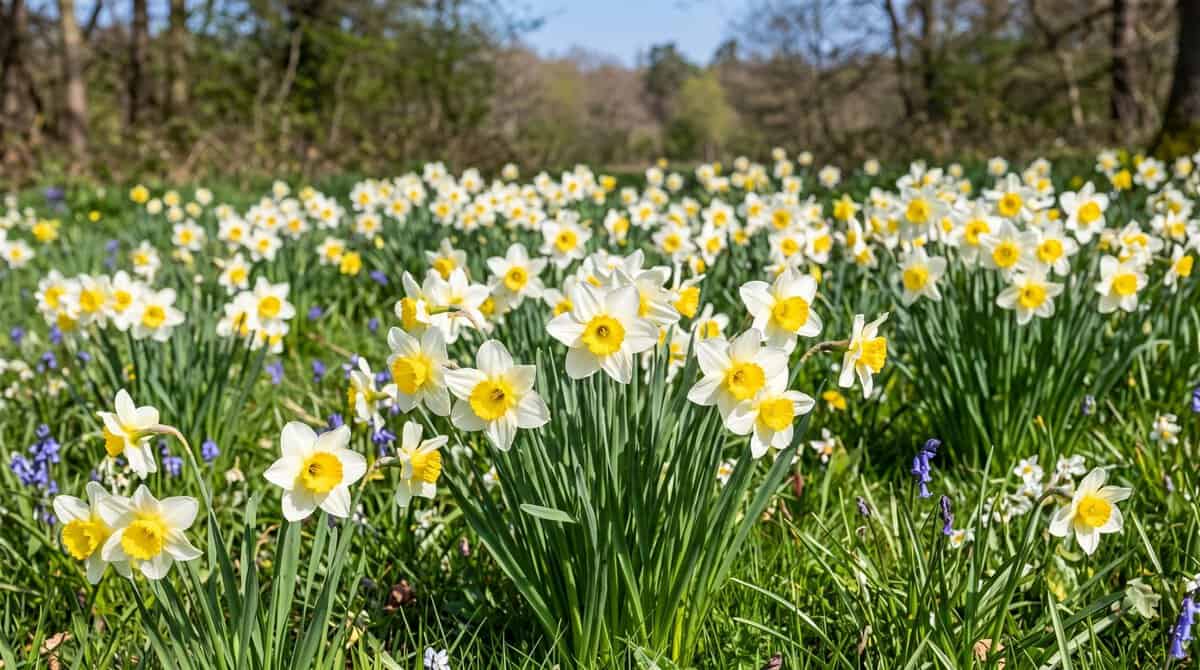
Few flowers are as closely connected with Persephone’s story as the narcissus.
According to the Homeric Hymn to Demeter, Persephone was gathering flowers with other women when an extraordinary narcissus caught her attention.
It was beautiful. Almost unnaturally beautiful. She reached for it.
Then the earth opened. Hades appeared and carried Persephone into the Underworld.
The narcissus therefore stands directly at the boundary between her old life and her new one.
One moment, Persephone is gathering flowers in a meadow.
The next, she is beginning the journey that will eventually make her queen of the dead.
That gives the narcissus an eerie beauty. It represents attraction, mystery, and the moment before everything changes.
Sometimes the most beautiful flower in the field is growing beside a hidden door.
3. Pomegranate Flower – The Blossom Behind Persephone’s Famous Fruit
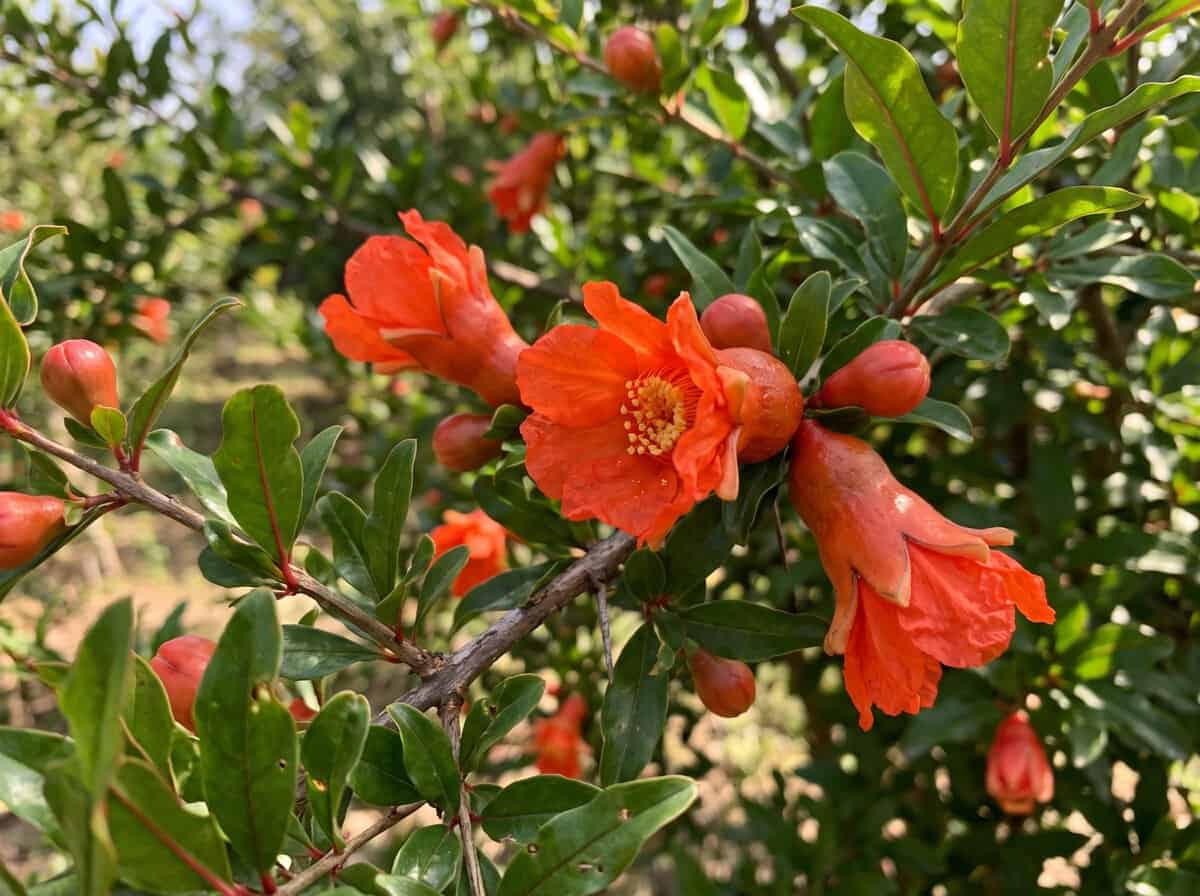
The pomegranate is famous in the story of Persephone. Its flower deserves attention too.
Pomegranate trees produce bright blossoms before the familiar red fruit develops.
That fruit becomes one of the most important symbols in the entire myth.
Persephone eats pomegranate seeds while connected with the Underworld.
Because of this, she cannot simply leave Hades forever. She must return.
The pomegranate therefore becomes a symbol of her connection with two worlds.
She belongs to the world above with Demeter. But part of her belongs below as queen beside Hades.
The flower represents the beginning of that cycle. Before the seeds. Before the fruit. Before the return.
A bright flower eventually becomes the food that ties a goddess to the land of the dead.
4. Hyacinth – The Flower Born From a Beautiful Death
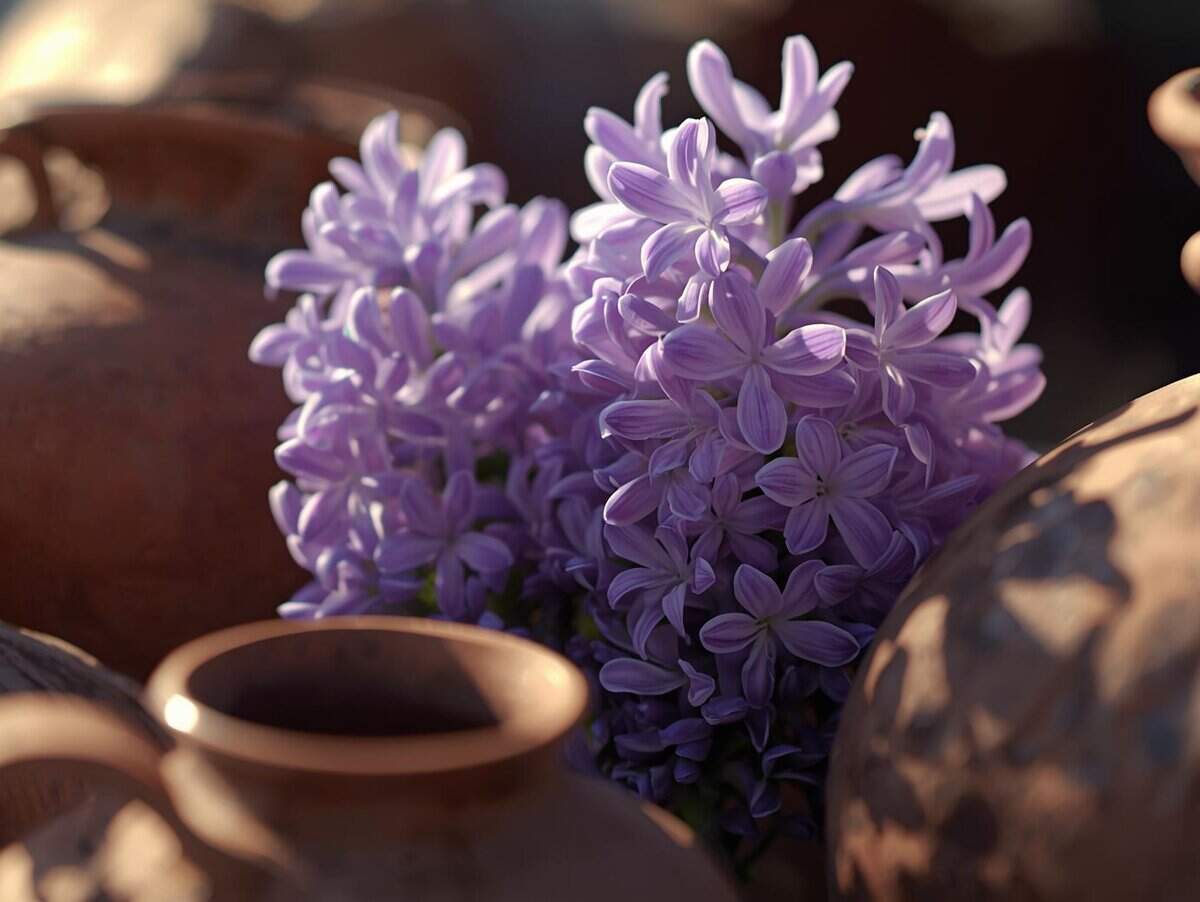
Hyacinthus was a beautiful young man loved by the god Apollo. Their story does not end happily.
Hyacinthus dies after being struck by a discus. Apollo is devastated.
But death does not completely erase the young man from the world. A flower appears from his blood.
That flower becomes the hyacinth of mythology. The story connects flowers with one of the oldest human hopes.
Something remains. A person may disappear, but memory can take another form.
The flower becomes a living reminder of someone who is no longer alive. That makes hyacinth a natural symbol of grief.
Apollo cannot undo what happened. He cannot simply bring Hyacinthus back.
But he can make sure his beloved is remembered. Every time the flower returns, so does the story.
5. Anemone – The Flower Connected With the Death of Adonis
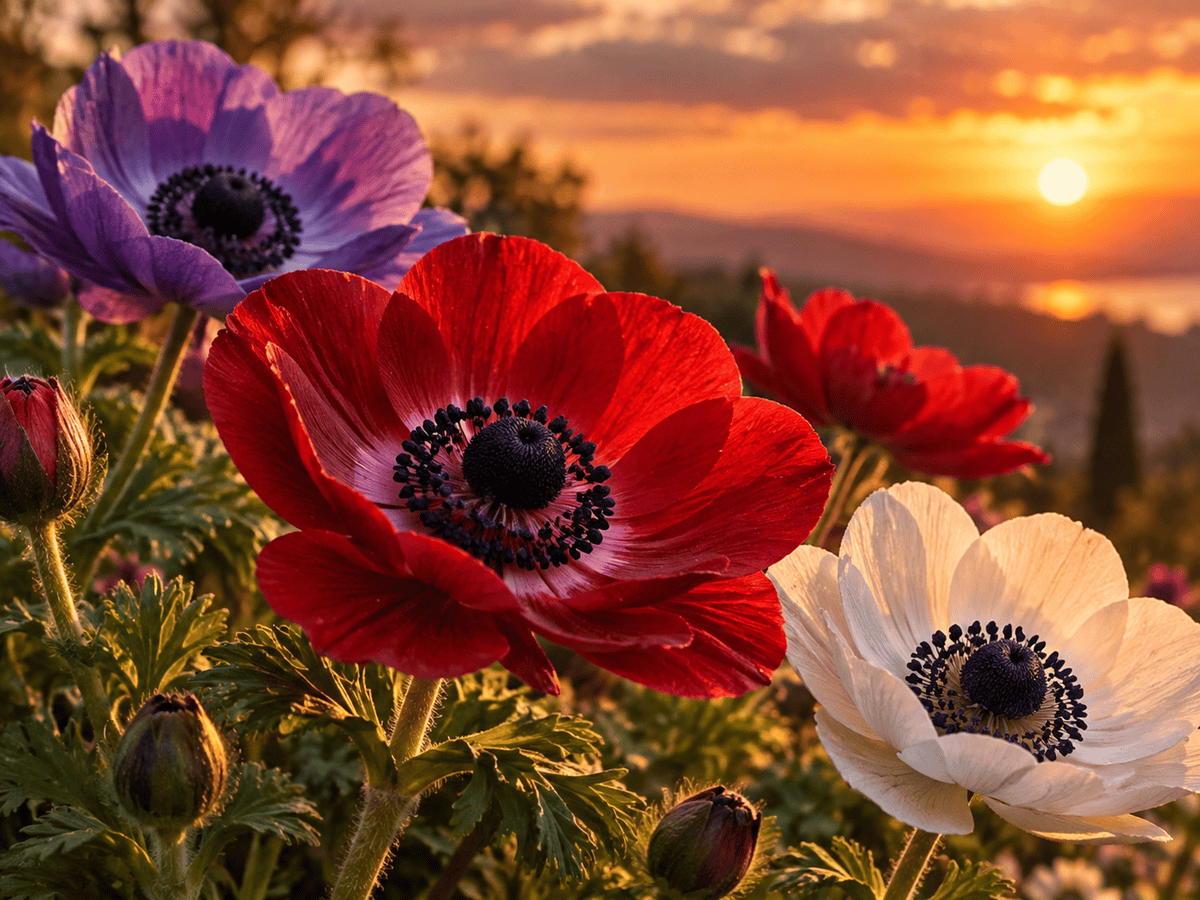
Adonis was famous for his beauty. He was also deeply loved by Aphrodite.
But his story ends with his death after an encounter with a wild boar.
Aphrodite mourns him. In one famous version of the myth, anemones grow from his blood.
A delicate flower emerges from a violent ending. That contrast is exactly what makes the story memorable.
Anemones do not last forever. Their petals can seem fragile.
This made them fitting symbols for a beautiful life that ended too quickly.
Adonis also became connected with seasonal ideas of loss and return.
His mythology developed strong links with vegetation and mourning.
So the anemone does more than remember death. It carries the idea that beauty can return even after loss.
The person is gone. But the flower appears.
6. Violet – The Flower Linked With Attis and Cybele

Violets have a darker mythological history than their gentle appearance suggests.
One important connection comes from traditions surrounding Attis and the goddess Cybele.
Attis was a beautiful young figure whose story involves love, madness, death, and mourning.
Different versions of his myth survive. In later traditions, violets become connected with his death.
They were said to spring from his blood or appear around the place where he died.
This linked the small purple flower with mourning and renewal.
The story of Attis also became connected with seasonal religious celebrations.
Death was followed by grief. But the cycle did not simply end there.
Violets returning from the earth could represent something continuing after loss.
A tiny flower becomes a reminder that the ground associated with death can still produce life.
7. Crocus – The Flower Born From Loss
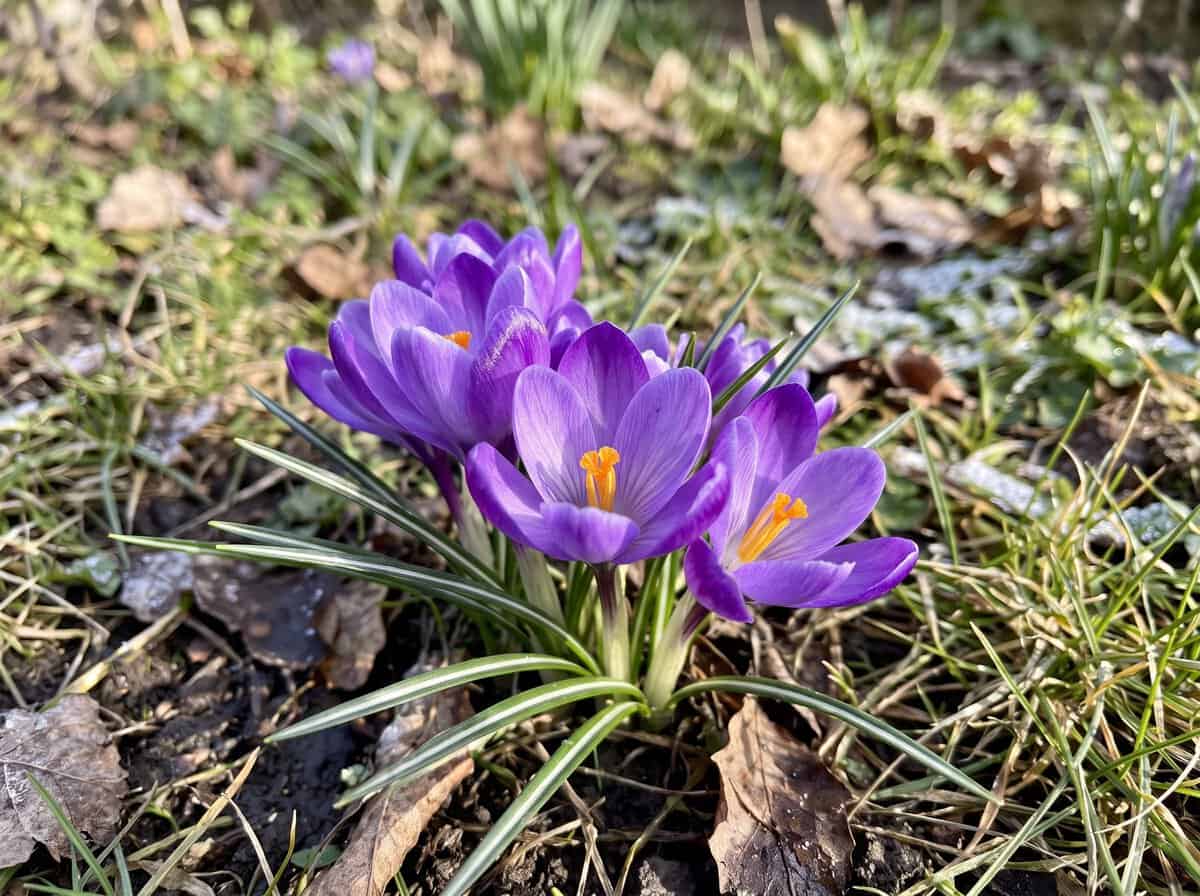
The crocus appears in more than one Greek story. One tradition tells of Crocus, a young man connected with the nymph Smilax.
Their story ends sadly. Crocus is transformed into the flower that carries his name.
Other traditions surrounding crocus flowers also connect them with divine landscapes and important mythological moments.
What makes the crocus especially fitting for this list is its relationship with transition.
Certain crocuses appear when the landscape seems almost empty.
They can emerge around the edges of colder seasons. That gives them an almost Underworld-like quality.
The flower appears when much of nature seems to be sleeping.
It pushes through the ground as though returning from somewhere hidden beneath it.
For ancient people surrounded by stories of gods who disappeared and returned, that kind of flower could carry powerful meaning.
8. Poppy – The Flower of Sleep, Night, and the Edge of Death

Poppies have long carried associations with sleep. That alone brings them close to the world of death in mythology.
Sleep and death were closely connected in Greek thought.
Hypnos, the god of sleep, and Thanatos, the personification of death, were brothers.
Their mother was Nyx, the goddess of Night. Poppies also became associated with Demeter.
According to ancient traditions, the goddess could be shown with grain and poppies.
That connection becomes especially meaningful when we remember her grief over Persephone.
Demeter’s daughter has disappeared into the Underworld. The grieving goddess searches for her while the earth itself suffers.
The poppy therefore sits between several powerful ideas. Sleep. Grief. Forgetfulness. Night.
And the strange stillness that resembles death without being death itself.
9. Rose – The Flower That Followed Aphrodite Into Grief
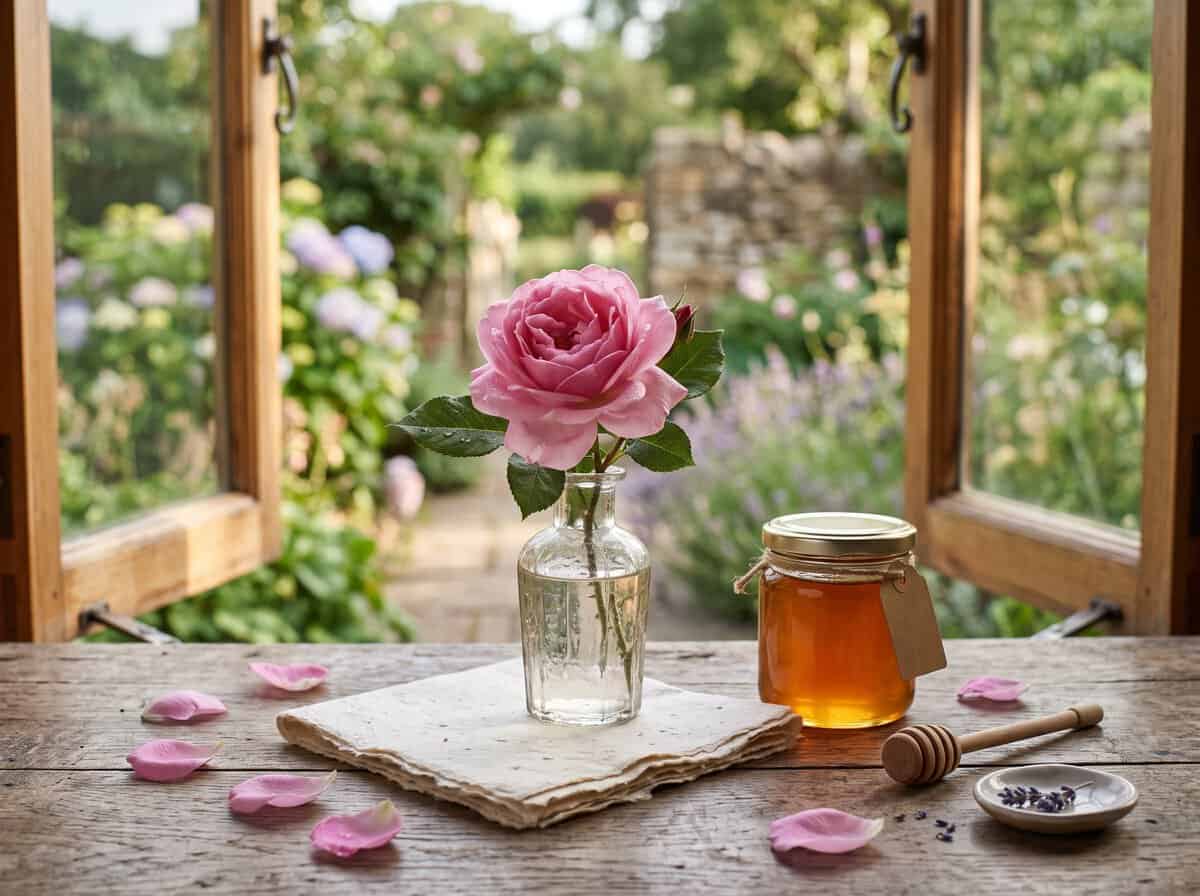
Roses are usually connected with love. But mythology repeatedly reminds us that love and grief can grow very close together.
One tradition connects the red rose with Aphrodite and the death of Adonis.
As the goddess rushes toward her dying lover, she is scratched by thorns.
Her blood colors the roses red. Other versions tell the symbolism differently.
But the connection remains powerful. The red rose becomes more than a romantic flower.
It carries pain. Aphrodite may be the goddess of love, but divine love does not protect her from grief.
That makes the rose surprisingly appropriate for the boundary between love and death.
People often think the opposite of love is death. Mythology suggests something different.
Sometimes love is exactly what makes death hurt so much. The rose carries both.
10. Cypress – The Plant That Became a Symbol of the Dead

The cypress is technically a tree rather than a flower. But no list of plants connected with the ancient Underworld feels complete without it.
The cypress became strongly associated with mourning and death in the Greek and Roman worlds.
Its mythological story is connected with Cyparissus. He was a beautiful young man loved by Apollo.
Cyparissus accidentally killed a beloved stag and became overwhelmed with grief.
He wanted to mourn forever. Eventually, he was transformed into a cypress tree.
The tree became a lasting symbol of sorrow. Their tall, dark shapes still appear in graveyards across the Mediterranean today.
Unlike a flower that blooms briefly and disappears, the cypress remains. That makes its message different.
Asphodel belongs to the dead. Narcissus marks Persephone’s descent.
Hyacinth and anemone preserve people lost too soon. But the cypress stands quietly beside the boundary. It remembers.

Siempre sentí una fuerte conexión con lo Divino desde mi nacimiento. Como autora y mentora, mi misión es ayudar a los demás a encontrar el amor, la felicidad y la fuerza interior en los momentos más oscuros.