
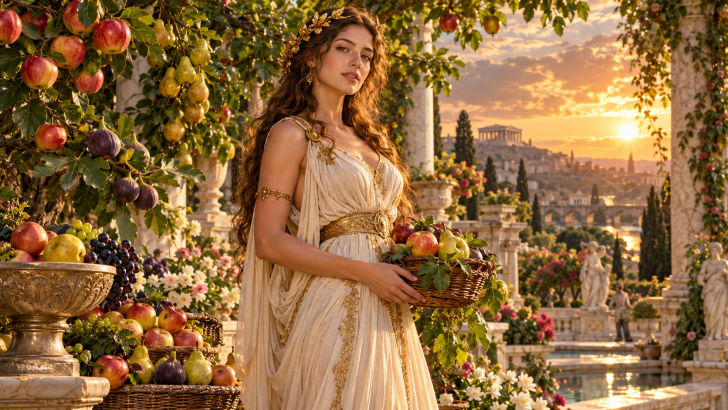
Ancient Rome had gods and goddesses for almost everything. There were deities connected with love, war, the sea, the harvest, and even the doors of a house.
But one goddess had a particularly beautiful responsibility. She looked after fruit trees.
Her name was Pomona, and she was the Roman goddess of orchards, fruit, and the careful cultivation of trees.
Unlike some Roman goddesses, Pomona was not famous for dramatic battles or complicated family arguments.
Her world was filled with apples, pears, gardens, and branches heavy with ripe fruit. But that does not mean her mythology was boring.
Pomona had her own sacred grove, attracted the attention of several woodland gods, and became the central figure in a fascinating story about love and transformation.
Her name also survived long after the ancient Roman religion disappeared.
Here are ten interesting things you probably didn’t know about Pomona, the Roman goddess of fruit.
1. Pomona Was Not Actually the Goddess of Every Harvest
When people hear that Pomona was a fruit goddess, they sometimes assume she ruled over all farming.
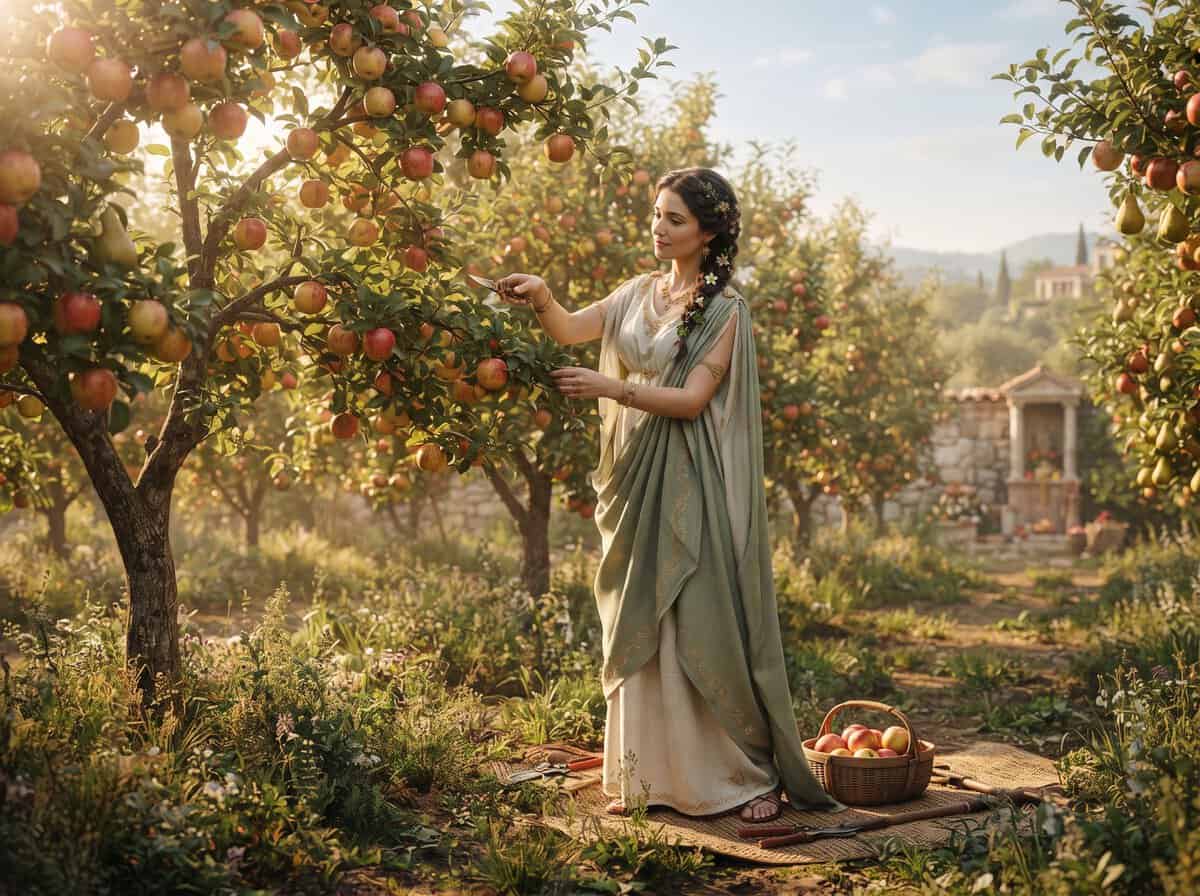
But her responsibilities were much more specific. Pomona was particularly associated with cultivated fruit trees and orchards.
That made her different from Ceres, the Roman goddess connected with grain and agriculture.
Ceres watched over crops that helped feed entire communities. Pomona’s special concern was the fruit growing on trees.
Apples, pears, and other orchard fruits belonged to her world. The Roman poet Ovid makes this distinction in his Metamorphoses.
He describes Pomona as a goddess who cared more about cultivated trees than forests, rivers, or open fields.
She loved the work of tending an orchard. Pruning branches, encouraging healthy growth, and protecting ripening fruit were all part of her divine identity.
This makes Pomona an unusually practical goddess. Her power was not only about making plants grow.
It was about helping them grow well. And anyone who has cared for a fruit tree knows that there is a difference.
2. Her Name Is Connected to the Latin Word for Fruit
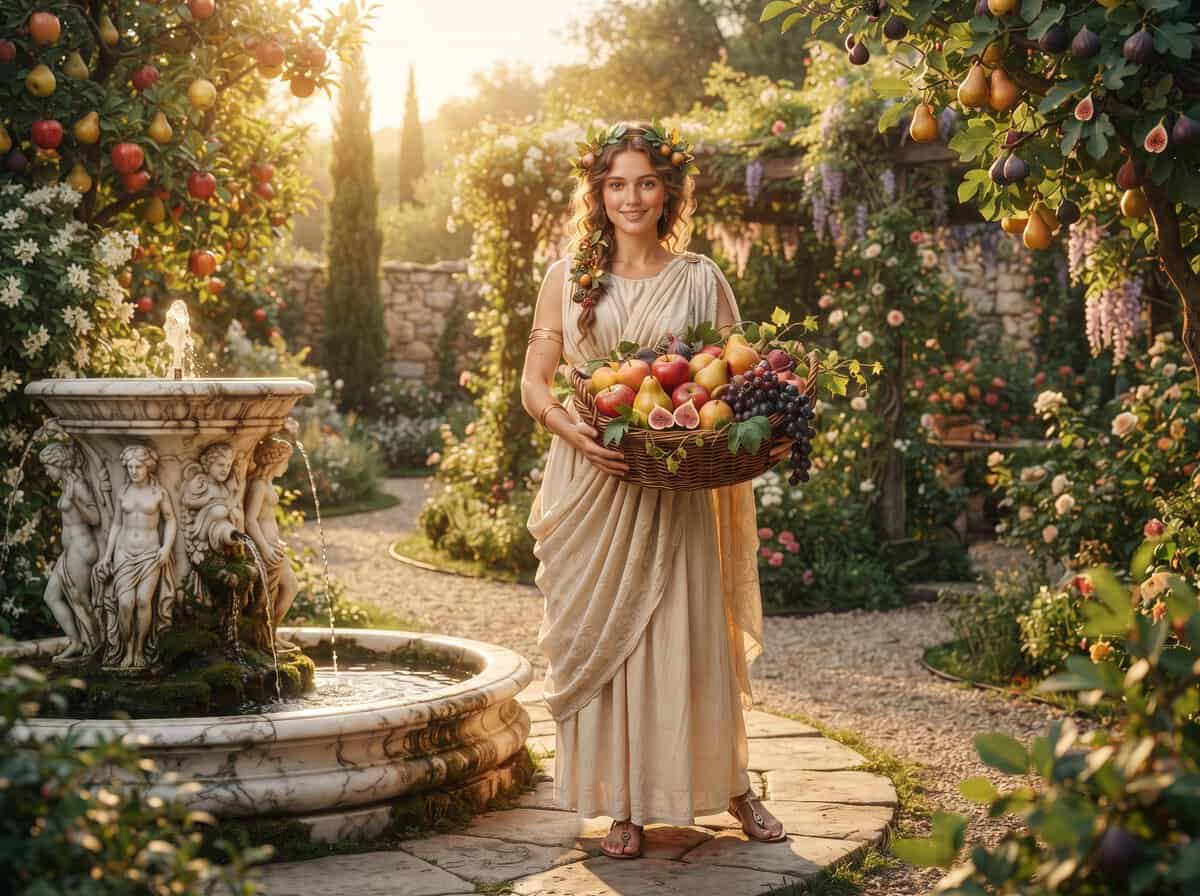
Pomona’s name tells us almost everything about her divine responsibility. It comes from the Latin word pomum, meaning fruit, especially the fruit of a tree.
The plural form, poma, referred to fruits more generally. This connection makes her name particularly appropriate.
She was quite literally the goddess of fruit. Interestingly, the Latin word also left traces in later European languages.
The French word pomme, meaning apple, developed from the same Latin source.
That is why Pomona’s name may sound familiar even to people who have never studied Roman mythology.
But there is an important difference. Pomona was not exclusively an apple goddess.
Apples became one of her most recognizable symbols, especially in later art. However, her ancient role included the wider world of cultivated fruit trees.
Pears, figs, and other orchard fruits could all fit within her domain. Her true kingdom was the entire orchard.
So although a beautiful apple is a perfect symbol for Pomona, it represents only one part of her responsibilities.
3. Pomona Was One of the Roman Numina
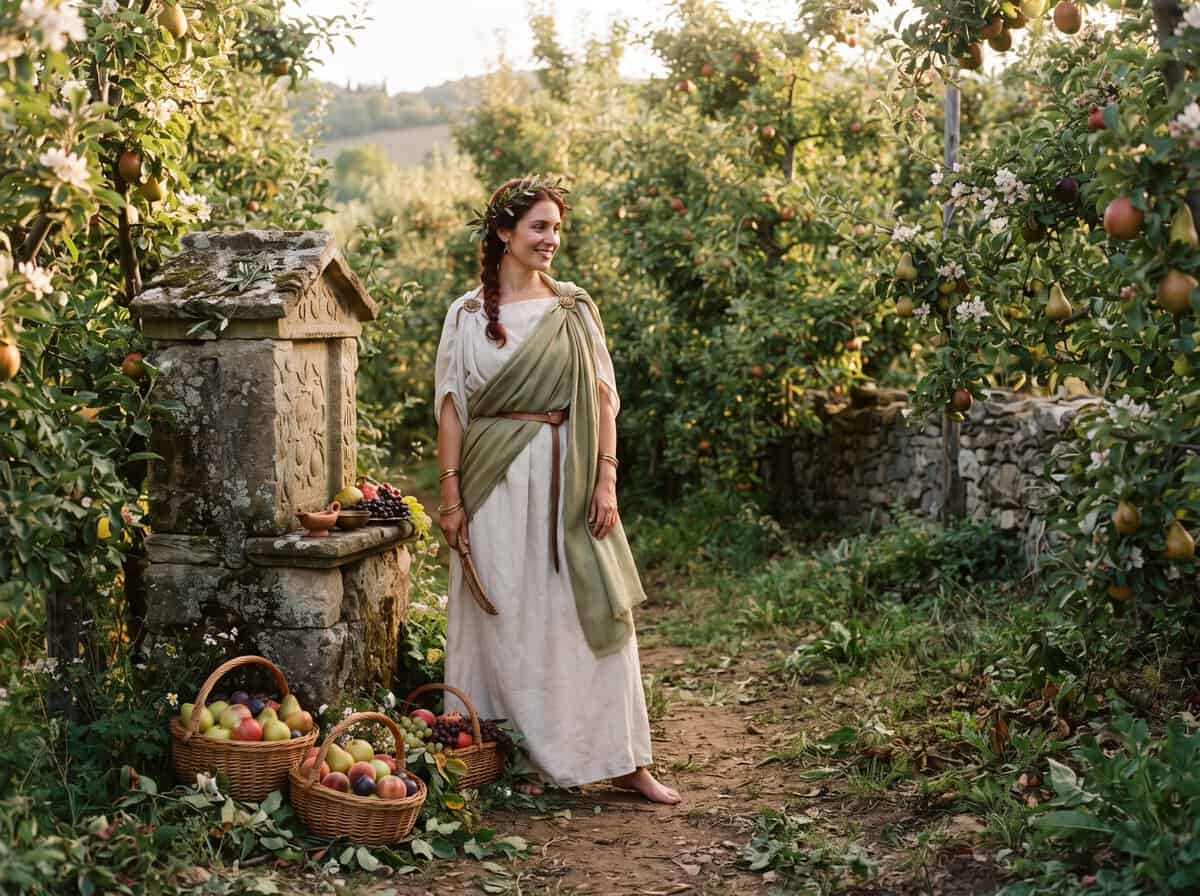
Before Roman mythology became filled with elaborate stories resembling those of the Greeks, Romans honored many divine powers connected with particular parts of life.
These powers are often discussed using the Latin term numina. They could be associated with natural processes, places, household activities, or agricultural work.
Pomona fits comfortably into this religious world. Her identity was closely connected with a specific responsibility.
Protecting and encouraging fruit cultivation. She did not need an enormous palace on Mount Olympus to be important.
Her presence could be imagined in an orchard where the trees were healthy, and the branches were full.
This also helps explain why Pomona has fewer surviving myths than goddesses such as Venus or Diana.
Her importance was originally connected with worship and agricultural life rather than dramatic adventures.
For ancient people who depended on the success of their crops, however, that was hardly a small responsibility.
A healthy orchard could provide food, valuable produce, and a sense of security. Pomona represented the divine care behind that abundance.
4. She Had Her Own Priest in Ancient Rome
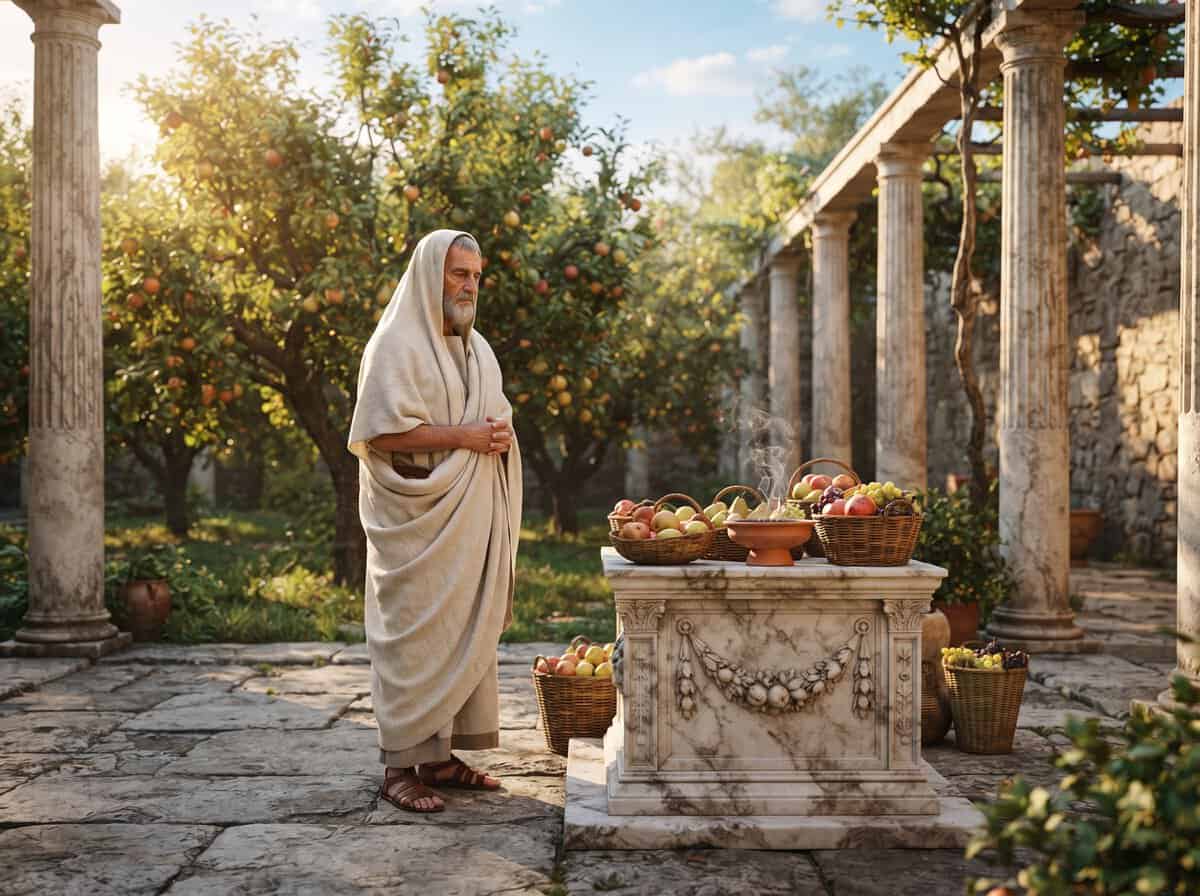
Pomona was important enough to have a priestly office associated with her worship. The priest was known as the flamen Pomonalis.
In ancient Rome, a flamen was a priest assigned to the service of a particular deity.
Some flamines served major gods, while others were connected with older Roman divinities whose worship reached far back into Roman religious history.
Pomona’s priest belonged to this traditional religious system. That is a fascinating detail because so little information survives about her actual ceremonies.
We know the priestly office existed. But the specific rituals performed in her honor are not well documented.
Perhaps offerings were connected with orchard produce. Maybe certain ceremonies marked important moments in fruit cultivation.
Those possibilities are tempting, but the surviving evidence does not allow us to describe them with certainty.
What matters is that Pomona was not simply a poetic character invented for a love story. She had a recognized place in Roman religion.
And her own priestly office shows that fruit cultivation was important enough to receive divine attention.
5. Pomona Preferred Her Orchard to Romantic Attention
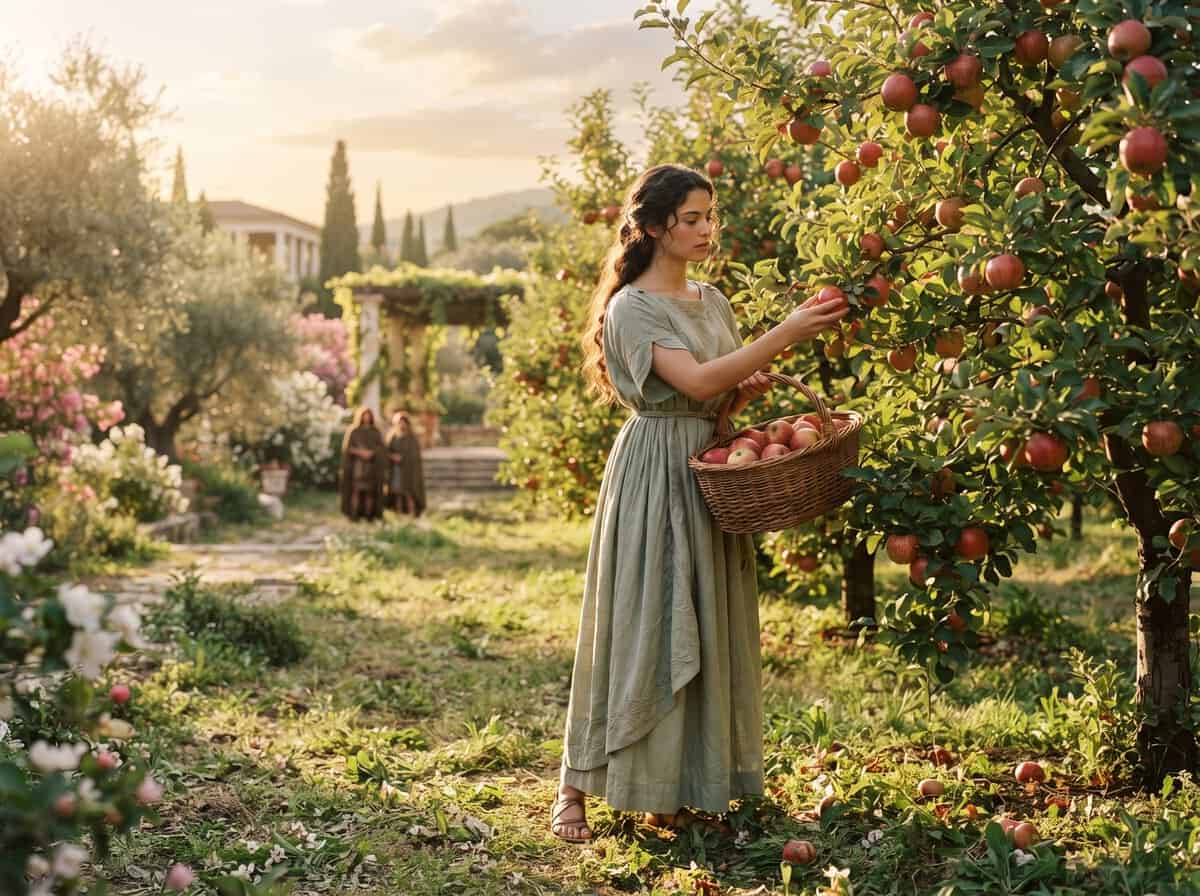
One of the most charming things about Pomona is how much she loved her work. According to Ovid, she was devoted to caring for fruit trees.
She spent her time cultivating plants, tending branches, and enjoying the beauty of her orchard.
Romance was not her main concern. In fact, she avoided the woodland gods who tried to pursue her.
Ovid mentions several figures attracted to Pomona, including satyrs and other rustic deities.
But she was not interested in their attention. She preferred the peace of her garden.
This makes her different from many female figures in classical mythology whose stories revolve almost entirely around marriage or romantic relationships.
Pomona already had something she loved. Her orchard. And she was perfectly happy spending her time there.
There is something wonderfully relatable about that. Imagine being a goddess surrounded by beautiful fruit trees, only to have visitors constantly interrupting your gardening.
Pomona’s priorities were clear. The trees needed attention. Romance could wait.
6. Vertumnus Fell in Love With Her and Changed His Appearance
Pomona’s most famous myth involves Vertumnus. He was a Roman god associated with change, seasonal transformation, and the changing appearance of plants.
That made him a natural figure to appear in a story about an orchard goddess. According to Ovid, Vertumnus fell deeply in love with Pomona.
Unfortunately for him, she was not interested in his romantic advances. So he tried approaching her in different disguises.
He appeared as various people connected with rural life, hoping one of those appearances would help him get close to her.
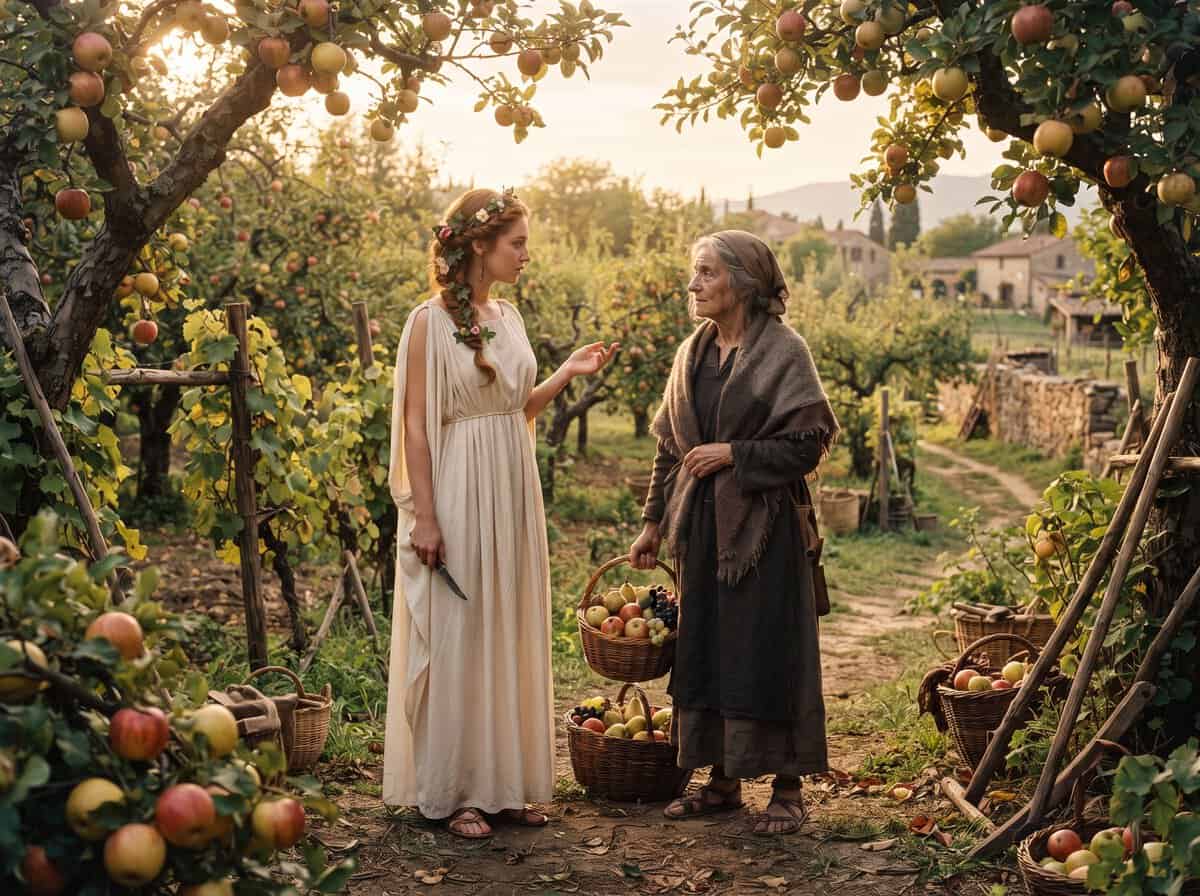
Eventually, he chose the disguise of an elderly woman. This allowed him to enter Pomona’s garden and speak with her.
But Vertumnus did not immediately reveal who he was. Instead, he began offering advice about love and marriage.
He praised Vertumnus as a suitable partner, even though he was secretly talking about himself. It is one of the stranger courtship stories in Roman mythology.
A god who can change his appearance decides that the best way to impress someone is to pretend to be an elderly woman recommending him as a husband.
Ancient mythology certainly had some unusual romantic strategies.
7. A Story About an Elm Tree and a Vine Helped Persuade Her
While disguised as an elderly woman, Vertumnus tried to convince Pomona that love and companionship were important.
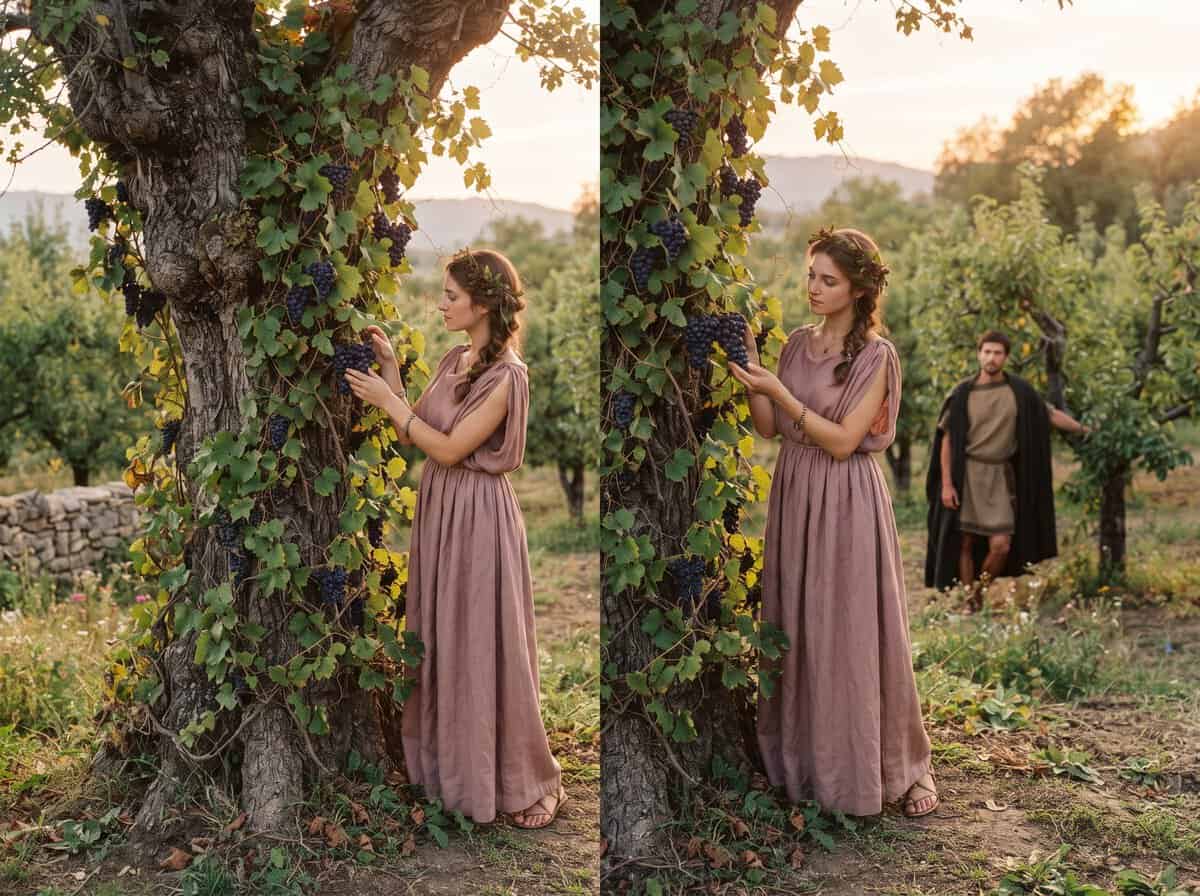
He used an example from the natural world. An elm tree supporting a climbing vine.
In ancient Roman agricultural imagery, vines were often trained to grow around trees. Ovid uses this familiar sight as a symbol of partnership.
The vine benefits from the support of the tree, while the combined plants create a picture of growth and abundance.
Vertumnus argues that Pomona should consider a relationship in the same way.
He also tells her a cautionary story about a woman who rejected a devoted admirer, attempting to influence her decision.
The entire conversation is designed to persuade Pomona to accept him.
Eventually, Vertumnus reveals his true appearance. Ovid’s story ends with Pomona becoming receptive to him.
Modern readers may notice that his disguises and persistence raise questions about respecting another person’s wishes.
But the story also reveals how Roman poets used gardens and cultivated plants to explore human relationships.
The orchard was not simply a beautiful background. Its trees and vines became part of the language of love.
8. She Was Often Shown Carrying Fruit or Gardening Tools
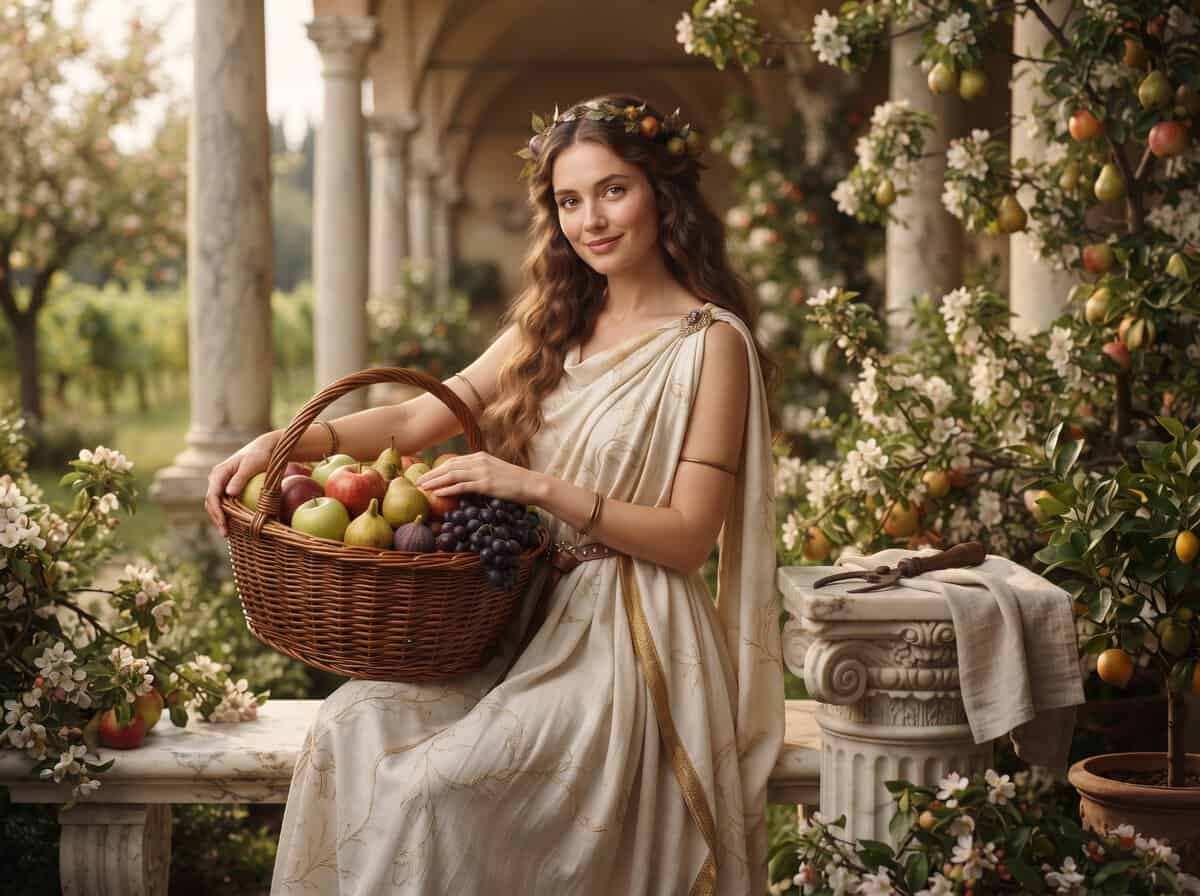
Pomona is usually easy to recognize in classical and later European art. She is often portrayed as a young woman surrounded by fruit.
Sometimes she carries a basket overflowing with apples, pears, and grapes.
Other artworks show her holding a pruning knife or standing among carefully cultivated trees.
These objects reveal different sides of her identity. The fruit represents abundance. The orchard represents fertility and growth.
And the pruning tool represents the work needed to produce a successful harvest. That last symbol is especially interesting.
Pomona was not simply a goddess who made fruit appear through divine power. She was associated with cultivation.
Her imagery recognizes that abundance often requires patience and care. A fruit tree must be planted.
Its branches need attention. And the harvest arrives only after a period of growth.
That makes Pomona a beautiful symbol of rewards that develop gradually.
Her fruit is valuable not only because it is delicious. It represents the result of careful attention over time.
9. Pomona Became Connected With Autumn and Harvest Celebrations
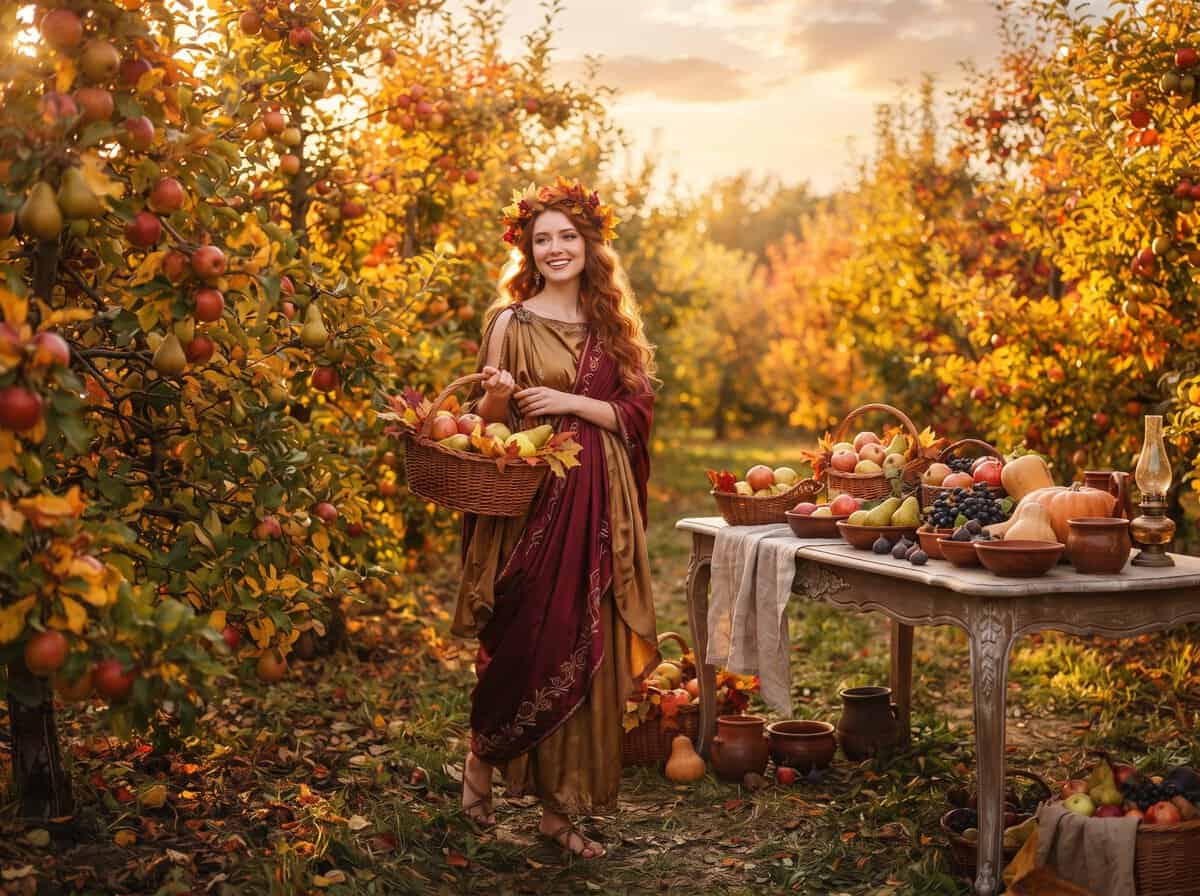
Pomona’s connection with ripe fruit naturally made her a symbol of autumn.
This association became especially popular in later European art and literature.
She was often portrayed with baskets of apples, pears, and other fruits gathered during the harvest season.
Over time, Pomona also became linked in popular writing with Halloween.
You may come across claims that an ancient Roman festival dedicated to her directly influenced Halloween celebrations.
However, there is no strong historical evidence for a specific Pomona festival being the origin of Halloween.
The familiar story appears largely in later explanations that attempted to connect different autumn traditions.
Still, the association is easy to understand. Autumn is the season of ripening apples, gathering fruit, and preparing for winter.
Those activities fit Pomona’s symbolism beautifully. And apples themselves became important in various European autumn customs.
So although the historical connection is often exaggerated, Pomona remains a fitting mythological figure for the season.
She represents the moment when months of growth finally become something people can gather and enjoy.
10. Pomona’s Name Still Lives On Today
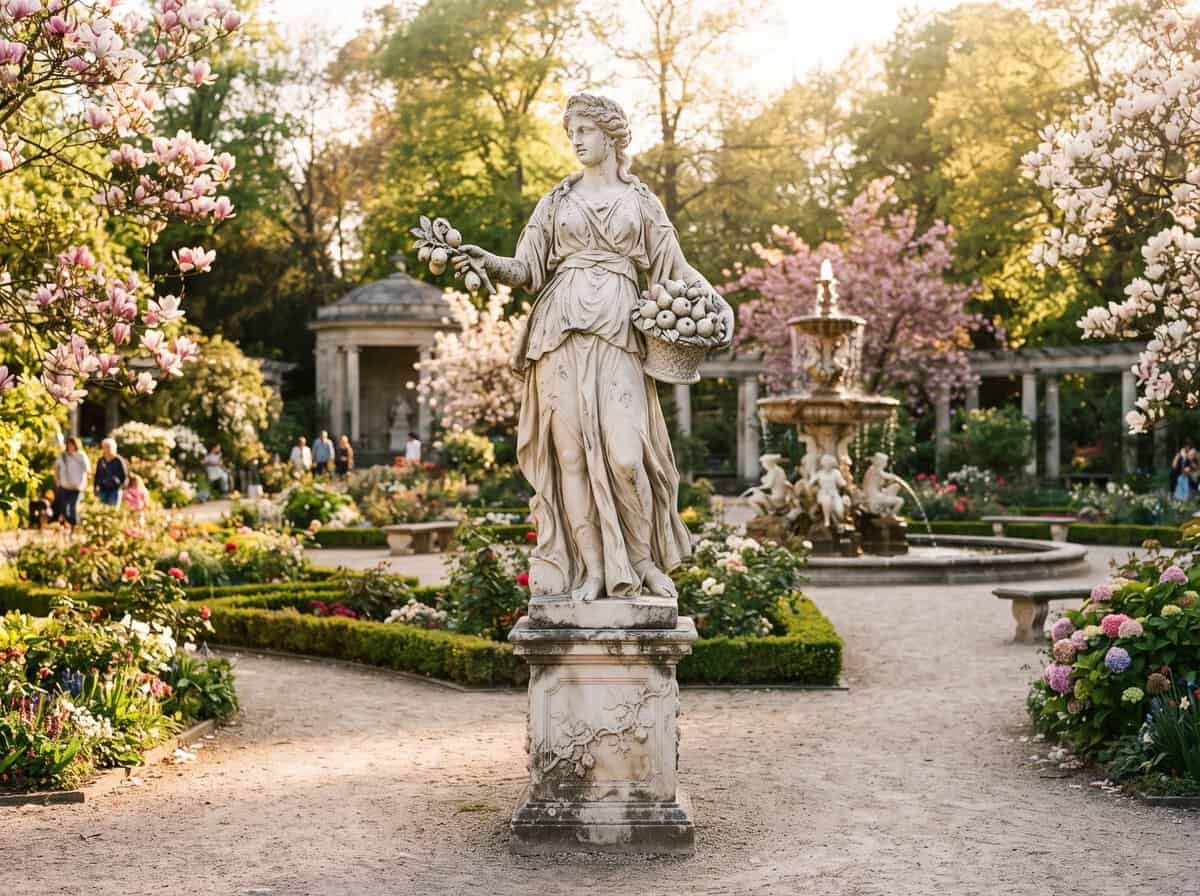
Pomona may not be as famous as Venus, Minerva, or Diana. But her name has survived in some surprisingly visible places.
One example is Pomona, California. The city was named after the Roman goddess of fruit, reflecting the agricultural importance.
Pomona also appears in the name of Pomona College, a well-known educational institution in California.
Her name has been used for gardens, agricultural organizations, and artworks celebrating fruit cultivation.
And her image continues to appear in paintings and sculptures inspired by classical mythology.
That is quite a legacy for a goddess whose greatest passion was looking after trees. But perhaps it makes sense.
Pomona represents something people have valued throughout history.
The ability to plant something small, care for it, and eventually enjoy the results.
Her mythology is not filled with thunderbolts or enormous battles.
Instead, it celebrates patience, growth, and the beauty of ordinary abundance. And that may be what makes Pomona so memorable.
She reminds us that even gods and goddesses did not always need dramatic adventures to have an important purpose. Sometimes tending a garden was divine work enough.

Siempre sentí una fuerte conexión con lo Divino desde mi nacimiento. Como autora y mentora, mi misión es ayudar a los demás a encontrar el amor, la felicidad y la fuerza interior en los momentos más oscuros.