

Nicolas Flamel is one of the most mysterious figures in history, a man whose name has become synonymous with alchemy, secret knowledge, and the legendary Philosopher’s Stone.
According to legend, the Philosopher’s Stone could turn ordinary metals into gold and even grant eternal life.
While some parts of Flamel’s life are documented in historical records, much of what people know about him comes from myths that developed centuries after his death.
His story blends reality with imagination, creating a figure who has fascinated scholars, writers, and adventurers for hundreds of years.
But who was Nicolas Flamel, and why does his name continue to intrigue the world?
The Life of a Parisian Scribe

Nicolas Flamel was born in France around 1330, during a time of social change and intellectual curiosity. Paris was a bustling city of scholars, merchants, and religious institutions.
Flamel worked as a scribe and a seller of rare manuscripts, a position that allowed him access to knowledge and texts few could see.
Historical records confirm that he was wealthy and respected, yet they provide little evidence about his legendary alchemical achievements.
Flamel married Perenelle, a woman who shared his interest in charitable works and possibly in mystical practices.
Together, they donated generously to churches, hospitals, and public projects, earning admiration and respect from their community.
Some historians suggest that Flamel’s wealth may have contributed to rumors about his secret knowledge.
The combination of wealth, intelligence, and generosity made him a perfect subject for legends, and it was only a matter of time before stories about alchemy and immortality were attached to his name.
During his lifetime, Flamel was also known for his deep curiosity about the natural and spiritual world.
He reportedly studied rare texts and sought wisdom from ancient traditions, combining his understanding of science, religion, and philosophy.
In a society where knowledge was closely guarded, his position gave him an aura of mystery.
Many believe that his quiet life and scholarly pursuits allowed legends to grow in the shadows, making him appear more extraordinary than he may have been in reality.
The Quest for the Philosopher’s Stone
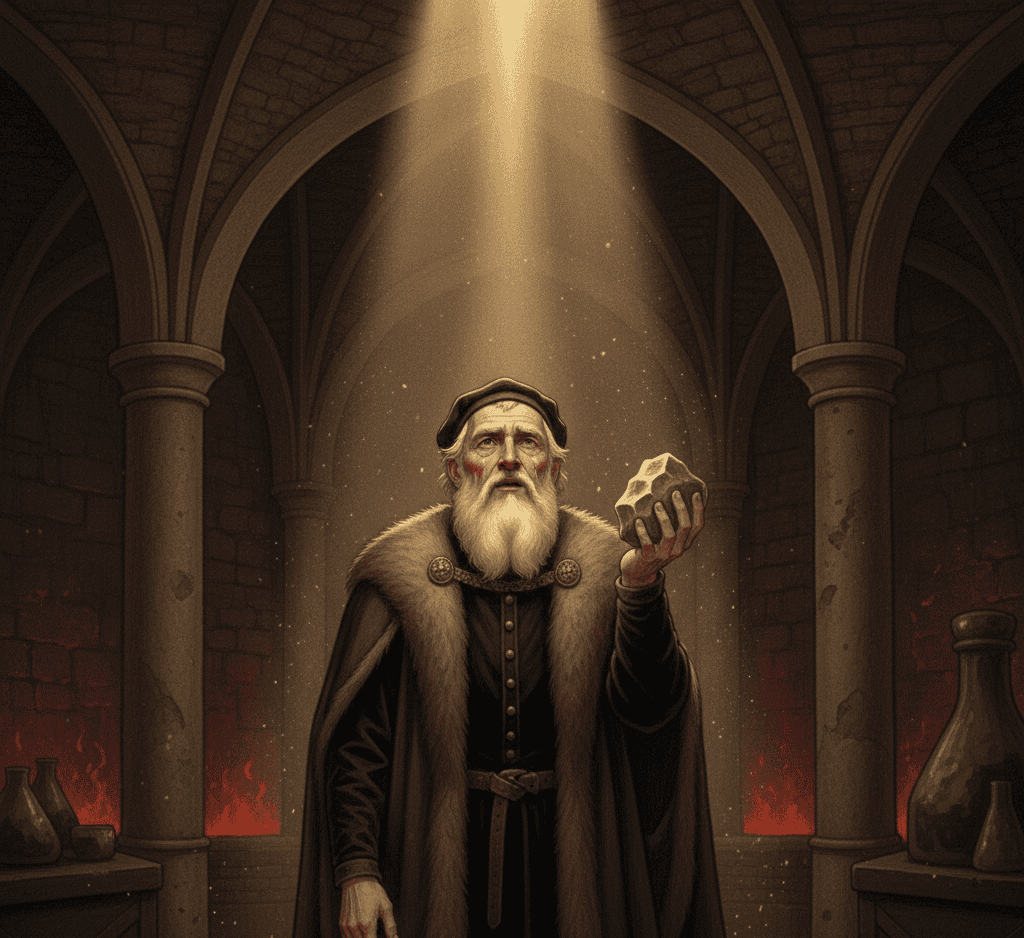
The Philosopher’s Stone is central to Flamel’s legend. In alchemy, it was said to transform base metals into gold and grant eternal life.
For centuries, alchemists pursued this ultimate goal, believing it could unlock the secrets of the universe.
Flamel’s name became linked to this quest through stories claiming he discovered ancient texts, decoded secret symbols, and performed rituals that allowed him to create the Stone.
While there is no proof that Flamel succeeded, the legend captures the imagination because it represents a universal human desire: the hope to transform the ordinary into the extraordinary.
The Philosopher’s Stone was not just a material object. It symbolized spiritual enlightenment, wisdom, and self-transformation.
Many alchemists saw the pursuit of the Stone as a journey toward understanding the hidden forces of life itself.
Flamel’s story embodies this pursuit, showing how curiosity, dedication, and courage can become immortalized through legend, even centuries after a person has died.
Some accounts also suggest that Flamel and Perenelle used the Stone to extend their lives.
According to these tales, they lived far beyond a normal lifespan, traveling and continuing their studies while others passed away.
These stories, though unproven, contributed to Flamel’s reputation as a figure who had stepped beyond the boundaries of ordinary human experience, creating a legend that still inspires curiosity today.
Manuscripts and Hidden Knowledge

Much of Flamel’s fame comes from manuscripts attributed to him, filled with cryptic symbols, diagrams, and coded instructions that supposedly reveal the secrets of the Philosopher’s Stone.
Some of these texts survive today, but scholars debate whether Flamel wrote them or if they were later falsely attributed to him.
These manuscripts contain intricate alchemical recipes, mystical illustrations, and philosophical reflections on life, death, and transformation.
Legends say that Flamel spent decades deciphering these texts, working in the shadows to uncover hidden knowledge.
Readers and seekers over the centuries have studied these manuscripts, hoping to replicate his discoveries.
Some stories even suggest that Flamel left clues for future generations, turning his life into a puzzle that blends history with mystery.
His manuscripts also reflect the spiritual dimension of alchemy. Alchemists did not simply seek gold.
They searched for wisdom, moral insight, and an understanding of the universe.
In this sense, the writings attributed to Flamel serve as both guides and symbols, representing the human longing to uncover hidden truths.
The manuscripts help explain why Flamel’s story has endured, bridging the gap between historical fact and imaginative legend.
Perenelle Flamel and the Mystical Partnership

Flamel’s wife, Perenelle, plays a vital role in the legend. Historical records suggest she was wealthy in her own right and supported charitable projects alongside her husband.
In folklore, she is often portrayed as Flamel’s partner in alchemy, assisting in experiments and sharing in the mystical quest.
Some tales even suggest that she contributed key knowledge that allowed Flamel to understand the Philosopher’s Stone.
The partnership between Nicolas and Perenelle adds depth to the legend. Together, they represent collaboration, curiosity, and the blending of intellect with imagination.
Stories about their joint work illustrate how myths can combine personal relationships with grand achievements.
The idea of a husband and wife working together to unlock the secrets of the universe adds a human touch to an otherwise mystical narrative.
Legends and Cultural Influence

Flamel’s story has inspired countless works of fiction, films, and video games. He appears as a wise, mysterious figure who holds secrets that can change the world.
Tales often describe him traveling through shadows, decoding ancient texts, and facing danger in pursuit of knowledge.
In these stories, Flamel embodies the archetype of the seeker. He is someone willing to take risks, explore the unknown, and face challenges for the sake of discovery.
Beyond fiction, Flamel’s legend encourages reflection on human ambition and curiosity. The desire for immortality, secret knowledge, and transformation is universal.
His life illustrates how historical figures can become symbols of larger ideas, bridging history with imagination.
People continue to be drawn to Flamel’s story because it combines historical fact, mystical possibility, and the allure of hidden knowledge.
His legend reminds us that some mysteries remain compelling because they invite us to wonder, explore, and imagine what lies just beyond the ordinary.

Siempre sentí una fuerte conexión con lo Divino desde mi nacimiento. Como autora y mentora, mi misión es ayudar a los demás a encontrar el amor, la felicidad y la fuerza interior en los momentos más oscuros.