
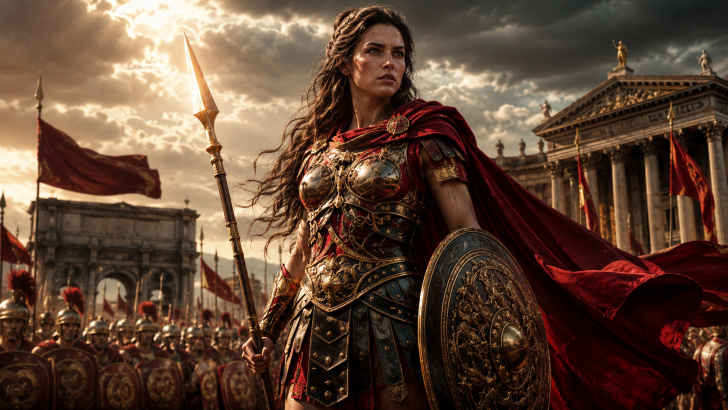
When people think of Roman mythology, they usually remember Jupiter, Venus, Mars, or Minerva.
Yet one of Rome’s most powerful goddesses was Bellona, a fearless deity whose name became almost synonymous with war.
Bellona represented the chaos, courage, and determination that came with battle.
Roman soldiers, generals, and political leaders honored her before military campaigns, hoping for victory and protection.
Although she is less well known today than Mars, the god of war, Bellona held an important place in Roman religion for centuries.
Her story reveals just how seriously the Romans viewed warfare and the gods they believed watched over it.
Here are eight fascinating facts about Bellona, Rome’s goddess of war.
1. Bellona Was the Roman Goddess of War
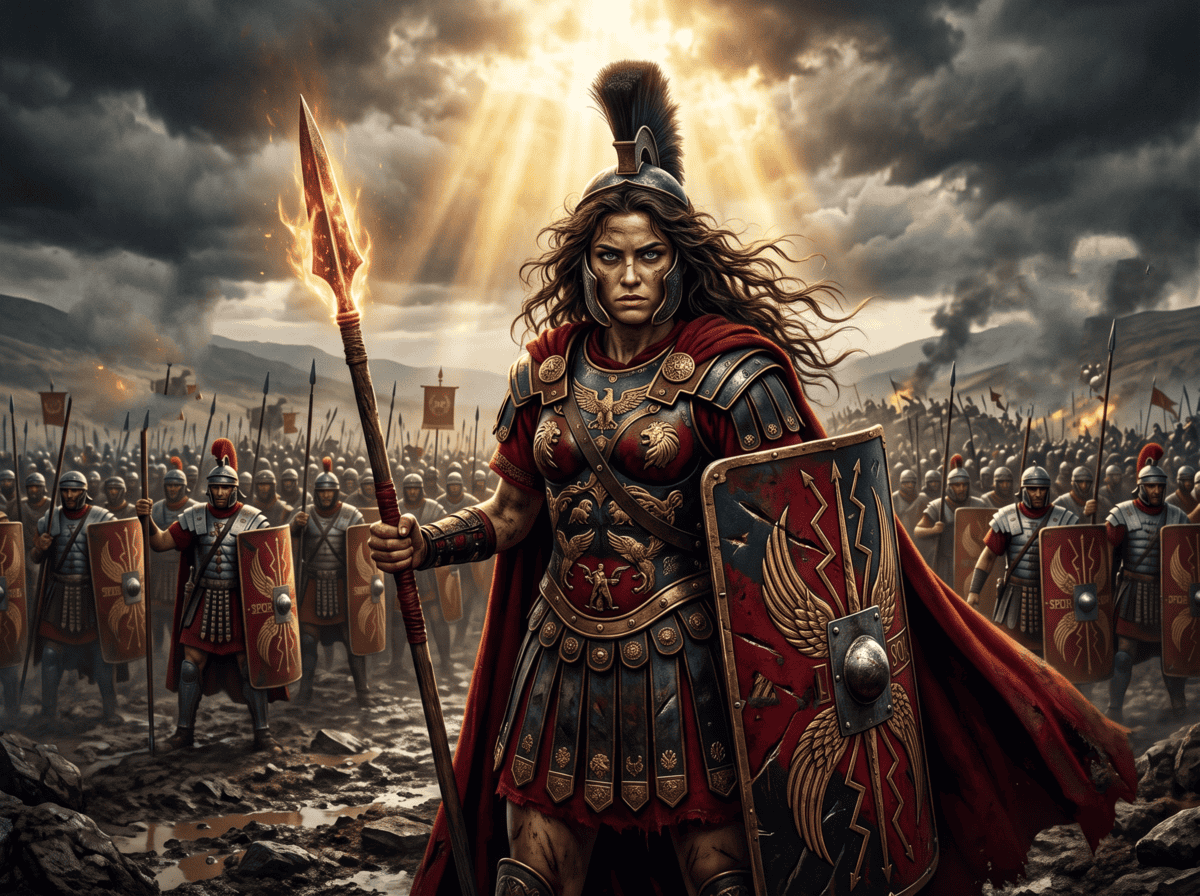
Bellona was one of the primary deities associated with war in ancient Rome.
While Mars represented many aspects of military strength and even agriculture in early Roman religion, Bellona focused almost entirely on the fierce reality of battle.
She symbolized courage, determination, and the willingness to face danger.
For Roman soldiers preparing to march into unknown territory, Bellona represented the strength needed to confront fear.
Her presence reminded warriors that victory required both bravery and discipline.
Because war played such an important role in Roman history, Bellona became one of the empire’s most respected military deities.
Her reputation spread throughout the Roman world, and countless soldiers believed that honoring her before battle could bring confidence, strength, and the determination needed to overcome even the most difficult enemies.
2. She Was Closely Connected to Mars
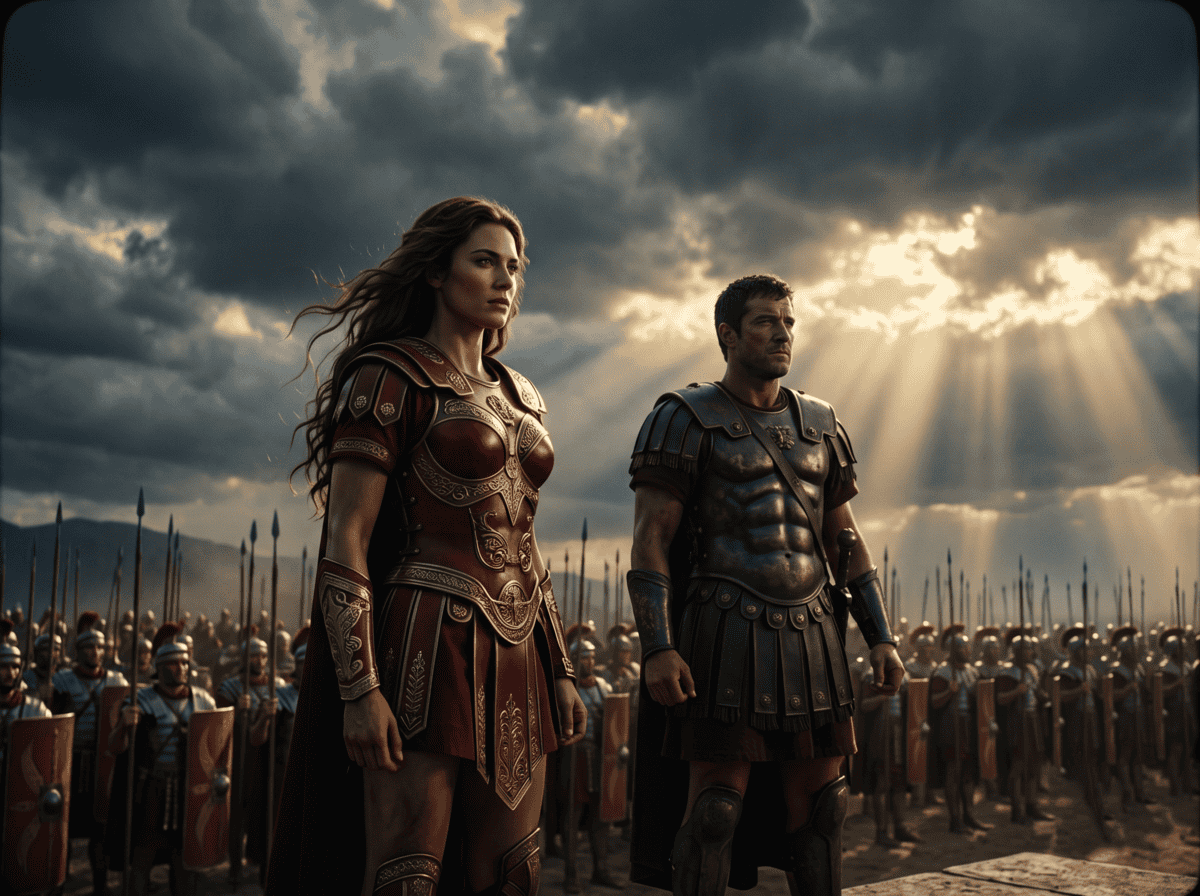
Bellona shared a strong connection with Mars, the Roman god of war. Ancient writers described her in different ways.
Some called her Mars’s sister, while others considered her his wife or companion.
Although these traditions varied, they all emphasized the close relationship between the two deities.
Together they represented the power and determination of Rome’s armies.
While Mars often symbolized military might as a whole, Bellona embodied the intensity and fury of combat itself.
Their partnership reflected the Romans’ belief that both gods and goddesses played important roles in protecting the empire.
The two deities were sometimes honored during the same religious ceremonies, reinforcing the idea that victory depended on both strength and fearless determination when facing the uncertainty of war.
3. Roman Generals Honored Her Before Battle
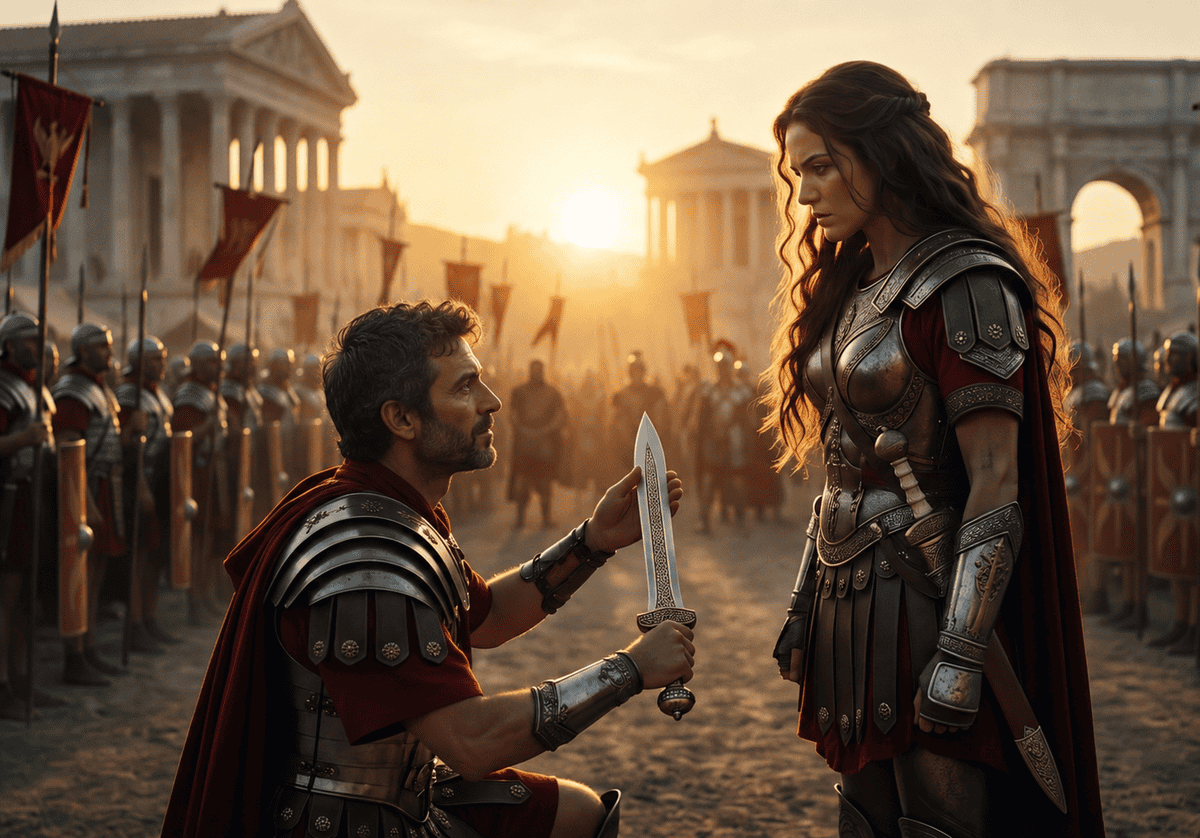
Before beginning military campaigns, Roman leaders often sought Bellona’s favor.
Victorious battles depended on careful planning, skilled leadership, and loyal soldiers, but many Romans also believed divine support was essential.
Offerings and prayers were made in hopes that Bellona would grant courage and success. Bellona became a symbol of confidence during uncertain times.
After important victories, generals sometimes returned to thank the goddess for her protection.
These ceremonies reflected the Roman belief that military achievements were connected not only to human effort but also to the blessings of the gods.
Many commanders believed that showing respect to the goddess before battle demonstrated humility as well as courage, reminding soldiers that even the greatest armies depended on both preparation and divine favor.
4. She Had an Important Temple in Rome

Bellona’s temple stood just outside the city of Rome near the Campus Martius, an area closely associated with military activities.
Its location made it especially significant. The Roman Senate held certain meetings at Bellona’s temple.
Foreign ambassadors were sometimes received there instead of inside the city, particularly when discussions involved war or military alliances.
Rather than serving only as a place of worship, it became closely connected to some of the empire’s most important military decisions.
Its role in public life shows that Bellona was not simply a mythological figure. She was closely connected to the government, diplomacy, and military planning of ancient Rome itself.
5. Priests Performed Dramatic Rituals in Her Honor

Bellona’s worship included ceremonies unlike those of many other Roman gods.
Some of her priests, known as the Bellonarii, performed intense rituals during religious festivals.
Ancient writers describe them as working themselves into emotional states and, in some accounts, even drawing their own blood as an act of devotion.
These dramatic ceremonies reflected the fierce nature of the goddess they served.
The rituals were meant to demonstrate courage, sacrifice, and complete dedication.
Although such practices may seem unusual today, they formed part of the rich variety of religious traditions found throughout the Roman world.
These ceremonies left a powerful impression on those who witnessed them and emphasized that Bellona’s followers saw war as a force requiring extraordinary commitment and unwavering devotion.
6. Bellona’s Name Means “War”
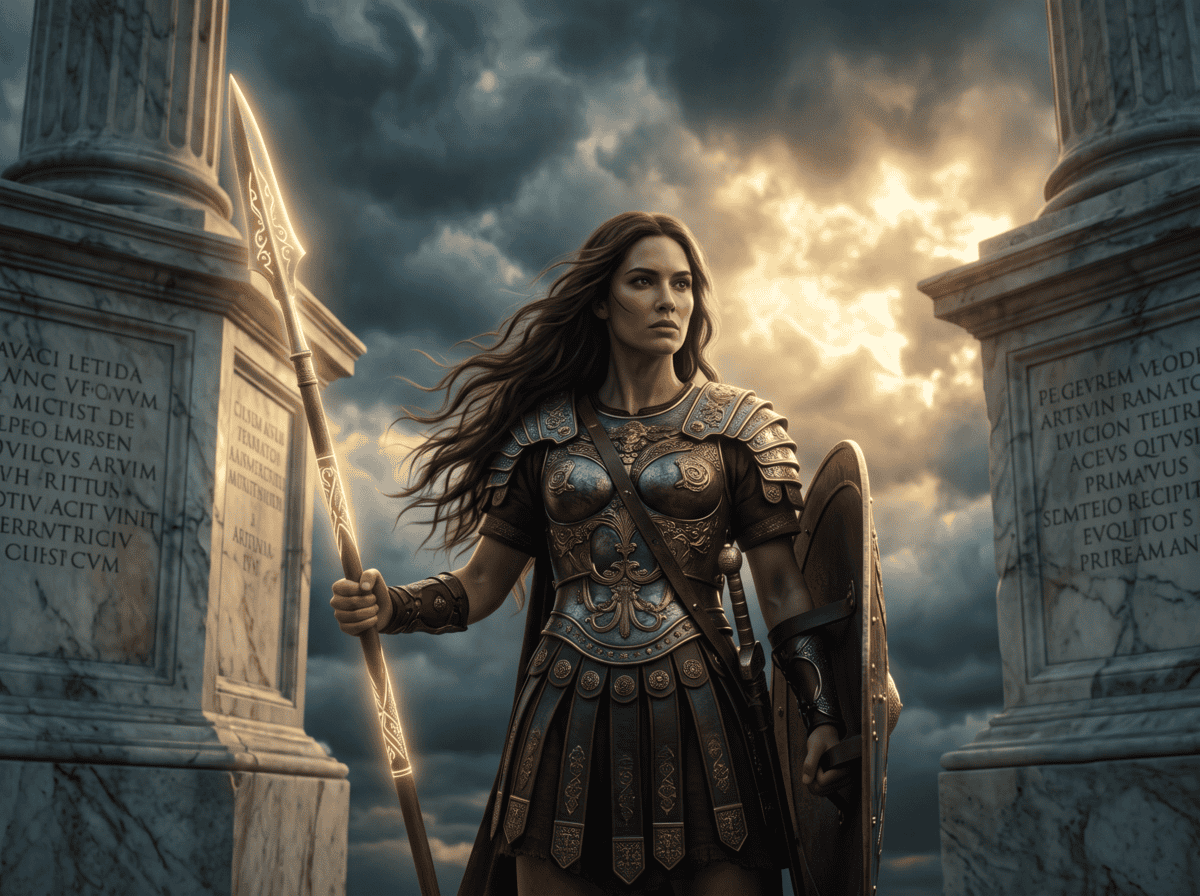
The goddess’s name comes from the Latin word bellum, meaning war. Her identity was completely tied to warfare and military strength.
This direct connection makes Bellona one of the easiest Roman deities to understand by name alone.
Unlike many gods whose names have uncertain origins, Bellona’s purpose is immediately clear.
The simplicity of her name also reflects how central war was to Roman society.
For a civilization that expanded through conquest, a goddess whose very name meant war naturally held an important place in public life.
Her straightforward name helped people immediately recognize her role, making Bellona one of the most easily identifiable deities in the Roman pantheon and an enduring symbol of military power.
7. She Was Depicted Carrying Weapons

Ancient artists often portrayed Bellona wearing a helmet and carrying weapons associated with battle.
She frequently appeared with a sword, spear, or shield, emphasizing her role as a warrior goddess.
Some images also show her holding a torch, symbolizing the destructive power that war could unleash.
Rather than appearing as a peaceful protector, Bellona was shown as a fearless fighter prepared for combat.
These powerful images reminded worshippers that victory often demanded courage, sacrifice, and determination.
Her appearance reflected the strength the Romans admired in both their soldiers and their gods.
Every detail of her appearance reinforced her identity as a fearless protector, reminding worshippers that courage was one of the greatest virtues a Roman soldier could hope to possess.
8. Bellona Inspired Art and Literature for Centuries

Although the worship of the Roman gods eventually faded, Bellona did not disappear from history.
During the Renaissance and later periods, artists, poets, and composers continued to include her in paintings, sculptures, and literary works.
She became a symbol of warfare itself and was often used to represent the courage, danger, and consequences of battle.
Even today, her name occasionally appears in books, artwork, and discussions of Roman mythology.
While Mars remains the more famous Roman war deity, Bellona continues to fascinate historians because she represents one of the most powerful female figures in the ancient Roman pantheon.
Even centuries after ancient Rome ended, Bellona continued to symbolize the strength, sacrifice, and complexity of war.

Siempre sentí una fuerte conexión con lo Divino desde mi nacimiento. Como autora y mentora, mi misión es ayudar a los demás a encontrar el amor, la felicidad y la fuerza interior en los momentos más oscuros.