
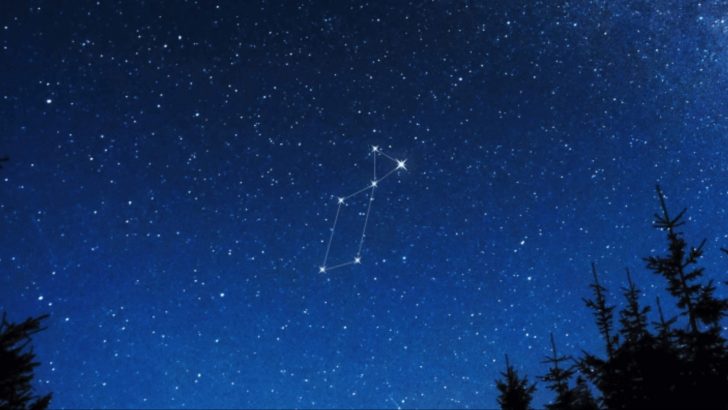
The night sky is packed with stories and myths that have been passed down through the centuries. However, it’s not always easy to recognize them, and they often appear periodically.
When you look up and spot constellations, you’re peering into the mythological worlds of ancient civilizations.
Here are 7 fascinating constellations you can spot in the clear night sky, and the epic myths behind them!
1. Orion
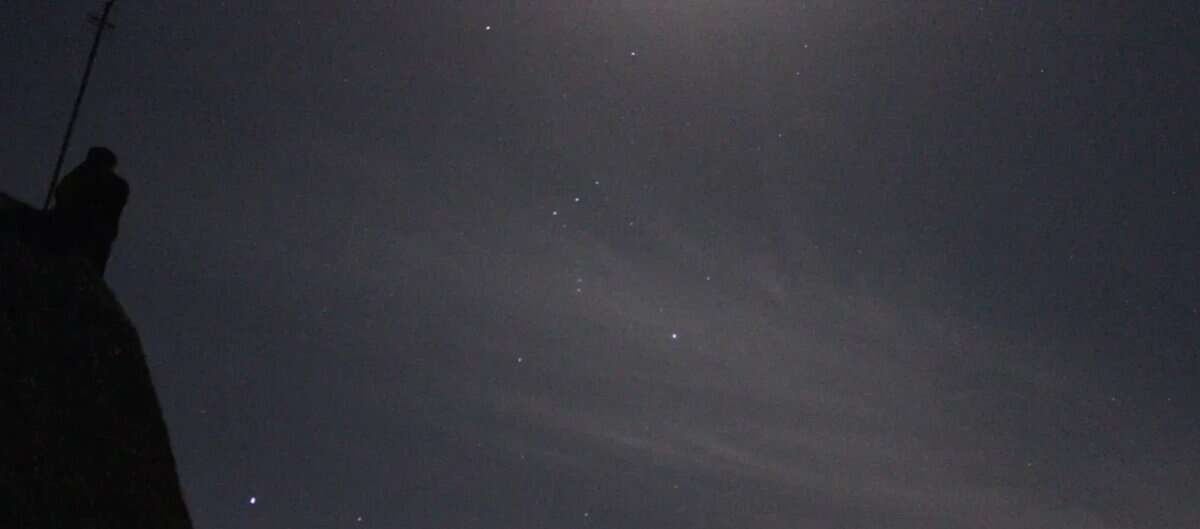
Orion is one of the most eye-catching winter constellations, with its bright stars like Betelgeuse and Rigel lighting up the sky.
The myth of Orion comes from Greek mythology, where he was a mighty hunter, often portrayed as a giant, beautiful hero.
According to legend, he was the son of Poseidon, who gave him the ability to walk on water and an incredible talent for hunting.
His story is linked to the goddess Artemis; he was a close companion to her.
Some myths say that Orion boasted he could kill all animals on Earth, which angered Gaia, the Earth goddess.
To protect her creatures, she sent a giant Scorpion to sting him – resulting in his placement in the stars.
Orion’s constellation is a tribute to his legendary hunting skills and tragic end.
2. Cassiopeia

Cassiopeia is one of the most recognizable constellations because of its distinctive W or M shape in the northern sky.
However, her myth involves a huge case of hubris. Cassiopeia was the queen of Ethiopia and was known for her vanity.
She boasted that she was more beautiful than the Nereids, sea nymphs and daughters of the sea god Nereus.
Offended, the Nereids complained to Poseidon, who decided to punish the queen by sending a sea monster to threaten her kingdom.
To save their land, her own daughter, Andromeda, was chained to a rock as a sacrifice. Luckily, Perseus managed to save Andromeda, and defeated the monster.
Cassiopeia’s star pattern is said to represent her proud pose – sometimes upside-down, to remind everyone of vanity’s consequences.
3. Scorpius

Scorpius is the constellation that resembles a giant scorpion, and it’s a summer sky staple, especially in the southern hemisphere.
The myth behind Scorpius is filled with revenge and heroism. In Greek myths, the scorpion was sent by Gaia to kill Orion. The two had a fierce rivalry, as described above.
Anyway, the Scorpion stung Orion, leading to his death.
To honor the scorpion, the gods placed both Orion and Scorpius in the sky, but they are positioned so they never appear together – one sets as the other rises.
This myth is a reminder of the deadly power of nature and the eternal battle between hunter and prey.
4. Lyra
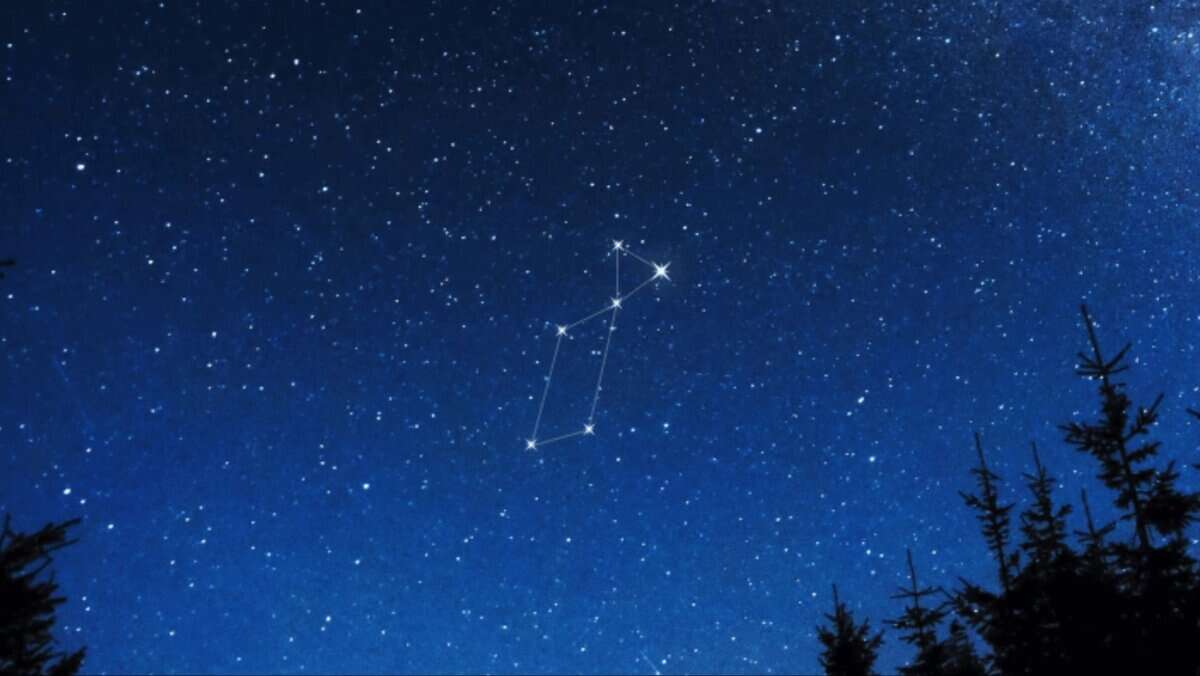
Lyra is a tiny but important constellation, home to the bright star Vega and a part of the famous Summer Triangle.
Its myth is straight out of a Greek legend, revolving around Orpheus.
According to myth, he was so talented with his lyre that even gods and beasts stopped to listen. His enchanting music could soften even the harshest hearts.
When Orpheus’s wife Eurydice died, he journeyed to the Underworld to bring her back.
He played his lyre with such emotion that Hades agreed to let Eurydice go, under one condition: Orpheus must not look back until they reached the surface.
Sadly, he did, and lost her forever. The gods then placed his lyre among the stars, honoring his musical genius and tragic love story.
5. Cygnus

Cygnus, also called the Northern Cross, is a stunning constellation visible during the summer months. Its myth is deeply connected to stories of transformation and love.
In Greek mythology, Cygnus is linked to the story of Zeus, who transformed into a swan to seduce or rescue several of his lovers.
One popular legend involves Zeus turning into a swan to approach Leda, who later laid eggs from which Helen of Troy was born.
In other versions, Cygnus is identified as Orpheus himself, and it’s even positioned near Lyra. It represents Orpheus, forever immortalized in the night sky.
The shape of the constellation resembles a graceful swan gliding through the heavens.
6. Taurus

Taurus is a bright constellation that features the glowing star Aldebaran and the Pleiades cluster.
Its myth comes from the Greek legend, where Taurus is linked to the story of Zeus and Europa. Zeus transformed himself into a magnificent white bull to win Europa’s affection.
When she saw the beautiful, gentle bull, she was so charmed that she climbed onto its back. Zeus then carried her across the sea to Crete, where he revealed his true form.
The constellation’s shape is said to represent the bull, the Pleiades representing the cluster of stars that look like a group of bright, shining eyes.
Taurus is a symbol of strength and divine love, reminding us of Zeus’s clever disguise.
7. Pegasus

The story of Pegasus begins with the hero Bellerophon, who tamed the winged horse with the help of the goddess Athena.
Pegasus was born of the blood of Medusa when she was slain by Perseus.
Bellerophon used Pegasus to defeat the Chimera, a fire-breathing monster, making him a legendary hero.
However, his own hubris eventually led to his downfall, as he tried to fly to Olympus, but the winged horse threw him off its back.
Pegasus was then rewarded by the gods and immortalized as a constellation.
Today, it symbolizes inspiration, poetic creativity, and the power of the divine. Its star pattern even resembles a flying horse.

A little Aquarius, devoted to writing and embroidery. Through my writing, I hope to empower readers to align with their true selves and navigate life’s mysteries with confidence.