
The Bible is the foundation of both Judaism and Christianity, but it’s also filled with contradictions.
Some differences are minor, but others put the crucial parts of the biblical narrative en pregunta.
Whether you’re a believer or a skeptic, you’ll find these interesting.
1. The Order of Creation

Genesis 1 and Genesis 2 present two different versions of the creation myth, and they don’t quite match up.
Genesis 1 describes a step-by-step process: light, sky, land, plants, animals and finally, humans created last, in God’s image.
Genesis 2 flips the order: it begins with man, then plants, animals, and finally woman.
This isn’t a minor detail but a fundamental contradiction about how humanity and the world came to be.
Some claim it’s simply a different perspective, while others see it as an outright inconsistency.
Either way, it’s hard to ignore.
2. God’s Rest
En Exodus 31, God explicitly states that he rested and was refreshed after creation. Here, the Bible describes a human-like need for rest.
Pero Isaiah 40 boldly claims that God doesn’t grow tired.
How can the same God need rest in one place and be beyond fatigue in another?
This is a direct contradiction about the nature of God’s strength and energy. Is he subject to human limitations, or is he beyond all that?
These differing descriptions make it hard to the Bible is actually trying to teach about divine power. It forces us to question how we understand God across different texts.
3. Animals on the Ark

The story of Noah’s Ark is one of the most famous in the Bible, but even here, the numbers don’t add up.
Genesis 6 says Noah took two of every animal, which is a simple concept.
Pero Genesis 7 complicates things by saying Noah was told to take seven pairs of clean animals and only two of the unclean.
That’s a huge difference and a seemingly unnecessary contradiction.
Did Noah take two of each or more?
These conflicting narratives create confusion about how many animals actually went on the Ark.
It’s a glaring inconsistency that forces us to question the story’s accuracy.
4. Temptation from God

James 1 states explicitly that God does not tempt anyone to do evil. It’s a very straightforward claim about God’s nature.
But then we have Genesis 22, where God tests Abraham by asking him to sacrifice his son, Isaac.
This appears to be a divine temptation; God is putting Abraham through a trial. So, how can both be true?
The contradiction is clear. One part says God doesn’t tempt, and the other shows him actively doing so.
This inconsistency raises questions about the very nature of the biblical God.
5. Seeing God

En John 1, it’s stated that no one has ever seen God, which highlights his invisible, divine nature.
Pero Genesis 32 tells a different story: Jacob wrestles face-to-face with a man who is often interpreted as God. So, did Jacob see God?
According to John, no one has, but Genesis suggests otherwise.
This contradiction questions divine mystery and invisibility. Is biblical God beyond our comprehension, and so we can’t ever see him, or were there personal encounters?
6. The Ten Commandments
The Ten Commandments are the foundational moral code, but surprisingly, the lists in Exodus 20 y Exodus 34 are different.
The list in Exodus 10 is the concise list most people are familiar with.
But the second list in Exodus 34 contains different commandments, with some excluded and others added. How can one God give two diferente sets of commandments?
Are both lists authentic? Is either of them authentic? Are they meant for different audiences?
This contradiction raises questions about biblical consistency and whether these texts can be harmonized into a coherent moral law.
7. The Death of Judas
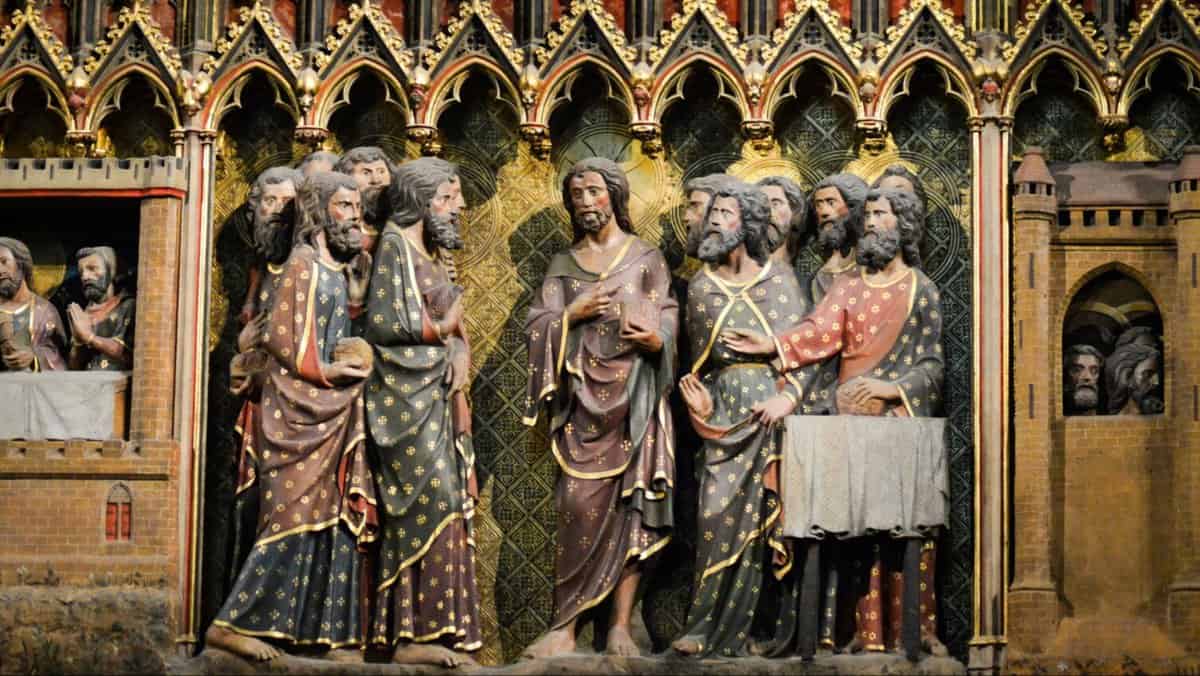
How Judas Iscariot died is also a topic of confusion. Matthew 27 states that Judas hanged himself after betraying Jesus.
Sin embargo, Acts 1 offers a different story: Judas falls headfirst into a field, his body bursts open, and he dies.
These are two completely different scenarios. Did he hang himself, or did he fall and bleed out?
The contradictions about Judas’ death highlight inconsistencies in the narrative details, which make it hard to conclude what actually happened.
It’s also making many people wonder about the reliability of the Gospels.
8. Jesus’s Final Words
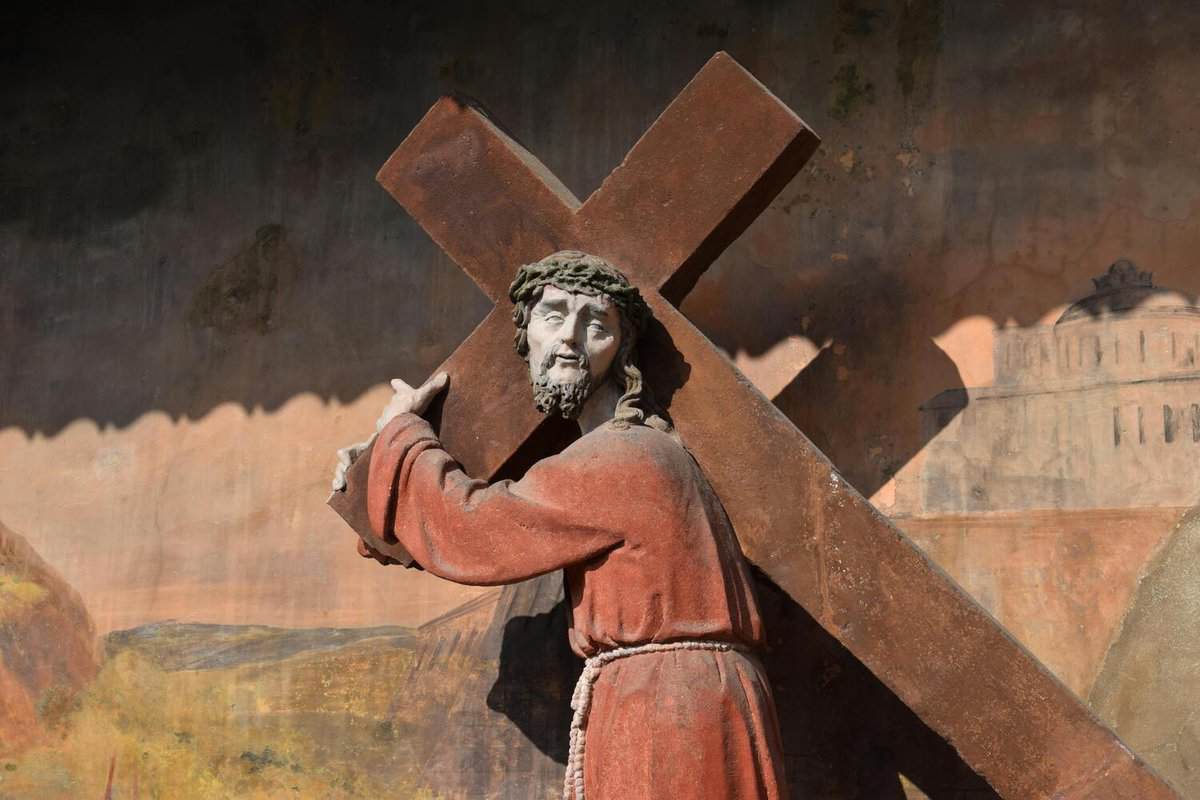
En John 19, Jesus’s last words are, “It is finished,” signaling the end of his mission.
Pero Luke 23 records Jesus saying, “Father, into your hands I commit my spirit,” just before dying.
These are very different phrases; one is about completion, and the other about surrender. Are these two different accounts of his final moments?
Or do they simply reflect different theological stances?
The contradiction is striking and raises questions about the accuracy of Christ’s last words as recorded by the Gospels.
9. Duration of the Flood

The story of the Great Flood also has conflicting timelines. Genesis 7 states that the flood lasted for 150 days before receding.
Pero Genesis 8 suggests it was over after just 40 days of rain.
That’s a huge difference! One states that the flood lasted nearly five months, the other less than a month!
Why the contradiction?
These conflicting durations make it difficult to understand the timeline of one of the Bible’s most pivotal stories, which raises questions about its credibility.
10. The Salvation Contradiction

Ephesians 2 promises salvation through faith alone, “by grace you have been saved through faith.”
Sin embargo, James 2 argues that faith without deeds is dead, implying that it’s actually our deeds that lead to salvation.
These two ideas completely oppose each other.
Is salvation a gift received through faith, or is it earned by actions?
This contradiction has fueled countless debates about whether salvation is by faith, works, both, or neither.
It’s a fundamental theological divide.
11. Who Killed Goliath?
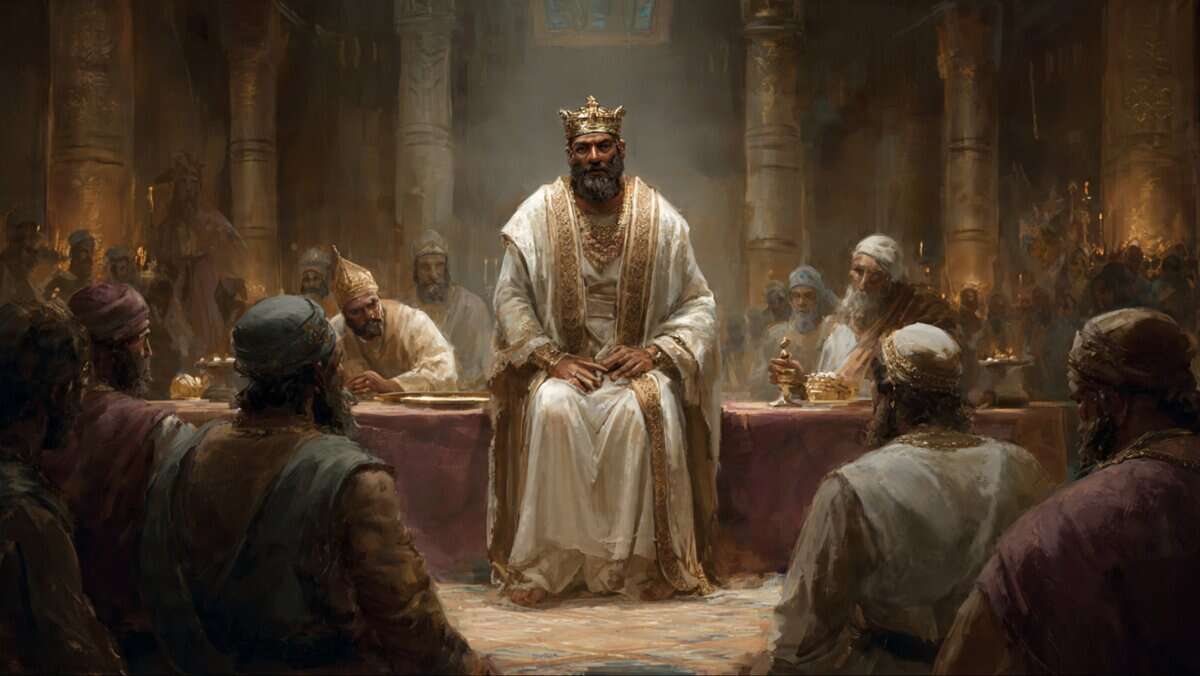
The tale of David slaying Goliath is legendary, but the details vary in different books.
1 Samuel 17 credits David with victory, but 2 Samuel 21 introduces a warrior named Elhanan.
This contradiction puts one of the most renowned legends in question: Did David kill Goliath or not?
It casts doubt on the whole story.
Some scholars hold that 2 Samuel 21:19, which claims that Elhanan killed Goliath, was actually a scribal mistake.
They claim that David indeed did kill Goliath, but Elhanan defeated Goliath’s brother, Lahmi.
12. False Companions
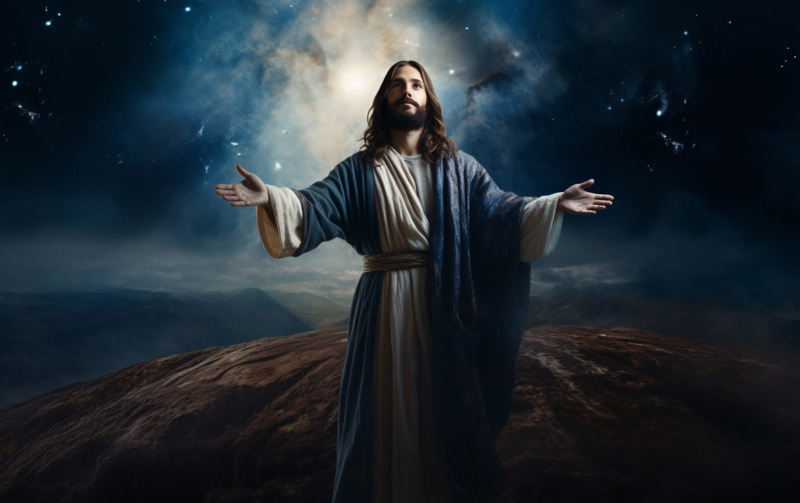
When Paul encounters Jesus, different accounts describe his companions’ experience differently.
Acts 9 states that Paul’s companions heard a voice but saw no one. But Acts 22 says they saw a bright light but didn’t hear the voice.
Are these just differences in perspective, or another contradiction?
The inconsistency in what the companions experienced muddies the story, raising questions about the reliability of these eyewitness accounts and how they were recorded.
13. Who Visited Jesus’s Tomb?
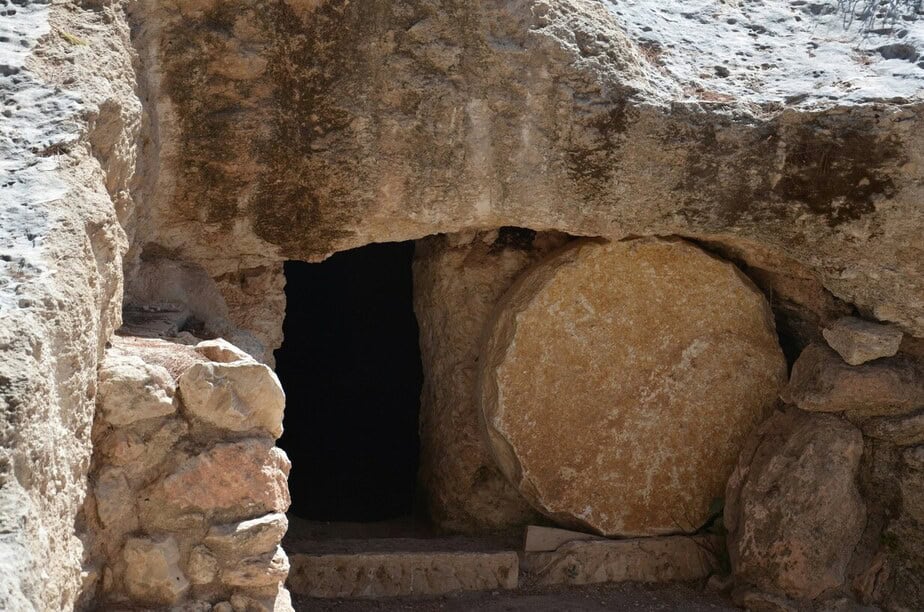
The accounts of who visited Jesus’s tomb also differ.
Matthew 28 mentions two women – Mary Magdalene and another – arriving to find the tomb empty.
John 20, on the other hand, says it was only Mary Magdalene.
So, which is it?
These contradictions make it hard to understand the events surrounding Jesus’s resurrection.
Different disciples gave different versions of the same event, which puts the whole thing into question.
14. Answering Fools
Proverbs 26 contains conflicting advice: some verses suggest you should answer a fool according to his folly, while others advise ignoring him.
This contradiction raises a practical question – should you engage with foolishness or avoid it?
The Bible doesn’t seem to give a clear answer.
Some say this reflects the complexity of dealing with foolishness in life. Perhaps we are to take the advice that suits our individual situation?
15. Joseph’s Father
The genealogy of Jesus in Matthew 1 lists Jacob as Joseph’s father, tracing the royal line to David.
Pero Luke 3 names Heli as Joseph’s father, which leads to a different lineage.
This contradiction has puzzled scholars for centuries.
It’s a clear inconsistency that challenges the idea of a straightforward family line for Jesus. It raises questions about biblical accuracy and historical reliability.

A little Aquarius, devoted to writing and embroidery. Through my writing, I hope to empower readers to align with their true selves and navigate life’s mysteries with confidence.