
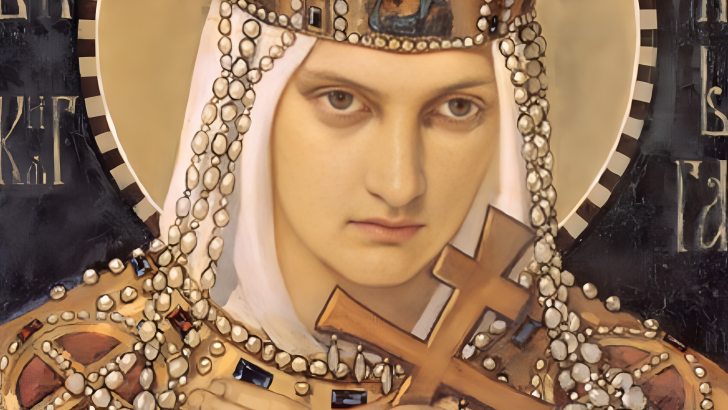
History rarely produces a figure as complex and unforgettable as Olga of Kiev.
Remembered both as a ruthless avenger and as a Christian saint, she ruled during the turbulent tenth century, when the powerful state of Kievan Rus was still taking shape.
Her life reads almost like a legend: brutal acts of calculated revenge, bold political reforms, diplomatic journeys to Constantinople, and ultimately canonization by the Church.
Few rulers have embodied such dramatic contrasts within a single lifetime.
Olga’s story reveals the realities of medieval power, where survival often required strength and strategy, yet faith could reshape a legacy.
These five facts explore how she secured her authority, transformed her realm, and left a lasting spiritual and political imprint on Eastern Europe.
1. Olga of Kiev Took Brutal Revenge on the Drevlians
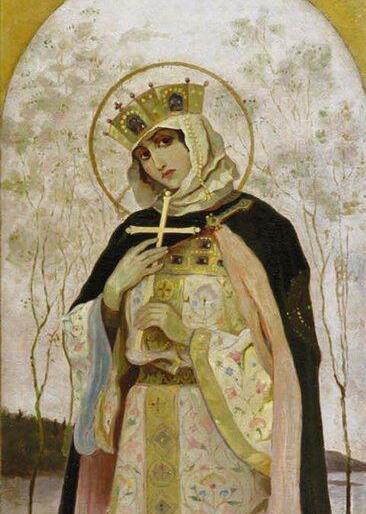
One of the most famous and chilling parts of Olga’s story is her calculated revenge against the Drevlians, the tribe responsible for the death of her husband, Prince Igor of Kiev.
After Igor was killed while collecting tribute, the Drevlians sent messengers to Olga, suggesting she marry their prince and unite their peoples.
Instead of accepting, Olga began a series of carefully planned acts of vengeance. According to the medieval Primary Chronicle, she had the first group of envoys buried alive.
A second delegation was burned in a bathhouse. Later, she invited Drevlian nobles to a funeral feast and had them killed.
Finally, she reportedly destroyed their capital city using fire. Though dramatic and possibly embellished, these stories earned her a reputation as a ruthless and strategic ruler determined to secure her authority.
2. She Ruled as Regent of Kievan Rus
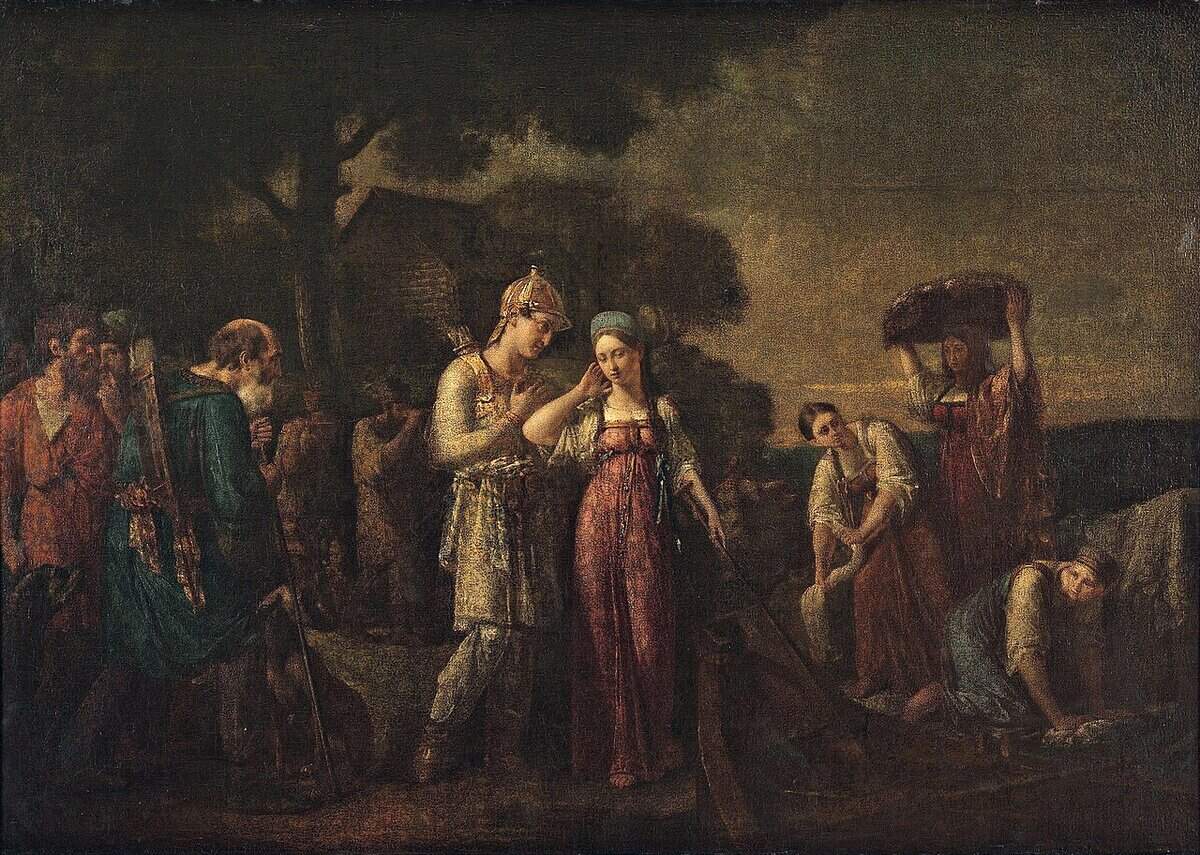
After Igor’s death, Olga became regent for her young son, Sviatoslav, ruling the realm of Kievan Rus in his name.
At a time when female rulers were rare in many parts of Europe, she successfully maintained control over a powerful and expanding state.
Her leadership was not based solely on fear. She implemented administrative reforms that strengthened the economy and stabilized tribute collection, reducing the likelihood of further rebellion.
Olga established fixed tribute sites and clear taxation systems, making governance more organized and less dependent on risky travel.
These reforms helped centralize authority in Kiev and laid the foundation for future growth.
Her ability to combine harsh retaliation with practical governance demonstrates that she was more than a vengeful widow, she was a capable and forward-thinking political leader.
3. She Became One of the First Christian Rulers of Rus
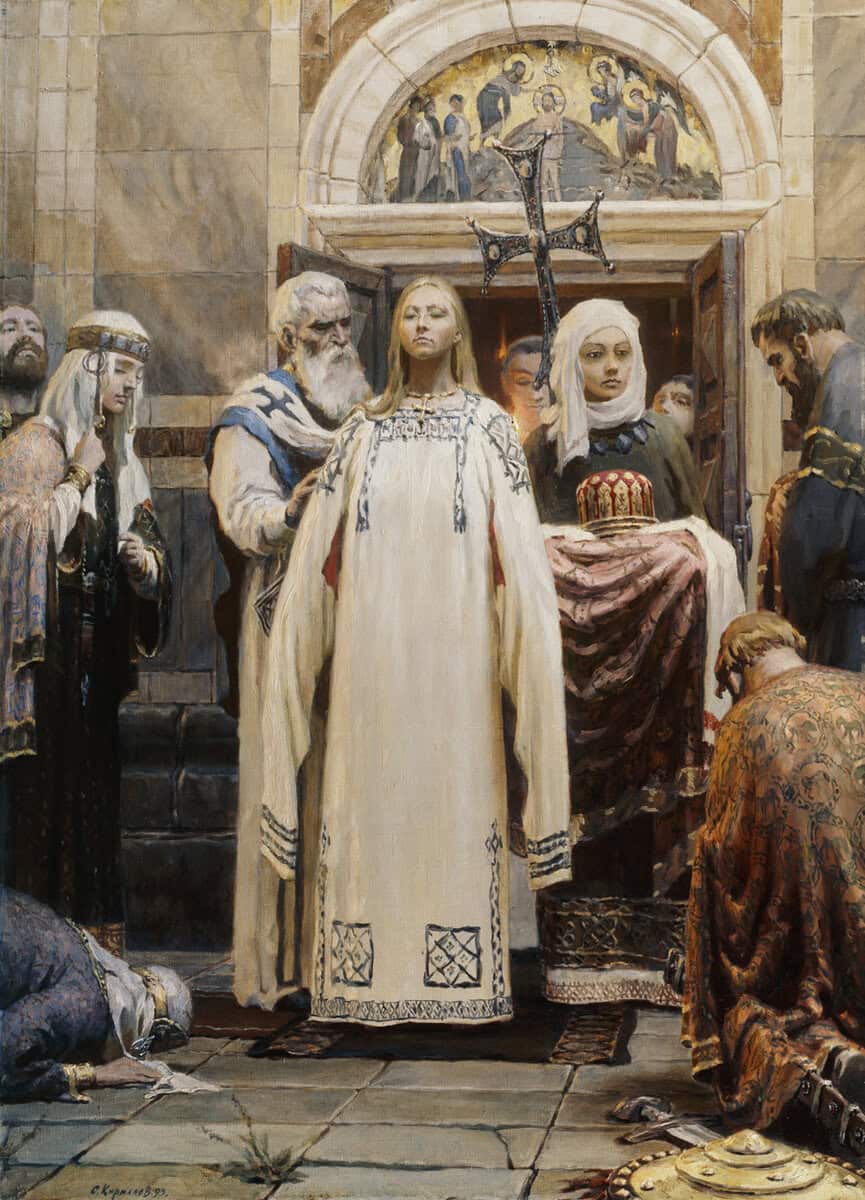
Despite her earlier reputation for severity, Olga later made a decision that changed the spiritual direction of her realm.
Around the mid-tenth century, she traveled to Constantinople and converted to Christianity.
During her visit, she was baptized, possibly taking the Christian name Helena. Her conversion made her one of the first rulers of Kievan Rus to adopt the new faith.
At the time, most of her people still practiced traditional Slavic paganism. Although her son Sviatoslav refused to convert, Olga continued to promote Christianity within her court and encouraged the building of churches.
Her decision strengthened diplomatic ties with the Byzantine Empire and introduced new cultural influences to her land.
This shift from pagan queen to Christian convert marked a major turning point in the history of Eastern Europe.
4. She Was Canonized as a Saint
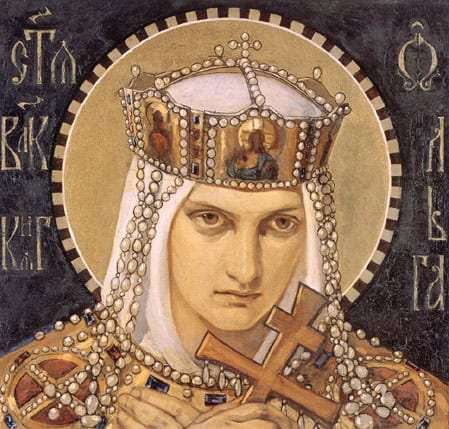
Olga’s later reputation stands in striking contrast to the stories of her violent revenge.
In the Orthodox Christian tradition, she was eventually canonized as a saint and is known as Saint Olga, Equal to the Apostles.
This title reflects her role in preparing the way for the Christianization of Kievan Rus, which was fully realized under her grandson, Vladimir the Great.
Her early adoption of Christianity and efforts to spread the faith were seen as foundational for the spiritual development of the region.
The Church emphasized her wisdom, perseverance, and commitment to her new beliefs. Over time, her image shifted from ruthless avenger to holy matriarch.
The dual nature of her legacy shows how historical figures can be remembered in dramatically different ways depending on which parts of their lives are emphasized.
5. Her Legacy Shaped the Future of Eastern Europe
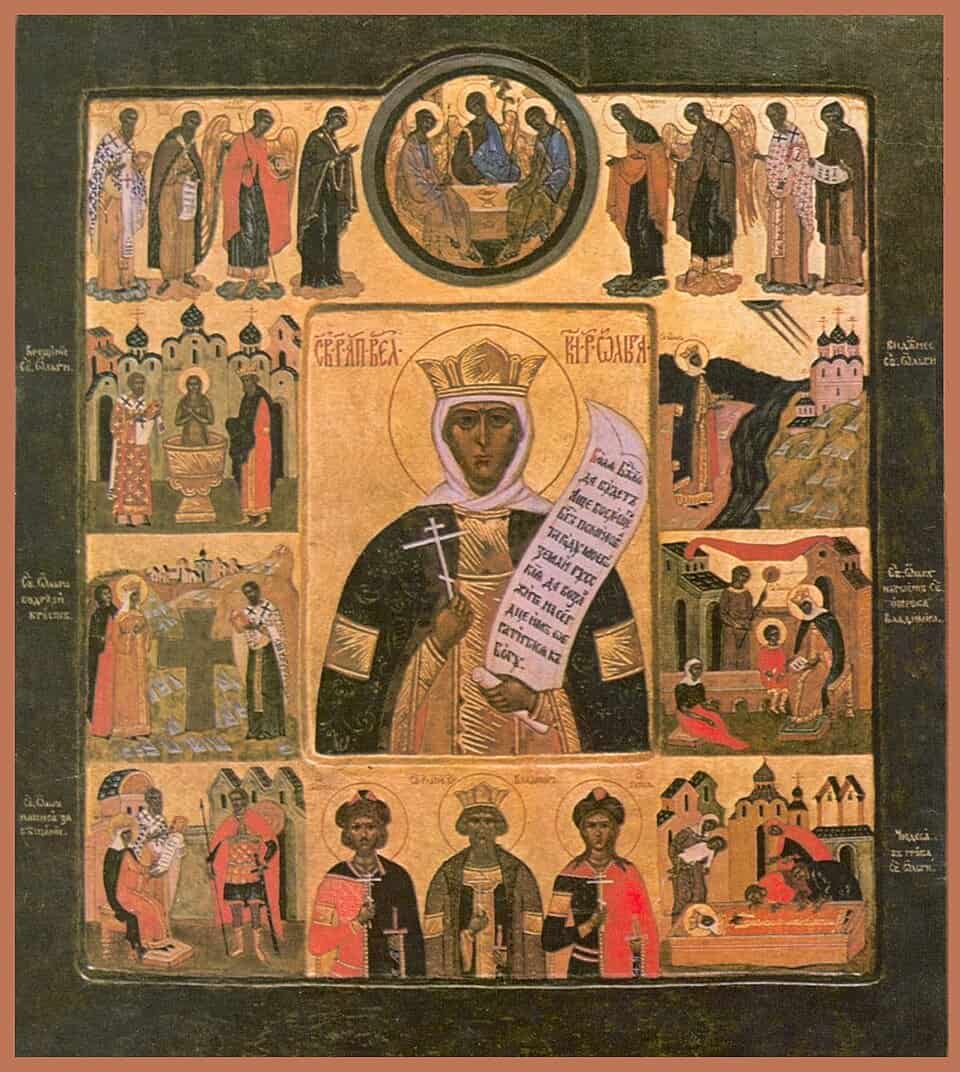
Olga’s influence extended far beyond her own lifetime. By stabilizing her realm, reforming administration, and introducing Christianity at the highest level of leadership, she helped shape the future identity of Kievan Rus.
Her grandson Vladimir would later adopt Christianity as the official religion, transforming the cultural and spiritual landscape of the region.
This decision connected the emerging state more closely with the Byzantine world and influenced the development of Russian, Ukrainian, and Belarusian religious traditions.
Olga’s life story, combining fierce determination with religious devotion, has remained powerful for over a thousand years.
She is remembered not only as a queen and regent but also as a foundational figure in Eastern European history.
Her complex character continues to fascinate historians, theologians, and readers alike.

Siempre sentí una fuerte conexión con lo Divino desde mi nacimiento. Como autora y mentora, mi misión es ayudar a los demás a encontrar el amor, la felicidad y la fuerza interior en los momentos más oscuros.