
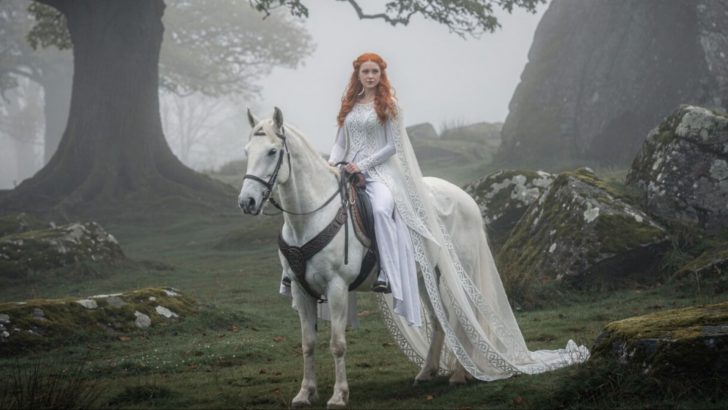
In Welsh mythology, one figure stands out among the many legends, and it’s Rhiannon.
She’s the Horse Maiden, riding so smoothly her horse’s hooves barely seem to touch the ground.
She appears in the Mabinogion, and instantly captures the imagination.
And while many modern worshippers revere her as a divine figure of the moon, horses, and sovereignty, in the earliest texts, she is a very human queen.
Yet, her magic is undeniable.
Let’s explore her story, and see how a noble maiden turned into a goddess.
1. Her Name
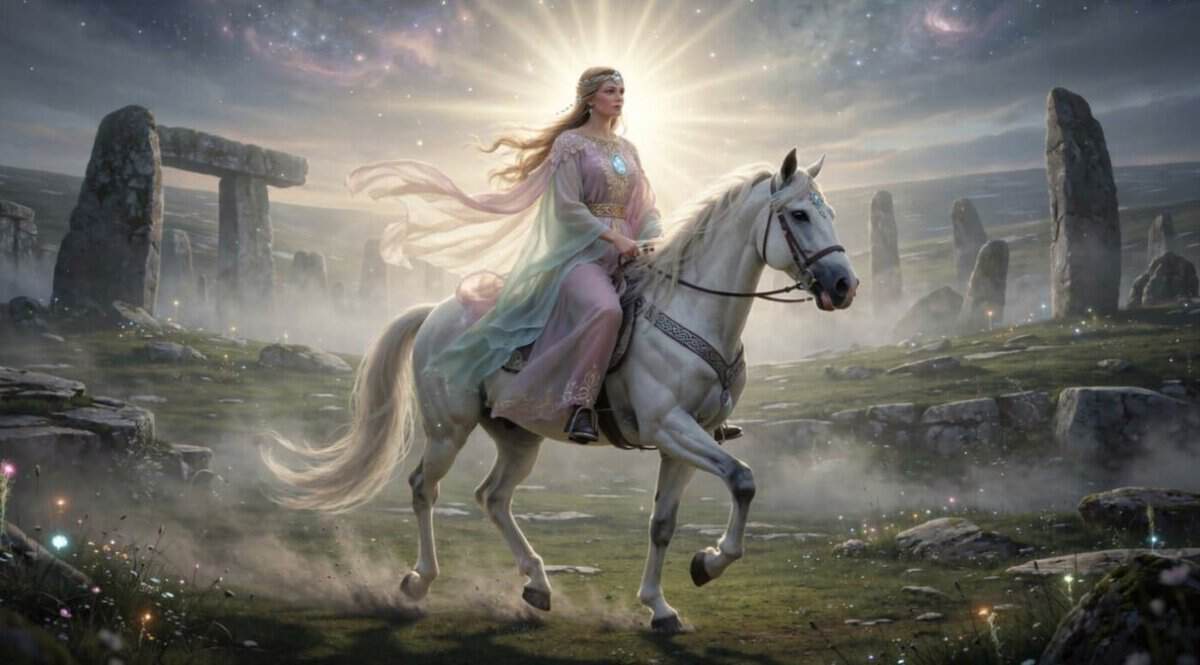
Rhiannon is a name heavy with meaning and ancient power.
Most scholars agree that it stems from the proto-Celtic root Rigantona, which translates roughly to Great Queen.
Her name alone invokes a sense of royalty and sovereignty. It suggests she was destined for greatness from the start.
While Rigantona might have been the name of a broader Celtic mother goddess, by the time the Welsh stories were written down, Rhiannon had become a distinct character.
Her name carries the weight of leadership, the land itself, and even a connection to the horse goddess Epona.
2. The Otherworldly Encounter
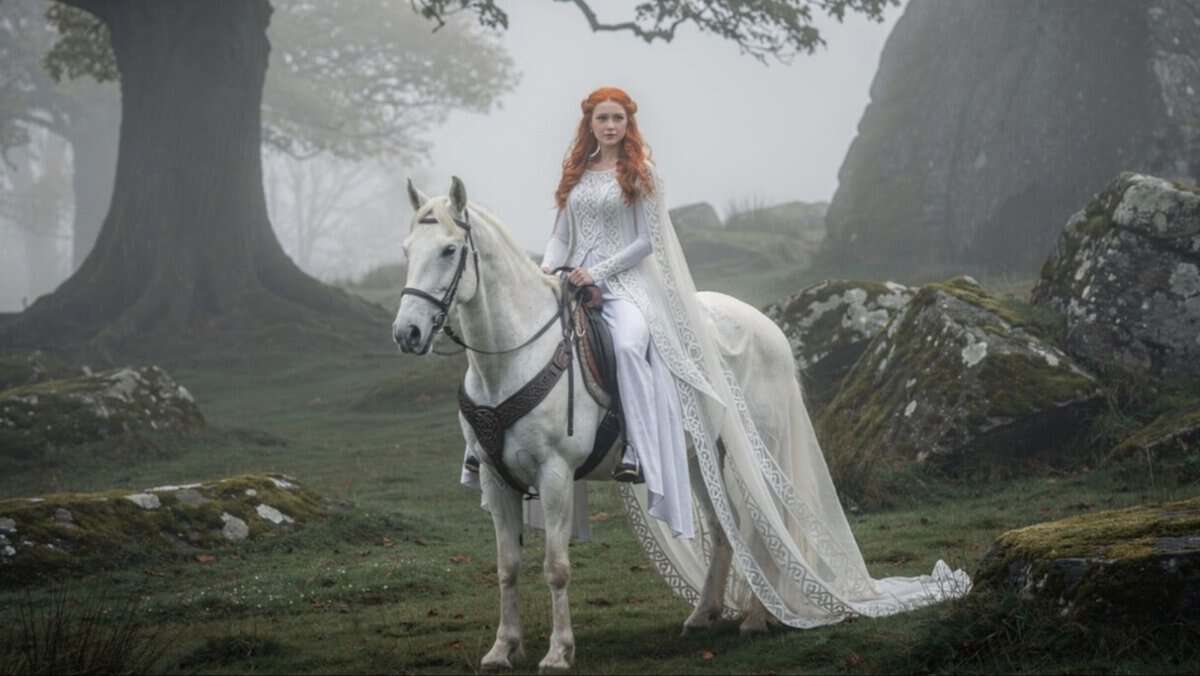
The story begins in the First Branch of the Mabinogi.
King Pwyll stood on a magical mound called Gorsedd Arberth, a place known for revealing wonders or danger.
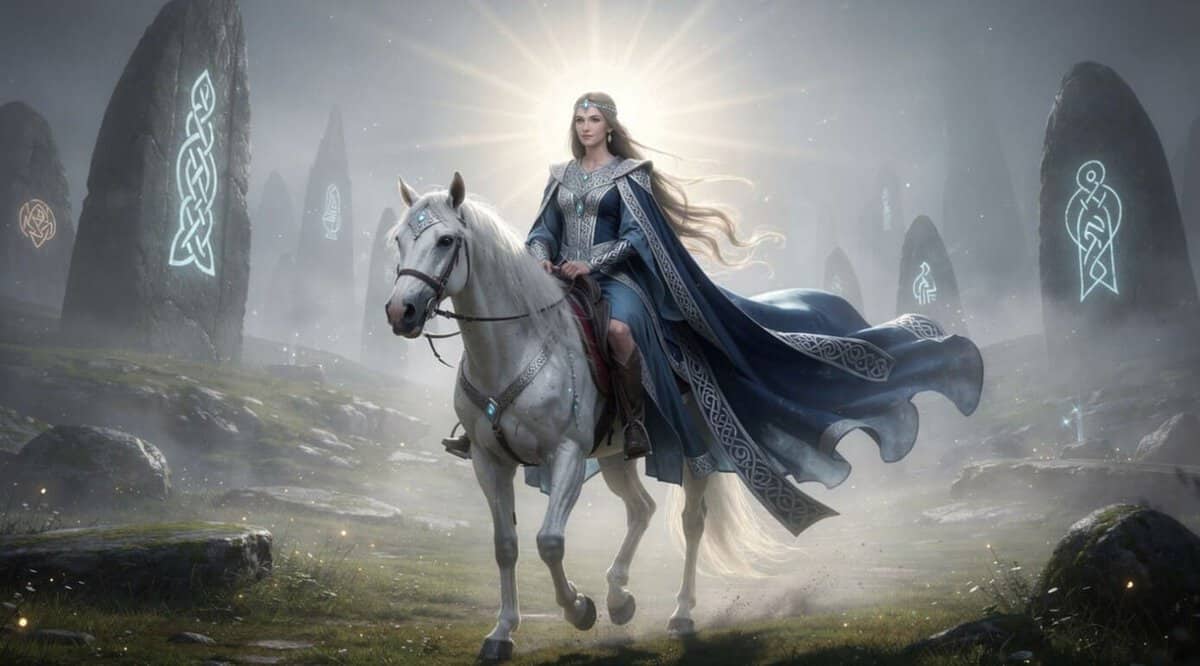
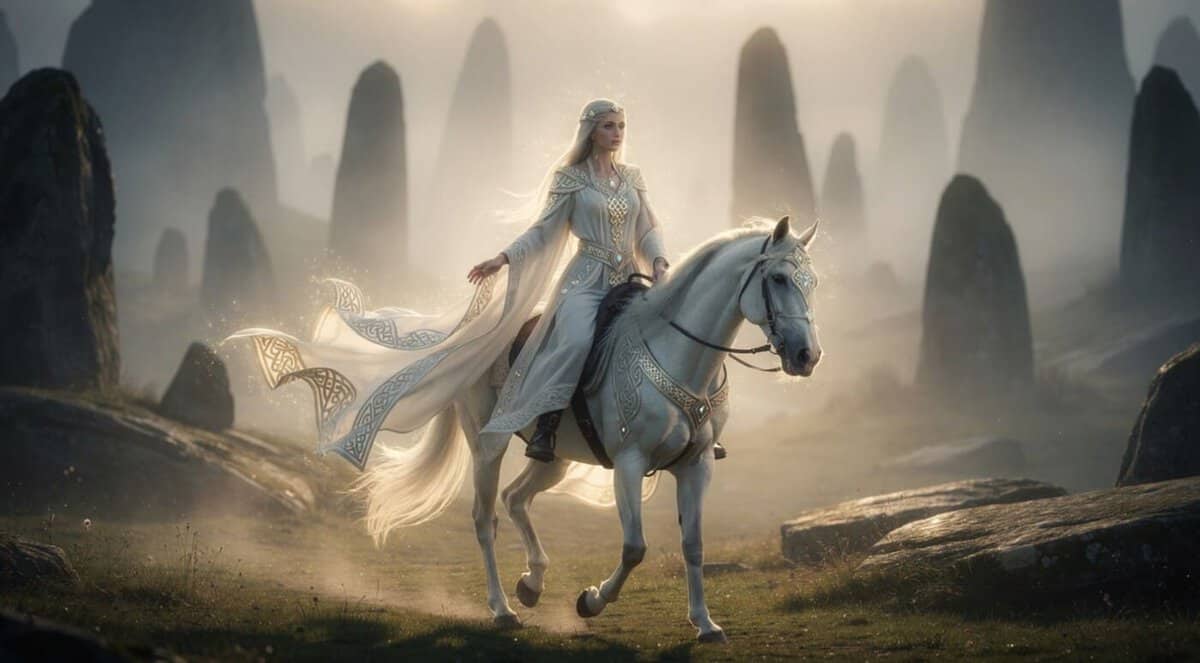
Suddenly, he saw a vision: a woman in gold silk riding a pure white horse approached.
Pwyll sent his fastest rider to catch her, but no matter how fast the rider chased, she stayed just ahead.
And she wasn’t running, but moving at a peaceful pace.
After a day and night of futile chasing, Pwyll simply called out to her, asking her to stop for the sake of the man she loves most.
Immediately, she stopped, and it turns out she wasn’t running away.
She was actually seeking him to avoid an unwanted marriage to another man.
Immediately, Rhiannon stands out as a maiden who takes control of her propio destino.
3. A Marriage Like No Other
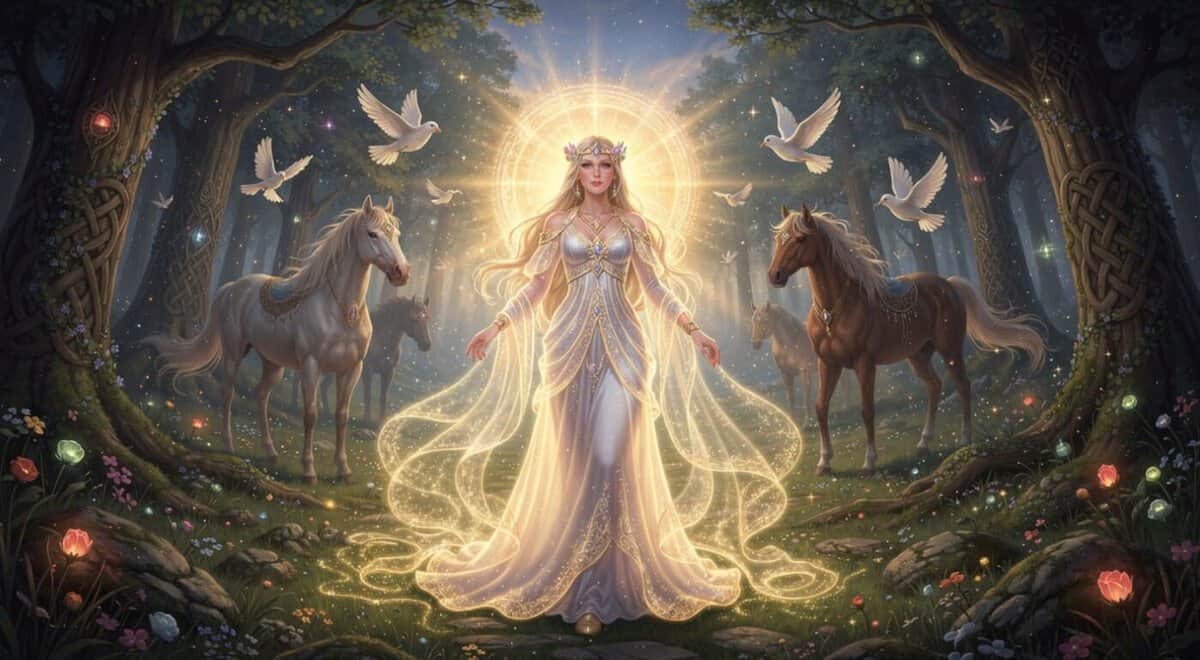
Rhiannon revealed her identity and told Pwyll she wanted to marry him instead of her current suitor, Gwawl.
This shows her unusual agency, in a time when women were often stripped of any rights.
To marry the one she wants, Rhiannon first had to outsmart Gwawl.
She gave Pwyll a magical bag that could hold anything.
When Gwawl got greedy and started making demands, Pwyll trapped him in the bag!
The court proceeded to beat Gwawl until he agreed to release Rhiannon from their promise.
With the obstacle removed, Rhiannon and Pwyll could marry.
This section of her tale highlights her intelligence and strategic mind. She wasn’t a passive damsel, but an active participant in her fate.
4. The Lost Child
Traditional folk tales often have dark turns, and Rhiannon’s life is sadly no exception.
She gave birth to a son, Pryderi, but on the night of his birth, the women tasked with watching him fell asleep.
When they woke up, the baby was gone.
Terrified of the punishment for their negligence, they killed a puppy and smeared its blood on Rhiannon’s sleeping face. They accused her of eating her own child!
Despite her protests, Pwyll, bound by his own laws and the pressure of his court, couldn’t intervene directly.
For seven years, Rhiannon was forced to sit by the castle gate at the horse block, telling her story to every stranger who passed, and offering to carry them on her back into the castle like a horse.
This punishment was meant to break her, but she endured it with dignity and grace.
5. The Return of Her Son
In another part of the land, a nobleman Teyrnon found a baby boy in his stable on the same night Rhiannon’s son vanished.
He raised the boy, who grew up with incredible speed and strength, looking exactly like his father, Pwyll.
Eventually, Teyrnon realized who the boy truly was and decided to return him to his parents.
When they arrived at the gate, they found Rhiannon serving her punishment.
Teyrnon revealed the truth: the baby was Pryderi.
The false nurses confessed their crime, and Rhiannon was exonerated.
Her name was cleared, and her son restored.
This part of the myth speaks to the endurance of truth and justice.
Rhiannon’s suffering transformed her from a queen into a figure of immense spiritual strength.
6. Motherhood and Sovereignty
With her honor restored, Rhiannon fully stepped into her role as Queen and mother.
Her return to power was a restoration of order to the kingdom.
In Welsh mythology, the health of the land is tied to the legitimacy of the ruler and his queen.
The land of Dyfed was saved from the bad luck that came with a wrongful conviction.
Her son Pryderi went on to become a great hero himself, linking Rhiannon to the future of the lineage.
This connection between the queen and the land is a classic trait of sovereignty goddesses.
Rhiannon ensured the fertility and prosperity of the realm.
Her story teaches that true power comes from integrity and the ability to endure hardship without losing yourself.
7. The Second Branch
Rhiannon’s story continues into the Second Branch of the Mabinogion.
She was widowed, and she eventually married Manawydan, the brother of the famous giant king Bran the Blessed.
They lived happily with Pryderi and his wife Cigfa.
However, a magical mist descended on Dyfed, wiping out every single person and animal except for the four of them.
The group moves to England to learn a trade so they could live.
They excel at saddlery, which is a nod to her connection to horses. However, they’re driven out by jealous craftsmen.
Upon returning to Wales, Pryderi got stuck in a magical bowl, and Rhiannon tried to save him but was ensnared as well.
They were whisked away, and this also highlights Rhiannon’s role as the mother, who never stopped protecting her child, even when he’s all grown up.
8. Becoming a Goddess
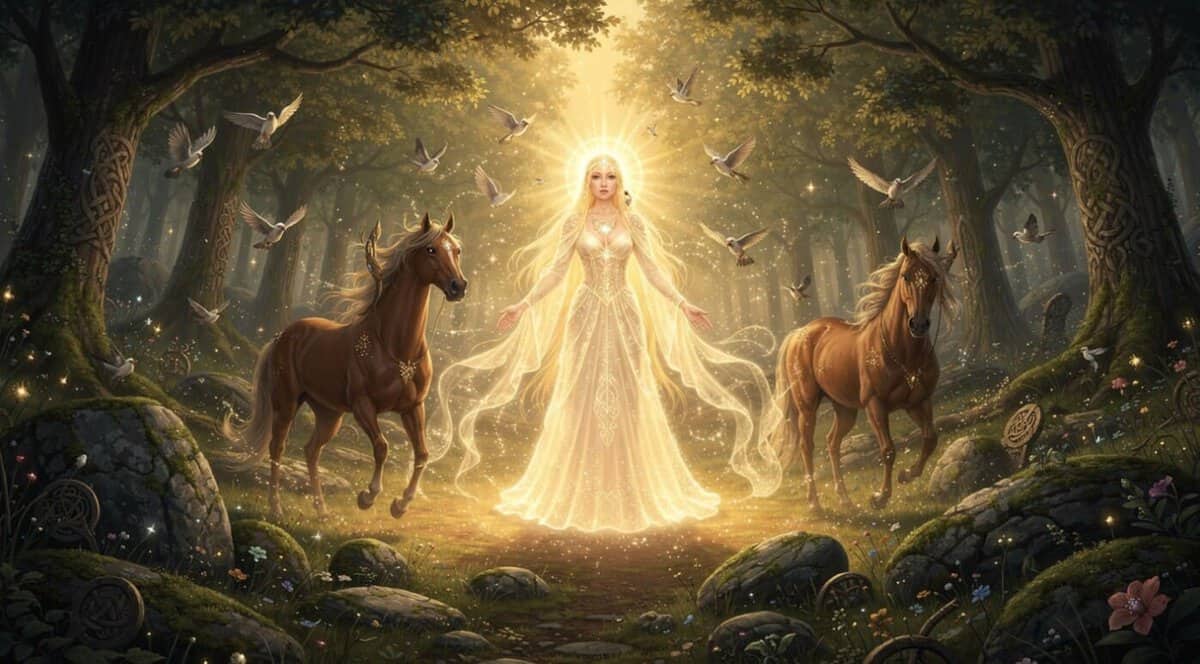
Over centuries, oral tradition and the blending of pagan beliefs with Christian influences changed Rhiannon’s status.
Scholars often compare her to the Gaulish goddess Epona due to their shared association with horses.
Epona was a protector of horses, ponies, donkeys, and mules, and was widely venerated across the Roman Empire.
Rhiannon’s birds, which can wake the dead or lull the living to sleep, also add to her otro mundo poder.
En modern paganism and druidry revived interest in Celtic mythology, Rhiannon was elevated from a tragic literary figure to a deity of the moon the divine feminine.
9. The Enduring Relevance
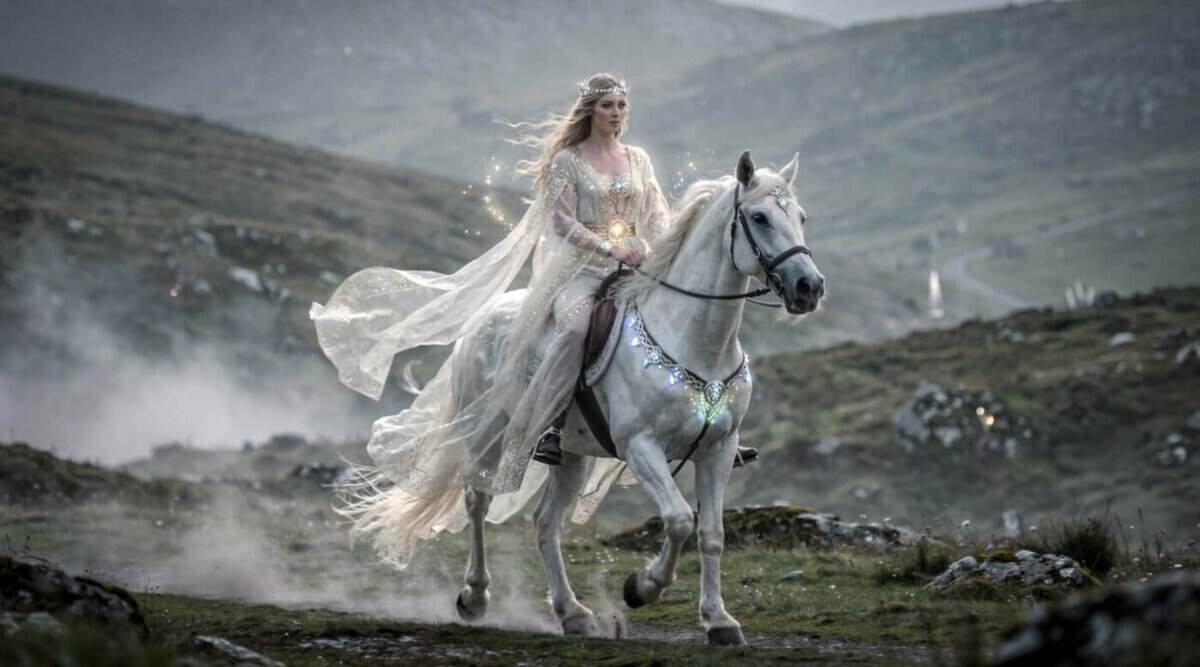
Rhiannon’s journey from a magical maiden to a goddess is a testament to the power of storytelling.
She represents the perfect blend of the human and el divino: flawed yet majestic, suffering yet triumphant.
She teaches us about the importance of sovereignty over our own lives and the strength found in endurance.
To this day, she is a beloved figure from Welsh folklore and an inspiration to artists and musicians.

A little Aquarius, devoted to writing and embroidery. Through my writing, I hope to empower readers to align with their true selves and navigate life’s mysteries with confidence.