

Somewhere beneath the waters of a quiet Russian lake, an entire city is said to be hiding.
Its churches are still there. Its streets remain untouched. And according to legend, the city never fell into ruin.
It simply became invisible. This mysterious place is Kitezh, one of the most beautiful lost-city legends in Russian folklore.
The story is usually connected with Lake Svetloyar in the Nizhny Novgorod region.
In the most famous version, Kitezh disappeared when enemies approached.
Instead of allowing the city to be destroyed, divine protection hid it from the outside world.
But disappearing was only the beginning. Over time, people claimed they could hear church bells beneath the lake.
Others believed that only those with pure hearts could find the hidden city.
Some even said Kitezh still existed exactly as it had centuries ago.
Here are seven fascinating legends about Russia’s invisible city of Kitezh.
1. Kitezh Was Said to Be a Sacred City

The story of Kitezh begins with Prince Georgy Vsevolodovich. According to later legends, the prince founded two cities.
The first was Lesser Kitezh. He then traveled farther into the wilderness and discovered a beautiful place beside Lake Svetloyar.
There, he founded Greater Kitezh. The city was surrounded by forests and peaceful countryside.
But Kitezh was not remembered simply as another medieval settlement. It became a sacred place.
Churches and monasteries were said to stand within it, and the people living there were described as deeply religious.
This spiritual reputation became extremely important to the later legend.
Kitezh was not saved because it had enormous walls or a powerful army.
It was saved because it was holy. That is what makes the story so unusual.
Most legendary cities disappear because they are cursed. Kitezh supposedly disappeared because it was protected.
2. The Mongols Found Kitezh Through Betrayal

A hidden city is difficult to attack if nobody knows how to reach it.
According to the legend, that was exactly the problem facing the forces of Batu Khan during the Mongol invasion of Rus’.
The invaders first reached Lesser Kitezh. But Greater Kitezh was hidden deeper in the wilderness.
They needed someone to show them the way. The story says a man named Grishka Kuterma eventually revealed the secret route.
Some versions describe him as being tortured until he gave away the location. He showed the invaders a hidden path leading toward the city.
That path became known in legend as Batu’s Trail. The betrayal gives the story a darker feeling.
Kitezh might have remained hidden naturally if its location had never been revealed.
Instead, human weakness brought danger directly to its gates. But what the attackers found when they arrived was not what they expected.
3. Kitezh Had No Walls to Protect It
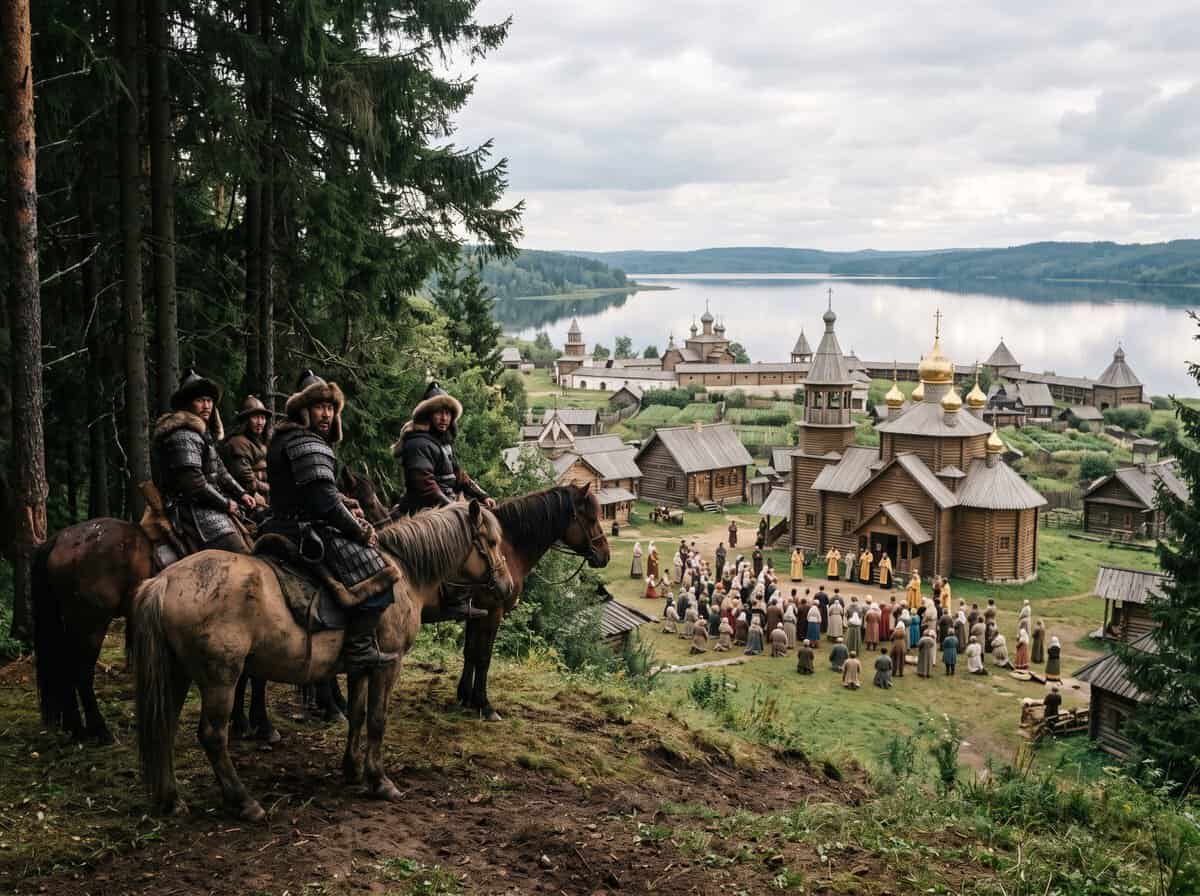
When Batu Khan’s forces finally reached Kitezh, they supposedly discovered something strange.
The city had no fortifications. There were no enormous walls. There were no defensive structures strong enough to stop an army.
The people of Kitezh also did not prepare for battle in the way the attackers expected.
Instead, they prayed. According to the legend, the residents asked God to save their city.
From a military point of view, Kitezh appeared helpless. The invaders had already found the secret route.
Nothing seemed to stand between them and the city. But Kitezh’s lack of walls becomes one of the most important parts of the story.
The city did not trust stone to save it. Its protection came from somewhere else.
And before the attackers could take Kitezh, something impossible supposedly began to happen.
4. The City Sank Into Lake Svetloyar
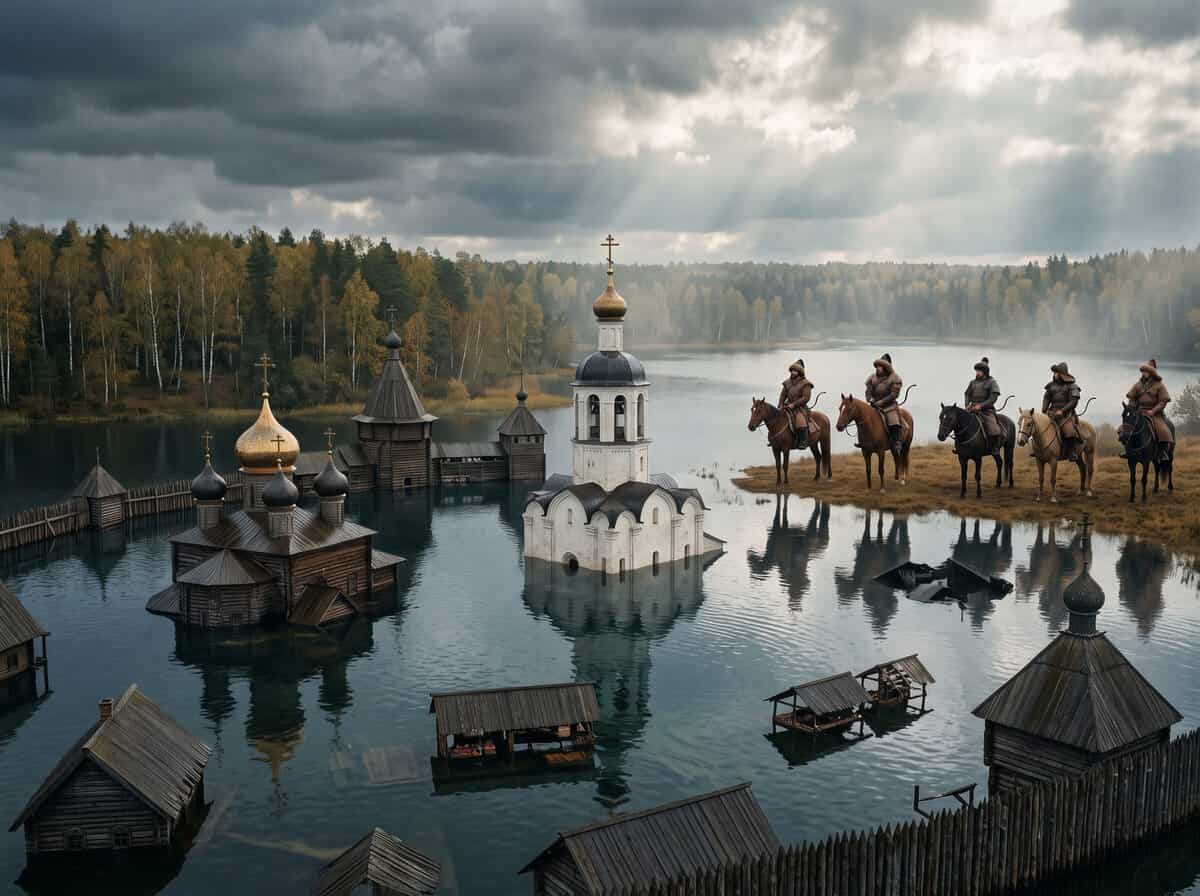
This is the moment that made Kitezh legendary. As the invaders approached, water began appearing around the city.
Springs burst from the ground. More and more water rose. The attackers watched as Kitezh slowly disappeared.
Buildings vanished beneath the surface. Churches sank into the water. Eventually, the entire city was gone.
In its place stood Lake Svetloyar. The invaders could not enter Kitezh because there was no longer a city to capture.
According to some versions, the last thing they saw was the shining cross on top of a church disappearing beneath the water.
The city had been saved. Not through battle. Not through stronger weapons.
Through disappearance. That image has helped the legend survive for centuries.
Somewhere beneath the calm surface of the lake, Kitezh may still be waiting.
5. People Say Church Bells Can Still Be Heard Beneath the Water
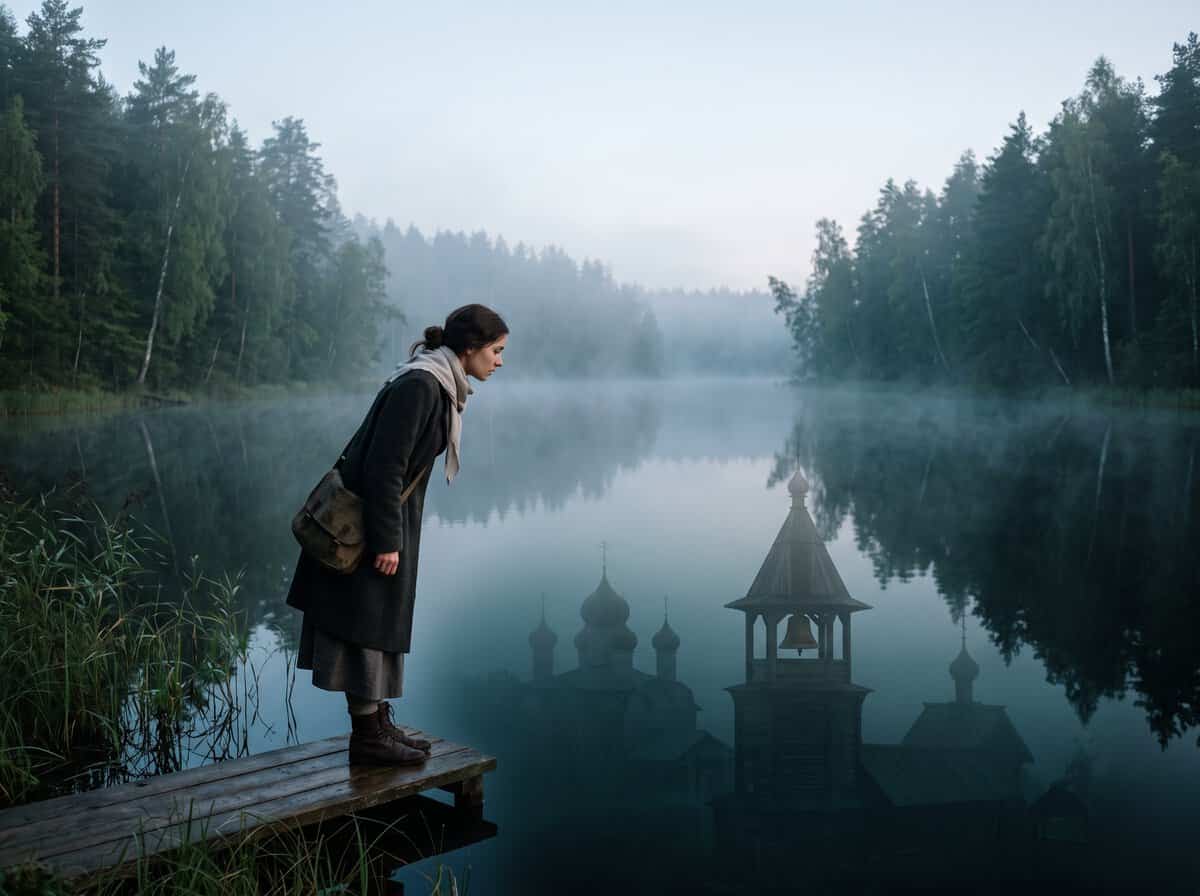
If Kitezh simply sank and was destroyed, the story would already be mysterious.
But the legend goes much further. The city is said to remain alive beneath the lake.
On quiet days, some people have claimed to hear sounds coming from the water.
The most famous are church bells. Imagine standing beside Lake Svetloyar when everything is still.
Then, somewhere beneath the surface, you hear a distant bell.
According to believers in the legend, those sounds come from the churches of Kitezh.
Some stories also mention singing or prayers. The city may be invisible, but it is not necessarily silent.
The bells suggest that life inside Kitezh somehow continues. Its people did not simply drown when the city disappeared.
They entered another state of existence, hidden from the ordinary world. And occasionally, the outside world is allowed to hear them.
6. Only the Pure of Heart Can Find Kitezh

Not everyone is supposed to be able to reach the hidden city.
According to later spiritual traditions surrounding Kitezh, only certain people can find it.
They must be pure of heart. This changes Kitezh from a lost city into something much more mysterious.
You cannot simply bring a map. You cannot organize an expedition and expect to discover it.
The road to Kitezh is spiritual. Some legends say a worthy person may see lights beneath the water.
Others may hear bells. A few stories suggest that the truly faithful could even enter the invisible city.
But someone motivated by greed would never find it. That is especially interesting because most lost-city legends attract treasure hunters.
Kitezh works oppositely. The harder you search because you want riches or fame, the less likely you are to succeed.
The city reveals itself only when you are no longer trying to take something from it.
7. Kitezh May Still Exist in Another World

Perhaps the strangest version of the legend says Kitezh is not really underwater at all.
It is somewhere else. The lake may simply mark the place where the city left our ordinary world.
In this version, Kitezh still exists completely intact. Its churches still stand. Its bells still ring.
Its people continue living in peace. But the city has become invisible to ordinary human eyes.
This idea made Kitezh especially important in Russian religious folklore.
It became more than a lost settlement. It represented a hidden holy world untouched by war, greed, and corruption.
That may explain why the story survived for so long. People were not only imagining a city beneath a lake.
They were imagining a place that remained pure because the outside world could no longer reach it.
Lake Svetloyar remains closely connected with the legend today. Visitors still come to its shores.
Some come because of history. Others come because of faith or curiosity.
And perhaps a few stand quietly beside the water hoping to hear something.
A distant sound. A bell beneath the surface. A reminder that Kitezh may still be there, hidden just beyond what ordinary eyes can see.

Siempre sentí una fuerte conexión con lo Divino desde mi nacimiento. Como autora y mentora, mi misión es ayudar a los demás a encontrar el amor, la felicidad y la fuerza interior en los momentos más oscuros.