
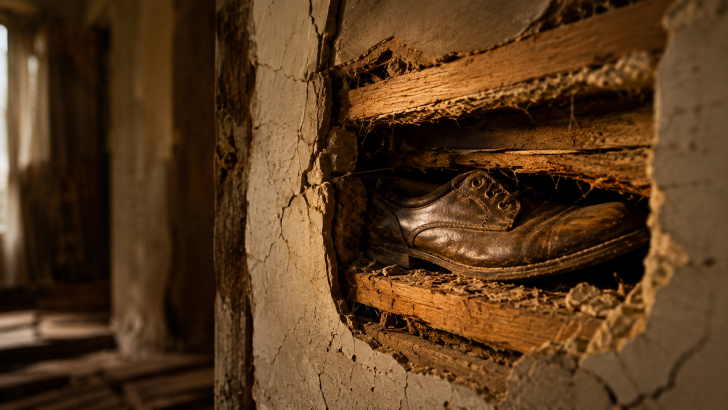
Across Britain and other parts of the world, people once tucked worn shoes inside walls, chimneys, roofs, and floors.
For centuries, people believed an old shoe could protect the home, confuse evil forces, or trap something dangerous before it reached the family inside.
1. The Shoes Didn’t End Up There by Accident
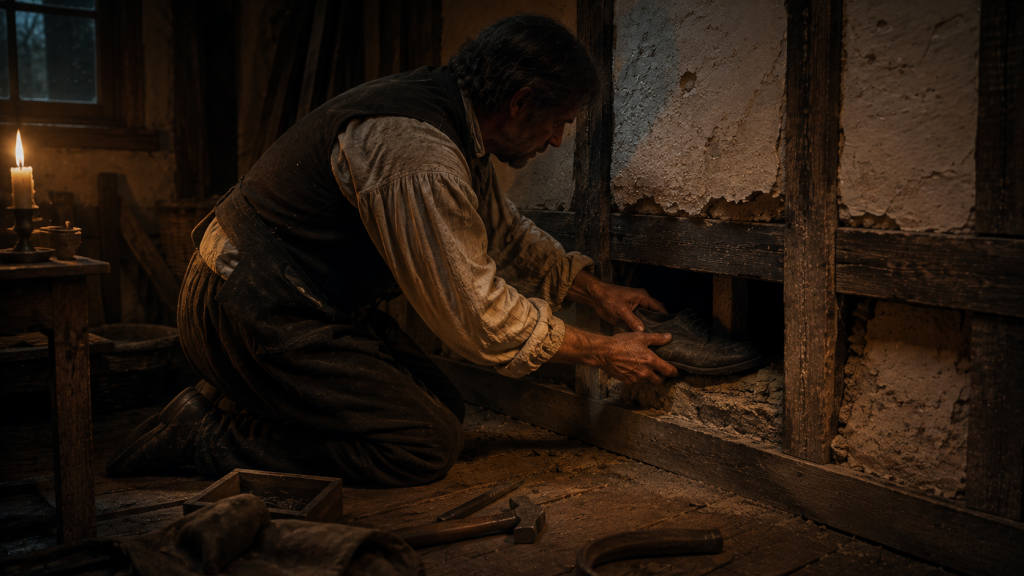
These objects are now known as concealed shoes, and thousands of them have been discovered inside old buildings.
Many come from the eighteenth and nineteenth centuries, though people were hiding objects inside homes long before that.
These shoes are usually old, heavily worn, repaired, or damaged. Quite often, only one shoe was hidden.
That detail is very important.
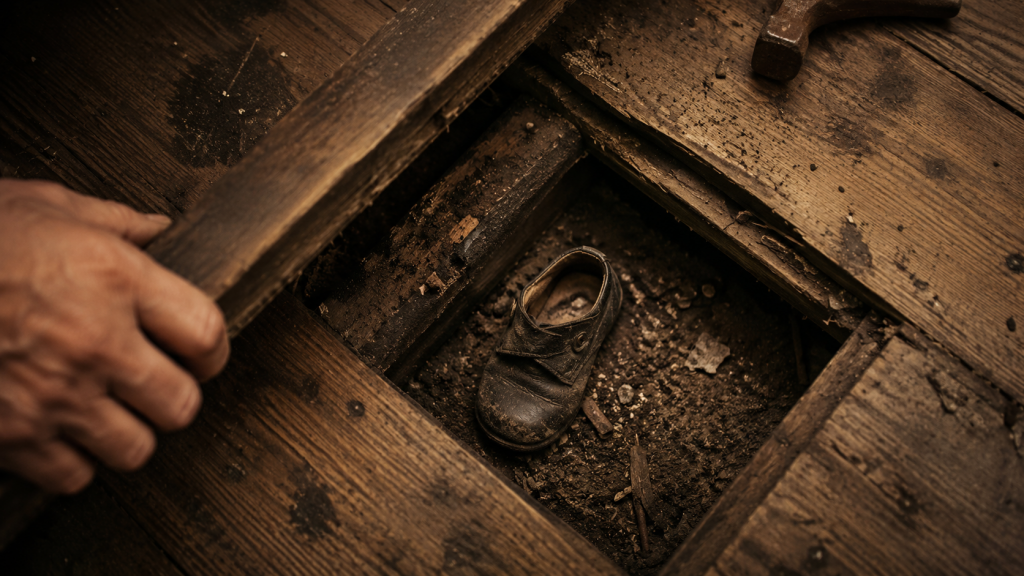
Someone didn’t simply lose a shoe behind a cupboard. These shoes were pushed into spaces that were later covered with bricks, floorboards, plaster, or roof tiles.
The person hiding the shoe knew it wouldn’t be found for a very long time.
And that was probably the whole point.
Some were placed during construction, while others seem to have gone into the building during repairs or renovations.
Either way, somebody stopped what they were doing, chose a particular spot, and sealed the shoe inside.
2. People Thought Certain Parts of the Home Needed Protection

People once saw the home as more than a physical building.
It was also a boundary between the family inside and everything dangerous outside.
That danger wasn’t always a thief. People also worried about curses, witches, spirits, illness, and unexplained bad luck.
Certain parts of the house felt more exposed than others.
Chimneys opened straight into the home. Doors and windows allowed people to cross from one space into another. Roofs, floors, and foundations marked the edges of the household.
And those are exactly the places where hidden shoes are often found.
Many have turned up near fireplaces, inside chimneys, beneath floorboards, above ceilings, and around doorways.
Researchers think the shoes were placed there as a form of supernatural protection.
Nobody passing through the room would know it was there. Still, the family could believe the house had an extra layer of protection.
3. An Old Shoe Still Carried Something of Its Owner

There’s a reason people hid worn shoes rather than brand-new ones.
A shoe changes as someone wears it. The leather bends around the foot. The sole wears down in certain places. After years of use, no two shoes look exactly the same.
Researchers think people saw that worn shape as a link to the person who had owned it. The shoe held the mark of the body, almost like a footprint that never disappeared.
That gave it power.
In folk belief, objects closely connected to a person often carried part of their presence.
Hair, clothing, nail clippings, and personal belongings appeared in charms and protective rituals for the same reason.
A worn shoe fit that way of thinking perfectly.
Shoes also weren’t cheap, disposable objects. Families repaired them again and again. Children wore shoes passed down from older siblings.
So hiding an old shoe didn’t always mean throwing it away. It could mean placing part of the family into the house itself.
4. The Shoe Could Have Trapped Something Dangerous
One of the strangest ideas is that the shoe worked as a trap.
English folklore told stories about John Schorn, a medieval priest who was said to have trapped the Devil inside a boot.
The story became well known, and images sometimes showed him holding a boot with a small devil inside it.
That probably helped create a strong connection between shoes and evil.
A hidden shoe could also work as a decoy. Because it carried the shape and smell of a real person, a spirit or harmful force could mistake it for the person living in the house.
The danger followed the shoe. Then it became trapped inside the wall, chimney, or floor.
Although it sounds strange now, the idea follows a clear kind of folk logic. Give the threat something human to chase, then seal that object somewhere it can’t escape.
Of course, not every shoe had the same purpose. Some were probably hidden for good luck, while others could have been connected to fertility, family protection, or remembrance.
The custom lasted for centuries, so its meaning likely changed from one place to another.
5. Nobody Wrote Down the Exact Rules
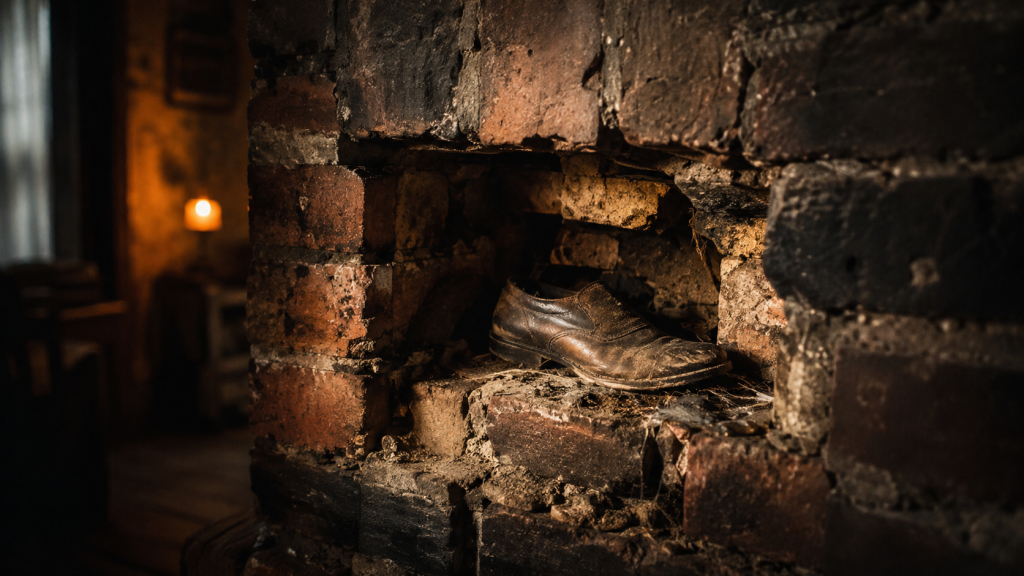
The biggest mystery is that people never clearly explained what they were doing.
No guide has been found telling families which shoe to use, where to hide it, or what the shoe was supposed to protect them from.
That makes the custom even more interesting.
It was probably passed down through families and communities.
Over time, people could forget the original reason while still believing the custom was worth keeping.
Researchers now study the shoes by looking at where they were found, how old they are, and what other objects were hidden nearby.
They’re still being discovered during renovations today. And some homeowners choose to put them back before closing the wall again.
You can understand why.
After a shoe has sat inside a house for two hundred years, protecting it or simply watching over it, throwing it into the bin suddenly feels like a bad idea.
