
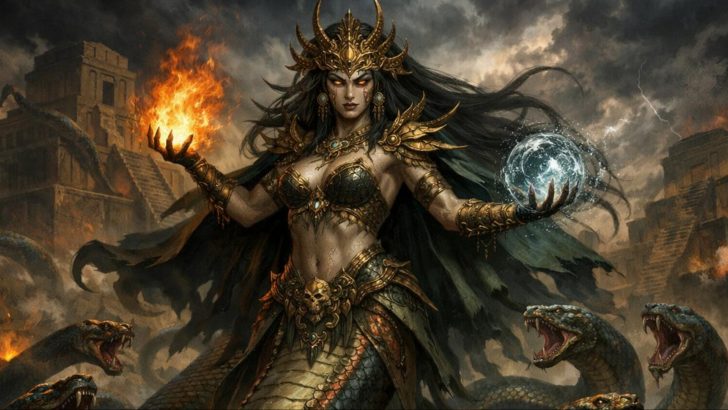
Tiamat is seen as a fearsome sea dragon or serpent, but there’s much more to her than the monstrous exterior.
Her story originates in Mesopotamian culture, especially in Babylonian mythology, where she symbolizes chaos, primordial waters, and the raw forces of nature.
Over time, her myth has been simplified, but her true significance goes beyond just being a monster.
Her story reveals much about how ancient humans understood the universo y divine authority.
1. Origins of Tiamat
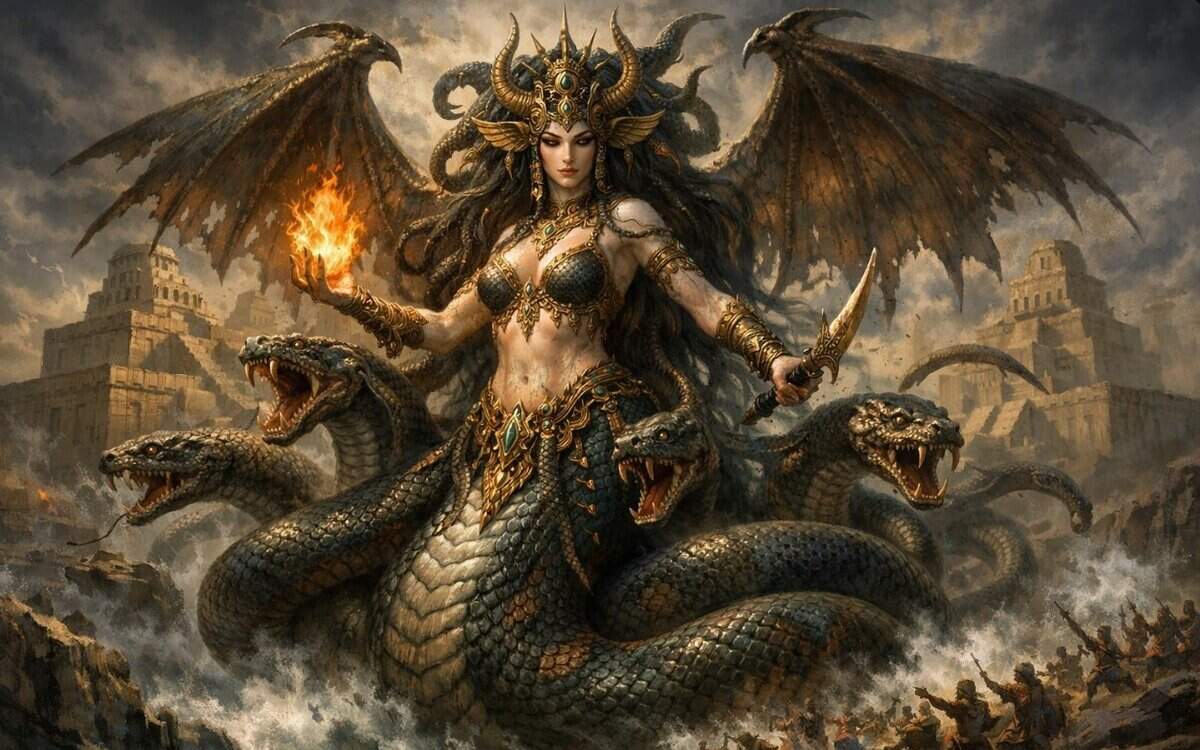
Tiamat’s roots stretch back to the earliest days of Mesopotamian civilization.
She plays a prominent role in the “Enuma Elish,” a creation myth from around the 12th century BC, where she’s described as a chaotic sea goddess.
She represents the primal chaos from which everything else emerges.
The Mesopotamians believed that before the world was given order, there was only the limitless, tumultuous ocean – Tiamat’s domain.
Her myth reflects the understanding that chaos and order are locked in constant struggle.
This cosmic battle shaped their worldview: chaos had to be defeated by divine forces for civilization to flourish.
2. The Depiction of the Goddess
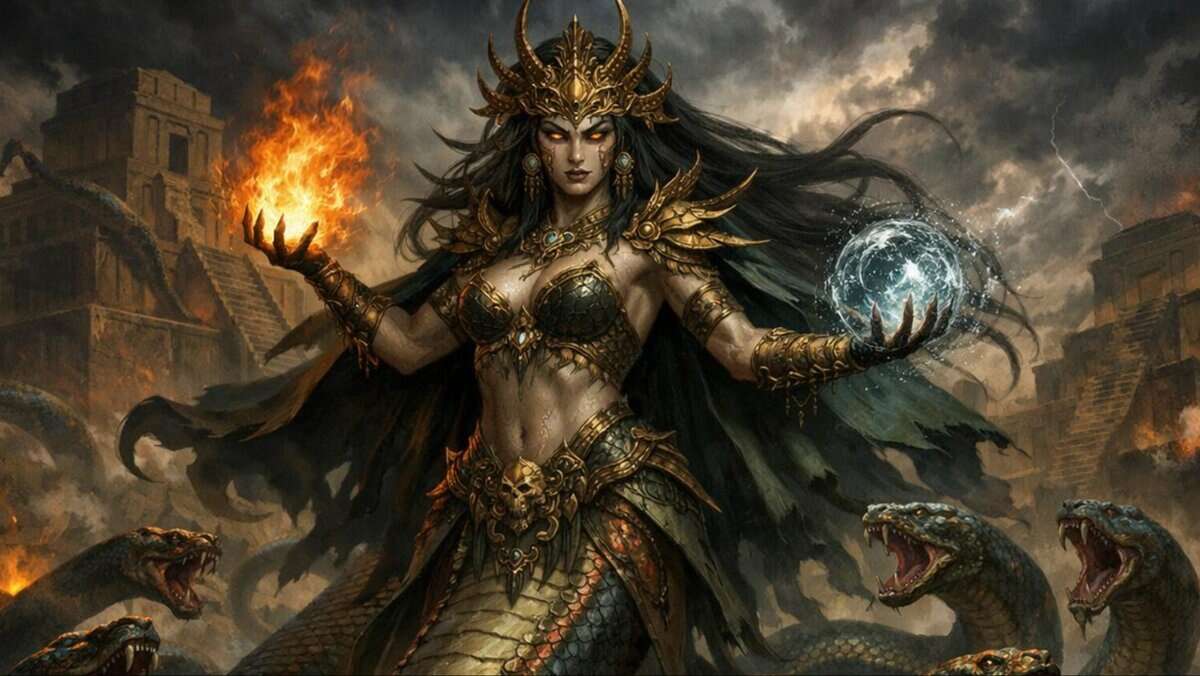
Visually, Tiamat is often depicted as a multi-headed sea serpent or dragon.
Her appearance highlights her role as the embodiment of chaos. She’s destructive, yet strangely awe-inspiring.
She symbolizes the primal waters and natural forces that existed before the ordered world as we know it.
Her serpentine form and monstrous features are a visual cue for her wild nature. In many ways, she’s a mirror of primal natural forces – both destructive and creative.
Her symbolism makes it clear that chaos, while dangerous, is also a necessary part of the cycle of existence.
3. Fear and Reverence
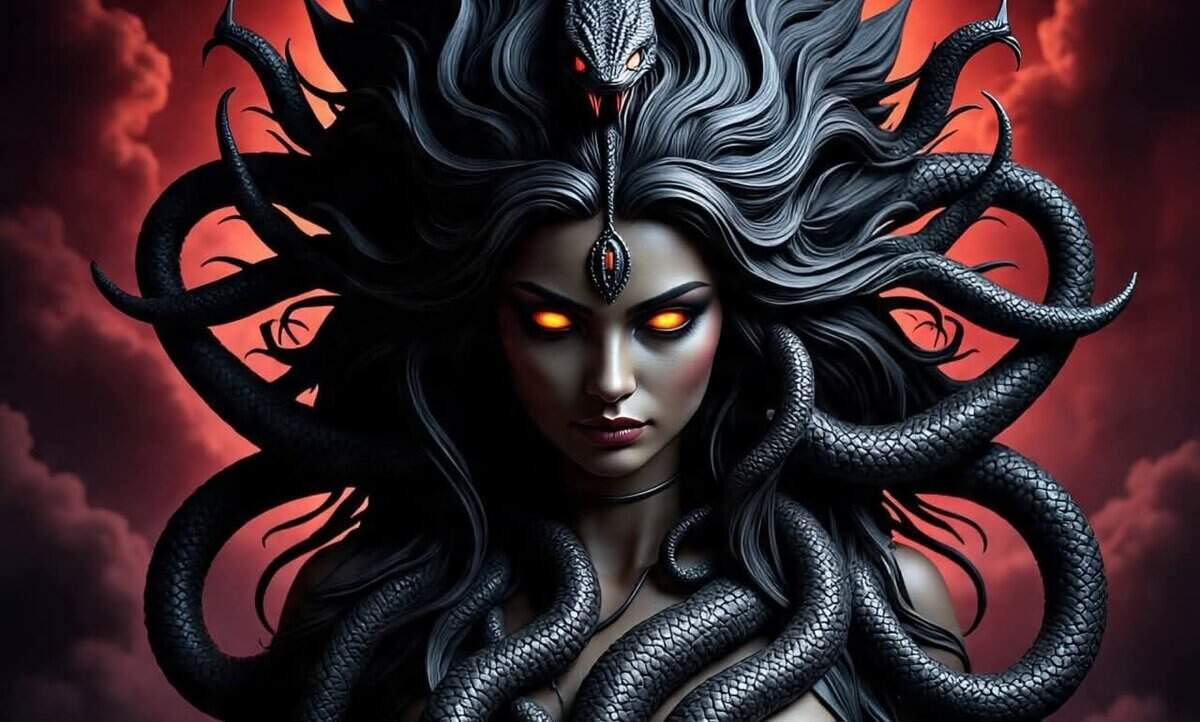
In ancient Mesopotamian culture, Tiamat was both feared and respected.
She represented the uncontrollable natural forces that could wipe out entire civilizations if left unchecked.
However, at the same time, she was a divine entity, part of the cosmic order that had to be acknowledged.
Her mythic battles with the gods, particularly Marduk, highlight this complex relationship.
Rituals and offerings presented to Tiamat likely aimed to appease her destructive power or keep her at bay.
This duality reflects how ancient peoples saw natural phenomena: as divine forces that demanded worship, but also needed to be controlled through ritual.
4. Tiamat’s Role in Creation
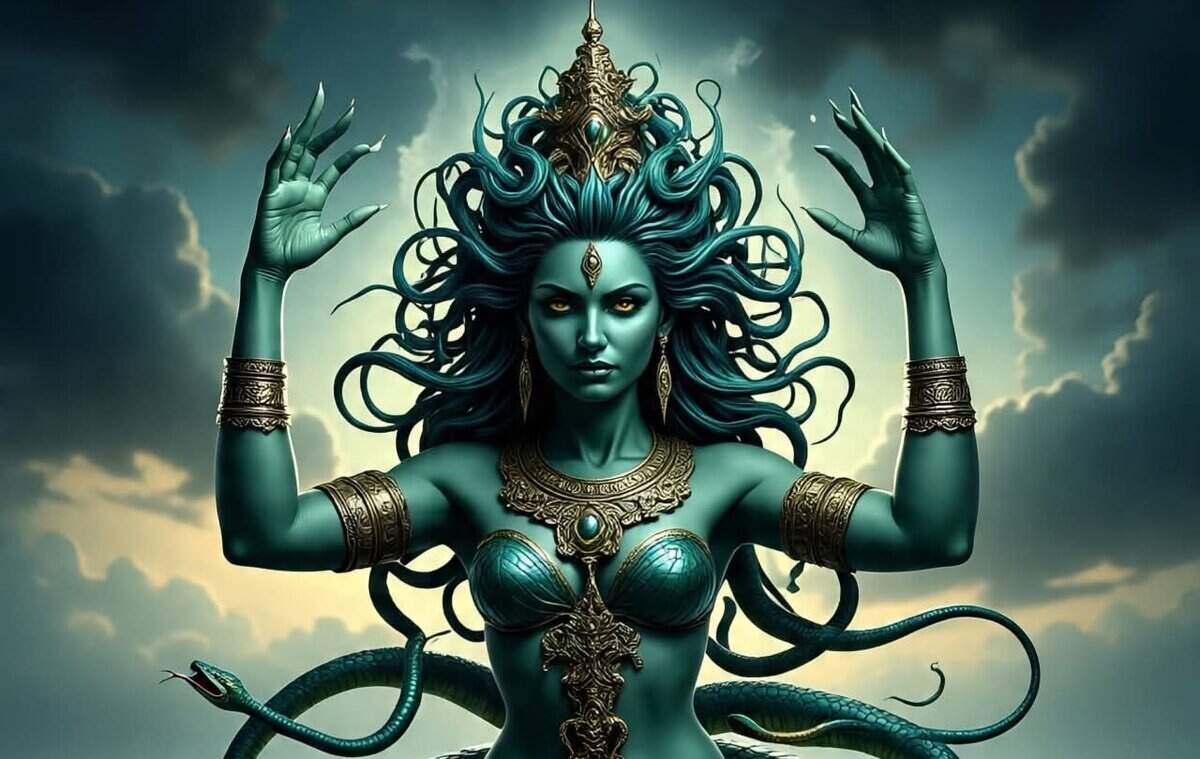
Tiamat’s story is central to the creation of the universe in the “Enuma Elish.”
After her mate Apsu is killed by the younger gods, she becomes furious and seeks revenge.
Her rage leads her to battle the divine order, culminating in her confrontation with Marduk, the storm god.
Marduk defeats her in a cosmic battle, and her body is used to create the heavens and earth, symbolizing the triumph of order over chaos.
Her defeat marks a pivotal moment when the universe takes shape.
This myth, with her in the middle, shows the transition from primordial chaos to a structured, divine cosmos.
5. Echoes and Influence

Tiamat’s myth didn’t stay only in Mesopotamia. Over centuries, her serpentine, chaotic image influenced other mythologies and stories.
Greek mythology, for example, features monsters like Typhon, a chaos-bringing serpent.
Her story also laid groundwork for later ideas about chaos in Western thought – such as Chaos as a primordial state in Greek myth or the idea of the void.
In modern spirituality, she’s been embraced as a symbol of feminine strength and rage.
6. Rituals and Religious Significance
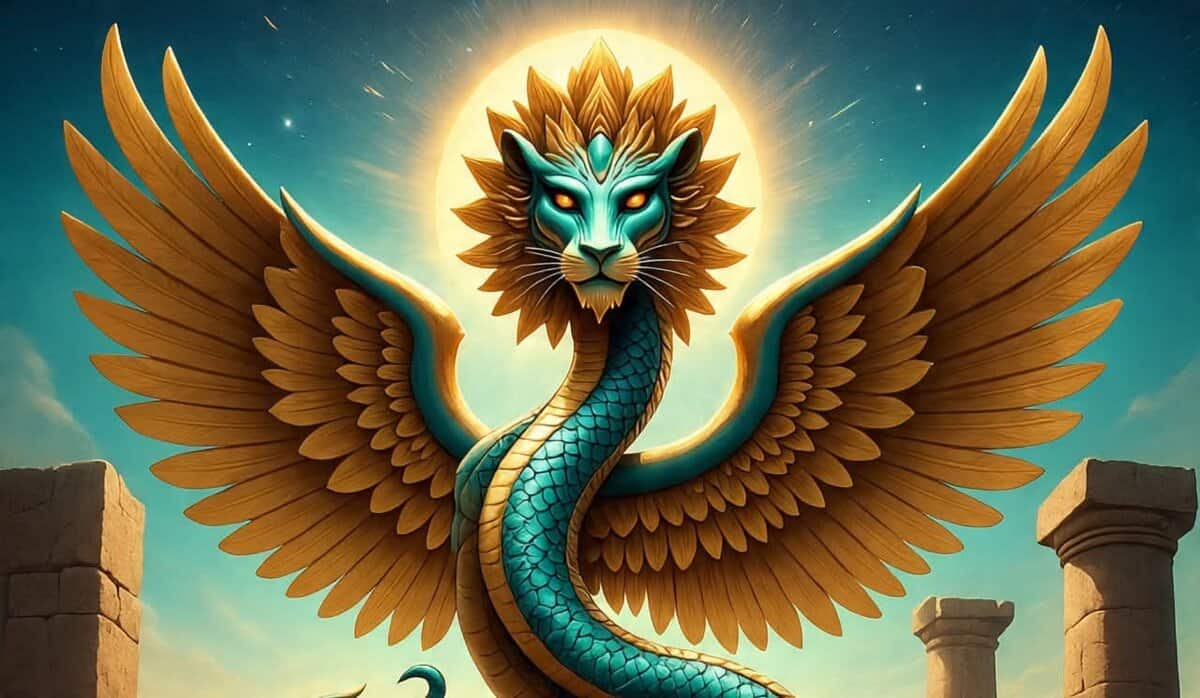
While concrete evidence of a dedicated Tiamat cult isn’t particularly strong, she was an important divine figure.
She was worshipped as a force of chaos – an entity that needed to be acknowledged and appeased.
Ritual offerings and ceremonies were probably aimed at keeping her destructive aspects in check, especially during natural calamities.
Temples specifically dedicated to her haven’t been discovered, but her myth suggests she was deeply involved in religious practices.
She represented both the destructive and creative powers of nature, and ancient Mesopotamians understood that respecting her was needed to maintain cosmic balance.
7. Feminine Power
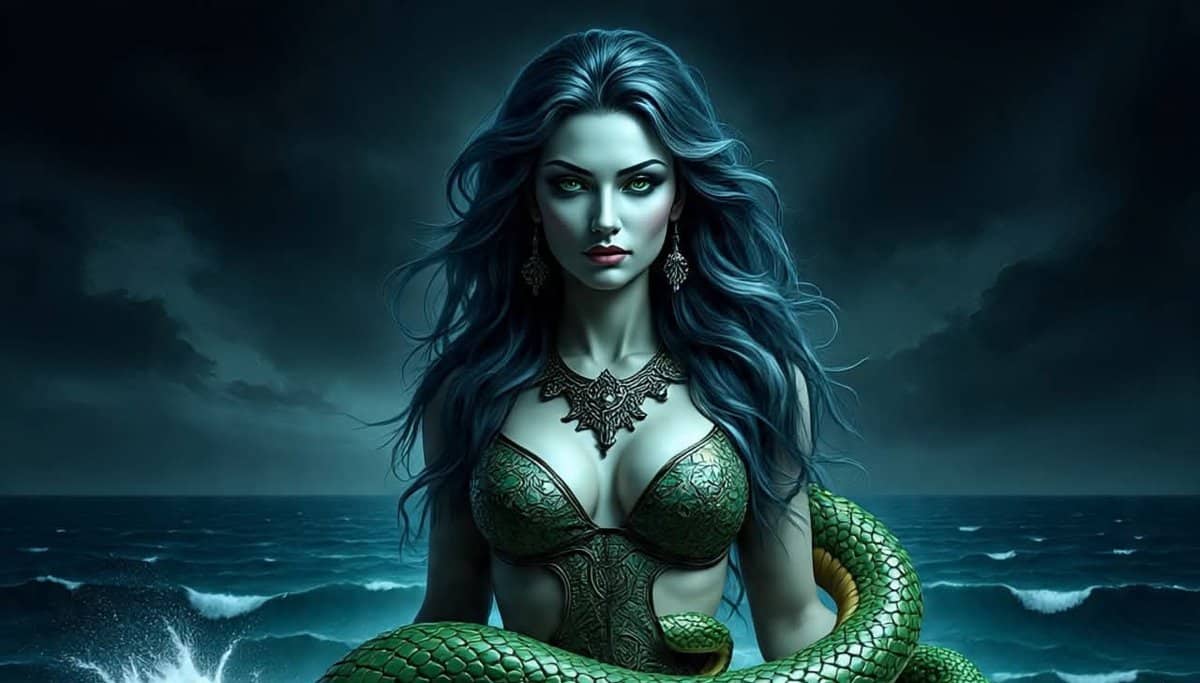
Tiamat stands out as a primordial feminine divine figure, embodying the duality of nature.
She’s the archetype that predates many later mythologies – an embodiment of raw, untamed feminine energy.
Her myth reflects the tension between chaos and civilization, with her defeat symbolizing the suppression of the wild feminine force.
Her feminine nature is also reflected in her life-giving power – destruction that leads to creation.
In some way, she’s a symbol of feminine strength that can’t be easily contained.
Her story prompts us to reconsider the idea of chaos as merely negative; sometimes, it’s the necessary foundation for new beginnings.
8. Tiamat’s Legacy
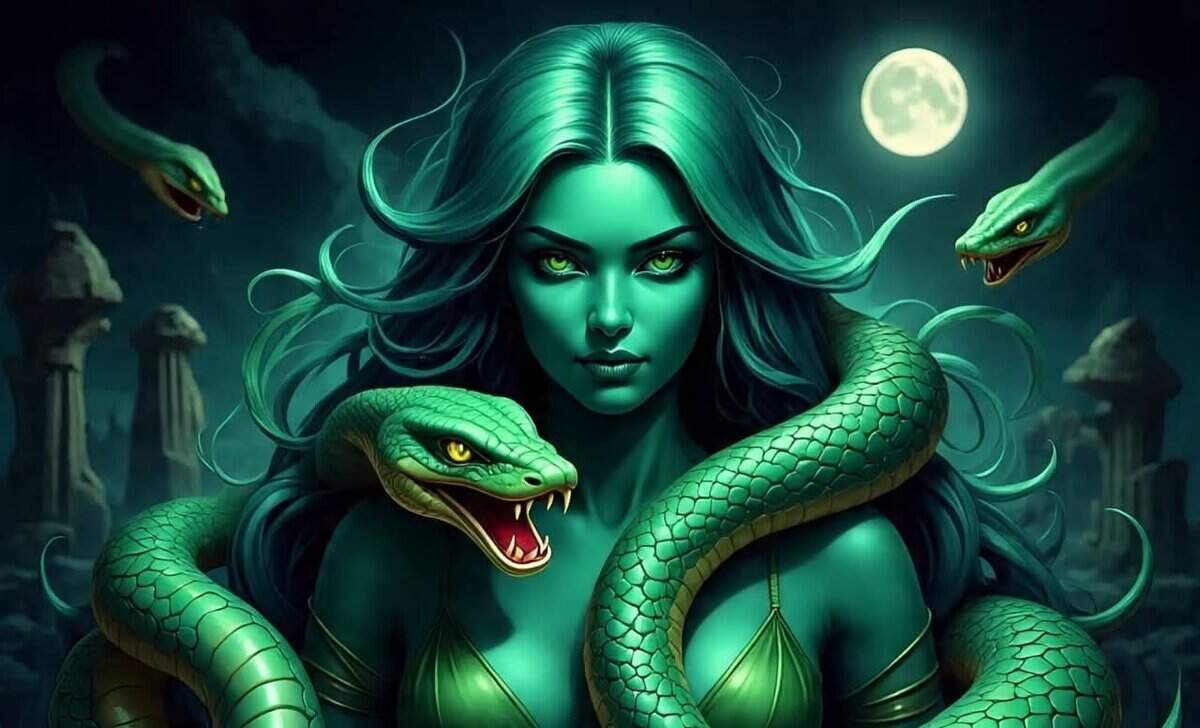
Today, Tiamat is a powerful symbol in contemporary spiritual and artistic circles.
She’s been given a new image: the goddess of feminine power and resistance against oppressive order.
Many modern interpretations embrace her as a force that’s necessary for transformation.
In pop culture, she appears in fantasy stories, video games, and occult traditions, reinforcing her status as a primal goddess.
Tiamat’s myth continues to challenge us, encouraging a view of the universe that respects both order and chaos as parts of a greater whole.

A little Aquarius, devoted to writing and embroidery. Through my writing, I hope to empower readers to align with their true selves and navigate life’s mysteries with confidence.