
The Vikings have become one of history’s favorite groups to exaggerate. Popular culture has given us enormous men in horned helmets, nonstop battles, magical weapons, and enough dramatic shouting to make every Scandinavian village sound like it had a permanent heavy-metal festival happening.
The real Vikings were arguably even more interesting.
From surprisingly sophisticated grooming habits to long-distance voyages, complex legal systems, and bizarrely creative methods of getting attention, Viking-age Scandinavians had lives that were considerably more complicated than the stereotypical image of a bearded warrior swinging an axe. They were farmers, traders, explorers, craftspeople, settlers, politicians, and, yes, raiders.
Some of the strangest Viking facts sound like modern inventions. But archaeological discoveries, written sources, and historical research show that several of these seemingly ridiculous details are actually true.
Here are ten Viking facts that sound completely made up but are actually real.
1. Vikings Did Not Actually Wear Horned Helmets
Let’s start with the biggest betrayal of Viking pop culture: the horned helmet is basically a historical fake.
Despite appearing everywhere from movies to sports logos, there is no good archaeological evidence that Viking warriors routinely wore helmets with horns sticking out of them. Surviving Viking-age helmets are extremely rare, and the famous Gjermundbu helmet, discovered in Norway, has no horns.
So where did the image come from?
The horned Viking helmet became popular much later, particularly through 19th-century romanticized depictions of Scandinavia and productions of Wagner’s operas. Artists wanted Vikings to look dramatic, intimidating, and unmistakably “Viking,” apparently deciding that a normal helmet simply wasn’t doing enough.
Real helmets were much more practical. A helmet exists primarily to stop someone from hitting you in the head, which is already a fairly demanding job. Adding giant horns would make it harder to move, easier to grab, and generally terrible for combat.
So if you see a Viking wearing horns, congratulations: you have probably met a Viking from the imagination of a 19th-century costume designer rather than the Viking Age.
2. Vikings Were Surprisingly Obsessed With Personal Grooming
The stereotypical Viking is usually imagined as a filthy warrior who spends his free time pillaging villages and aggressively refusing to bathe.
The reality is considerably cleaner.
Archaeological discoveries from Viking-age Scandinavia include combs, tweezers, ear spoons, razors, and other grooming tools. Combs in particular appear to have been common. Vikings cared about their appearance, and written sources suggest that grooming and bathing were regular parts of life.
In fact, some contemporary observers from other cultures complained that Scandinavian visitors bathed and groomed themselves frequently enough to attract the attention of local women. One famous account by the Arab traveler Ahmad ibn Fadlan describes Rus men washing themselves, although his reaction was considerably less enthusiastic than you might expect.
Viking-age people also appear to have cared about hairstyles, beards, and clothing.
So the Viking warrior may have spent the morning sharpening an axe, but there was a reasonable chance he also spent time combing his hair.
History’s most intimidating raiders apparently did not want to go raiding with bedhead.
3. They Traveled to North America Centuries Before Columbus
This one sounds like something from an alternate-history movie, but it is firmly established archaeology.
Norse explorers reached North America around the year 1000, roughly five centuries before Christopher Columbus’s famous 1492 voyage.
The strongest evidence comes from L’Anse aux Meadows in Newfoundland, Canada. Archaeologists discovered remains of a Norse settlement there, including structures, ironworking evidence, and artifacts consistent with Viking-age Scandinavian activity.
Radiocarbon evidence has placed Norse activity at the site around the year 1021.
The Vikings did not simply stumble across America and immediately establish a massive Scandinavian empire. Their North American presence appears to have been relatively limited and temporary. Norse sagas also describe voyages to lands they called Vinland, although the sagas were written down centuries after the events they describe and therefore need to be treated carefully.
Still, the basic fact remains astonishing.
Around a thousand years ago, Norse sailors crossed the North Atlantic and reached North America using wooden ships, navigation skills, and an impressive willingness to look at an enormous ocean and say, “Sure, let’s see what’s over there.”
4. Vikings Used an Advanced System of Navigation
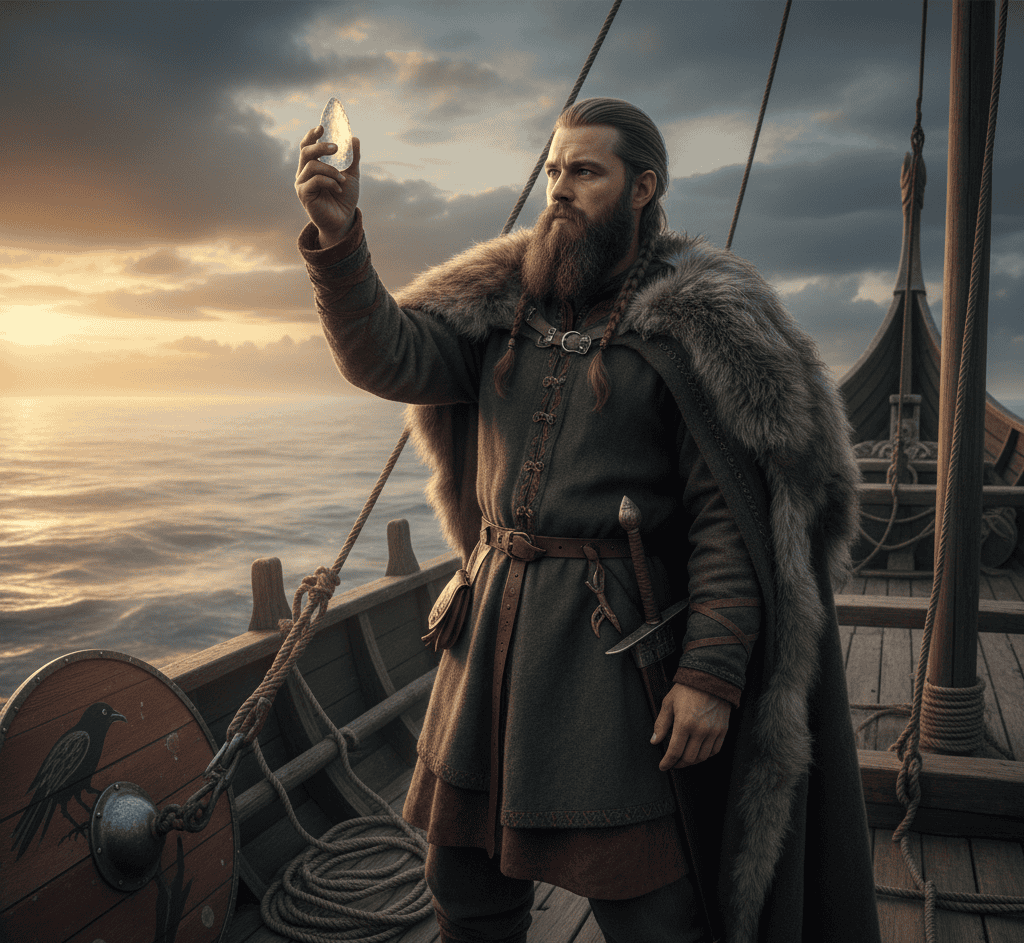
Viking sailors managed to travel enormous distances across the North Atlantic without modern maps, GPS, or even a helpful little voice saying, “Recalculating.”
Their success wasn’t magic. It depended on detailed knowledge of the sea, winds, currents, coastlines, landmarks, and celestial navigation.
They could use the sun and stars, observe birds and whales, monitor weather patterns, and recognize changes in the ocean. Some researchers have also investigated the possible use of sunstones, crystals that may have helped sailors determine the sun’s position under cloudy conditions.
The exact historical use of sunstones for navigation is still debated, so it shouldn’t be presented as a guaranteed Viking GPS system. But experimental research has shown that certain crystals could potentially help identify the direction of polarized light from the sky.
Viking ships were also extremely well suited to their environment. Their shallow drafts allowed them to travel along coastlines and into rivers, while their sails provided the speed necessary for long voyages.
Basically, Vikings had no Google Maps and still managed to show up everywhere.
5. Viking Women Could Own Property and Seek Divorce
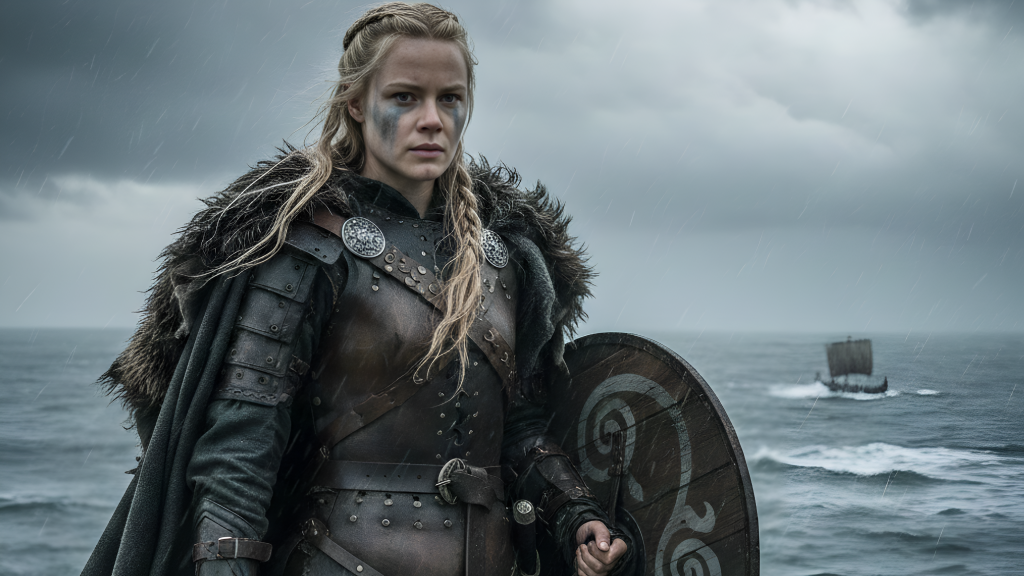
The Viking world was certainly not an egalitarian paradise, but women could have more legal and economic agency than the stereotype of the completely powerless medieval wife suggests.
Evidence from Viking-age Scandinavia indicates that women could own property, inherit wealth in certain circumstances, manage households, and participate in economic activity. Some historical and legal sources also indicate that women could initiate divorce.
The exact rights varied by place, period, and social status, and the surviving evidence comes from a mixture of archaeology, later written laws, and sagas. So it would be misleading to imagine Viking society as modern Scandinavia with swords.
Still, women could have significant responsibilities and authority, particularly within households and estates.
Archaeology also provides evidence of women involved in textile production, trade, and other forms of skilled work. The famous burial at Birka in Sweden once caused enormous debate because the occupant was long assumed to be male based on the grave goods. Modern genetic analysis identified the individual as biologically female, reigniting discussions about women and warfare in Viking society.
The Viking Age was complicated. Apparently, history refused to fit neatly into our stereotypes.
6. Vikings Had a Legal Assembly Called the Thing
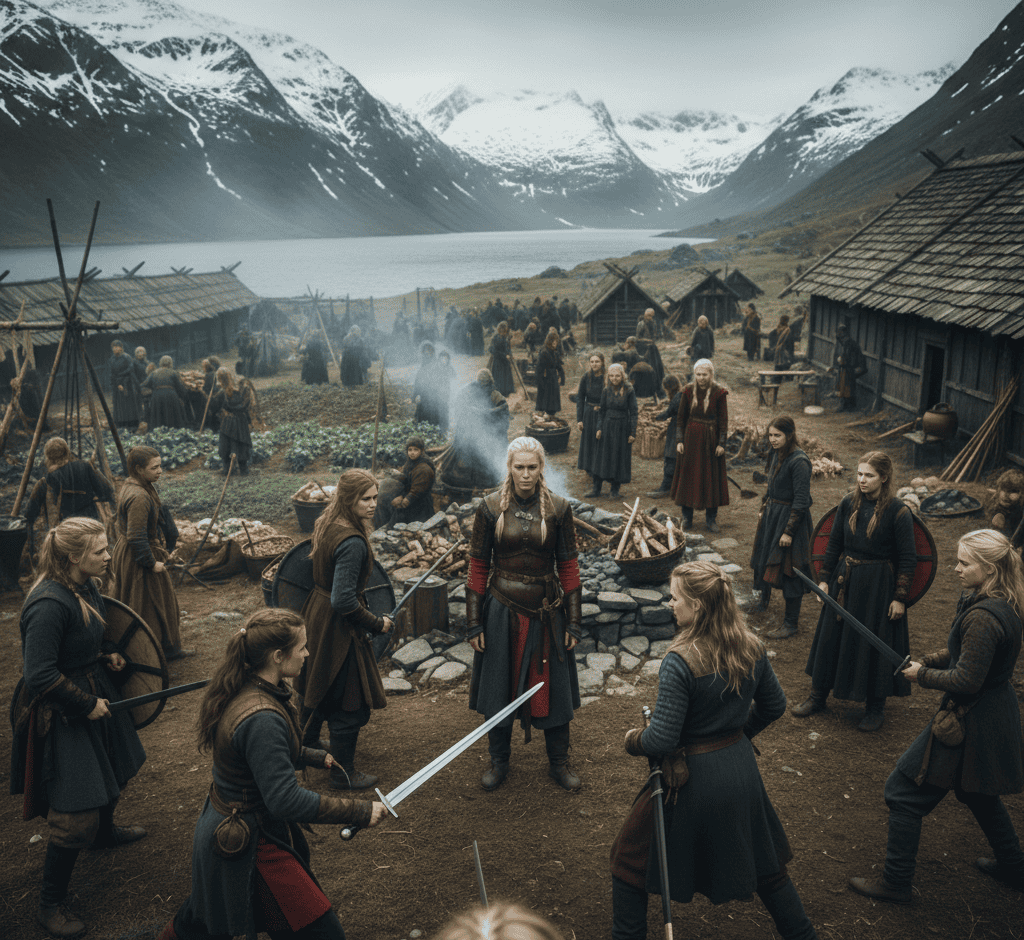
Vikings didn’t solve every disagreement by hitting each other with axes.
They also had laws.
Across Norse societies, assemblies known as 物事 provided places where people gathered to settle disputes, make decisions, hear legal cases, and discuss community matters. One of the most famous examples is Iceland’s Althing, traditionally established in 930.
These assemblies were important political and legal institutions.
That doesn’t mean Viking society had modern courts with comfortable chairs and someone politely asking everyone to silence their phones. Justice could be harsh, social status mattered enormously, and the legal system operated very differently from modern law.
But the existence of formal assemblies is still fascinating because it challenges the idea that Viking society was simply chaos interrupted by occasional raids.
There were rules, negotiations, legal procedures, political alliances, and consequences.
In other words, Vikings were perfectly capable of arguing without immediately reaching for a sword.
Sometimes they reached for a very long speech instead, which is perhaps the medieval Scandinavian equivalent of a 47-message group chat.
7. Viking Ships Could Be Dismantled and Transported Over Land

Viking ships were engineering masterpieces, but here’s where things become genuinely bizarre: their ships could sometimes be moved overland.
Viking-age ships were designed to be relatively light and flexible compared with many later sailing vessels. Their shallow drafts allowed them to operate in rivers and near shorelines.
This helped Norse travelers reach places far from the open ocean.
In Eastern Europe, Scandinavian traders and warriors traveled through river systems connecting the Baltic and Black Seas. Some routes required boats to be dragged across stretches of land between waterways.
Imagine seeing a group of Vikings arrive with a massive wooden ship and thinking, “Excellent. At least they’ll leave by sea.”
Then they pick up the ship and start dragging it across your lawn.
Their mobility helped connect Scandinavian travelers with enormous trading networks stretching across Europe and into the Byzantine and Islamic worlds.
The Viking Age wasn’t just about raiding monasteries. It was also about transportation, commerce, and connecting distant regions.
8. Vikings Traded With the Islamic World
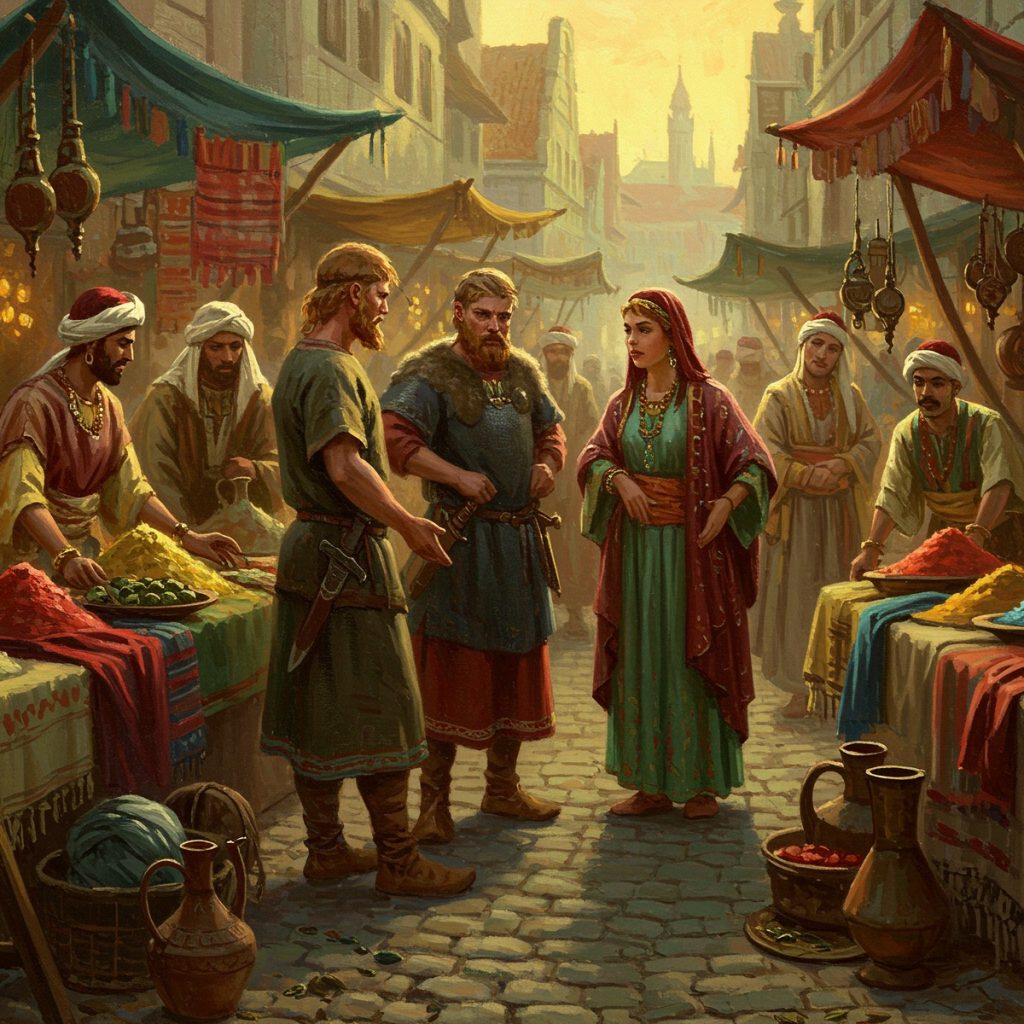
The Viking world was far more globally connected than the popular image suggests.
Norse traders traveled along river routes through Eastern Europe and established connections with the Byzantine Empire and the Islamic world. Archaeologists have discovered large numbers of Arabic silver coins, known as dirhams, in Scandinavia, particularly in areas associated with trade.
These coins provide striking evidence of long-distance commercial networks.
Viking-age traders exchanged goods such as furs, slaves, wax, amber, and other commodities for silver and luxury goods. Scandinavian objects have also been discovered far from Scandinavia, demonstrating how widely goods and people moved.
The connection wasn’t merely theoretical. The Rus, a group closely associated with Scandinavian traders and settlers in Eastern Europe, maintained important relationships with Byzantium.
So while one Viking might have been busy raiding a monastery in Western Europe, another could have been traveling eastward and participating in a trade network connecting Scandinavia with major cities of the medieval world.
The Viking Age was less “isolated barbarian island” and more “aggressively mobile international trading network.”
9. They Played Board Games Before Going Viking Was Cool
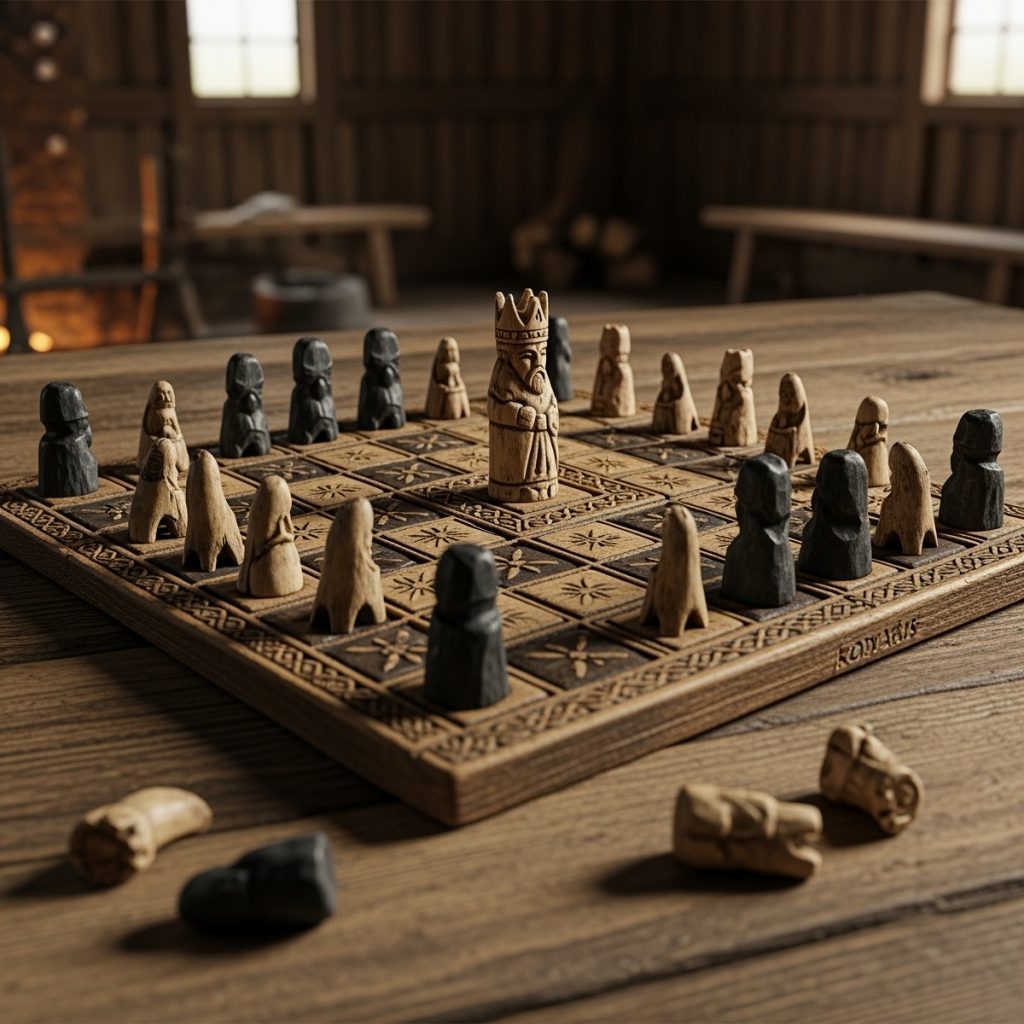
Vikings apparently understood an important truth: even professional warriors need something to do when nobody is currently available to raid.
Board games were popular in Viking-age Scandinavia.
One important family of games was tafl, including games such as hnefatafl. These were strategy games played on boards with pieces representing opposing forces. Archaeologists have found game boards and playing pieces at Viking-age sites, including in graves and settlements.
The exact rules of many historical versions aren’t completely certain, which is deeply frustrating for anyone who wants to recreate a Viking game night without first becoming an archaeologist.
Still, the evidence shows that strategic games were part of Scandinavian leisure culture.
And honestly, it makes sense. Vikings spent much of their lives dealing with complicated logistics, warfare, trade, politics, and family rivalries. A strategy board game probably felt like relaxing.
There is something wonderfully human about imagining a Viking warrior sitting down after a long day and saying, “Forget the battle. Let’s settle this on the board.”
Of course, someone probably still flipped the table eventually.
10. The Word “Viking” Did Not Mean an Ethnic Group
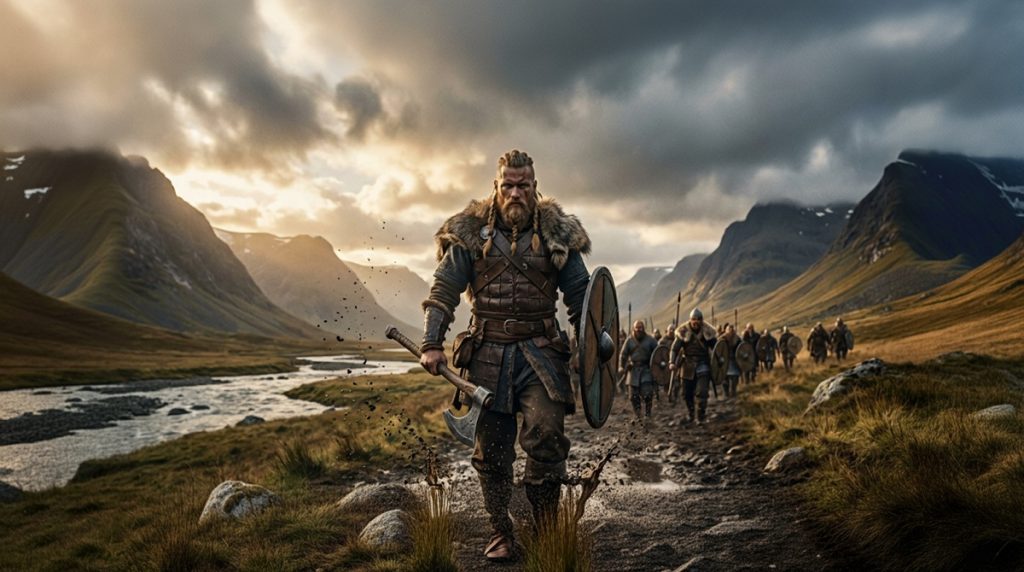
This may be the most important myth-busting fact of all.
“Viking” wasn’t simply the name of one unified Scandinavian people. The Viking Age included people from areas corresponding to modern Denmark, Norway, Sweden, and other parts of the Norse world. They spoke related languages and shared cultural traditions, but they weren’t members of a single Viking nation.
The Old Norse word víkingr was associated with someone who went on a víking, generally referring to raiding or overseas expedition activity. Not every Scandinavian during the Viking Age was a raider.
Most people were farmers, craftspeople, merchants, fishers, landowners, or members of local communities.
So calling everyone from Viking-age Scandinavia a “Viking” is a little like calling everyone in the modern world a “pirate” because some people work on pirate ships.
The Viking Age was a period of extraordinary movement, expansion, trade, warfare, settlement, and cultural exchange. Raiding was certainly part of it, but it wasn’t the entire identity of the people who lived through it. The real Vikings weren’t quite the horned-helmet, axe-swinging caricature we’ve inherited from popular culture. They were much stranger, more sophisticated, and more human — which, frankly, makes them considerably more interesting.

Lover of good music, reading, astrology and making memories with friends and spreading positive vibes! 🎶✨I aim to inspire others to find meaning and purpose through a deeper understanding of the universe’s energies.