

Melchizedek is one of the most mysterious figures in the Bible. He appears briefly in the book of Genesis, yet his role carries deep spiritual and symbolic meaning.
Despite the short mention, he is later discussed in the Psalms and the New Testament, where his importance grows even more.
He is described as both a king and a priest, a rare combination in biblical history.
Because so little information is given about his background, origin, or death, Melchizedek has become the subject of many interpretations and theological discussions.
These five facts explore what the Bible says about him and why his story continues to fascinate readers today.
1. He Was Both a King and a Priest

Melchizedek is introduced in Genesis as the king of Salem and a priest of God Most High.
This combination of roles was unusual in the ancient world, where political and religious authority were usually separate.
As king, he ruled over a city believed by many scholars to be an early form of Jerusalem.
As a priest, he served the one true God long before the formal priesthood of Israel was established.
When Abraham returned from battle, Melchizedek met him, blessed him, and brought bread and wine as a gesture of peace and honor.
Abraham responded by giving him a tenth of everything he had gained, showing deep respect for his spiritual authority.
This moment reveals that Melchizedek held a position of great honor and influence.
His dual role as ruler and spiritual leader made him a unique figure whose authority came from both earthly leadership and divine service.
2. His Background and Origin Are Unknown

One of the most intriguing details about Melchizedek is what the Bible does not say about him.
Unlike most important figures in Scripture, there is no record of his parents, birthplace, or family line.
There is also no mention of his death or the end of his priesthood.
This absence of genealogy is especially unusual in biblical writing, where family lines are often carefully recorded.
Because of this, later writers and scholars saw symbolic meaning in the silence. The book of Hebrews describes him as having no recorded beginning or end, emphasizing the timeless nature of his priesthood.
This does not necessarily mean he was not human, but it presents him as a figure who stands outside normal historical patterns.
The mystery surrounding his origin has led to many interpretations throughout history.
Some see him as a symbolic figure, while others see him as a historical person whose background was intentionally left unknown to highlight his unique spiritual role.
3. He Is Connected to the Promise Given to Abraham
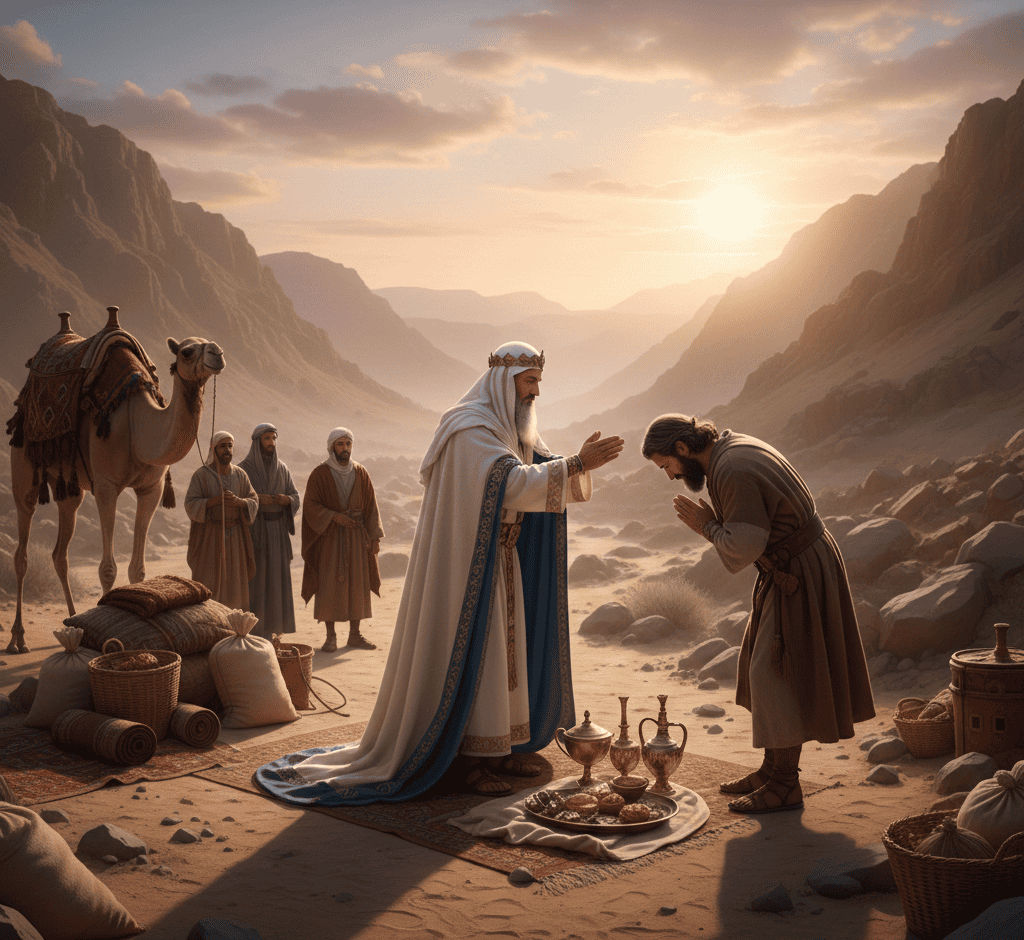
Melchizedek’s meeting with Abraham takes place at a significant moment. Abraham had just defeated several kings in battle and rescued his nephew Lot.
Instead of claiming personal glory, Abraham was met by Melchizedek, who blessed him in the name of God Most High and acknowledged that God had given him victory.
This blessing reinforced the idea that Abraham’s success came from divine favor rather than military strength alone.
By giving a tenth of his spoils, Abraham recognized Melchizedek’s spiritual authority and honored his priesthood.
This interaction is important because it takes place before the Law of Moses and the later priesthood of Israel.
It shows that the worship of the true God and the practice of honoring His priest existed earlier than the formal religious system.
The event also connects Melchizedek to the larger biblical story of God’s covenant with Abraham, placing him within the unfolding plan that would later shape the nation of Israel.
4. Psalm 110 Links Him to a Future Eternal Priest
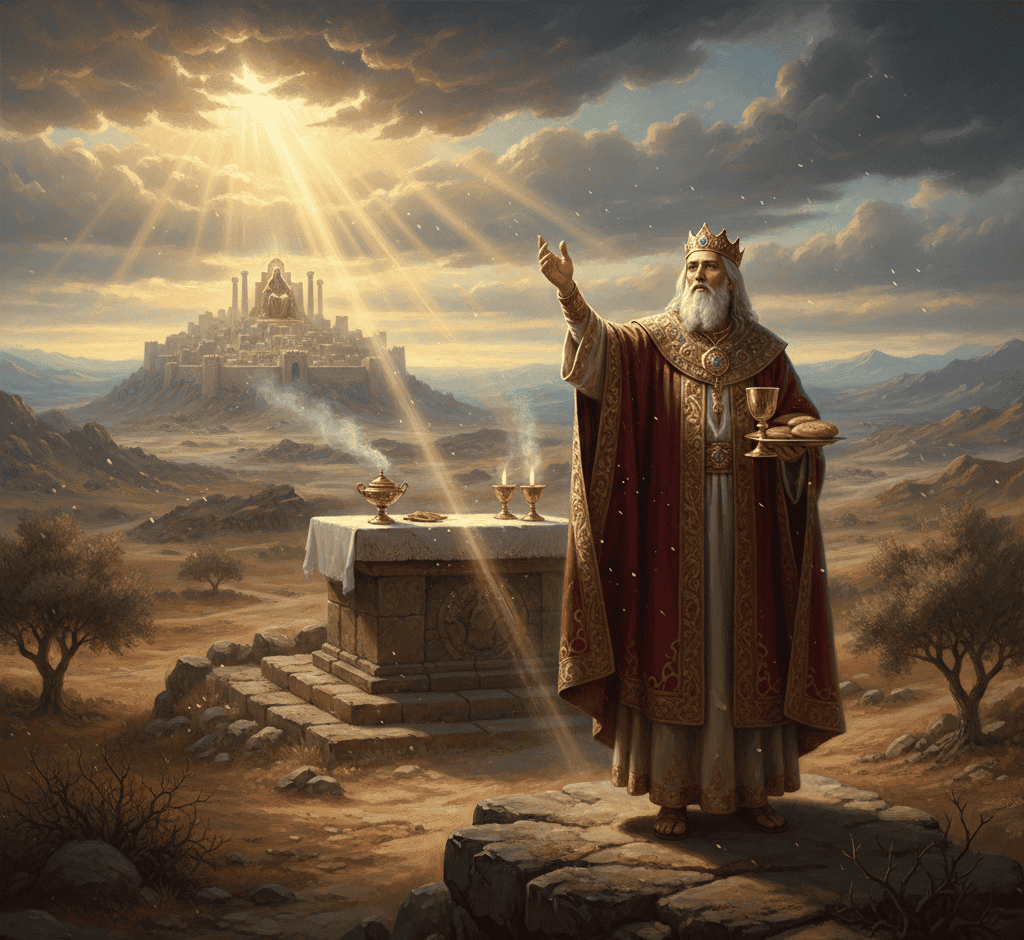
Melchizedek appears again centuries later in Psalm 110, a passage widely understood as prophetic and royal in nature.
The psalm declares that a future ruler will be a priest forever in the order of Melchizedek.
This statement is significant because Israel’s kings normally came from the tribe of Judah, while priests came from the tribe of Levi.
The idea of a priest king pointed back to Melchizedek’s unique role and forward to a new kind of spiritual leadership.
The phrase forever suggests a priesthood that does not end, unlike the temporary service of the Levitical priests.
This connection kept Melchizedek’s name alive in Israel’s religious thought long after his brief appearance in Genesis.
It also prepared the way for later interpretation in the New Testament.
By linking him to a future eternal priest, Psalm 110 transformed Melchizedek from a historical figure into a lasting symbol of divine authority and unending spiritual service.
5. The New Testament Presents Him as a Foreshadowing of Christ
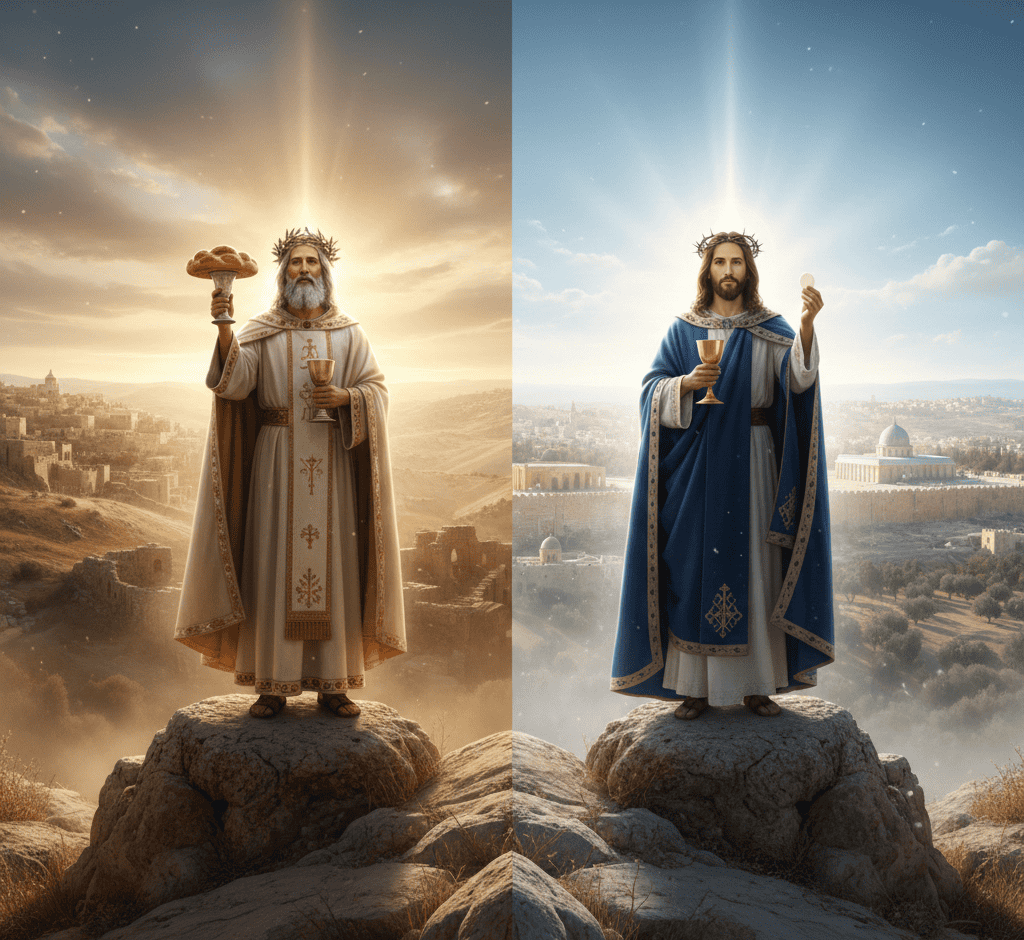
The book of Hebrews gives the most detailed explanation of Melchizedek’s significance.
It presents him as a pattern that points to the priesthood of Jesus Christ.
Like Melchizedek, Jesus is described as both king and priest, combining authority and spiritual leadership.
Hebrews emphasizes that Melchizedek’s priesthood came directly from God rather than from a human family line, just as Christ’s authority comes from divine appointment.
The absence of recorded genealogy for Melchizedek is used symbolically to illustrate a priesthood that is eternal and not limited by time.
The comparison also highlights that Christ’s priesthood is greater than the Levitical system because it is permanent and perfect.
Through this teaching, Melchizedek becomes more than a mysterious figure from the past.
He serves as a theological bridge between the Old Testament and the New, helping readers understand the unique and lasting role of Christ as both king and eternal high priest.

私は生まれたときから、常に神との強いつながりを感じていた。作家として、また指導者として、私の使命は、人々が最も暗い時代に愛と幸福と内なる強さを見つけるのを助けることである。