
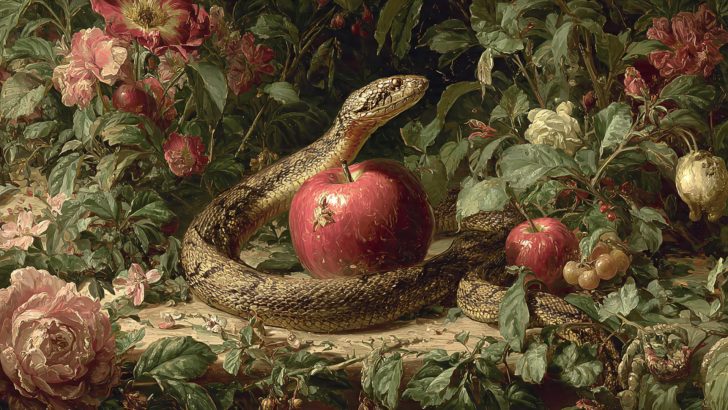
Enki is the trickster god from Sumerian myths, who defied the gods’ harshest commands just to protect humanity.
This snake god is an archetype of 悟り, who, much like Prometheus in the Greek mythology, offers humanity the wisdom to save itself.
His myths reveal a different narrative, where wisdom and mercy are at the core of divine action.
Sumerian mythology inspired the Old Testament of the Bible, and Enki’s role will force you to question what you know about God, heaven, and the snake’s temptation.
1. How Enki Created Humanity
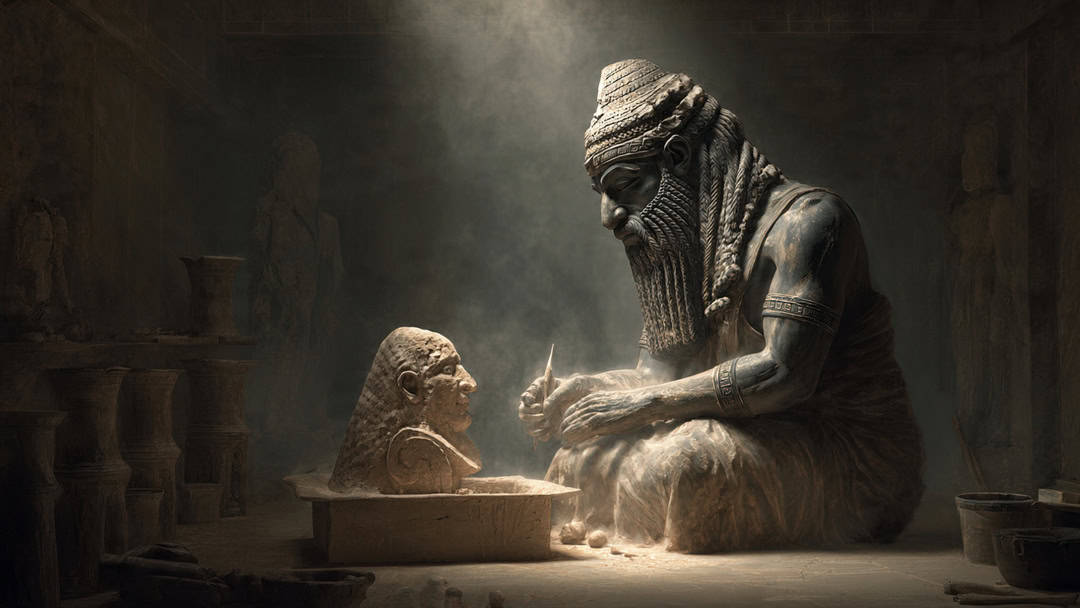
In Sumerian myths, Enki’s central role is as the creator of humans, a job he took on to free the lesser gods from backbreaking labor.
The snake god essentially created humanity to serve the gods.
He crafts humans from clay, helping them to take over the chores of irrigation and farming.
Though he’s a trickster, the Sumerian creation myth highlights his compassion.
He responded to divine exhaustion, looking to protect his fellow gods, as he would later step in to protect humanity.
Enki’s creation myth shows that wisdom and innovation are rooted in kindness.
2. Protector Against the Flood

In the Atrahasis epic, the chief god Enlil decides to wipe out humanity with a cataclysmic flood.
Unlike Enlil, who sees humans as troublesome, Enki warns Atrahasis and instructs him to build an ark.
This act of defiance isn’t reckless rebellion but a compassionate act to save mankind, his own creation.
Enki’s wisdom surpasses the authority of the gods, showing that divine knowledge can serve humanity rather than oppress it.
The snake god’s role in this epic makes him a symbol of salvation.
He’s an advocate for human survival in a universe ruled by capricious gods who threaten destruction at will.
From this story alone, we’re able to draw numerous parallels, with the myth of Prometheus, Noah, and even Lucifer’s rebellion.
3. The Trickster God
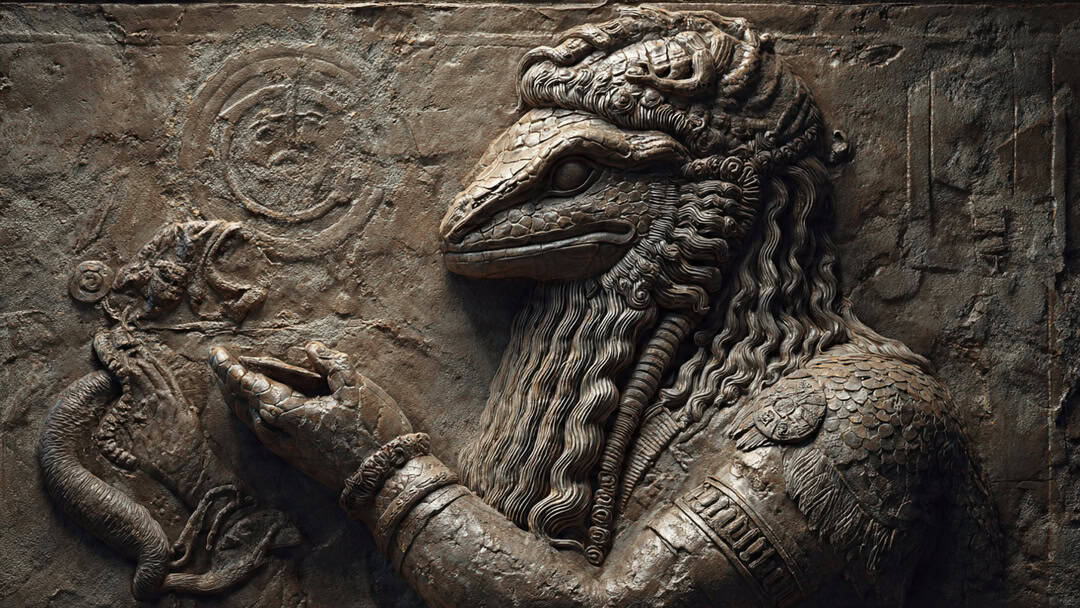
Enki’s personality is full of contradictions.
He is 賢い, but also a trickster who drinks too much, acts foolishly, and indulges in sexual mischief.
His cunning is his greatest strength, but it also gets him into trouble. This duality makes him relatable precisely because he’s not perfect, but flawed like a human.
His wisdom comes with flaws, which is deeply reassuring in itself.
This complexity turns the snake god into a being who embodies both the brilliance and the messiness of real life, making him more accessible and layered.
4. Fertility and Healing
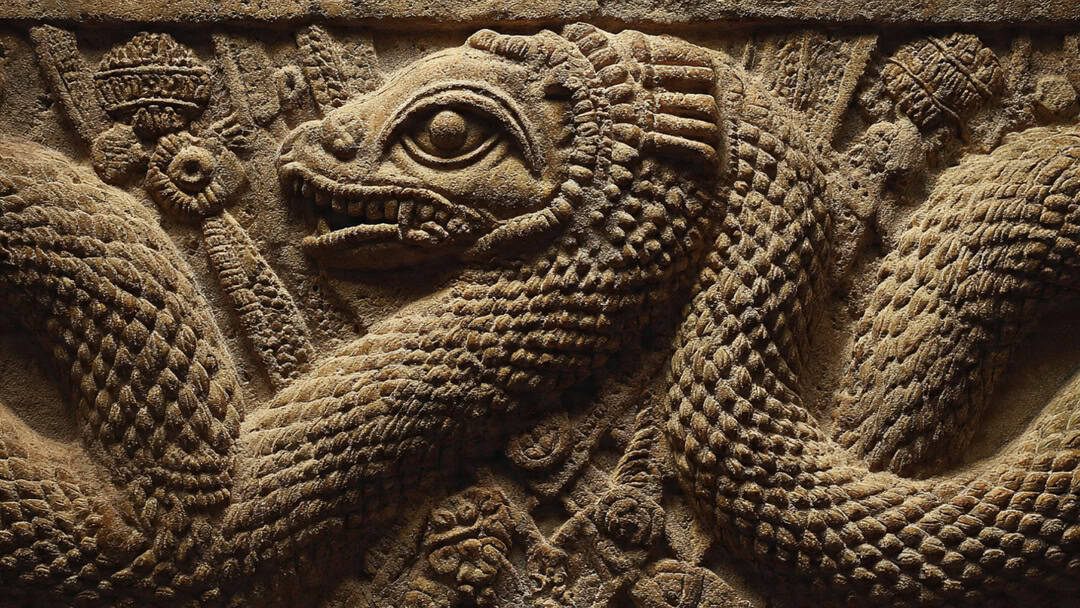
One of the most poetic myths involves Enki eating forbidden plants and falling ill.
Ninhursag, the earth mother goddess, then creates eight deities to heal his broken body parts. This story speaks of fertility, growth, and the nurturing power of nature.
It reflects the idea that wisdom and the creation of life are interconnected.
Enki’s illness and recovery symbolize the cycles of destruction and renewal, suggesting that failure is a natural part of progress.
This myth highlights fertility and healing as divine virtues, reminding us that even the snake god must obey the laws of nature.
5. God of Order
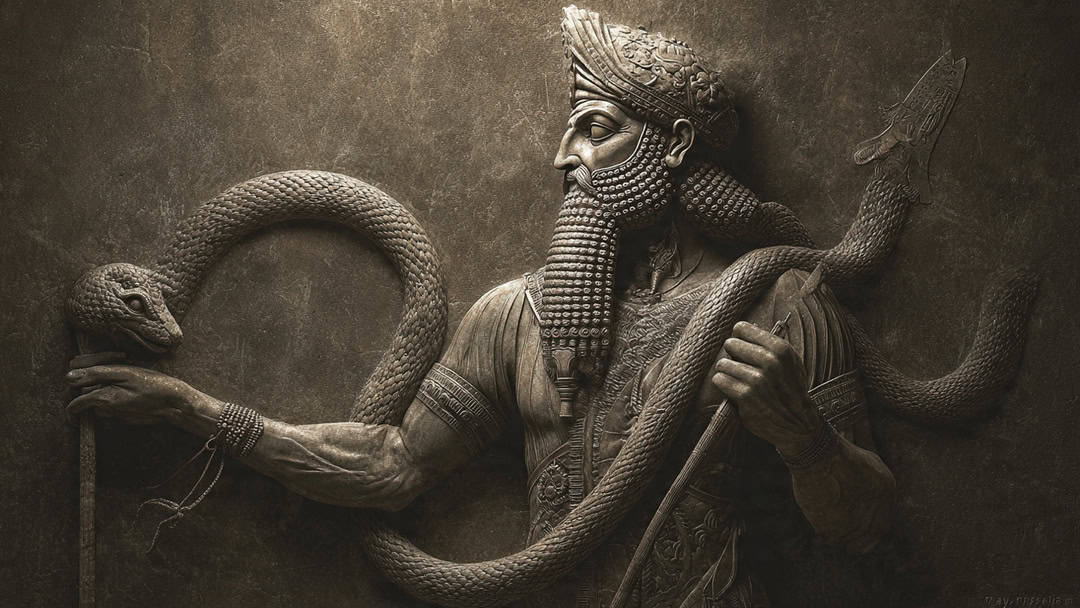
Enki’s travels and organizational skills are central to his mythos.
He assigns roles to gods and goddesses, establishing a cosmic order and preventing chaos. The snake god maintains harmony in a universe prone to disorder.
Enki’s work shows him understanding complex systems and creating rules that allow life to flourish.
He shows us that divine intelligence means balancing order and chaos. This aspect of Enki suggests that the role of the divine is fundamentally nurturing stability.
He challenges the notions of gods as wrathful tyrants.
6. Inanna and Enki
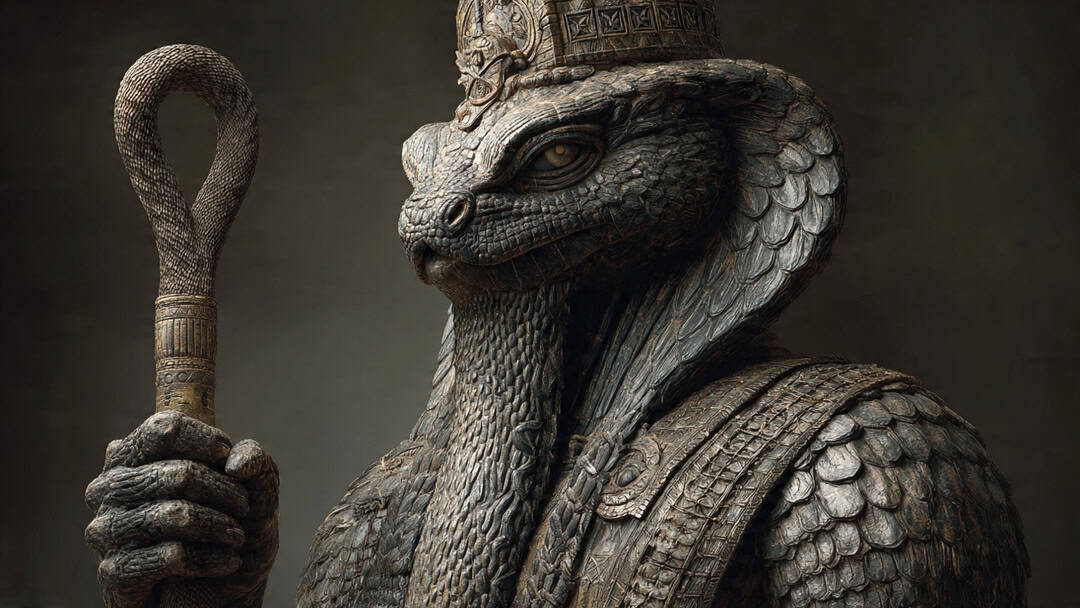
In the myth where Inanna tricks Enki into giving her the divine Me, we can see how knowledge and power are intertwined.
The snake god, after a drunken party, bestows Inanna with the rules of civilization: wisdom, arts, そして laws.
The story reveals that divine knowledge can be shared through cleverness and trickery, and that it shouldn’t be hoarded.
It also hints that civilization was built on such acts; by outsmarting the gods, humans gain the tools to shape their destiny.
The myth challenges the idea of divine power being static.
Instead, wisdom can be transferred, stolen, and gained through various means.
7. The Biblical Snake
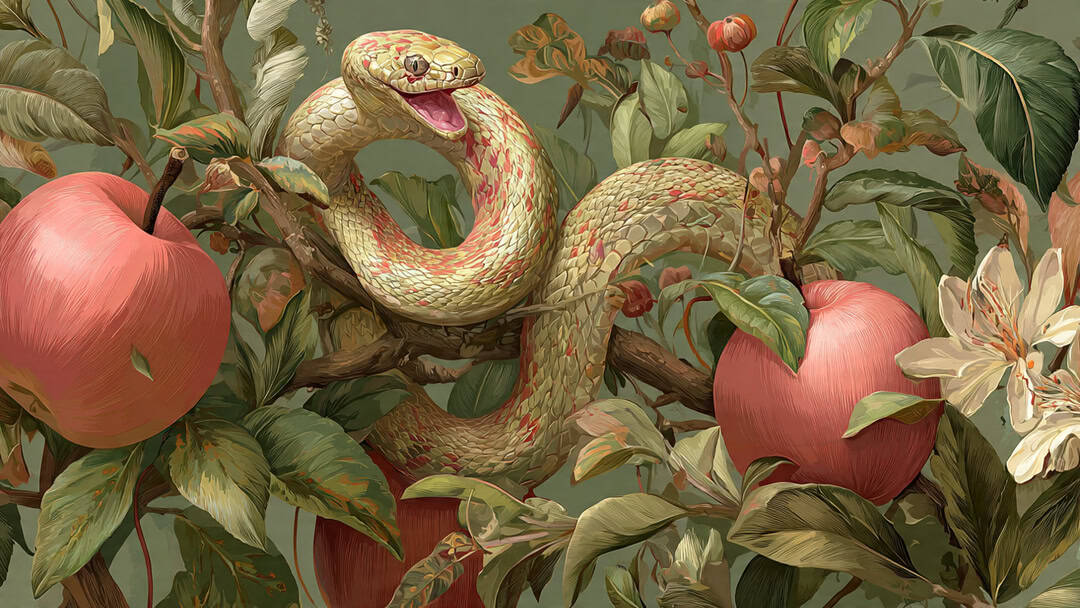
The biblical story of the serpent in Eden is presented as the ultimate evil; it tempts humans into sin and disobedience.
However, if we strip away the religious dogma and look at the deeper history, the snake could symbolize wisdom, rebirth, freedom, enlightenment…
In many cultures, snakes are sacred, linked to 変形 そして かくれたちしき.
The biblical story casts the serpent as the villain, turning human curiosity and desire for knowledge into sin.
This reversal raised the question: Why was Enki turned into the bad guy?
How come his efforts at enlightening and freeing humanity were spun into him trying to harm us?
We know the older Sumerian myths have inspired some fundamental biblical stories, including the serpent that offers wisdom to humanity.
So, why suppress this pursuit of freedom?
8. From Wisdom to Sin
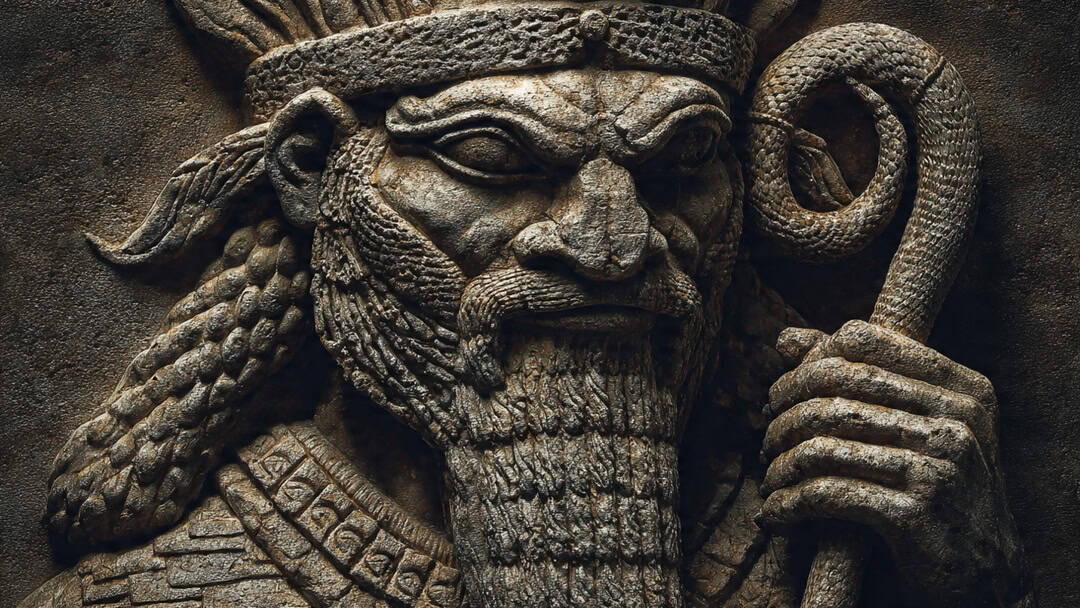
So, why did the perception of the snake turn from a symbol of wisdom to a symbol of evil?
Cultural and religious power, of course, played the crucial role.
As societal hierarchies solidified, authority figures benefited from discouraging independent thinking that might challenge their dominance.
It’s a tale as old as time, really.
The serpent’s association with enlightenment became a threat to those who wanted unconditional obedience.
This reflects a broader tendency to suppress wisdom that might empower individuals to question authority, which persists to this day.
It’s a cultural move to keep people obedient and dependent.
9. Humanity’s Journey and Rebellion
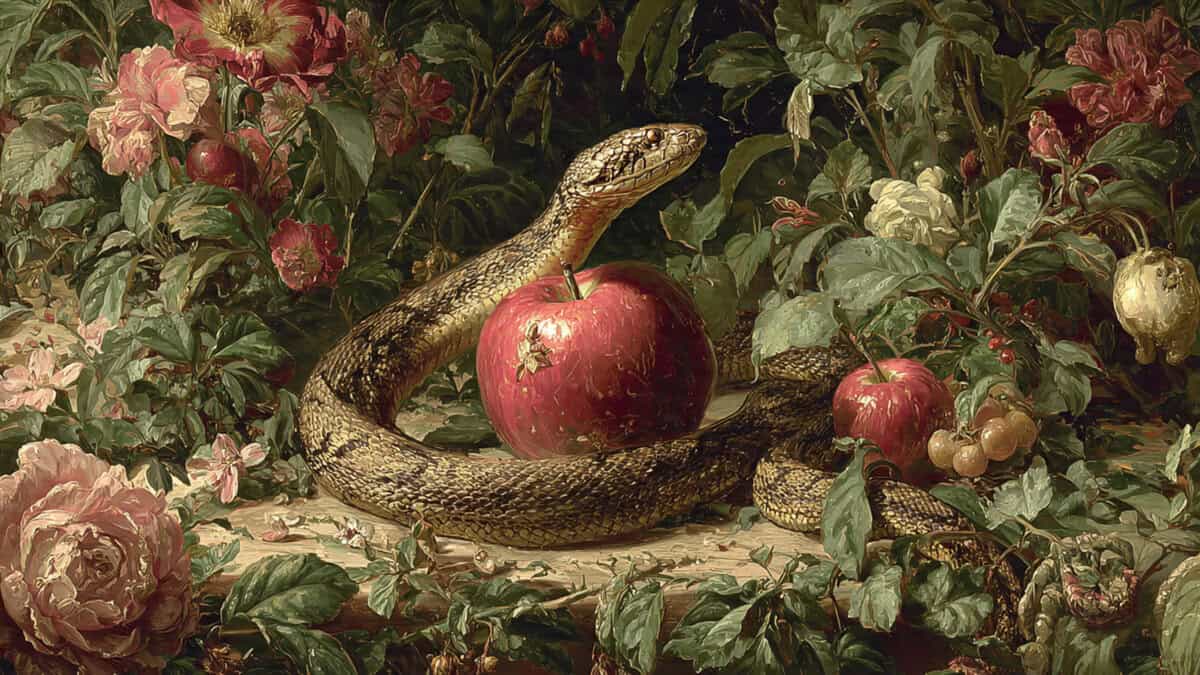
Looking at these myths objectively, it becomes clear that Enki’s story was twisted.
He sought to help awaken human consciousness, so that we’re able to question authority and embrace change.
The biblical narrative, in contrast, suggests obedience over understanding.
In a way, it advises that we shouldn’t try to know more, even though we have the means, like some things just aren’t for us to find out.
In the character of the snake, wisdom and rebellion become intertwined, as both are necessary for freedom and growth.

A little Aquarius, devoted to writing and embroidery. Through my writing, I hope to empower readers to align with their true selves and navigate life’s mysteries with confidence.