
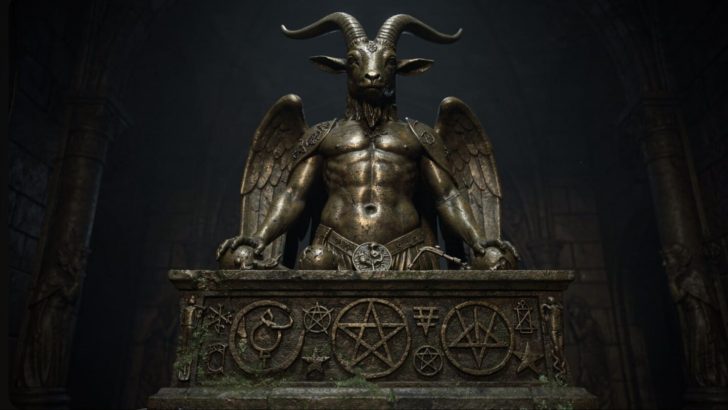
Most of us associate the name Baphomet with Aleister Crowley and other modern occultists, but it’s over 900 years old!
It was first recorded during the First Crusade.
In 1098, Anselm of Ribemont described the Siege of Antioch, where he claimed the Turks kept invoking Baphomet in battle.
Most scholars agreed that he might have misheard them, and they were actually invoking “Mahomet,” the prophet Muhammad.
No one knows for sure, but the name stuck, and to this day, it remains synonymous with the occult, dark rituals, and the rejection of God.
1. The Fall of the Templars
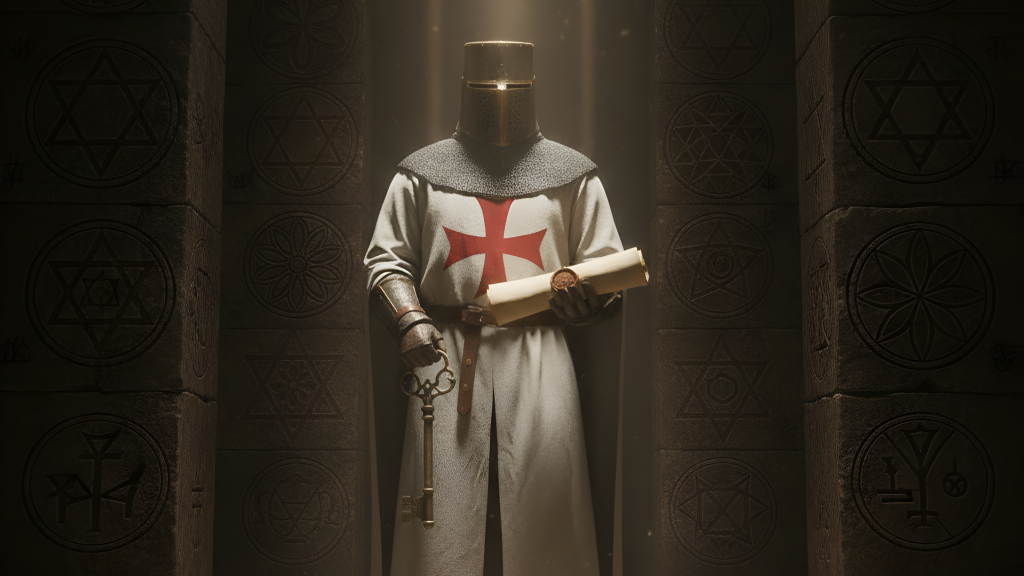
In 1307, King Philip IV of France shattered the Knights Templar and started persecuting 彼らだ。
The main accusation they faced was idolatry; specifically, the worship of a bearded, demonic head called Baphomet.
Tortured confessions described strange rituals and unholy veneration. However, even if there were confessions, we now know better than to trust what people say when they’re forced to say things.
The Templars’ power and the way they managed to infiltrate themselves all over the Catholic West made them targets. Baphomet was a tool used to destroy them.
The inquisition notes speak of a severed head that spoke prophecies, an unholy idol kissed in secret.
No solid evidence was ever discovered, but Baphomet became a stain on the order’s reputation.
2. The Masons and the Occult
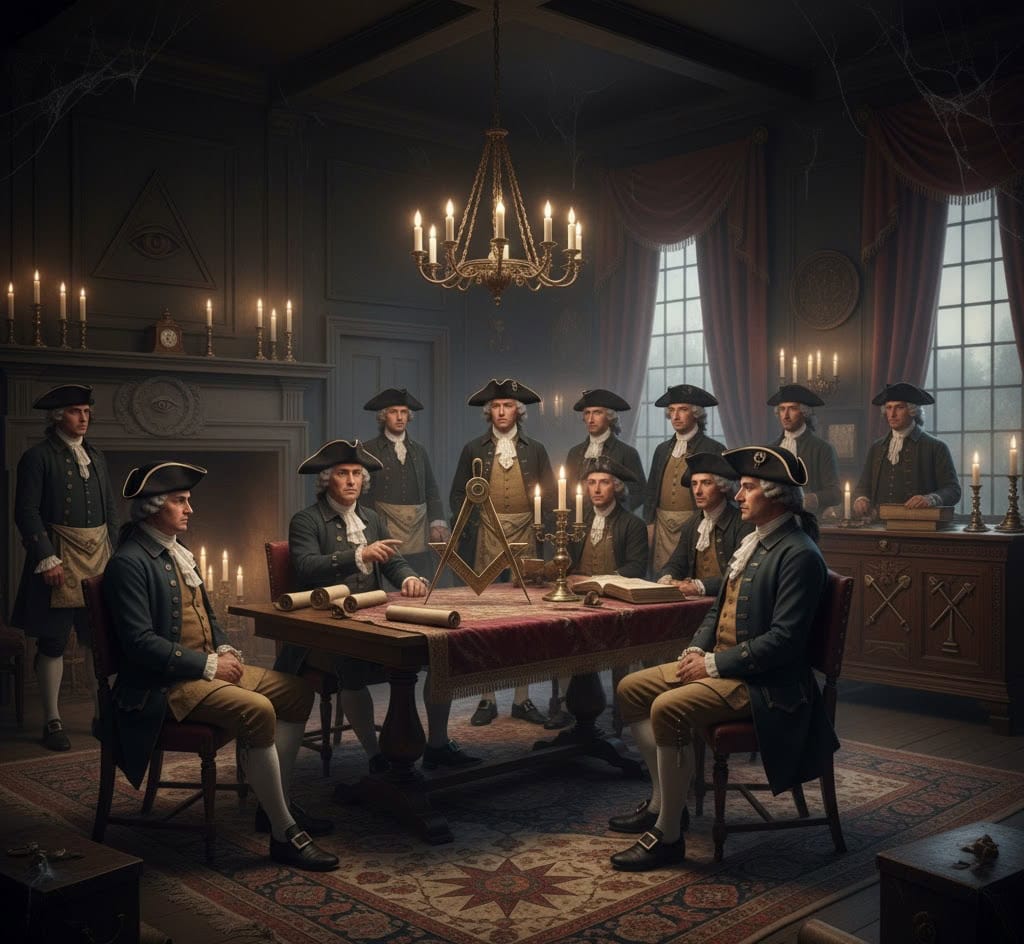
By the 19th century, Baphomet became connected to the Freemasons. All over the world, people whispered of a secret organization of elites who bowed before the horned idol.
The fact that the organization was so secretive didn’t help, of course; it only stoked the imagination of the masses.
Still, during the occult revival, a new Beast was born.
French occultist, Éliphas Lévi, resurrected it in 1856. Equal parts brilliant and mad, he didn’t envision a simple demon, but a being of terrifying duality!
He drew a hermaphroditic, winged entity with a human body and a goat’s head, with wings, and a torch burning between its horns.
His Baphomet wasn’t just a symbol of evil, but a mirror of the universe’s darkest truths.
3. The Image of Baphomet
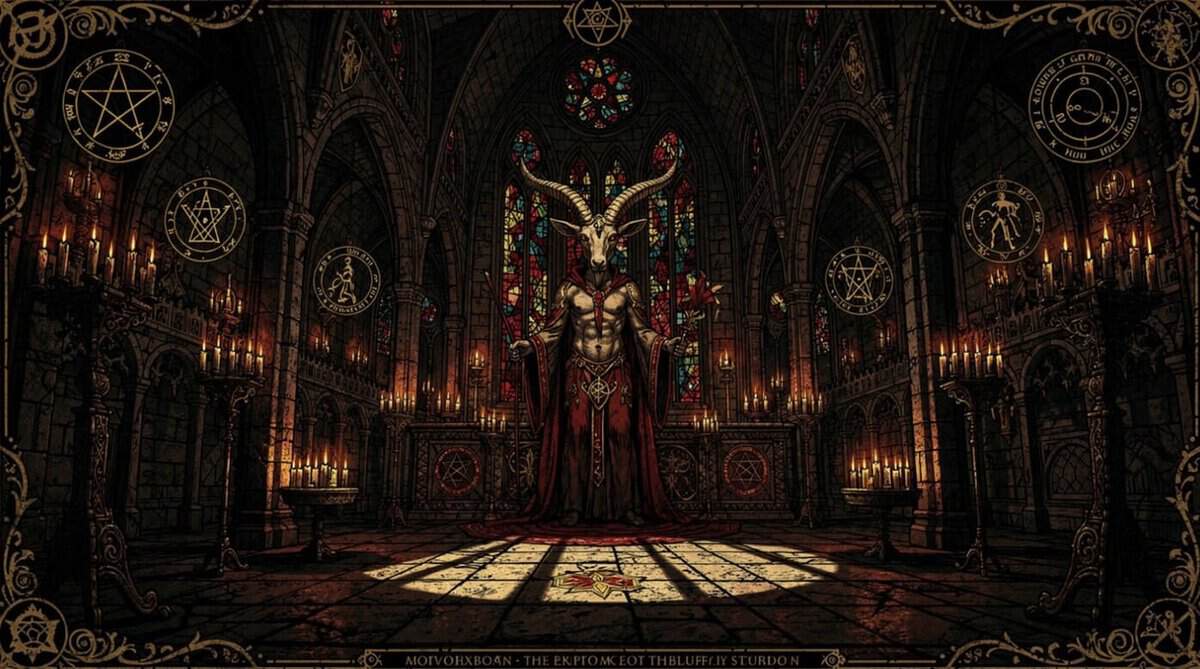
Lévi’s Baphomet is a thing of nightmares. Its body is a grotesque fusion of male and female, human and beast.
A torch burns between its horns, illuminating the pentagram on its forehead.
With that image, Lévi created a philosophy.
The creature embodies the polarities of existence, like light and shadow, and good and evil. Its very form defies nature!
The hermaphroditic form mocks the way God created humans to be male and female, while the wings suggest a being that’s beyond the bounds of this world.
It’s not just an idol, but a 挑戦 to our worldview. To look at it means to confront chaos.
People who are willing to step out of the comfort of their beliefs tend to offer a more lenient view of the Beast.
They claim it simply asks us not to look at the world as black and white, and to use 批判的思考, instead of sticking to what institutional religions tell us.
It’s also thought that the reason Baphomet is made to look so bizarre is to make us uncomfortable and force us to think outside the box.
4. SOLVE and COAGULA
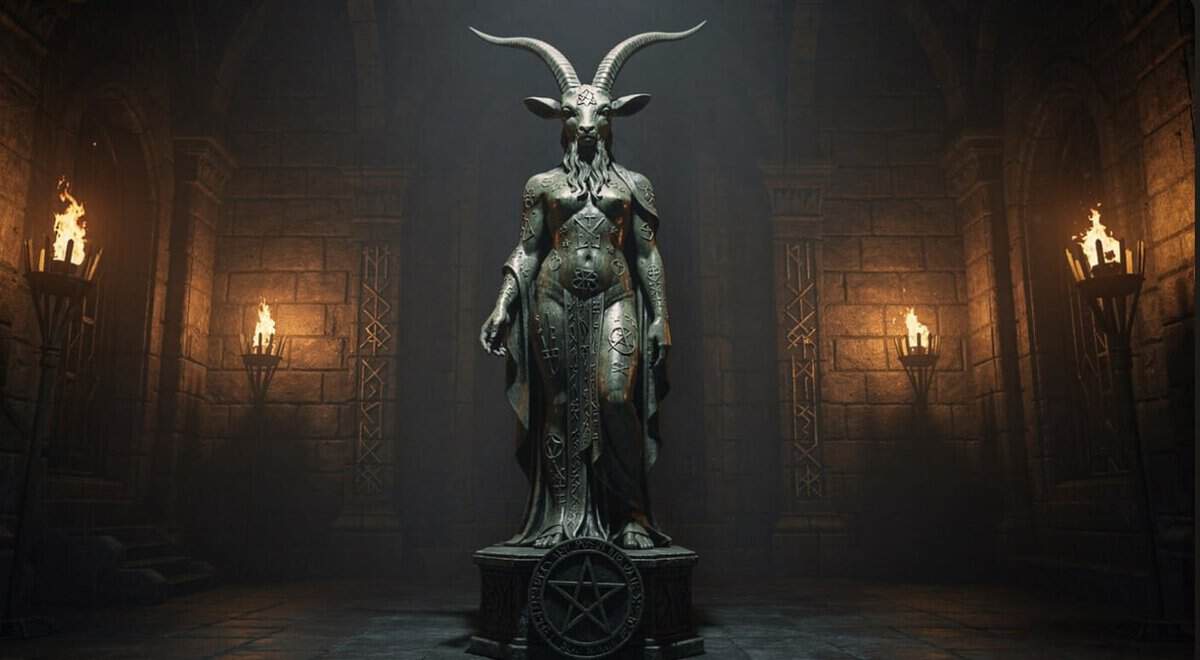
Two Latin words are written on Baphomet’s arms: solve and coagula, meaning separate そして join together.
These are the powers of binding and releasing, which are believed to belong only to God.
And they’re not simple phrases either, but crucial concepts in alchemy, creation, and destruction.
Solve tears apart the old to create something new, and coagula binds, turning chaos into order. The Beast wields both, which makes him the master of creation!
These words speak of forbidden knowledge and the ability to reshape reality itself.
The Beast mocks the divine, claiming authority over life and death.
With these words, Baphomet stands as a usurper of God’s power.
5. As Above, So Below
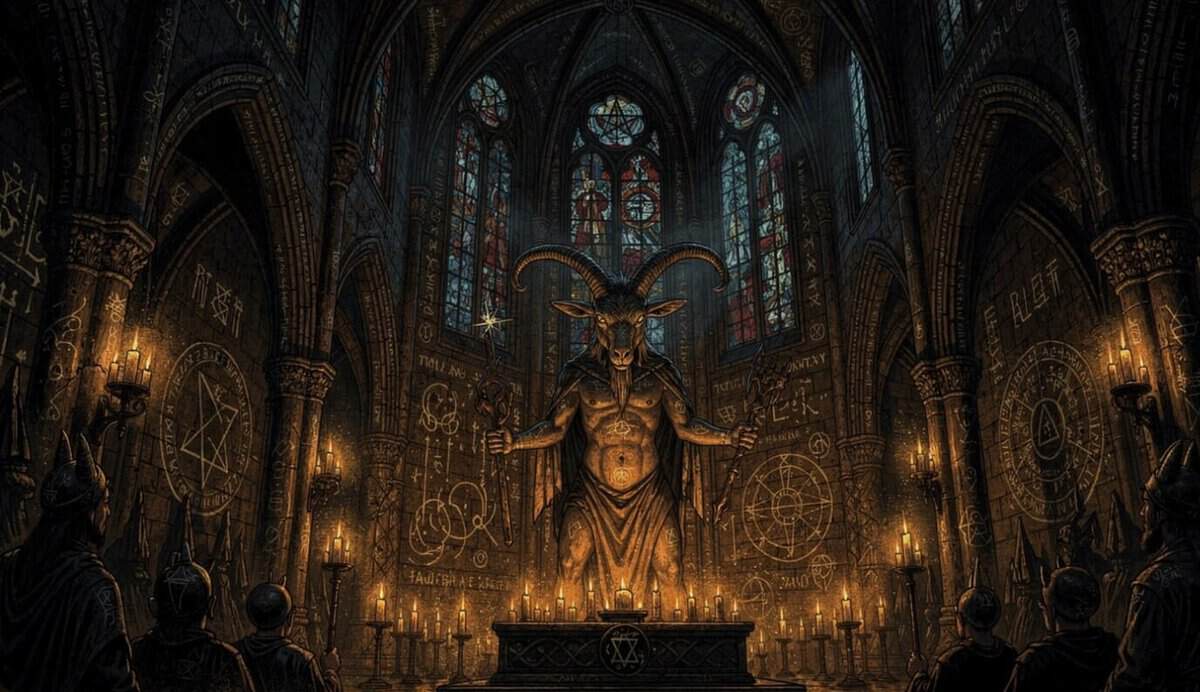
Baphomet’s hands also shape signs that aren’t at all random.
Two fingers of its right hand point toward the heavens, while on the left, two fingers point down.
As above, so below is an ancient Hermetic declaration that the microcosm (soul, humans) mirrors the macrocosm (god, universe).
That gesture is a key to unlocking the universe!
Occultists are drawn to this sign, which comes from the lost writings of Hermes Trismegistus.
That would make Baphomet the embodiment of cosmic balance, since it embodies both worlds.
The gesture is seen as both a blessing and a curse, a reminder that every action in the heavens echoes in our realm.
6. The Caduceus
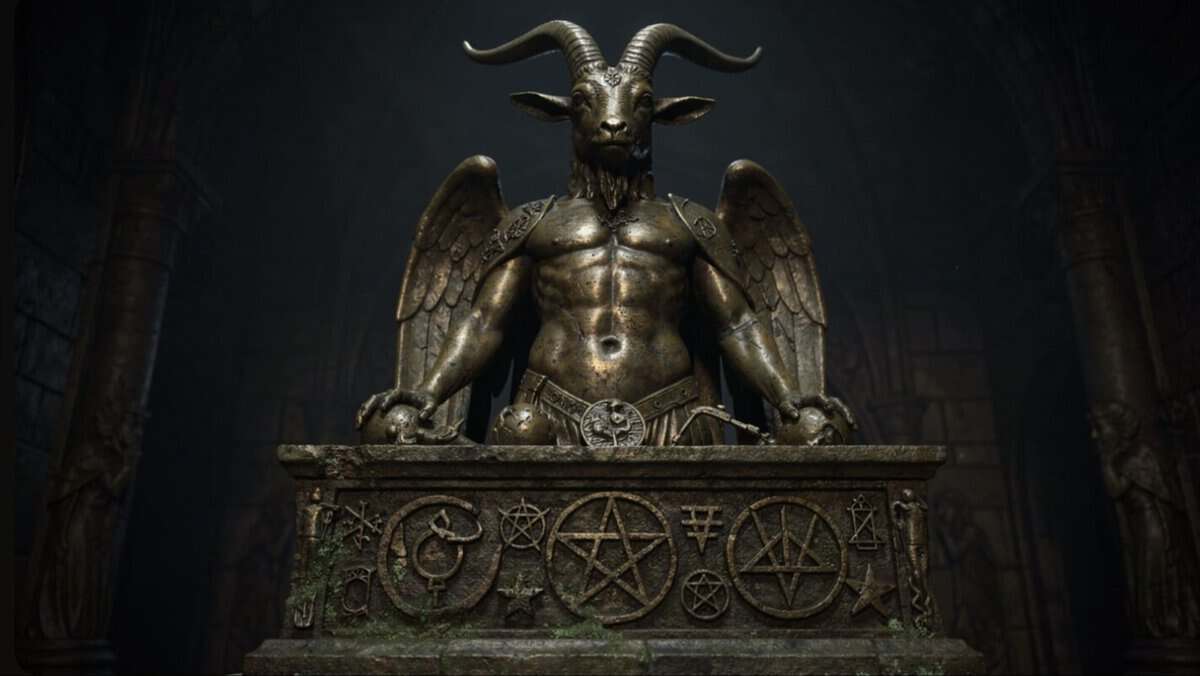
Coiled around the Baphomet’s stomach is the caduceus – two serpents wrapped around a staff, an ancient Greek symbol of Hermes.
The serpents stand for trade, negotiation, magic, and reciprocity, but also for temptation and sin, in this context.
The staff is placed in a way that clearly makes it a phallic symbol, which also ties it to creation. However, to the Christian eye, it invokes sin.
The Beast wears the caduceus like a trophy. It’s a declaration of its dominion over the material and the mystical.
The serpents twist in eternal conflict, which might also be a nod to the creature’s dual nature.
So, in the end, is the caduceus a positive or a negative symbol?
In Baphomet’s hands, it’s both. Just like the Beast, serpents have always been connected to the liminal spaces and rebirth.
7. The Torch of Knowledge
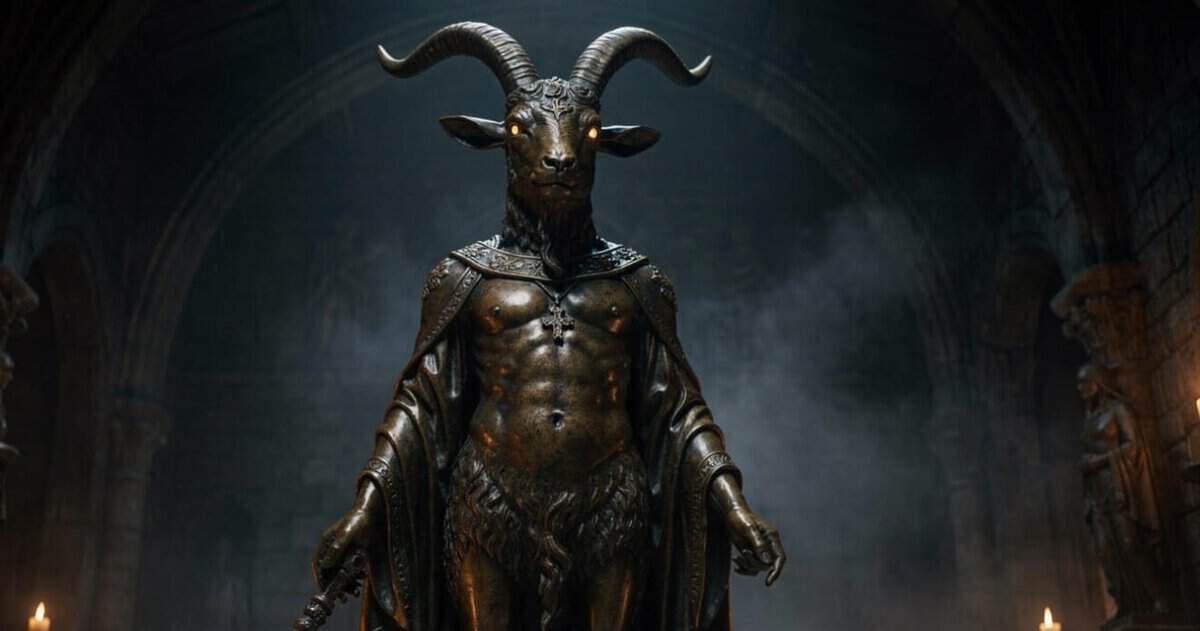
Between Baphomet’s horns is the torch of knowledge. It’s the fire of forbidden wisdom, the light that lures the curious toward sin.
The Beast glorifies the pursuit of all knowledge, which, as we know from the very beginning of the Old Testament, God isn’t very keen on.
The torch is also seen as a warning that chasing certain knowledge can lead to destruction. But without fire, there’s also no illumination.
The Beast dares us to question and challenge authority, to see what lies beyond the veil.
8. The Gnostic Mass
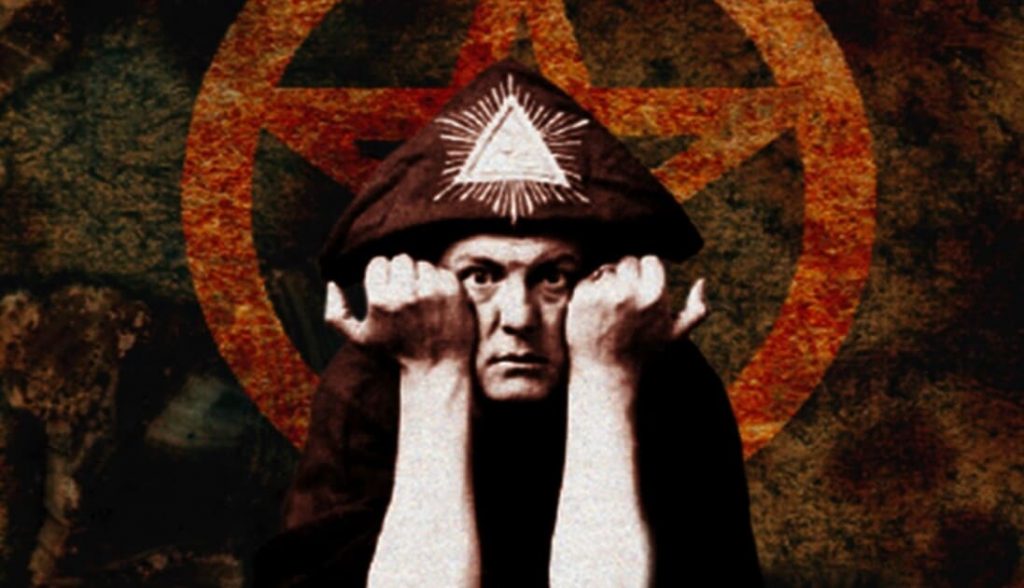
Aleister Crowley, known as the wickedest man in history, embraced Baphomet with open arms.
The Beast became a central figure in his Gnostic Mass; he presented it as a deity of revelation and rebellion.
There, Baphomet was a living presence invoked in rituals of passion, magic, and sacrifice.
Crowley saw a kindred spirit in the Beast; he was also full of contradictions, set upon challenging the Christian order.
His followers chanted the name in ecstasy. The Gnostic Mass was a rite of transformation, a communion with the forbidden.
Under Crowley’s influence, the Beast became a patron of the occult elite.
The Mass was a parody of the Eucharist, reflecting the horrors of extreme dogma.
9. A Satanic Symbol
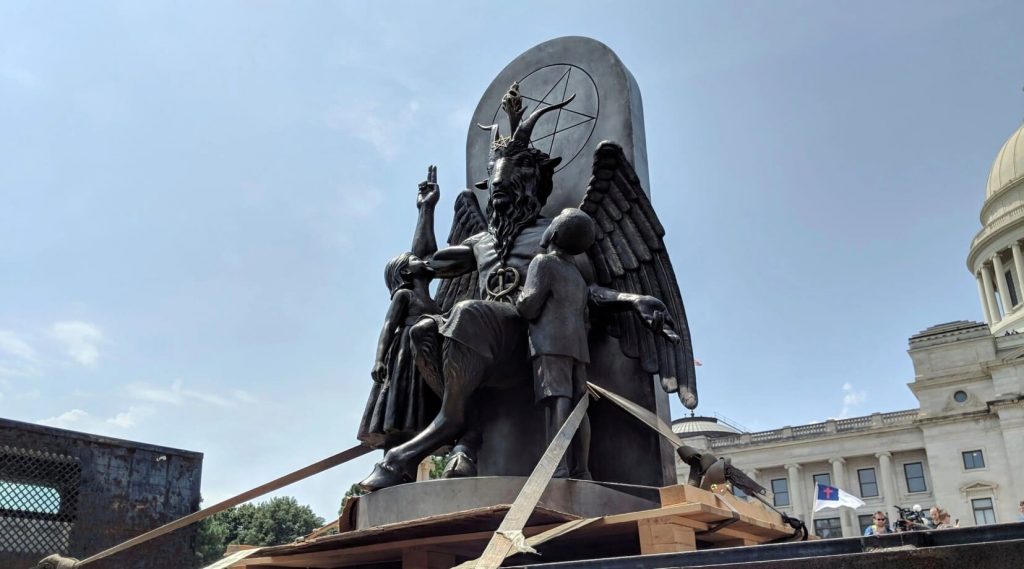
We don’t have to go back to the 19th and 20th centuries to witness the worship of Baphomet.
Just in 2015その Satanic Temple unveiled a statue of the Beast, surrounded by two children. You can only imagine how the public reacted, especially to children being connected to the whole thing.
To the masses, this came off as a threat: We’re here to corrupt your children and take them to the devil!
However, the Satanists in their interviews sound more or less reasonable. The statue was part of their religious expression, and they presented it to demand freedom and recognition of their beliefs.
They also did it to make a statement that America isn’t only a Christian nation.
Baphomet’s role evolves once more, as it’s now used as a symbol of secularism.

A little Aquarius, devoted to writing and embroidery. Through my writing, I hope to empower readers to align with their true selves and navigate life’s mysteries with confidence.