
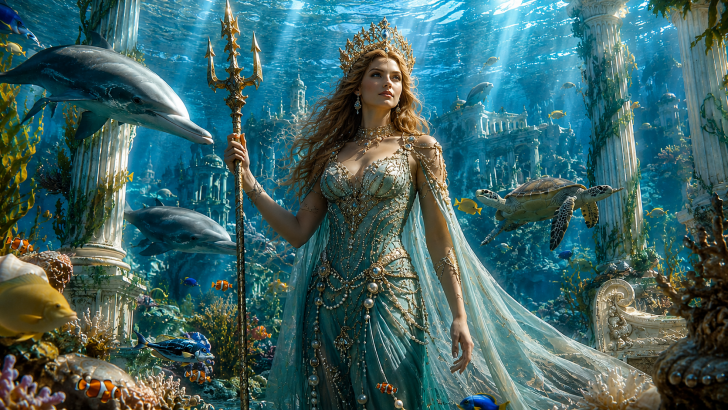
When people think about Greek mythology, Poseidon often steals the spotlight. As the god of the sea, earthquakes, and horses, he appears in countless myths.
Yet standing beside him was a powerful figure who is often overlooked today. Her name was Amphitrite.
Known as the Queen of the Sea, Amphitrite was one of the most important sea goddesses in Greek mythology.
She ruled alongside Poseidon and was associated with the vast oceans, marine life, and the mysterious world beneath the waves.
Although she appears less frequently in surviving myths than some other Greek goddesses, Amphitrite held an important position among the gods and was greatly respected by the ancient Greeks.
Here are eight fascinating things about Poseidon’s wife, Amphitrite, the Queen of the Sea.
1. Amphitrite Was a Sea Goddess Before Marrying Poseidon

Amphitrite did not become important simply because she married Poseidon. She was already a powerful sea deity in her own right.
In many versions of Greek mythology, Amphitrite was one of the Nereids, a group of fifty sea nymphs who were daughters of the sea god Nereus and the ocean goddess Doris.
The Nereids were associated with the beauty and bounty of the sea. They were often portrayed as graceful figures who helped sailors and protected marine life.
Imagine growing up surrounded by endless ocean waters and divine sea beings. From the very beginning, Amphitrite was deeply connected to the marine world she would later help rule.
2. She Initially Refused to Marry Poseidon

One of the most interesting stories about Amphitrite involves her courtship. According to mythology, Poseidon fell in love with her and wanted her to become his wife.
Amphitrite, however, was not immediately interested. Rather than accepting his proposal, she fled to a distant location to avoid him.
This detail makes Amphitrite stand out from many mythological figures. She was willing to make her own choices and did not simply agree.
The story presents her as independent and determined. Even the mighty ruler of the seas could not instantly win her affection.
Her decision created one of the more memorable courtship tales in Greek mythology.
3. A Dolphin Helped Bring the Couple Together

Poseidon eventually received help in his pursuit of Amphitrite. According to legend, a dolphin located the sea goddess and persuaded her to reconsider the proposal.
The dolphin’s efforts were successful, and Amphitrite ultimately agreed to marry Poseidon.
As a reward, Poseidon honored the helpful creature by placing it among the stars as the constellation Delphinus.
This charming story helped strengthen the connection between dolphins and the sea gods in Greek mythology.
It also explains why dolphins often appear in artwork depicting Amphitrite and Poseidon.
The tale adds a surprisingly gentle and memorable touch to the mythology surrounding the royal couple of the sea.
4. She Became the Queen of the Sea
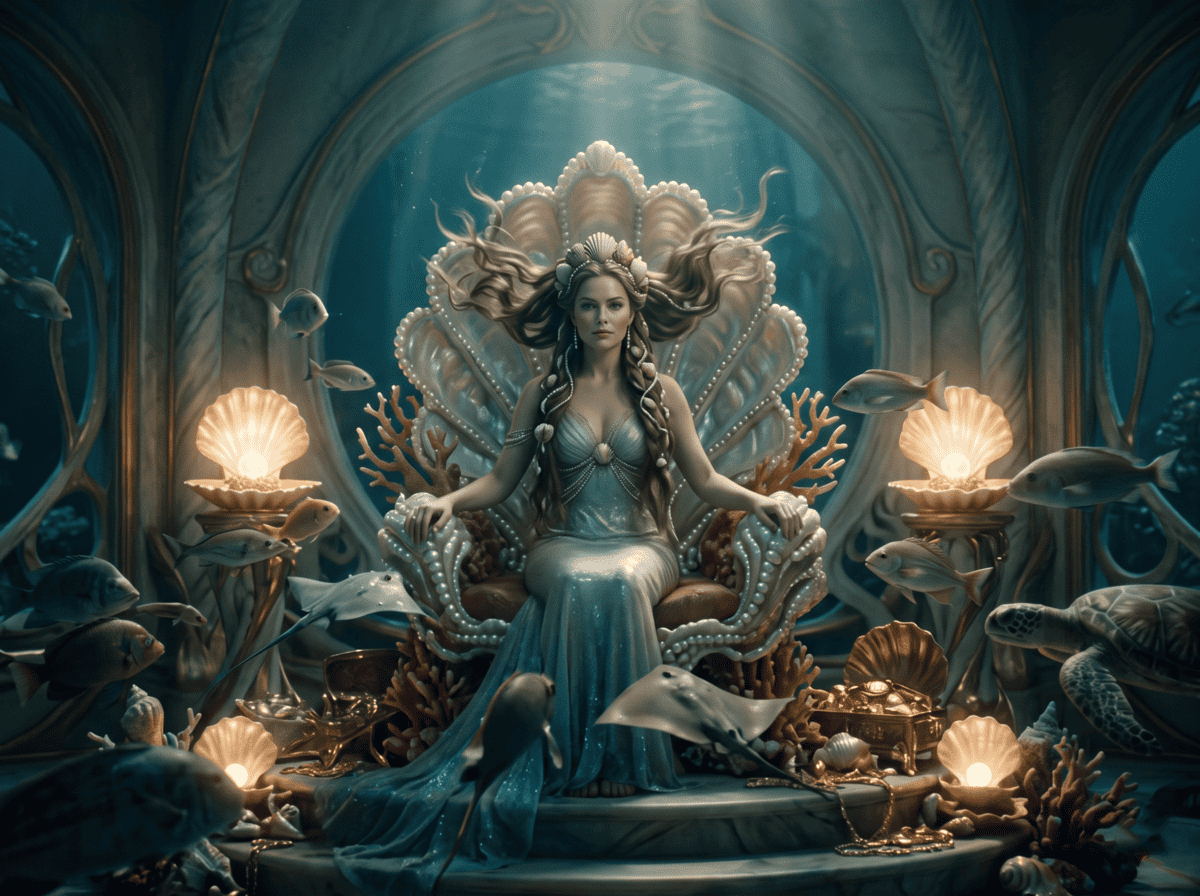
After marrying Poseidon, Amphitrite became the Queen of the Sea. Together, the couple ruled a magnificent underwater kingdom.
Ancient artists often imagined their palace as a beautiful structure beneath the waves, surrounded by marine life and attended by sea nymphs.
Think about how vast the oceans are. In Greek mythology, Amphitrite shared authority over this enormous realm.
Her status placed her among the highest-ranking goddesses in the Greek pantheon.
While Poseidon often represented the sea’s power and unpredictability, Amphitrite embodied its majesty and beauty.
5. She Was Associated With Calm Seas

Although Poseidon was famous for storms, earthquakes, and rough waters, Amphitrite was sometimes linked to calmer aspects of the ocean.
The sea can be both powerful and peaceful. Ancient Greeks recognized this balance and often associated Amphitrite with the more nurturing side of marine life.
Imagine standing on a quiet shoreline while gentle waves roll onto the beach. That peaceful image reflects the qualities many people connected with Amphitrite.
Her presence reminded worshippers that the ocean was not only a force of destruction but also a source of beauty, food, and life.
This association helped distinguish her role from that of her more tempestuous husband.
6. She Was the Mother of Triton
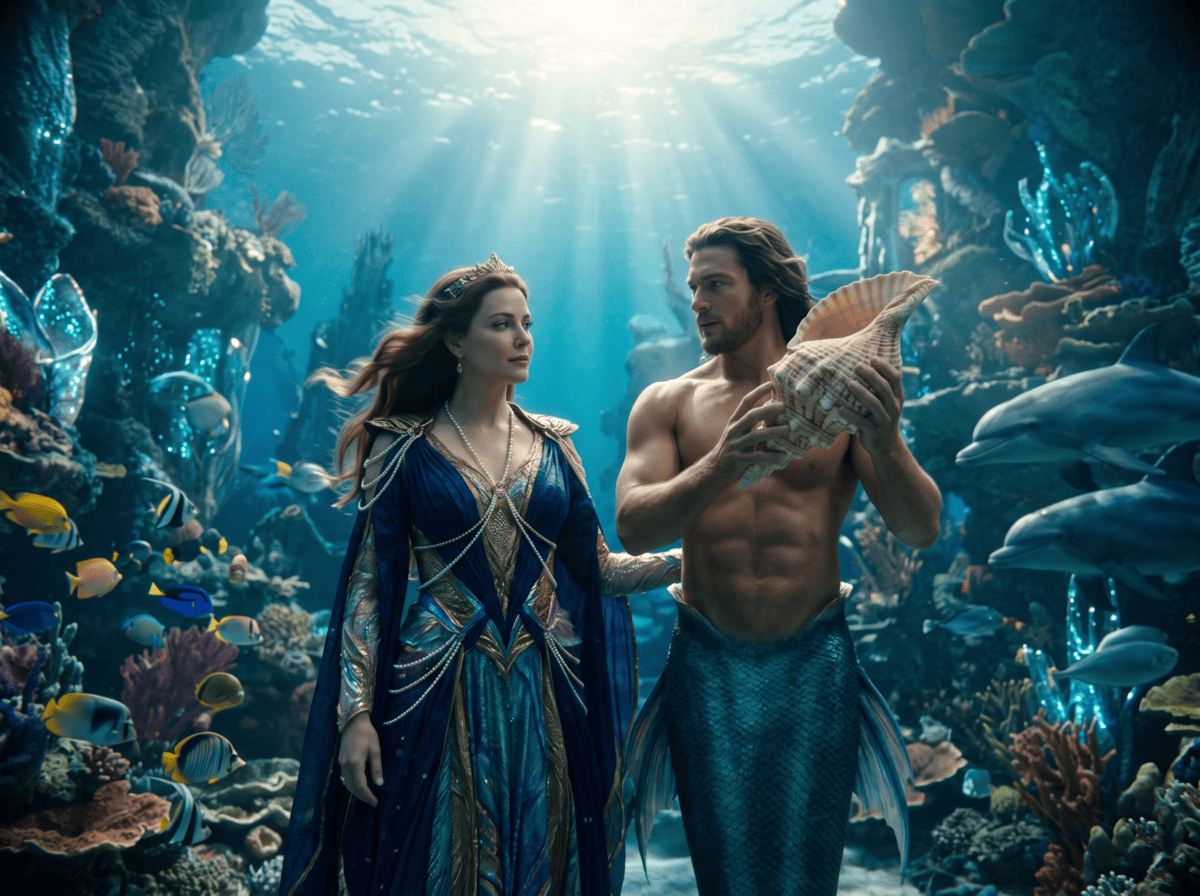
One of Amphitrite’s most famous children was Triton. Triton was a sea god often depicted with the upper body of a man and the tail of a fish.
In later mythology and art, he became one of the best-known marine deities.
He was frequently shown carrying a conch shell that he could use to calm or stir the waves.
As the mother of Triton, Amphitrite became part of an important divine family connected to the sea.
The relationship also reinforced her role as a maternal figure within the underwater kingdom.
Through Triton and other descendants, her influence extended across many sea-related myths.
7. Ancient Artists Frequently Depicted Her
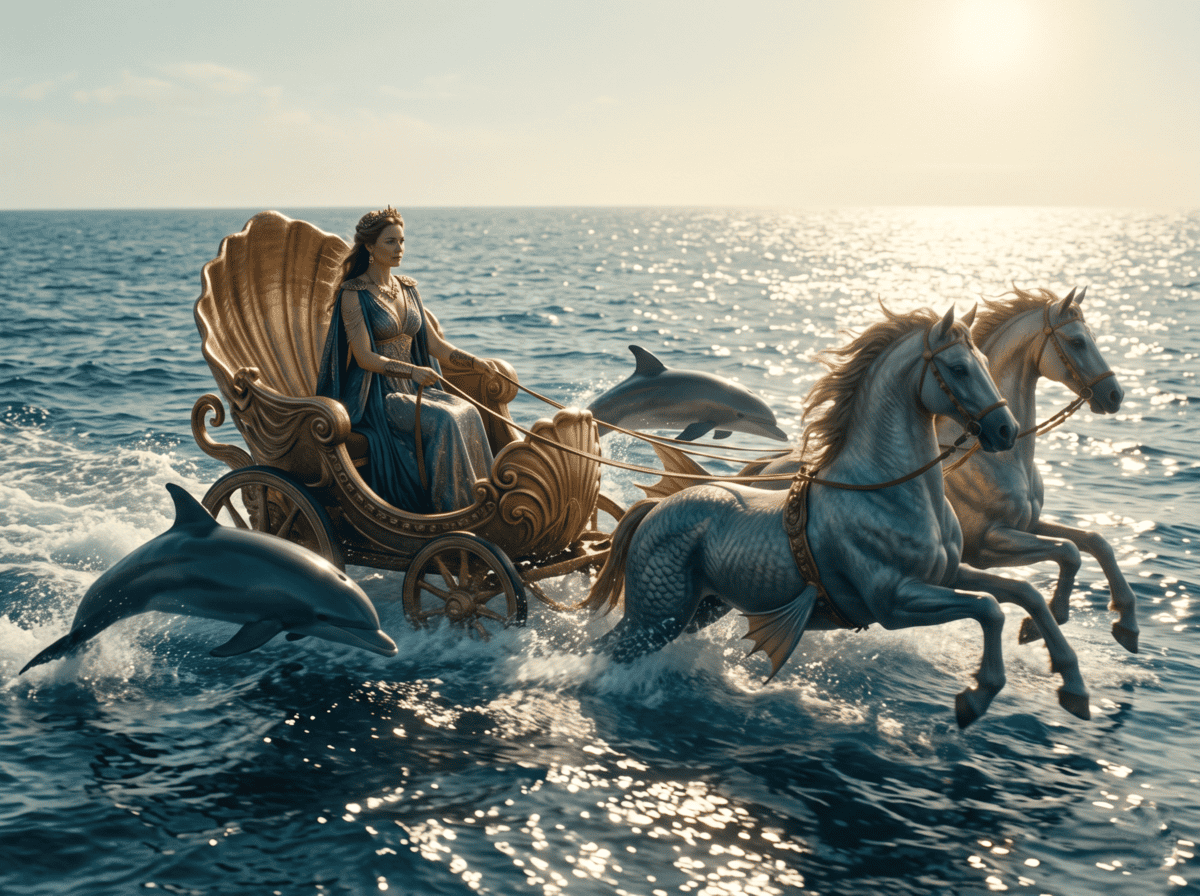
Amphitrite appeared in numerous ancient works of art. These images emphasized her royal status and connection to the ocean.
Greek and Roman artists often portrayed her riding across the sea in a chariot accompanied by dolphins, fish, and other marine creatures.
You can almost picture ancient sailors looking at such artwork and feeling reassured by the presence of their sea queen.
Many depictions show Amphitrite wearing elegant robes and a crown, highlighting her position as one of the most important marine deities.
The popularity of these artistic representations demonstrates how widely recognized she was throughout the ancient world.
8. Amphitrite Remains One of Mythology’s Most Famous Sea Queens

Although she does not appear in as many stories as Athena, Hera, or Aphrodite, Amphitrite remains one of the most recognizable sea goddesses in mythology.
Her role as Poseidon’s wife and Queen of the Sea has helped preserve her place in popular culture for centuries.
Writers, artists, and mythology enthusiasts continue to be fascinated by her connection to the ocean and her elegant yet powerful image.
Part of her appeal comes from the mystery surrounding her. Unlike some Greek deities whose lives are documented in countless myths, Amphitrite remains somewhat elusive.
As ruler of the ocean depths, protector of marine realms, and queen beside Poseidon, Amphitrite continues to hold an important place in the enduring stories of Greek mythology.

私は生まれたときから、常に神との強いつながりを感じていた。作家として、また指導者として、私の使命は、人々が最も暗い時代に愛と幸福と内なる強さを見つけるのを助けることである。