
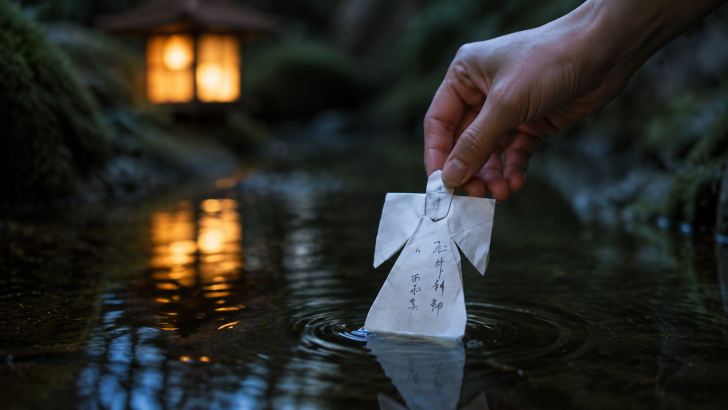
In Japan, paper figures known as hitogata have been used in purification rituals to symbolically carry away the things people would rather not keep holding onto.
It’s a little like handing your bad luck to someone else—but not a friend or family member. Instead, you give it to a tiny person cut out of paper.
The figures may be released into a stream or burned in a ritual. Either way, they’re not meant to stay. And before they leave, they’re given something very important.
Your name.
1. The Little Paper Figure Was Meant to Stand In for You
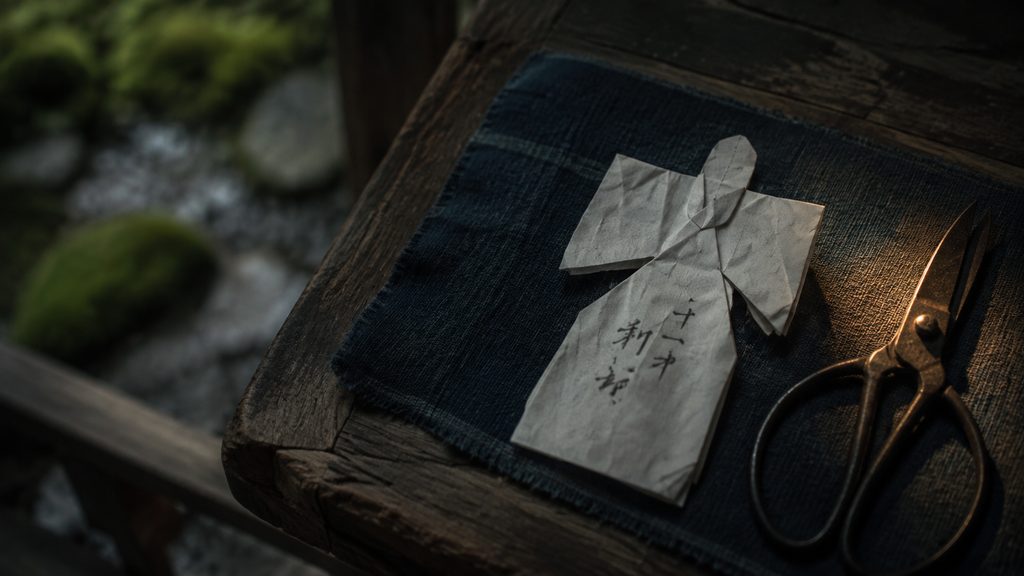
A hitogata doesn’t look particularly impressive. It’s often just a simple human-shaped piece of paper, with a head, arms, and enough of a body to make its purpose clear.
But that shape is the whole point.
The figure represents the person using it. It becomes a temporary stand-in during a purification ritual.
The person symbolically transfers their impurities or misfortune to the figure. And once the paper is carried away or ritually disposed of, the burden is believed to go with it.
Other terms and materials appear in related traditions, too.
The Kyoto National Museum describes historical substitute figures called katashiro, while some older purification figures were made from wood instead of paper.
What mattered wasn’t how detailed or expensive the little figure looked.
It was that something human-shaped could take a person’s place.
2. Your Name, Your Age, and Your Breath Made It Yours
The figure didn’t become a substitute just because it looked vaguely human.
It needed to be connected to a real person.
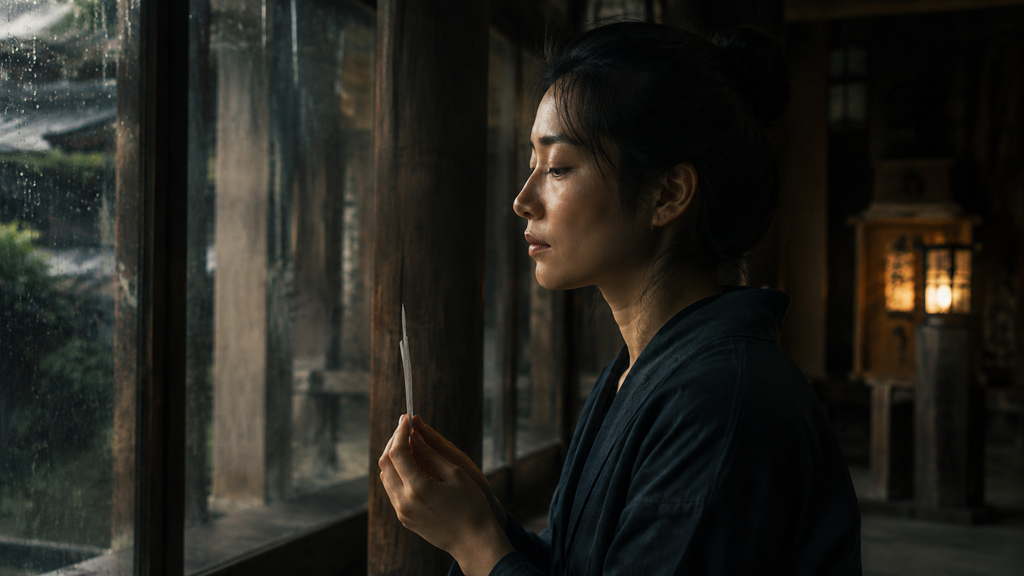
At Kamigamo Shrine in Kyoto, participants write their name and age on the paper figure before passing it over the left side, right side, and center of their chest.
Then they breathe onto it.
That final breath helps create a connection between the person and the object meant to represent them.
Still, the practices vary from shrine to shrine.
Some visitors rub the paper figure across their bodies, while others touch it to a place that’s hurting or causing them worry.
At Yasui Konpira Shrine, participants blow on their paper figures three times.
The paper starts out as an ordinary cutout. But by the end, it carries someone’s identity, their breath, and whatever they’re hoping to leave behind.
3. The River Gave Misfortune Somewhere to Go
Once a paper figure had taken on someone’s unwanted burden, it couldn’t just sit around forever. It needed to leave.
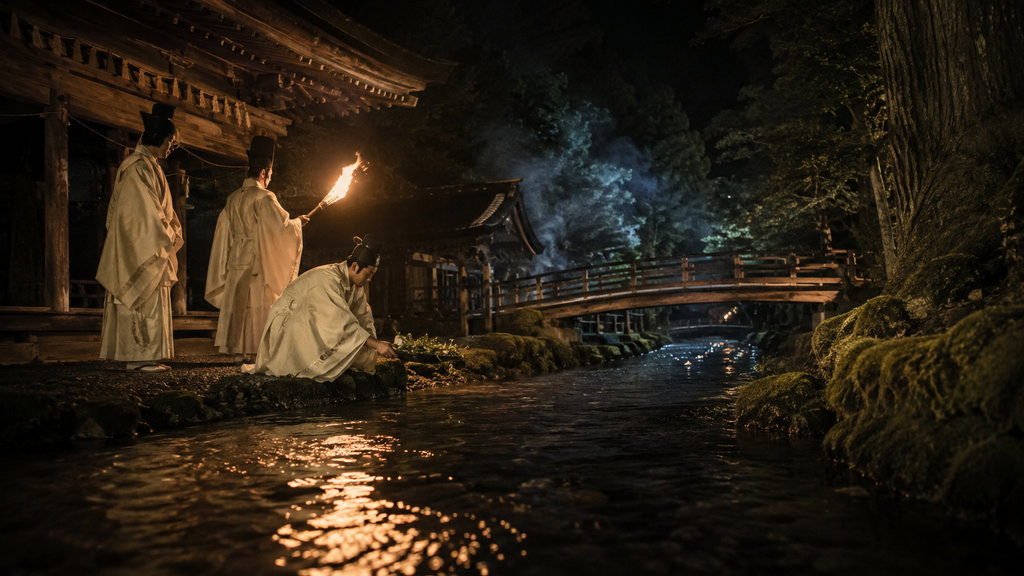
At Kamigamo Shrine, one of the most striking versions of the ritual takes place after dark on June 30.
Priests gather at a hall beside the Nara no Ogawa stream. Firelight moves across the water, prayers are recited, and the collected paper figures are released into the current.
One by one, they disappear downstream.
The idea is that the water carries away the impurities connected to each person who submitted a figure.
The ritual gives problems and worries a shape, then lets the current carry them away.
Some shrines place the figures in running water, while others burn them during a formal purification ceremony.
The method changes, but the basic idea doesn’t.
The paper takes what you don’t want to keep, and then it’s gone.
4. The Ritual Wasn’t Just for One Bad Day
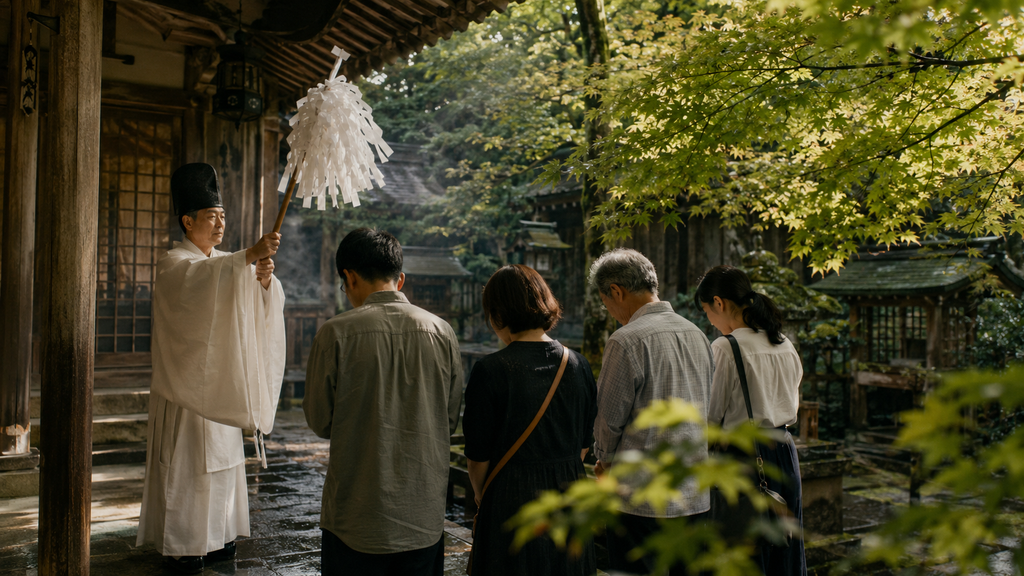
These figures aren’t only associated with moments when everything suddenly goes wrong.
They’re also part of a larger rhythm that divides the year into two halves.
Many Shinto shrines hold a major purification ceremony around the end of June. It’s commonly known as Nagoshi no Ōharae, or the Great Summer Purification.
The timing is key.
By then, half the year has already passed. The ritual offers a chance to symbolically clear away whatever has built up since January and move into the remaining months with a fresh start.
A similar ceremony takes place at the end of December. That one looks back over the second half of the year and prepares people for the year ahead.
So the tradition isn’t necessarily saying someone has done anything terrible.
It recognizes that everyday life can leave people feeling weighed down, unsettled, or simply in need of a reset.
Twice a year, there’s a moment to stop, acknowledge that, and let something go.
5. Some Shrines Also Ask People to Walk Through a Giant Ring
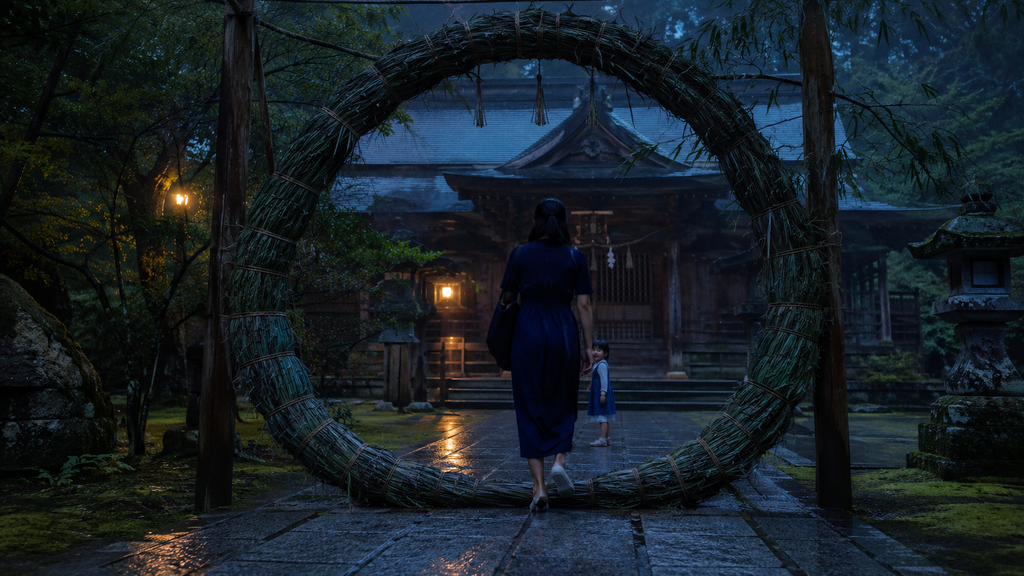
The paper figures aren’t the only memorable part of summer purification. At many shrines, visitors also encounter a large ring made from woven grass or reeds.
It’s called a chinowa, and it’s usually big enough for an adult to walk through comfortably.
Passing through the ring is another symbolic act of purification.
The exact ritual depends on the shrine, but visitors may walk through it several times, turning left and right in a particular sequence before approaching the main sanctuary.
The movements aren’t identical everywhere, of course.
Some shrines place the ring near the entrance, while others include it as part of a larger ceremony involving priests, prayers, and paper figures.
The two elements work together nicely.
The paper figure provides a substitute for whatever needs to be released, while the woven ring gives the person an actual threshold to step through.
One part of the ritual carries something away. The other helps mark the moment you move forward.
6. The Tradition Also Helped Shape Japan’s Famous Doll Festival
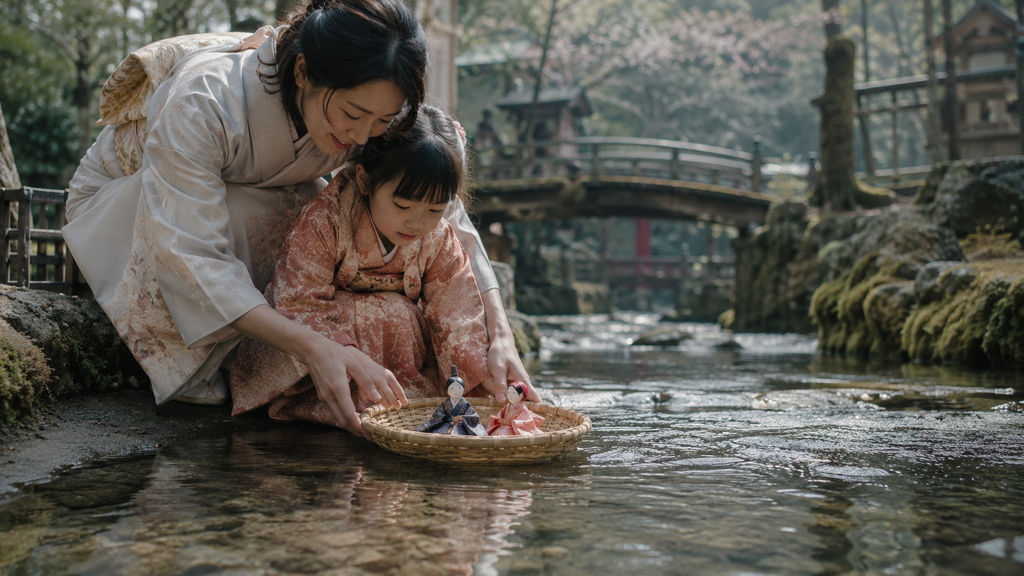
A plain paper figure doesn’t seem to have much in common with an elaborate doll dressed like a member of the imperial court.
At least, not at first glance. But there’s a historical connection.
Japan’s Doll Festival, known as Hinamatsuri, takes place on March 3 and is associated with prayers for children’s health and happiness, particularly girls.
According to the Kyoto National Museum, the festival grew out of older purification customs involving paper or wooden figures that absorbed impurities before being sent away.
Over time, those traditions became connected with children’s dolls.
By the Edo period, elaborate doll displays had become a familiar part of the celebration.
The transformation is pretty remarkable.
A figure originally meant to disappear eventually helped inspire beautifully dressed dolls that families carefully display and preserve.
Some communities still maintain that older connection to water.
At Shimogamo Shrine in Kyoto, small dolls are placed in straw boats and floated down the Mitarashi River during a March 3 ritual called nagashi-bina.
A related doll-floating tradition also survives in Mochigase, where Japan’s national tourism organization traces the practice back to the Heian period.
The spring doll-floating ceremonies and the June purification rituals aren’t the same event.
But they share a powerful idea: a small figure can carry away what a person hopes won’t follow them any further.
7. The Paper Figures Are Still Finding New Ways to Protect People
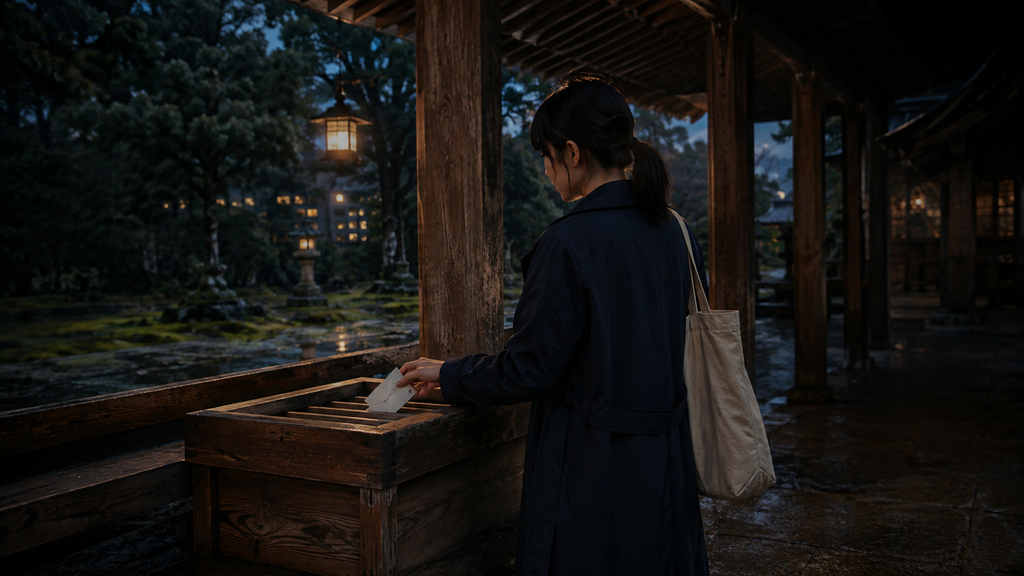
The tradition might be old, but it hasn’t stayed frozen in the past.
Kamigamo Shrine now offers something that would’ve looked pretty strange centuries ago: car-shaped paper figures.
People use them to pray for traffic safety, applying the same basic idea to a very modern concern.
At another Kyoto shrine, a woven purification ring has been made large enough for cars and motorcycles to pass through.
It turns out the desire for protection can adapt pretty easily.
The worries might change from one century to the next, but the need behind the ritual is still recognizable.
People get tired. They carry things longer than they should. And they want a way to mark the difference between what happened before and what comes next.
A paper figure doesn’t have to solve every problem to make that moment meaningful.
Sometimes, it’s enough to give your worries a shape, place them somewhere outside yourself, and watch them move away.
The figure is small. But what it represents usually isn’t.
