
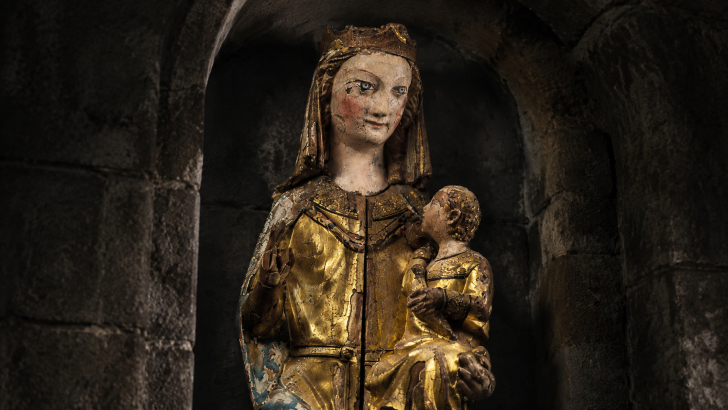
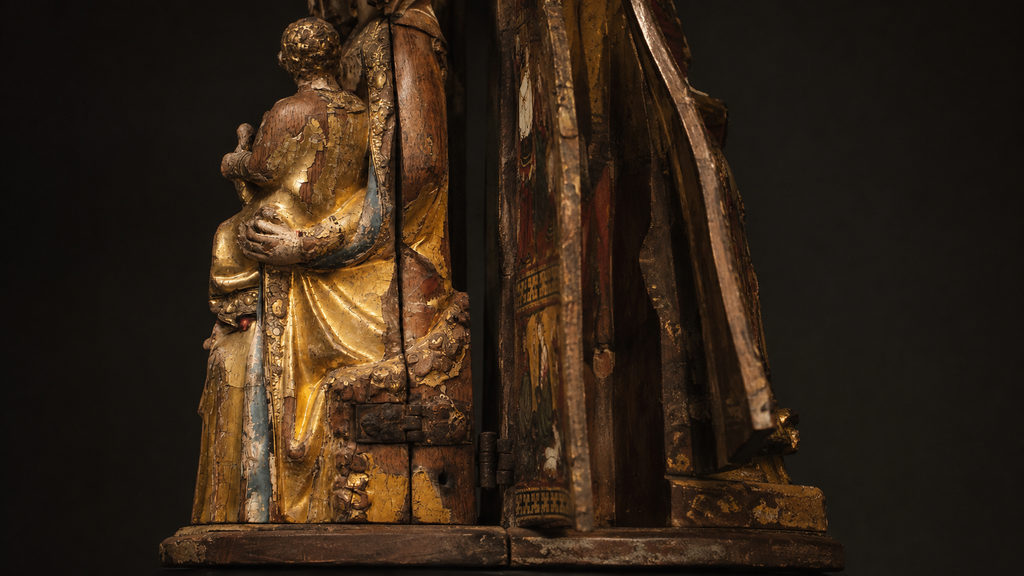
At first glance, this 700-year-old statue shows Mary holding the infant Jesus.
But the wooden figure opens down the middle, revealing a gilded interior with God the Father, six painted scenes, and a hidden image of the Trinity.
Mary herself becomes the container for the secret inside.
1. The Statue Is Smaller Than Its Secret Suggests
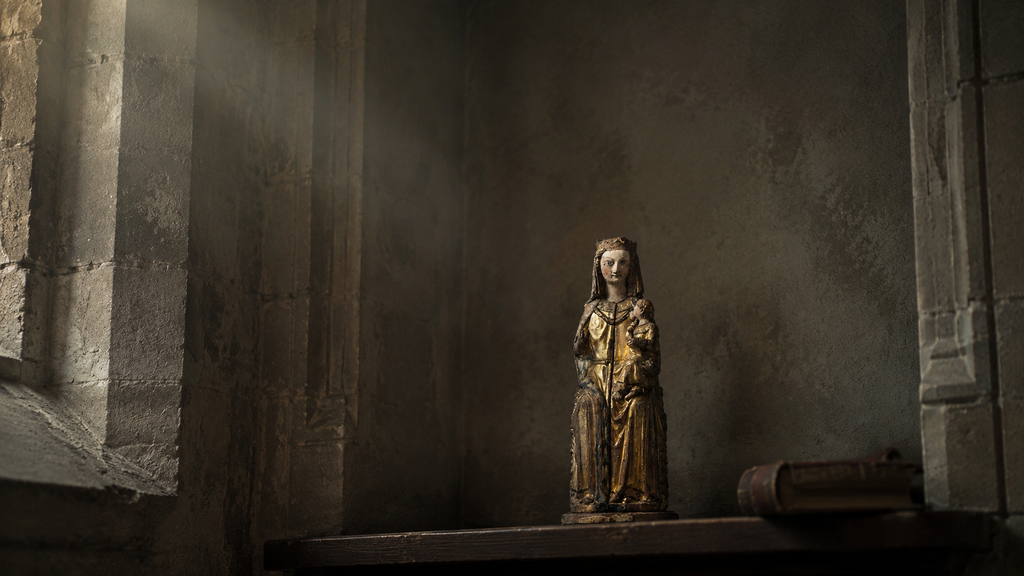
The object is known as the Shrine of the Virgin, and it belongs to the Metropolitan Museum of Art in New York.
According to the Met’s current collection record, it was made in Germany’s Rhine Valley around 1300. That makes it approximately 700 years old.
It stands just 14½ inches tall when open. Its materials include oak, linen, gesso, paint, and gilding.
That relatively modest size is important. This wasn’t an enormous public sculpture towering above a cathedral entrance. It was a movable devotional object that could be approached closely.
When closed, it presents Mary nursing Jesus. There’s no obvious indication that the figure contains an elaborate second composition.
The transformation only happens when someone physically opens it.
Suddenly, what appeared to be a single wooden statue becomes a shrine nearly as wide as it is tall.
2. It Belongs to a Rare Group of Opening Virgins
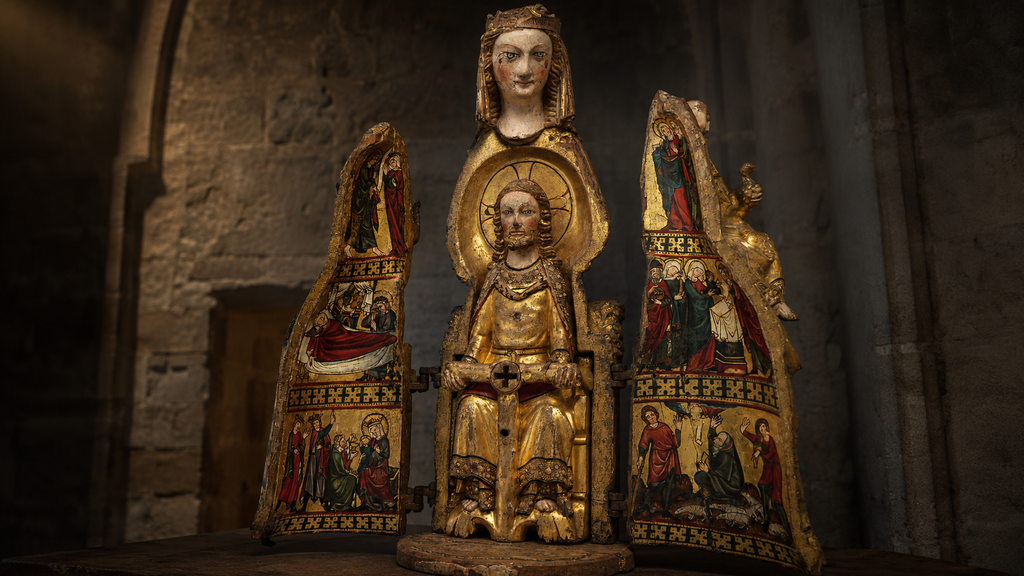
This type of sculpture is commonly called a Vierge Ouvrante, French for “Opening Virgin,” or a Shrine Madonna.
The name refers to its most striking feature: Mary herself opens.
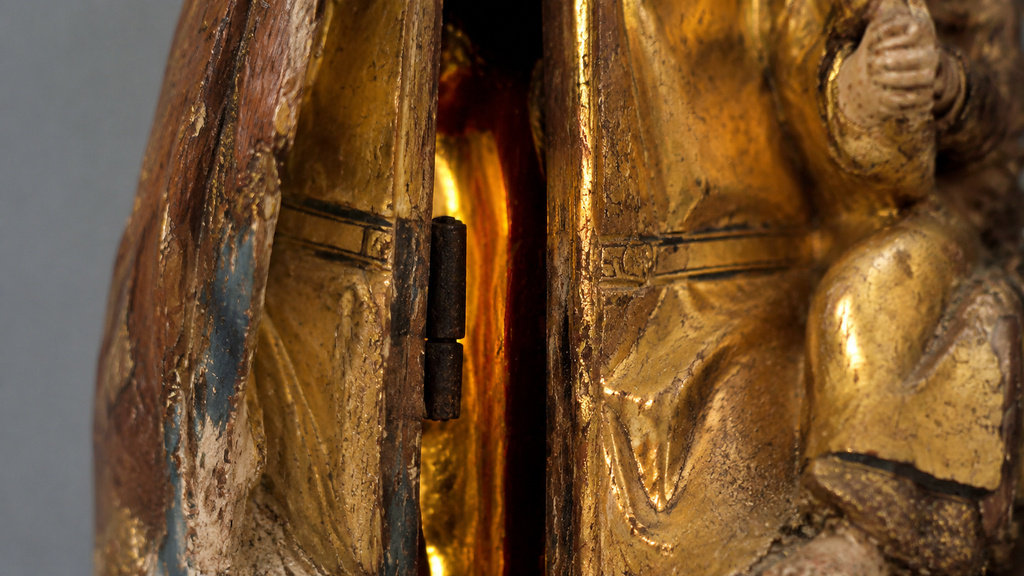
Instead of placing doors around the figure, the artist made the hinged sections of Mary’s body unfold into the wings of a miniature altarpiece. Her interior becomes the central sacred space.
The effect is far more dramatic than opening an ordinary cabinet or reliquary.
When closed, the sculpture presents an intimate image of a mother and child. When opened, it expands into a vision of Christian history and theology.
The two views are closely connected.
On the outside, Jesus appears as an infant nursing at Mary’s breast. Inside, he originally appeared again as the crucified Son presented by God the Father.
With a turn of the hinges, the sculpture moves from birth to sacrifice.
3. The Hidden Trinity Is No Longer Complete
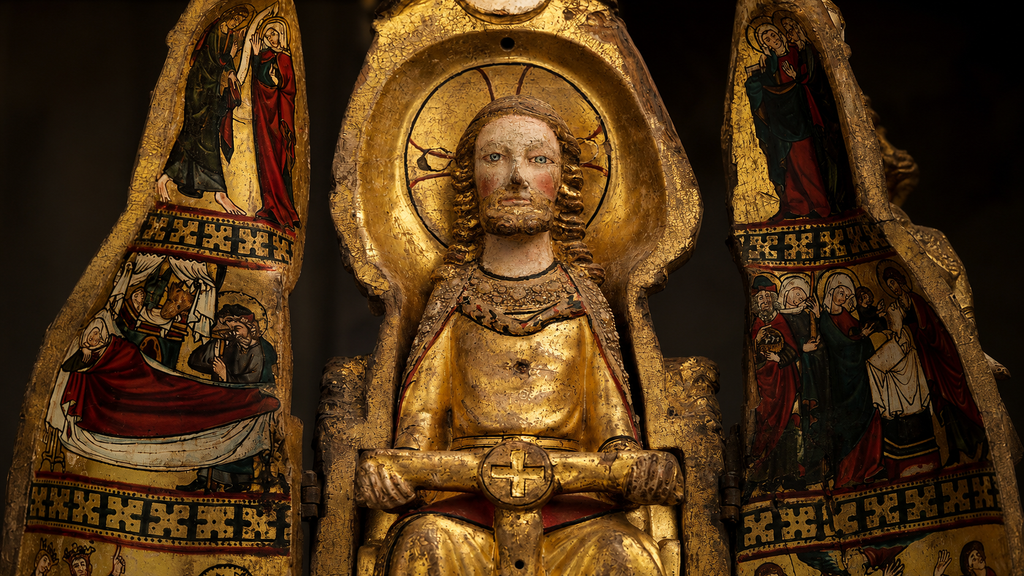
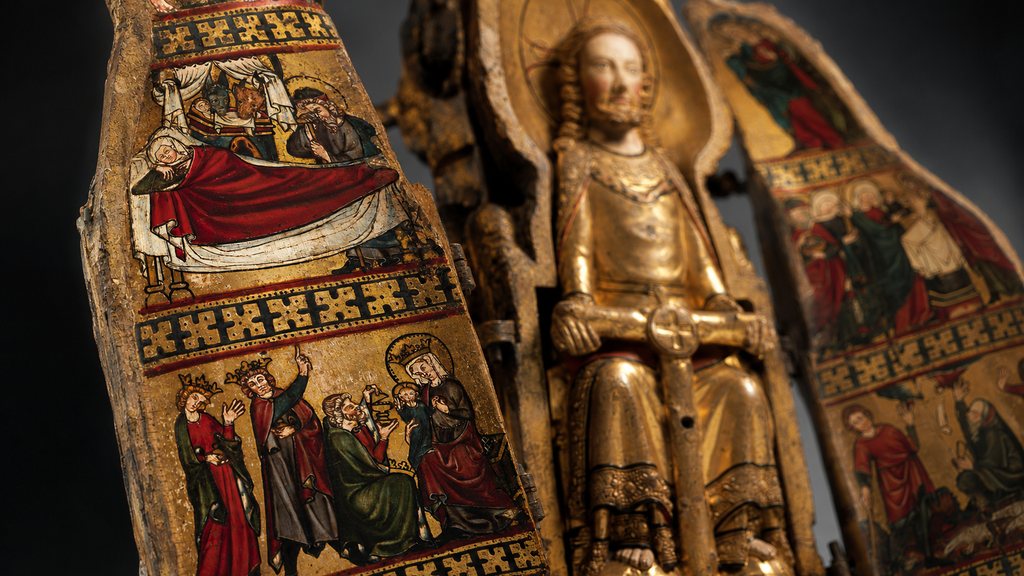
At the center of the open shrine is an enthroned figure of God the Father.
He holds a cross between his knees, but the body of Christ that once occupied it is missing. A smaller hole above the cross probably held a dove representing the Holy Spirit.
Together, the Father, crucified Son, and dove would have formed the Trinity.
This arrangement is known as the Throne of Mercy: God the Father presents the sacrificed Christ while the Holy Spirit appears above them.
Today, only the Father and cross remain, so modern visitors don’t see the complete composition the medieval artist intended. Even so, the surviving structure makes its original meaning clear.
The sculpture opens to reveal a representation of the Trinity, although its figures of Christ and the dove have been lost.
The statue still reveals its central mystery—just not every physical piece of it.
4. Six Painted Scenes Surround the Center
The hidden Trinity isn’t alone.
Six small paintings cover the inner wings in three levels, creating a visual narrative around Christ’s birth and early recognition.
At the top are the Annunciation, when the angel Gabriel tells Mary she will bear Jesus, and the Visitation, when Mary meets her pregnant cousin Elizabeth.
The middle level shows the Nativity and the Presentation of Christ in the Temple.
Below them are the Adoration of the Kings and the Annunciation to the Shepherds.
The arrangement isn’t strictly chronological. The narrow spaces inside the wings helped determine where some of the scenes could be placed.
Even so, the paintings create a clear progression.
Mary receives the news, Christ enters the world, and people from very different backgrounds—from kings to shepherds—recognize who he is.
At the center is the Trinity, linking the infant shown in these scenes with the sacrificed Christ who was once attached to the cross.
5. Mary’s Body Becomes Part of the Message
The hidden interior wasn’t just a clever way to fit more images into a small sculpture.
Its placement inside Mary is central to the statue’s meaning.
In Christian teaching, Mary is the woman through whom Christ entered the human world. By placing the Trinity inside her body, the artist turned that idea into something viewers could see and touch.
Mary was also linked symbolically with the Church, sometimes called Ecclesia. Just as Mary carried Christ, the Church was believed to make him accessible through teaching, worship, and the Eucharist.
The statue turns these ideas into a physical transformation.
The sculpture first presents Mary holding and nursing Jesus, then transforms into a shrine revealing the divine identity and sacrificial purpose hidden within that familiar mother-and-child scene.
Medieval writers called Mary porta mundi, or the gate through which Christ entered the world, and porta coeli, the gate of heaven.
In this sculpture, she becomes a doorway in the most literal sense.
6. Its Exact Use Remains Uncertain
It’s easy to imagine the statue opening during an elaborate ceremony.
That may have happened, but there’s no evidence showing exactly how this particular shrine was used.
The Met connects it with the daily prayers of nuns in a German convent. Its small size also suggests that people viewed it up close, rather than from across a church.
Other Opening Virgins may have stood on monastery altars or belonged to wealthy households. Some scholars believe certain examples may have held the consecrated Host, the bread used in Communion.
That idea fits the symbolism. Mary’s wooden body would contain Christ both visually and sacramentally.
But we shouldn’t assume every Opening Virgin served that purpose. The Met’s statue may simply have been a devotional object, without holding the Eucharist.
We know how it opened.
We don’t know who was allowed to open it, how often it happened, or which prayers accompanied the reveal.
7. Opening the Statue Completes the Artwork
Most sculptures reveal their details as you walk around them.
This one requires you to interact with it.
Someone has to touch the wood, move the hinged sections, and reveal the images inside. The viewer is making the transformation happen.
And the movement itself creates a sequence.
First, there’s Mary holding the infant Jesus. Then the figure separates, revealing gilded surfaces, painted scenes, and the Trinity within.
The shrine turns an abstract religious idea into something physical. The hidden images become visible through Mary’s body.
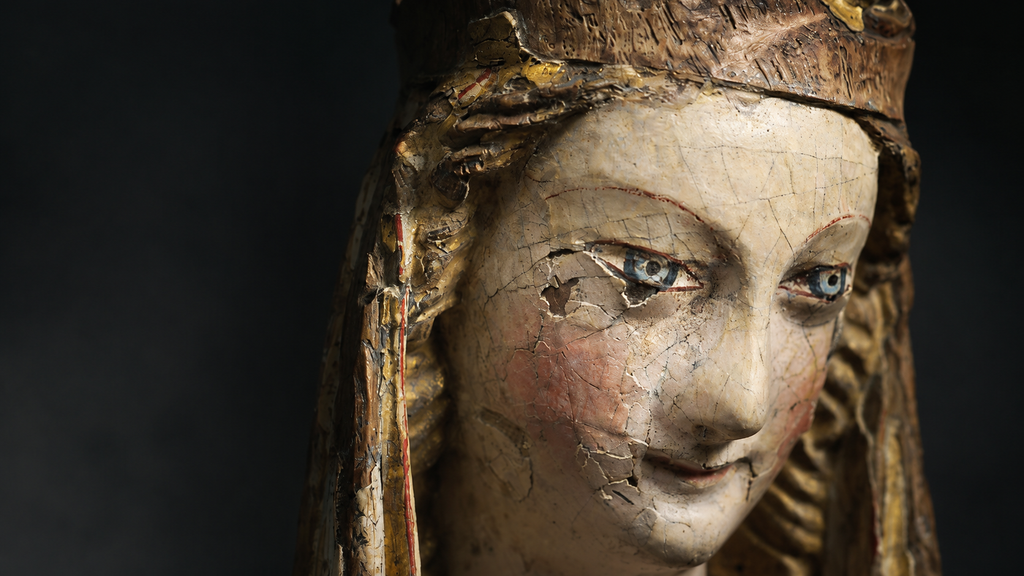
The missing figures, faded paint, and incomplete history mean we can’t experience it exactly as past viewers did. But the main idea still comes through.
Mary holds Christ close, then reveals the larger story of his birth, sacrifice, and salvation.
The Trinity wasn’t added behind the statue as a separate display. It was built into Mary from the very beginning.
