
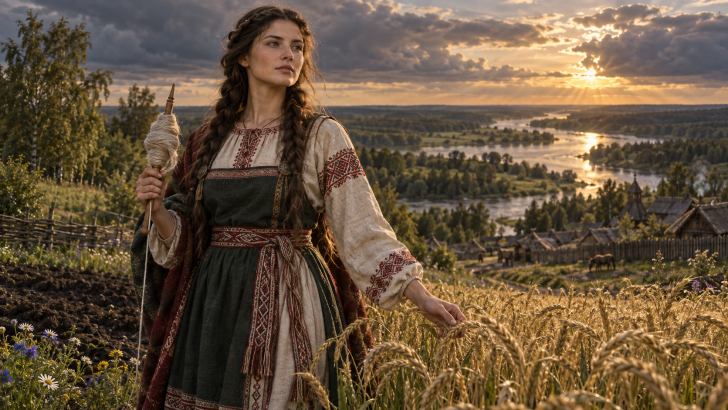
Among the gods of the ancient Slavs, Mokosh stands out immediately.
She is one of the few female deities whose name appears in medieval written sources describing the religion of Kyivan Rus.
While famous gods such as Perun ruled thunder and Stribog was connected with the winds, Mokosh seems to have belonged to a very different world.
She became associated with women, spinning, weaving, fertility, moisture, the earth, and household life.
Was Mokosh originally an earth goddess? Did she protect women while they worked? Why was she included among the important deities honored by Prince Vladimir?
The surviving evidence gives us intriguing clues without providing every answer.
Here are eight things you may not know about Mokosh, the mysterious Slavic mother goddess.
1. Mokosh Was the Only Female Deity Named Among Vladimir’s Major Gods
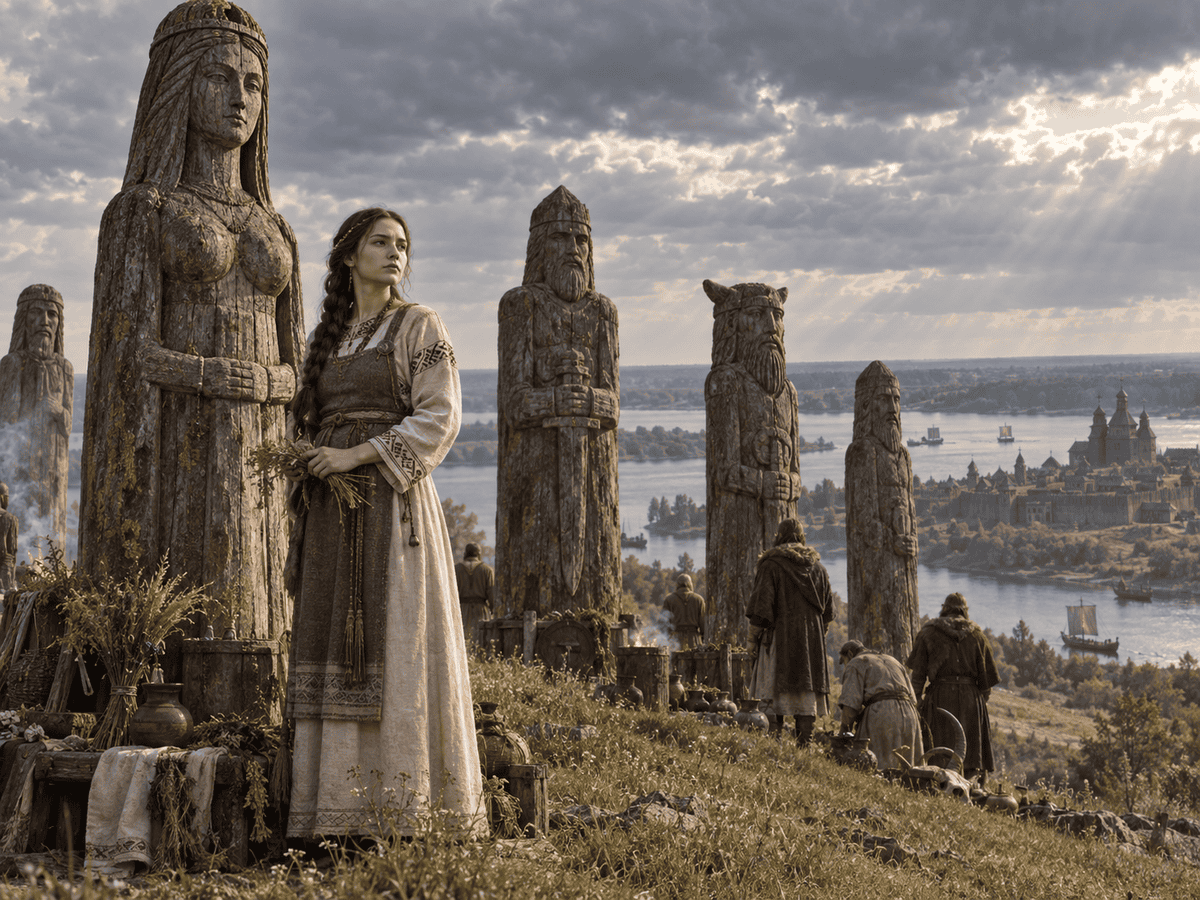
One of the strongest pieces of evidence for Mokosh’s importance comes from the Primary Chronicle.
According to the chronicle, Prince Vladimir established idols of several deities on a hill in Kyiv in 980, before his conversion to Christianity.
The gods named include Perun, Khors, Dazhbog, Stribog, Simargl, and Mokosh. Mokosh is the only clearly female deity on the list.
That is remarkable. It suggests she occupied an important position within the religious world Vladimir was attempting to organize.
Unfortunately, the chronicle does not explain exactly why she was included.
Her presence may indicate the importance of fertility, household production, women’s work, or the earth itself within the larger religious system.
Whatever the reason, Mokosh was clearly more than an obscure household spirit.
She stood among some of the most important divine names preserved from pre-Christian East Slavic religion.
2. Her Name May Be Connected With Moisture
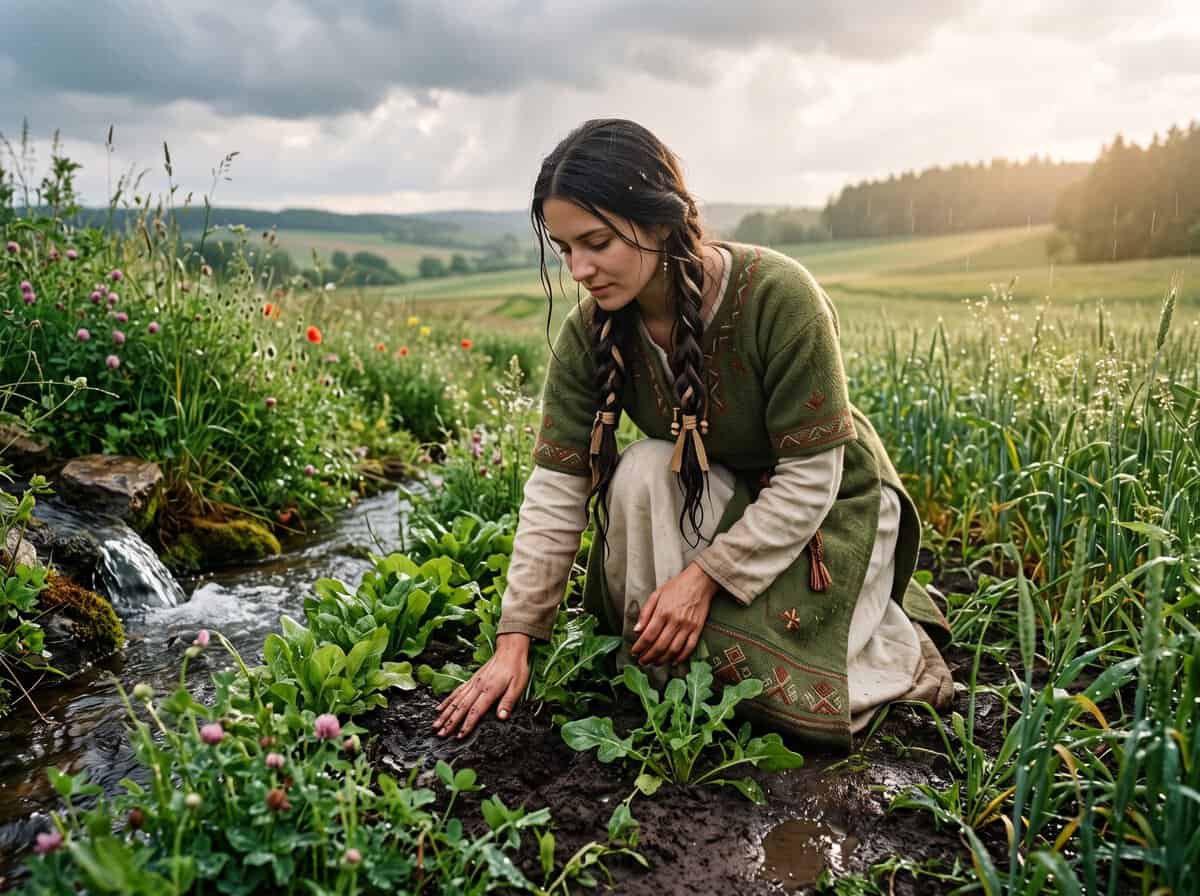
Even Mokosh’s name may reveal something about her original nature.
A widely discussed interpretation connects it with Slavic words relating to wetness or moisture.
If this interpretation is correct, Mokosh may originally have had strong associations with water, damp earth, fertility, or the life-giving moisture necessary for crops.
That would make sense for a goddess later associated with fertility and the earth.
Water and soil together create growth. Rain transforms dry ground. Moist earth produces food.
However, scholars have proposed different explanations for Mokosh’s name, and reconstructing the exact meaning of a deity’s name after more than a thousand years is difficult.
Still, the possible connection with moisture has contributed greatly to the modern interpretation of Mokosh as a figure linked with fertile earth.
3. She Was Closely Connected With Spinning and Women’s Work
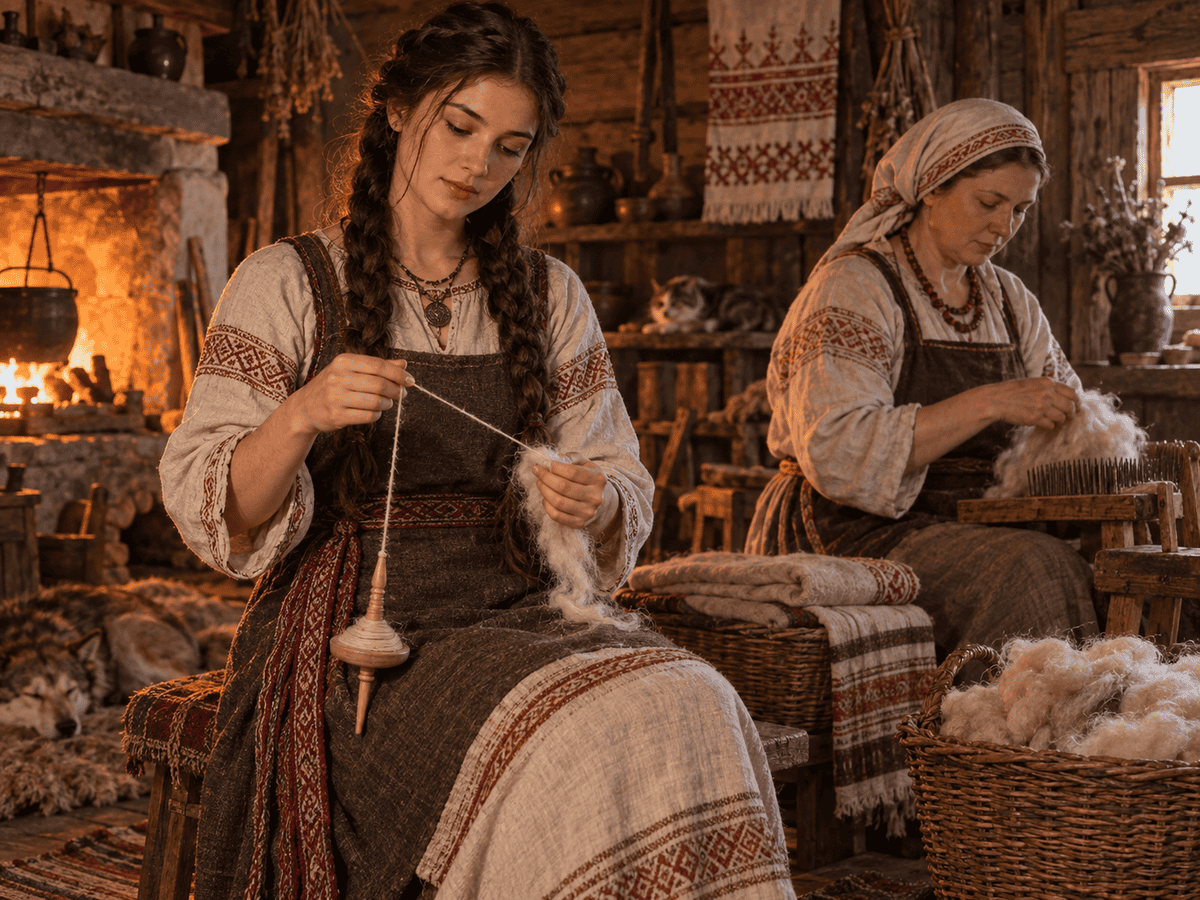
Mokosh became particularly associated with spinning, weaving, and textile work.
These activities may sound ordinary today, but they were essential parts of everyday life for generations.
Producing thread and cloth required enormous amounts of time and skill. Spinning also accumulated powerful symbolic meanings.
Thread could represent life, fate, continuity, and the connection between generations.
Later Slavic traditions contain supernatural female figures associated with spinning and rules about when certain textile work should or should not be performed.
Scholars have sometimes interpreted these customs as possible echoes of older beliefs surrounding Mokosh.
She was a goddess connected not only with grand forces of nature but with work performed quietly inside ordinary homes.
4. Friday Became Particularly Connected With Her
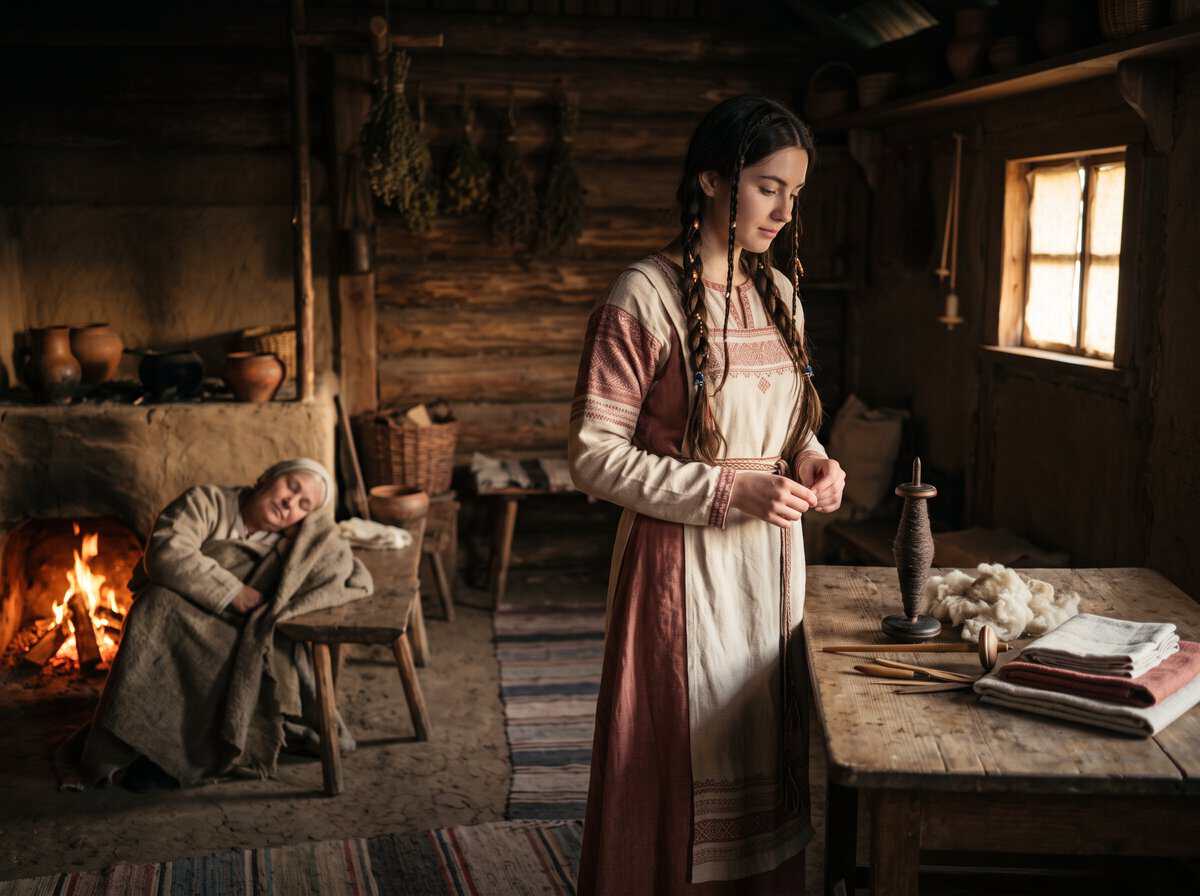
One surprising tradition surrounding Mokosh involves Friday.
Later folklore contains restrictions concerning spinning, washing, sewing, and other forms of women’s work on certain Fridays.
A mysterious female figure known as Paraskeva Friday became important in Slavic Christian folk tradition.
Saint Paraskeva was a Christian saint, but scholars have long noticed similarities between customs surrounding her and earlier beliefs associated with Mokosh.
This has led to the theory that some characteristics of the older goddess survived by becoming attached to a Christian saint.
The transition should not be treated as simple or certain.
Folk religion develops over centuries, and similar traditions do not automatically prove that one figure directly replaced another.
5. Mokosh May Have Been Imagined as a Form of Mother Earth
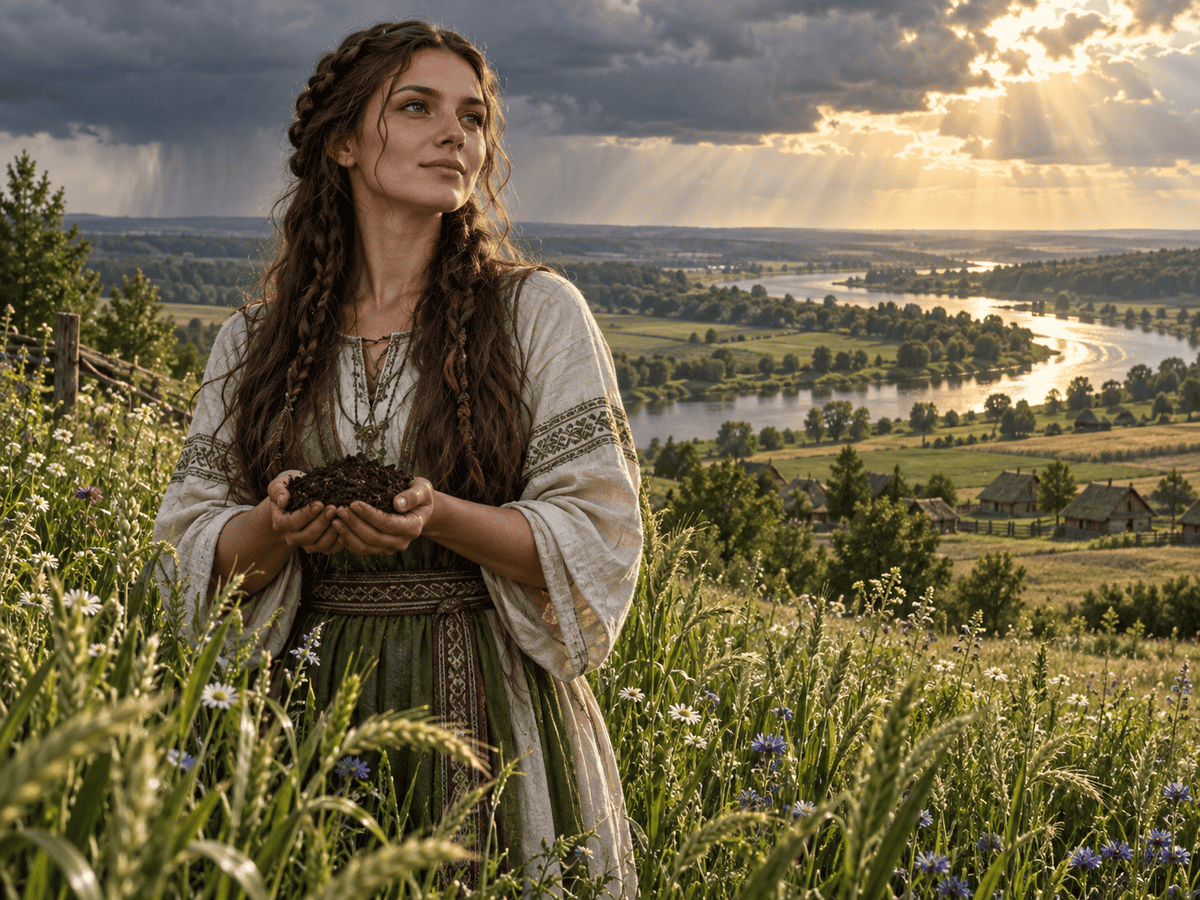
Mokosh is frequently described today as a “Mother Earth” goddess.
There are reasons for the association, but the surviving medieval sources do not give us a complete myth declaring exactly what she ruled.
Her possible connection with moisture, fertility, women’s work, and agricultural life naturally encouraged later interpretations of her as an earth mother.
Slavic tradition also preserved the broader concept of the earth as sacred and maternal.
Expressions involving “Mother Damp Earth” became especially significant in East Slavic folklore.
Some scholars have explored whether Mokosh may have been connected with this larger image.
If so, she would represent something fundamental. The earth was not merely ground beneath people’s feet.
It provided crops, received the dead, supported communities, and made human survival possible.
Calling Mokosh a Mother Earth figure therefore captures an important interpretation, but it is better understood as a scholarly reconstruction than as a complete surviving ancient myth.
6. Her Appearance Is Almost Completely Unknown
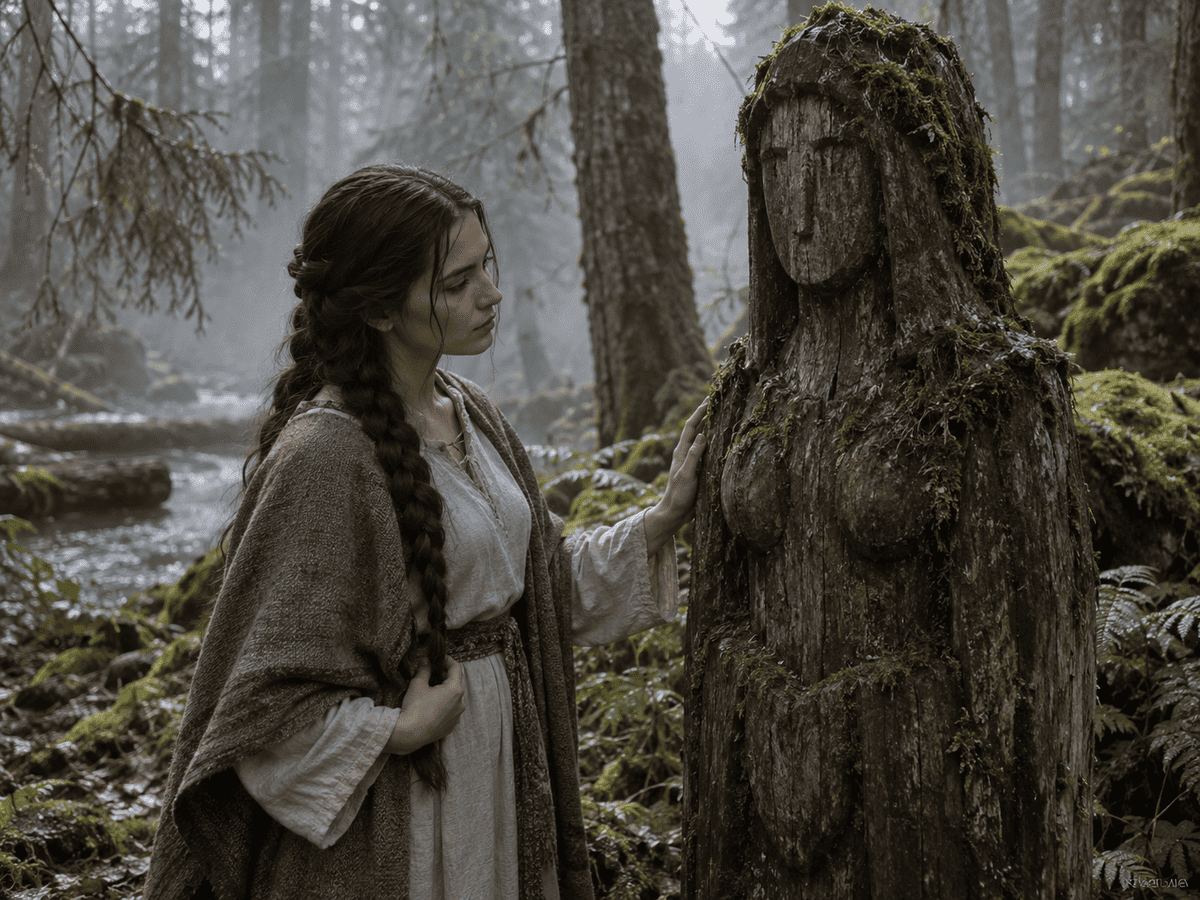
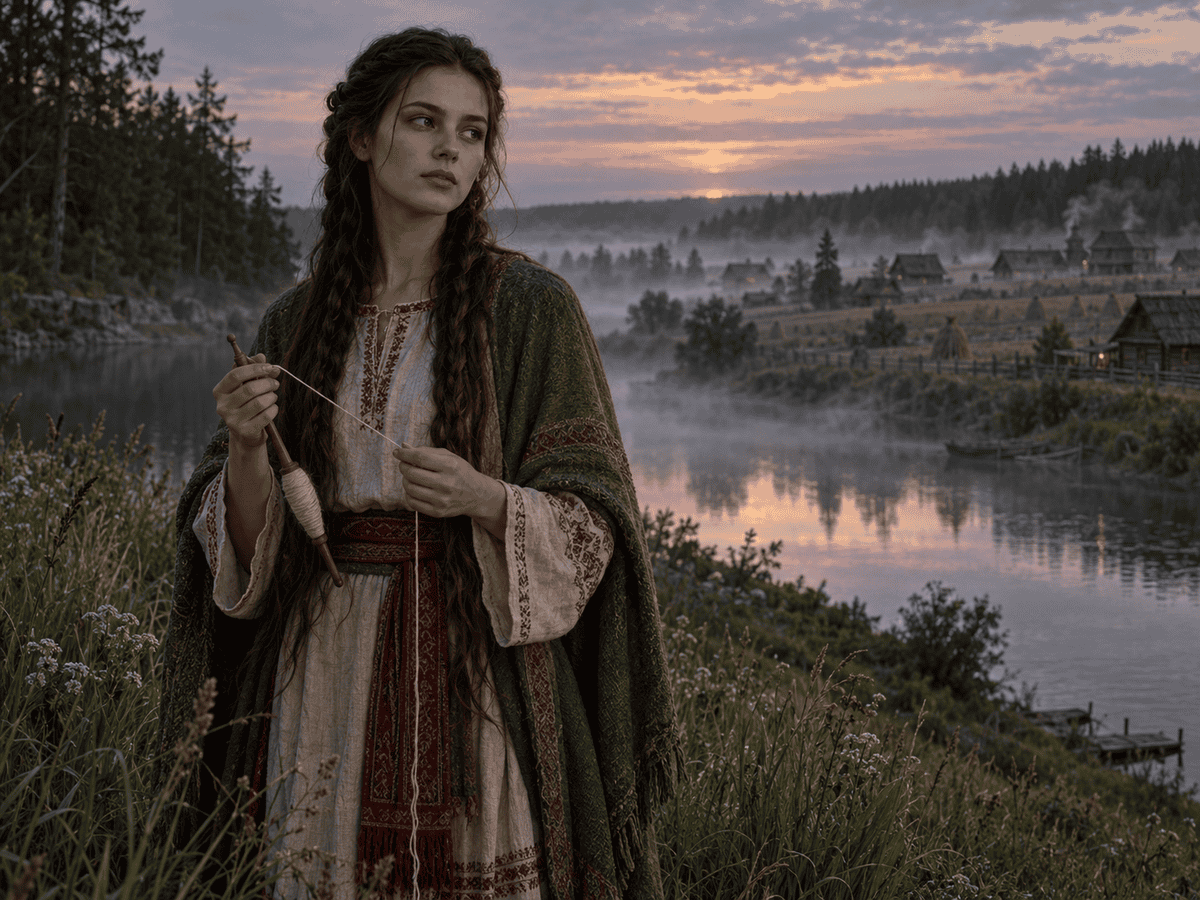
Modern illustrations often portray Mokosh as a beautiful woman in traditional Slavic clothing, sometimes holding thread, standing among crops, or raising her hands toward the sky.
Ancient worshippers may have imagined her very differently. We simply do not know.
Unlike Greek mythology, Slavic pagan religion did not leave behind a huge surviving collection of detailed literary descriptions and recognizable sculptures identifying every deity.
について Primary Chronicle tells us that Mokosh had an idol in Vladimir’s sanctuary, but it does not describe what that idol looked like.
This leaves modern artists with enormous freedom.
Images sometimes presented online as ancient representations of Mokosh may actually be modern interpretations or objects whose identification is uncertain.
There is therefore no historically verified portrait showing exactly what the goddess looked like. The real face of Mokosh has been lost.
7. Christian Writers Were Still Mentioning Mokosh After Conversion
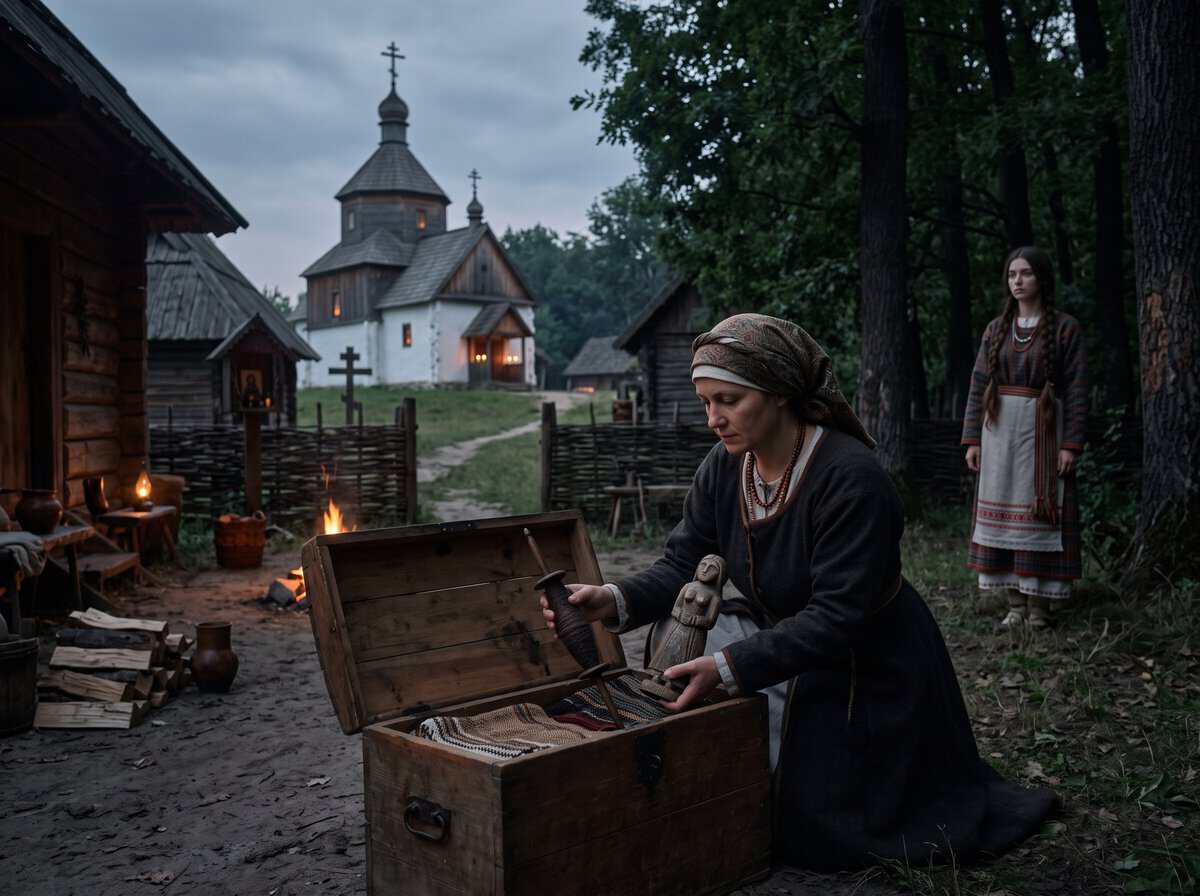
Vladimir converted to Christianity in 988, only a few years after establishing his famous pagan sanctuary.
The old gods were officially rejected. Yet Mokosh did not immediately disappear from cultural memory.
Her name continued appearing in later Christian writings condemning older beliefs and practices.
This is important because religious conversion rarely changes every household custom overnight.
Official temples can be destroyed quickly. Stories, habits, superstitions, seasonal customs, and family traditions are much harder to remove.
The continued appearance of Mokosh in texts criticizing pagan practices suggests that memories or traditions associated with her remained relevant after official Christianization.
8. We May Know Only a Small Part of Mokosh’s Original Story
The greatest mystery surrounding Mokosh is everything that disappeared. We know her name.
We know she was important enough to stand among Vladimir’s major gods.
Later traditions connect her with women, spinning, fertility, moisture, and household activities.
But where are her myths? Who were her divine relatives? Did she have a husband?
Were there particular festivals dedicated to her? What did people ask from her?
What stories were told about her during long evenings while women spun thread? We cannot confidently answer most of these questions.
Much of pre-Christian Slavic religion was transmitted orally, while the written descriptions that survive were often produced by Christian authors who were more interested in condemning paganism than carefully documenting it.
Mokosh therefore survives almost as a silhouette. We can recognize her importance from the traces around her, but the complete goddess remains hidden.
Perhaps she once stood at the center of stories involving the earth, fertility, fate, women, and the mysterious thread connecting one generation to another.

私は生まれたときから、常に神との強いつながりを感じていた。作家として、また指導者として、私の使命は、人々が最も暗い時代に愛と幸福と内なる強さを見つけるのを助けることである。