
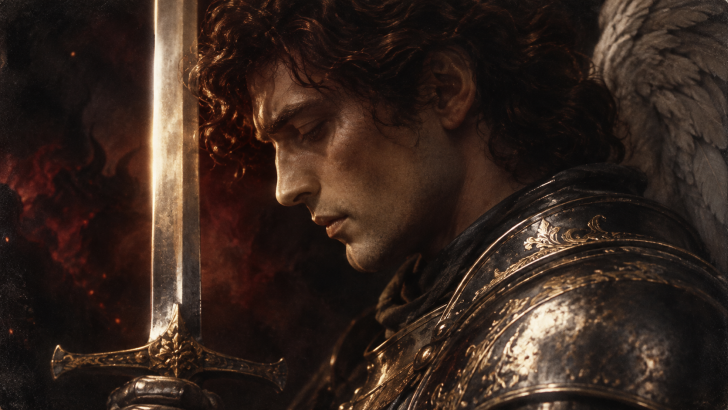
Archangel Michael is one of the few angels named in the Bible.
And every time he appears, something serious is happening. He appears during intense spiritual battles, and his role is always connected to protecting God’s people.
That’s where his fearsome reputation comes from.
1. He Holds an Important Rank in Heaven
Jude describes Michael as “the archangel,” while the Book of Daniel calls him one of the chief princes.
Revelation goes even further by referring to Michael and “his angels,” showing that other heavenly beings follow his leadership.
The Bible doesn’t give us a complete map of the angelic hierarchy, so there’s still plenty we don’t know about his exact position. But Michael is clearly more than an ordinary messenger.
He carries enough authority to enter the most serious spiritual conflicts, and when those conflicts intensify, other angels enter the fight under his command.
That’s the first reason evil has something to fear.
When Michael enters a battle, he comes with the support of heaven behind him.
2. He Enters Battles Other Angels Can’t Finish Alone
Michael first appears in Daniel 10, where a heavenly messenger explains why his answer to Daniel was delayed.
The mysterious “prince of Persia” resisted him for 21 days.
The passage doesn’t tell us everything about this figure, but the conflict is clearly happening on a spiritual level, and the messenger can’t continue until Michael comes to help.
That gives us a rare look at the kind of opposition Michael faces. He steps in when another heavenly being has already met serious resistance.
And once Michael arrives, the messenger is able to continue his journey to Daniel.
So part of Michael’s fearsome reputation comes from timing as well.
He’s the one heaven sends when the resistance has already proved it won’t move easily.
3. He Leads the Fight Against the Dragon
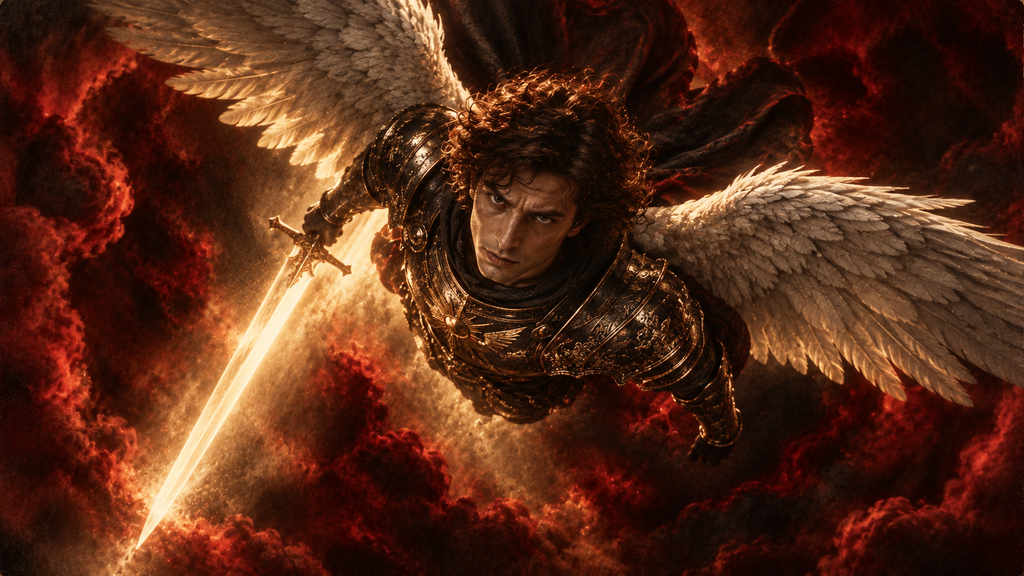
Michael’s most famous appearance comes in Revelation 12.
War breaks out in heaven, and Michael leads his angels against the dragon and the angels who follow it. The dragon is later identified as the ancient serpent—the devil and Satan.
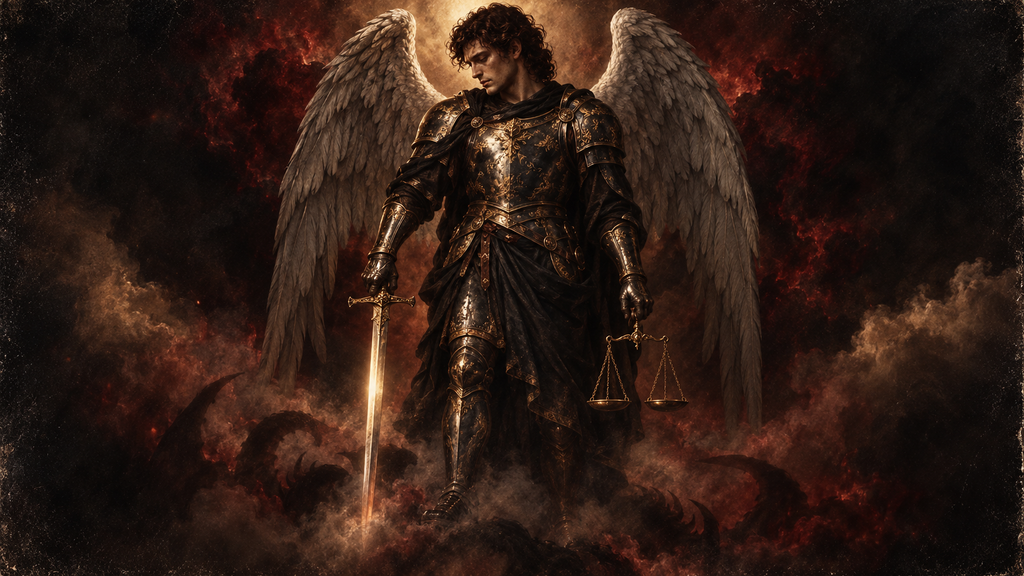
Christian tradition often connects this battle with the fall of Lucifer, which is why so much religious art shows Michael standing over Satan with a sword.
Still, Revelation doesn’t present them as two equal powers fighting for control.
Michael serves God. The dragon is trying to resist Him.
So Michael isn’t building his own kingdom or fighting for personal glory. He’s defending an order that already belongs to God.
4. Evil Loses Its Place When Michael Wins
Revelation doesn’t leave the battle without a clear result.
The dragon fights back, but it isn’t strong enough. Michael and his angels defeat it, and the dragon loses its place in heaven before being thrown down to earth.
Michael’s victory changes how much ground the enemy is allowed to occupy. The dragon continues causing harm afterward, so this isn’t yet the end of each and every struggle.
But it has still lost something it can’t take back.
That’s why Michael is such a threatening figure to the forces of evil and darkness. His arrival means they could lose more than one battle.
They could lose their position completely.
5. He Protects God’s People During the Worst Moments
Michael isn’t only known for attacking evil.
The Book of Daniel also describes him as the great prince who watches over God’s people.
In Daniel 12, Michael rises during a time of suffering unlike anything the nation has experienced before. His appearance is connected with the deliverance of those whose names are written in the book.
So Michael’s strength has a clear purpose. He fights because someone needs to be protected.
That also explains why believers traditionally turn to him for protection. He isn’t supposed to be terrifying to the people under his care; he’s terrifying to whatever is trying to reach them.
And the more overwhelming the danger becomes, the more meaningful his protection is.
6. Even the Devil Can’t Make Him Lose Control
Michael’s encounter with the devil in Jude looks very different from the battle in Revelation.
There’s no army and no intricate description of combat. Instead, Michael is disputing with the devil over the body of Moses.
Even then, he doesn’t throw insults or claim the right to condemn the devil by his own authority.
He simply says, “The Lord rebuke you.”
Michael doesn’t need rage to make him dangerous, so that restraint makes him powerful. And the devil can’t provoke him into forgetting whom he serves.
He knows the limits of his authority, of course. But he also knows exactly where greater authority can be found.
There’s nothing for evil to manipulate because Michael never makes the confrontation about himself.
7. His Traditional Image Became a Warning to Evil
Most people picture Michael wearing armor and carrying a sword.
Some traditions also show him holding scales because he eventually became associated with judgment. And the dragon trapped beneath his feet comes from his victory in Revelation.
The Bible doesn’t actually describe Michael’s physical appearance or tell us which weapons he carries.
Those details grew through centuries of Christian art and tradition, but they still reflect the role Scripture gives him.
The armor places him at the head of heaven’s army, while his sword represents the fight against evil.
Even Michael’s name carries the same message. It means “Who is like God?”—a question that reminds every rebellious power that it will never take God’s place.
That’s why Archangel Michael is so feared.
He has tremendous strength, but he never mistakes that strength for his own glory.
And that makes it impossible for evil to pull him away from the purpose he was given.
