

People have always tried to understand the strange moods of winter. It is cold, unpredictable, loud, and sometimes very magical.
In old Scotland and Ireland, people believed that winter arrived because of a powerful spirit called Cailleach.
She was not just a simple figure from a story. She was the ancient Snow Spirit who shaped storms, ice, and frozen mornings with a single tap of her staff.
Her legend is full of wild strength, sharp humor, and a touch of mystery. Some people feared her, others respected her, and many felt both at the same time.
This is the story of Cailleach, the winter maker, who reminds everyone that nature has its own rules and keeps them with great confidence.
The Ancient Shape of Winter

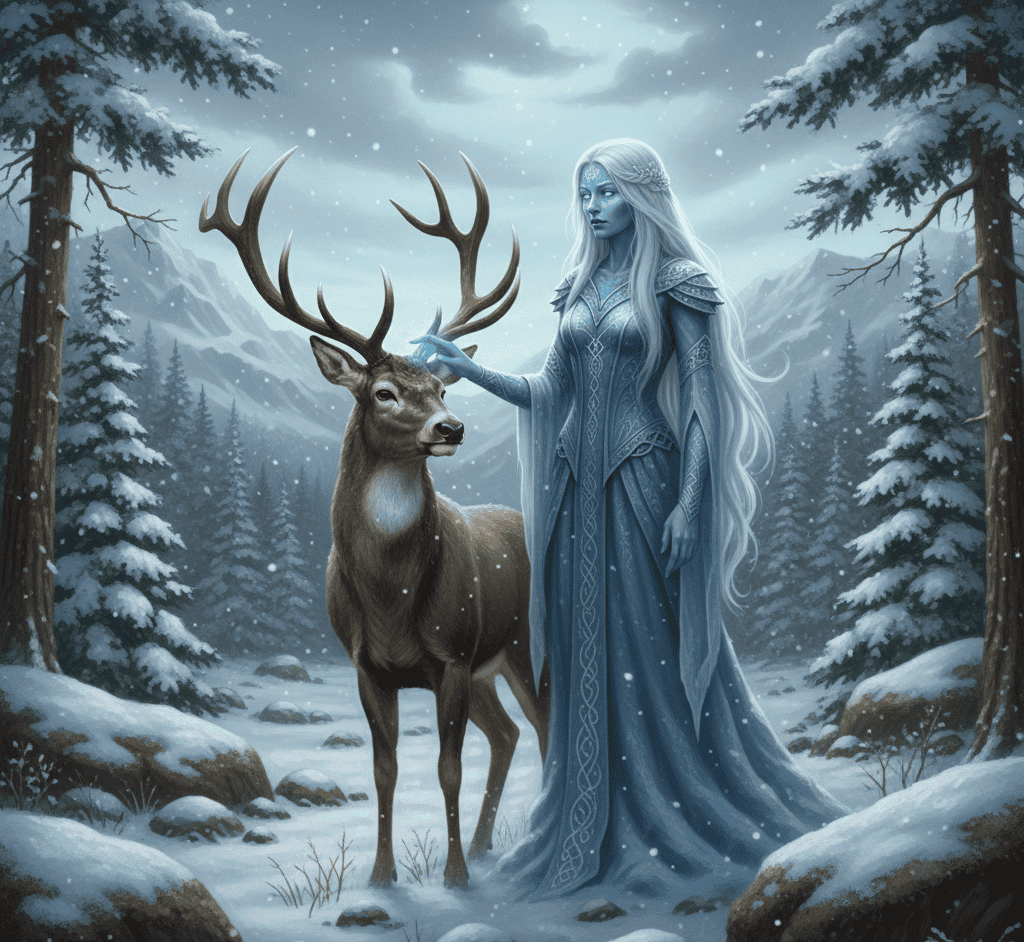
Cailleach is described as a tall old woman with long white hair that looks like fresh snow.
People imagined her with blue skin from centuries of cold air, and they said her eyes shone like bright winter stars.
She carried a heavy staff, sometimes wooden and sometimes iron, depending on the story. That staff was the source of her winter magic.
With one tap, she could freeze lakes, call a snowstorm, or bring the first flakes of the season.
Older tales say she walked the mountains long before towns or farms were built. She was not a soft and gentle grandmother.
She was the living force of winter, strong and unbothered by the opinions of humans.
In old Celtic beliefs, every season had a guardian spirit, and she ruled over winter. When she rose from her rest, the warm days were simply over.
People also believed she shaped the land itself. One legend says she carried stones in her apron and dropped them by accident as she walked.
Those stones became the hills and peaks that still stand today. Another story claims she dragged her staff behind her and carved deep valleys in the ground.
These stories helped explain the world in a time when nature felt huge and mysterious. Even though winter could be harsh, Cailleach was not seen as a villain.
Her cold winds cleaned the land, her snow covered the soil so it could rest, and her storms kept the natural cycle in balance.
Winter was part of her careful design, a season that prepared the world for new life.
The Staff That Commands the Cold

The most famous part of Cailleach’s legend is her staff. It was more than a symbol. It was her tool for shaping the weather.
When she tapped the ground, frost spread. When she raised her staff, snow clouds gathered. When she pointed it at the sea, large waves answered her call.
People believed she used the staff to mark the start of winter. Some stories say she tapped the earth on Samhain, the ancient festival at the beginning of November.
That tap sent cold air across the land. Leaves fell, and rooftops sparkled with frost. It was her quiet way of saying that winter belonged to her now.
Storms were also linked to her. If people heard strong winds at night, they said Cailleach was traveling across the sky.
The sound of branches knocking against windows was her voice. The howl through the chimney was her breath.
Parents told children to stay inside because the Snow Spirit was out walking.
There is also a charming belief connected to the first day of February. On that day, she decided whether winter should continue.
If she wanted more cold, she made the day clear and sunny because she needed the good weather to gather firewood.
A bright February day meant she was preparing for more storms. A dark and rainy day meant she could not collect wood, so winter would end sooner.
Her staff shows how much control she had over the season. She was not cruel. She was simply the keeper of winter, and she carried out her task with care and confidence.
A Spirit With Many Roles and Faces
Cailleach appears in different forms depending on the region. In some places, she is described as a frightening winter witch.
In others, she is a wise guardian of animals and mountains. There are stories where she is a goddess of age, wisdom, and transformation.
She sometimes lives forever and sometimes becomes young again when spring arrives.
One tale says she washes her cloak in a special whirlpool at the end of winter. When the water turns bright and clear, she spreads the cloak across the land to dry.
Wherever the cloak touches the ground, snow appears. Once the work is done, she grows tired and finally rests, giving space to spring.
Animals were also part of her world. Deer were her favorite creatures. Hunters respected her and believed she protected the herds.
If hunters were respectful, she guided the deer toward them. If they were greedy, she hid the animals deep in the mountains.
She controlled the balance between people and wildlife. Even though she could be strict, she was not seen as hateful.
Rural families often viewed her as a firm but fair grandmother of nature. They spoke kindly of her during the winter and sometimes left a small offering.
They wanted to stay on good terms with the spirit who carried storms in her hands.
Because she had so many roles, she became one of the richest figures in Celtic mythology. She could be fierce, gentle, protective, and wild all at once.
She shaped mountains, watched over animals, and kept the seasons turning in a steady rhythm.
Her Legacy in a World That Still Knows Winter

People still talk about Cailleach today. Her name appears in poems, stories, and modern books.
Many mountains in Scotland are named after her, and hikers like to joke that sudden cold weather means she has tapped her staff nearby.
Her legend carries a message that feels useful even now. Winter is not only a time to feel annoyed by the cold wind and frozen fingers.
It is a season of rest. It is a reminder to slow down and let the world breathe. Cailleach shows that difficult times can have a purpose.
They prepare the ground for better days and make spring feel even sweeter.
She also reminds people that nature follows its own rhythm. Humans may build cities and invent new tools, but they still cannot control everything.
Seasons come and go in their own time. Her icy work is part of a story older than any person alive today.
When you see snow falling softly outside your window, imagine Cailleach walking across the high hills.
Imagine her lifting her staff with calm focus. She is shaping winter once again, just as she has done for ages.
And when the first flowers appear in spring, imagine her finally resting after long months of cold work.
Cailleach still walks through the season she guards, and she invites us to understand winter in a deeper way simply by remembering her story.

私は生まれたときから、常に神との強いつながりを感じていた。作家として、また指導者として、私の使命は、人々が最も暗い時代に愛と幸福と内なる強さを見つけるのを助けることである。