
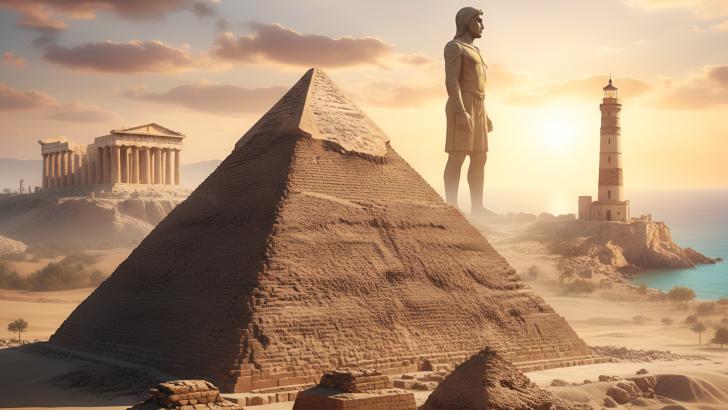
The Ancient Wonders of the World represent humanity’s earliest attempts to create something truly extraordinary.
These structures were built thousands of years ago, without modern tools or advanced machines, yet they pushed the limits of imagination and engineering.
Each wonder reflected the values, beliefs, and ambitions of the civilization that created it. Some were built to honor gods, others to celebrate power, beauty, or innovation.
Although most of them no longer exist, their stories continue to shape how we understand ancient history.
Exploring these wonders allows us to see how deeply humans have always desired to leave a lasting legacy.
From towering stone monuments to artistic masterpieces, the seven ancient wonders remind us that greatness has always been part of the human story.
1. The Great Pyramid of Giza
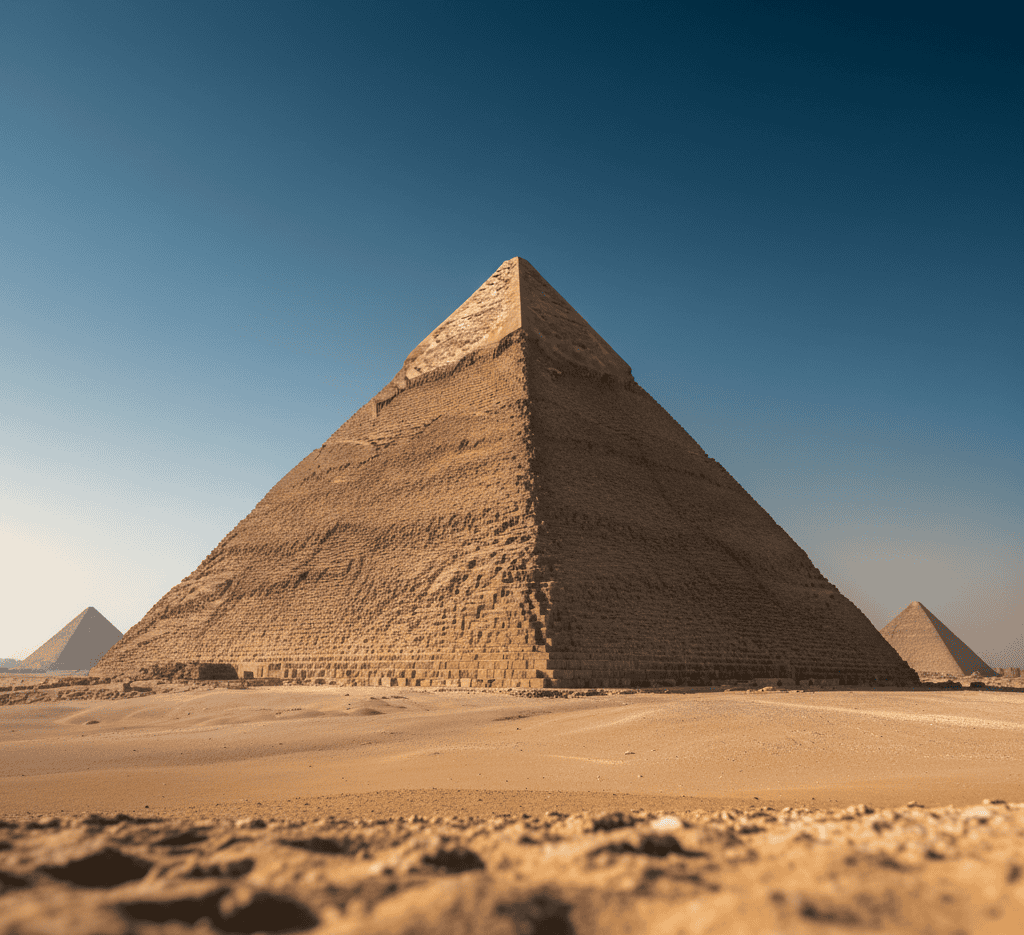
The Great Pyramid of Giza is the only ancient wonder still standing today. Built around 2560 BCE in Egypt, it served as the tomb of Pharaoh Khufu.
For more than three thousand years, it remained the tallest man-made structure in the world, a remarkable achievement for its time.
The pyramid was constructed using millions of limestone blocks, each weighing several tons. What continues to amaze researchers is the precision of its construction.
The sides align closely with the cardinal directions, and the structure was built with incredible accuracy despite the limited tools available.
Beyond its physical scale, the Great Pyramid reflects ancient Egyptian beliefs about the afterlife.
It was designed to ensure the pharaoh’s soul could journey safely into eternity. Today, it stands as a powerful symbol of endurance, skill, and human ambition.
2. The Hanging Gardens of Babylon
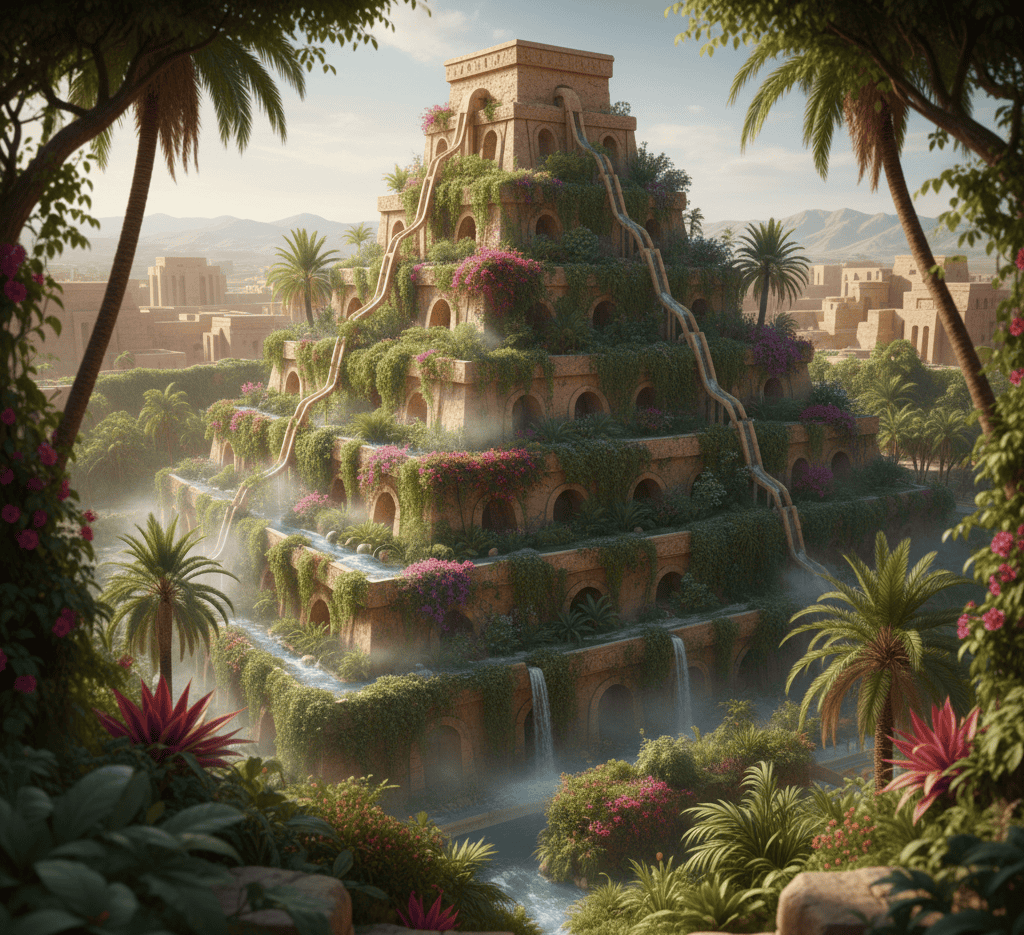
The Hanging Gardens of Babylon are perhaps the most mysterious of the seven wonders.
Ancient writers described them as a breathtaking series of terraces filled with trees, flowers, and flowing water, rising above the city of Babylon in present-day Iraq.
According to legend, the gardens were built by King Nebuchadnezzar II for his wife, who missed the green landscapes of her homeland.
An advanced irrigation system was said to lift water from the Euphrates River to nourish the plants, an impressive feat of engineering.
Despite detailed descriptions, no clear archaeological evidence has been found. Some historians believe the gardens may have been symbolic or located elsewhere.
Whether real or mythical, the Hanging Gardens represent humanity’s longing to create beauty and life even in harsh surroundings.
3. The Statue of Zeus at Olympia
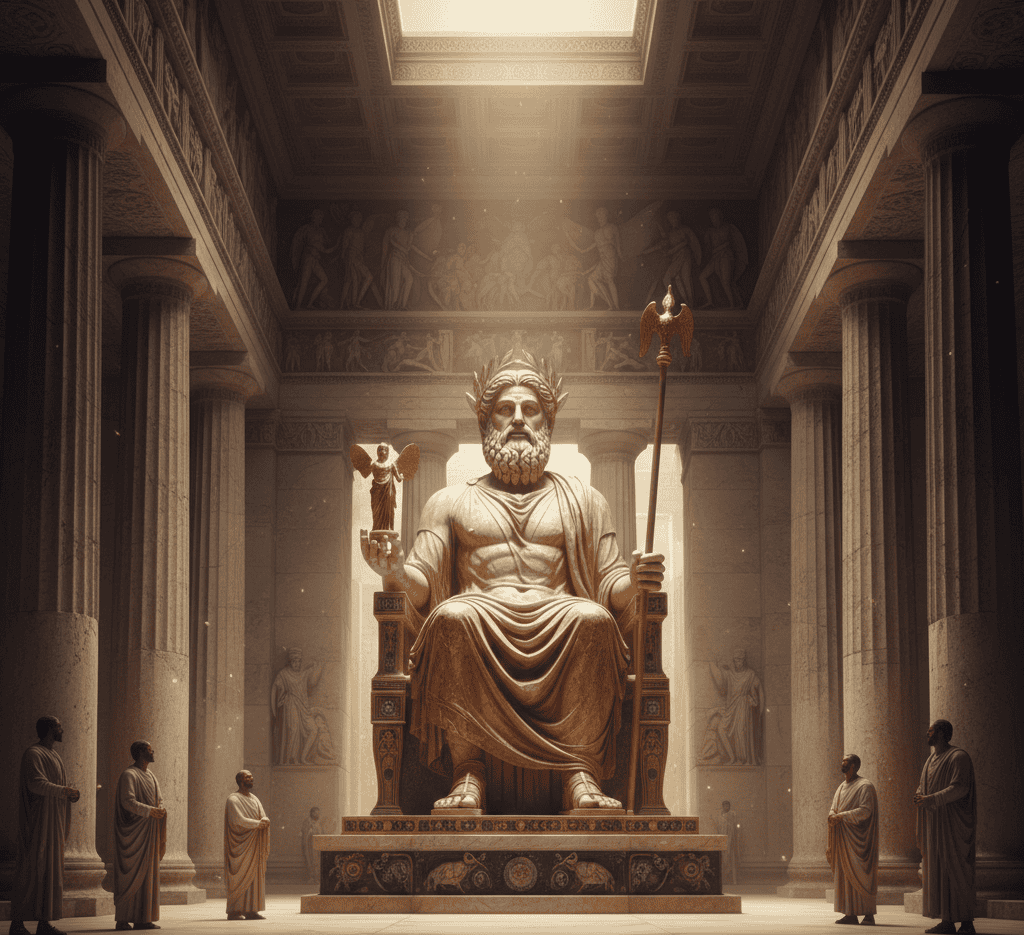
The Statue of Zeus at Olympia was a massive sculpture created by the renowned Greek artist Phidias around 435 BCE.
It stood inside the Temple of Zeus, the religious heart of Olympia, where the ancient Olympic Games were held.
Made from ivory and gold, the statue depicted Zeus seated on an elaborate throne. It was so large that it nearly touched the ceiling of the temple, filling visitors with a sense of awe and reverence.
Ancient accounts describe the statue as both majestic and overwhelming.
More than a work of art, the statue represented Greek devotion to their gods and the importance of religion in daily life.
Although it was eventually destroyed, its fame endured for centuries, symbolizing the artistic brilliance of ancient Greece.
4. The Temple of Artemis at Ephesus
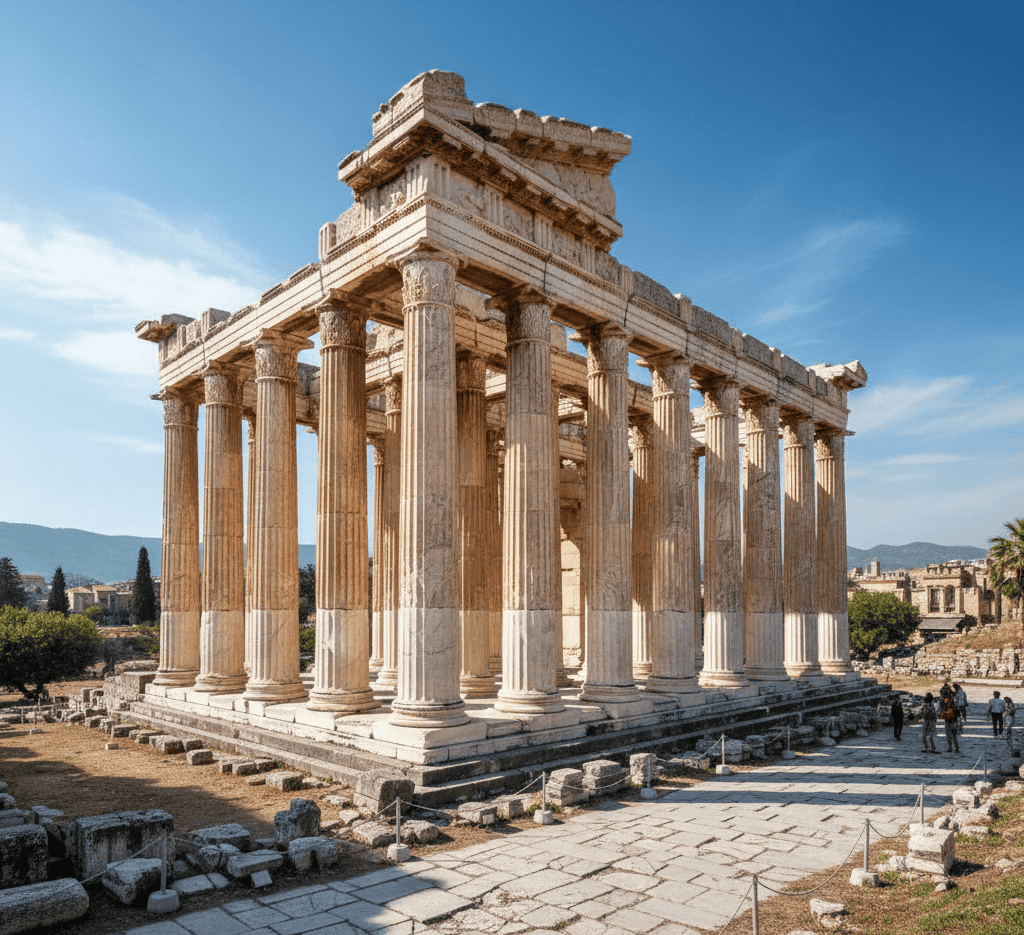
The Temple of Artemis was one of the most magnificent buildings of the ancient world.
Located in Ephesus, in modern-day Turkey, it was dedicated to Artemis, the Greek goddess of the hunt and fertility.
The temple was known for its grand scale and beauty, featuring more than one hundred marble columns.
It served not only as a place of worship but also as a cultural and economic center for the region.
Throughout history, the temple was destroyed and rebuilt several times due to fires and invasions. Eventually, it was dismantled, and its materials were reused.
Even in ruin, the Temple of Artemis remains a symbol of devotion, resilience, and architectural excellence.
5. The Mausoleum at Halicarnassus
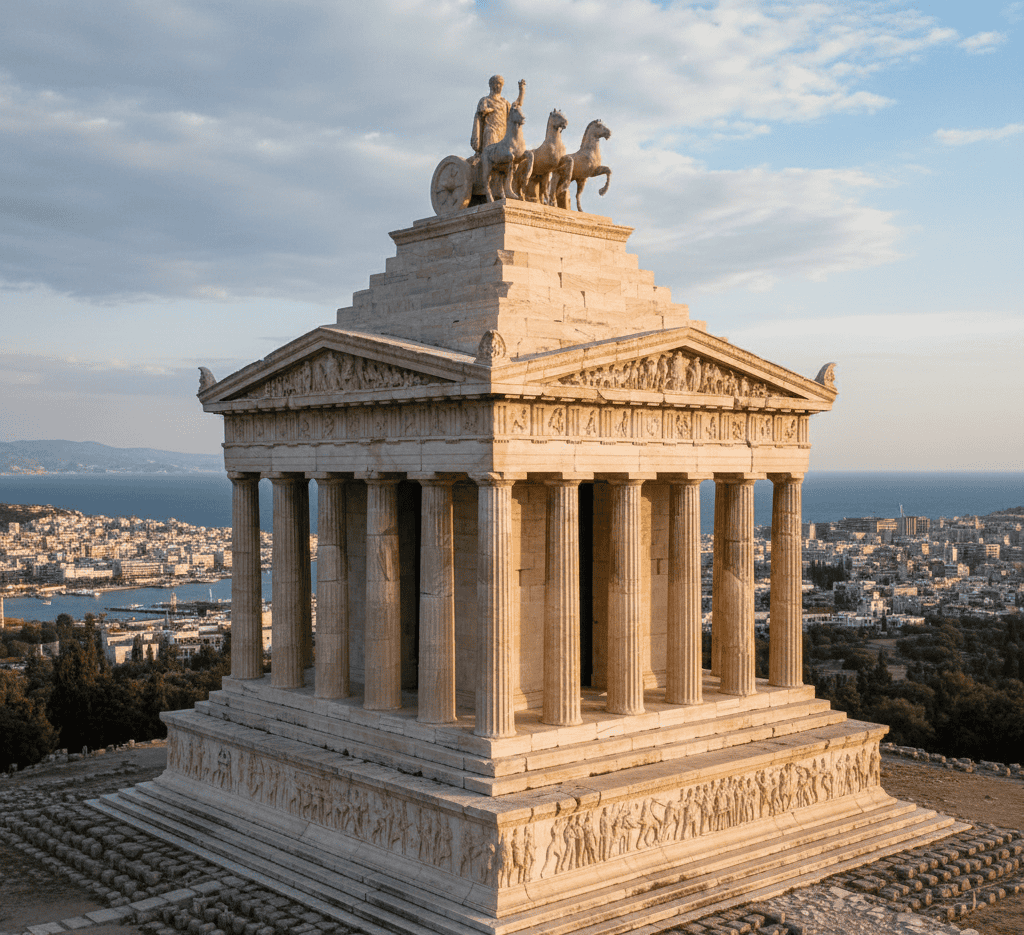
The Mausoleum at Halicarnassus was built around 350 BCE as a tomb for Mausolus, a powerful ruler in what is now Turkey.
The structure was so impressive that his name became the root of the word mausoleum, still used today.
Standing approximately forty-five meters tall, the mausoleum combined Greek, Egyptian, and Lycian architectural styles.
It was richly decorated with sculptures and detailed reliefs that celebrated both power and artistry.
The structure survived for many centuries before being damaged by earthquakes and eventually dismantled.
Even in fragments, it demonstrated how architecture could be used to honor legacy and status in the ancient world.
6. The Colossus of Rhodes
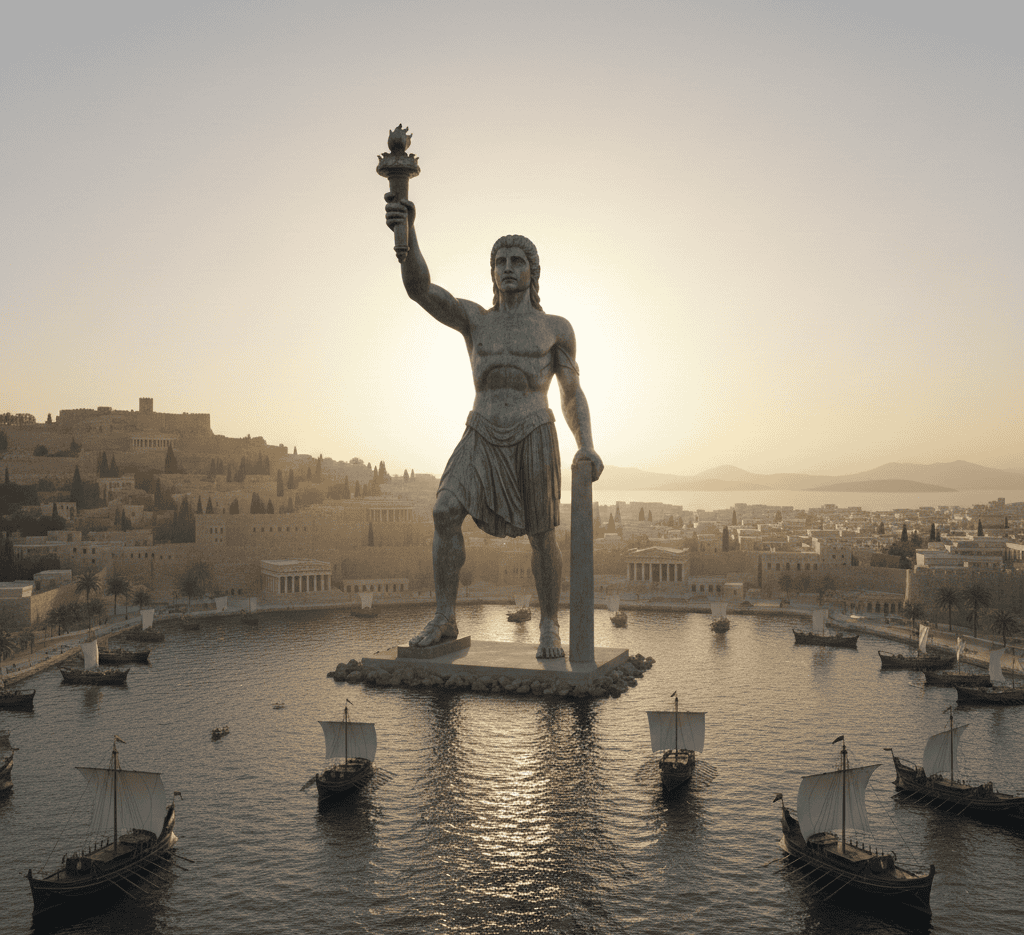
The Colossus of Rhodes was a giant bronze statue built on the Greek island of Rhodes around 280 BCE. It was created to celebrate a military victory and to honor Helios, the sun god.
Rising over thirty meters tall, the statue was among the tallest of the ancient world.
Although often imagined standing over the harbor entrance, historians believe it stood nearby, towering above the city.
The Colossus stood for only about fifty-six years before being destroyed by an earthquake.
Despite its short lifespan, it became a lasting symbol of strength, unity, and pride, inspiring stories and legends for generations.
7. The Lighthouse of Alexandria

The Lighthouse of Alexandria, also known as the Pharos of Alexandria, was built around 280 BCE on the island of Pharos in Egypt.
Its purpose was to guide sailors safely into the busy harbor of Alexandria, one of the most important cities of the ancient world.
The lighthouse may have stood over one hundred meters tall, making it one of the tallest structures of its time.
It used fire and reflective surfaces to project light across the sea, helping ships navigate safely at night.
The structure survived for centuries before being damaged by earthquakes and eventually collapsing.
The Lighthouse of Alexandria stands as a symbol of innovation, protection, and guidance through knowledge.

私は生まれたときから、常に神との強いつながりを感じていた。作家として、また指導者として、私の使命は、人々が最も暗い時代に愛と幸福と内なる強さを見つけるのを助けることである。