

Across many cultures and faiths, angels are seen as messengers, protectors, and guides. Some bring hope and comfort, while others carry heavier duties that few wish to think about.
Among them stands Azrael, the angel often linked with death. His name alone can make people uneasy, yet his role is not one of cruelty or fear.
Azrael is not a figure who brings punishment. Instead, he is described as a quiet presence who stands at the doorway between life and what comes after.
Stories about him have traveled through centuries, shaped by religion, folklore, and human imagination.
When people speak about Azrael, they often imagine darkness and final endings, but many traditions describe him as calm, gentle, and deeply respectful of human souls.
Understanding Azrael means looking beyond fear and seeing a figure who represents transition rather than loss.
The Origins of Azrael in Sacred Traditions

Azrael appears most clearly in Islamic tradition, where he is known as the Angel of Death.
His task is to separate the soul from the body when a person’s time has come.
This role is not chosen by Azrael himself. It is a duty given by God, and he carries it out with obedience and care.
In these teachings, Azrael does not decide when someone dies. He only fulfills a command that has already been written.
This detail is important because it removes the idea that Azrael causes death. Instead, he arrives when the moment has already been set.
In some stories, Azrael is described as having a vast and complex form, with countless eyes and wings.
Each eye is said to represent a human soul, watching over life as it moves toward its end. When a soul leaves the world, one of these eyes closes.
This image may sound frightening, but it also suggests awareness and compassion. Azrael sees every life and understands its value.
He is not distant or careless. He knows the weight of his task and carries it with seriousness.
Other traditions also hint at a similar figure, even if they do not use the same name. In Jewish mysticism and Christian folklore, angels connected to death appear as guides rather than executioners.
They help the soul move from one state of being to another. Over time, these ideas blended in stories and art, shaping the image of Azrael as a silent guardian at the edge of existence.
His presence is meant to be steady, not threatening, offering order in a moment that would otherwise feel chaotic.
The Role of Azrael at the Moment of Passing
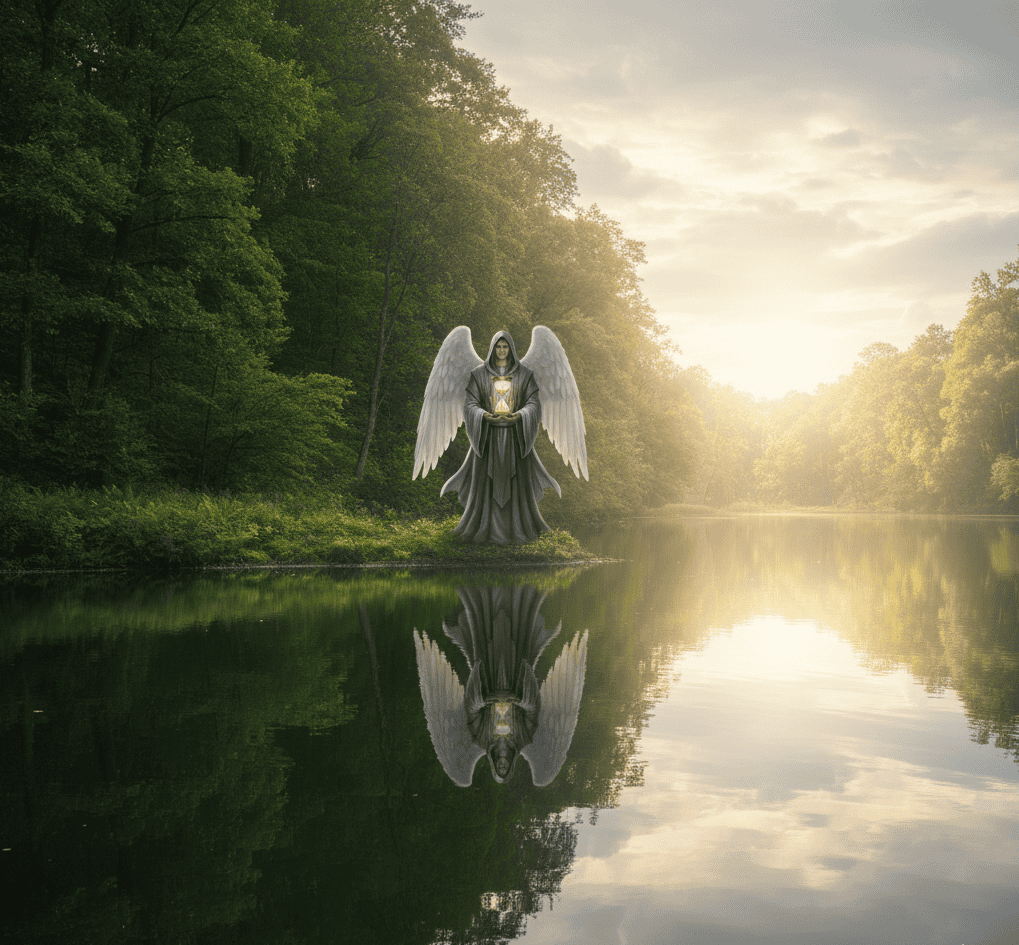
One of the most powerful ideas about Azrael is his role during the final moments of life. According to many teachings, he does not arrive suddenly or violently.
Instead, he comes quietly, often unseen, and offers the soul a gentle separation from the body. This moment is described as deeply personal.
Each soul experiences it in a way that reflects the life it lived. For some, it is peaceful. For others, it may be confusing or emotional.
Azrael adapts to each situation, acting with understanding rather than force.
Stories often say that Azrael speaks softly to the soul, helping it let go of fear and attachment. He reminds us that life does not simply end, but changes form.
This idea gives comfort to those who fear death. It suggests that no one faces this moment alone. Even in silence, there is guidance.
Azrael becomes a bridge between the known and the unknown, making the crossing less frightening.
In these stories, Azrael also respects the living. He does not linger longer than necessary, and he does not disturb those left behind.
His focus is on the soul, not on causing grief. This perspective changes how death is viewed.
Instead of seeing it as something taken away, it becomes a natural step guided by a careful hand.
Azrael’s presence turns a moment of loss into a moment of transition, reminding people that endings are often beginnings in another form.
Why Azrael Is Often Misunderstood
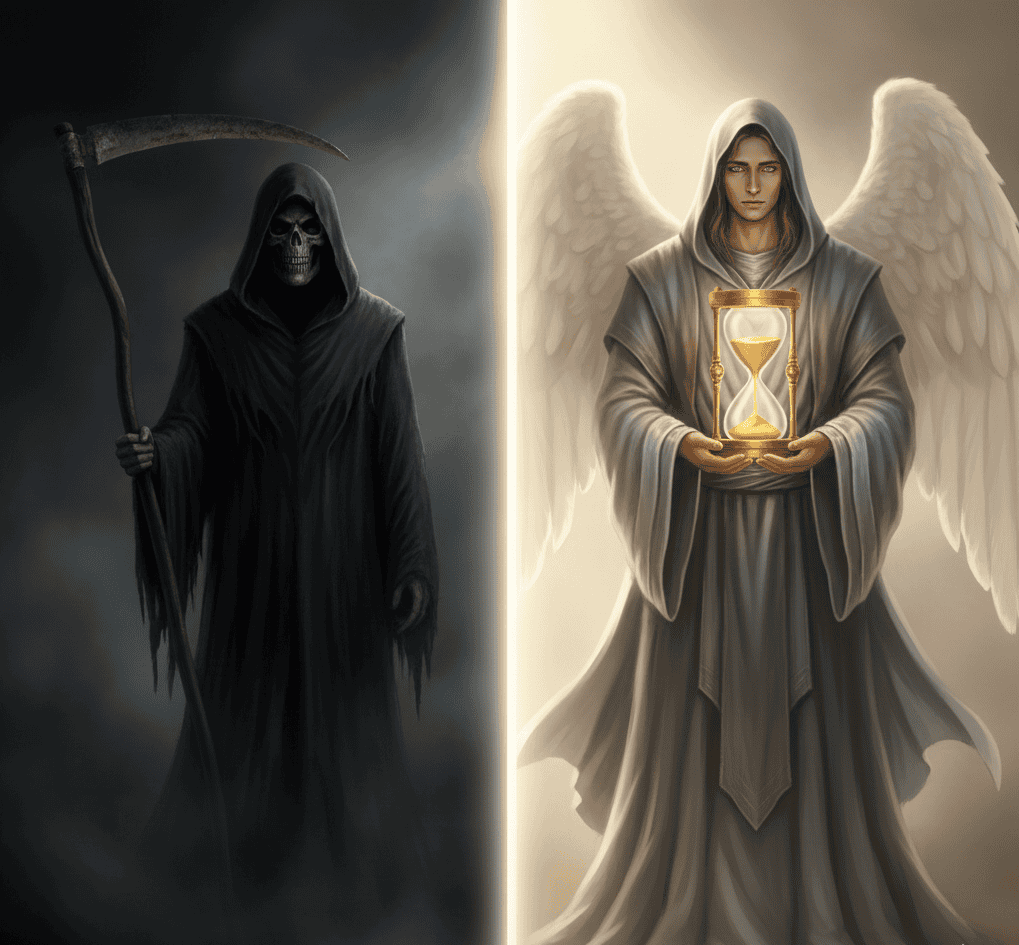
Despite these gentle descriptions, Azrael is often misunderstood. Popular culture tends to paint death-related figures as dark, cold, or cruel.
Over time, fear replaced understanding. Stories simplified Azrael into a symbol of doom rather than a servant of balance.
This shift happened partly because death itself is difficult to accept. People project their fear onto the figure associated with it, even when the original stories say otherwise.
Another reason for misunderstanding comes from the human need to assign blame. When someone dies, it feels easier to imagine a being who caused it rather than accept that life has limits.
Azrael became that imagined cause, even though his role was never about choice or judgment. He does not punish, and he does not reward.
Art and literature also played a role in shaping this darker image. Paintings often show angels of death in shadows or surrounded by darkness.
While visually striking, these images ignore the softer side of the story. They focus on fear rather than meaning.
In reality, many spiritual teachers describe Azrael as deeply compassionate, fully aware of the pain humans feel around death.
His silence is not cold. It is respectful. He understands that words are not always needed at such a moment.
When people look deeper into the older teachings, a different picture appears. Azrael is not an enemy of life. He is part of its cycle.
Without him, there would be no clear passage, only confusion and unrest. Seeing him this way helps remove some of the fear tied to his name.
Azrael as a Symbol of Peaceful Transition
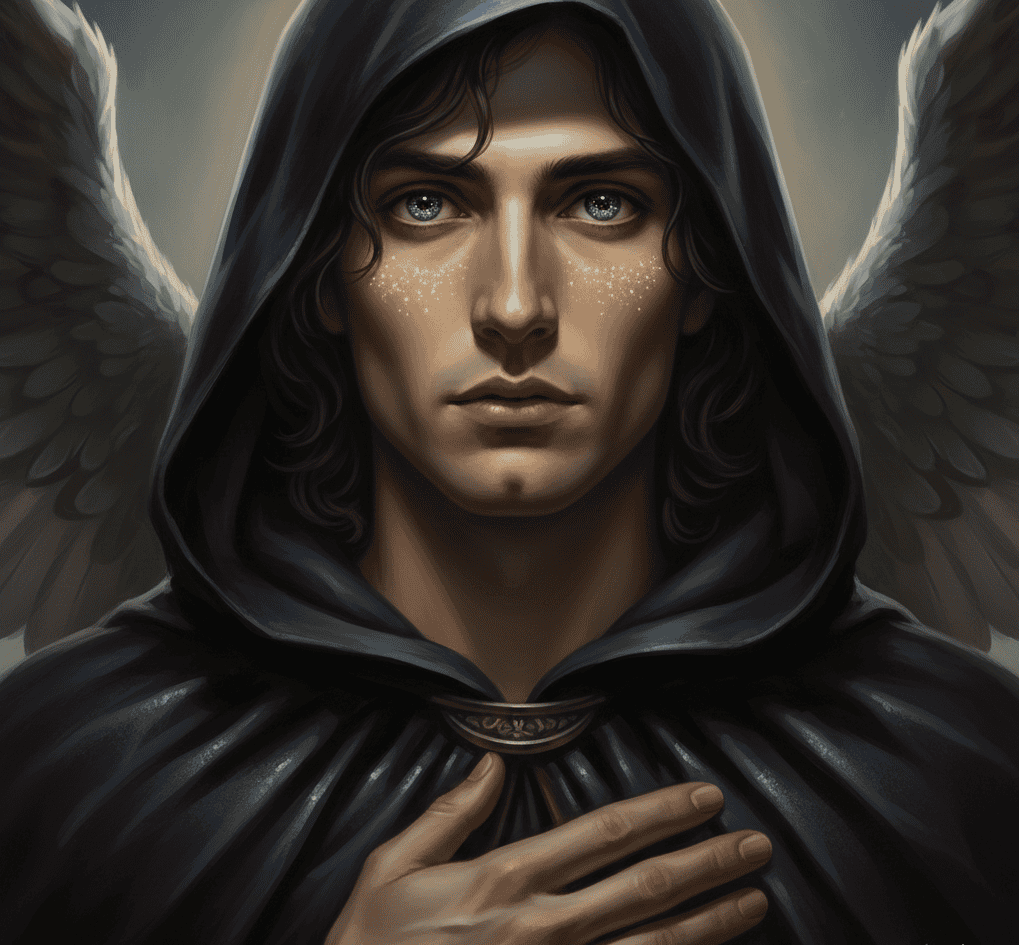
Beyond religious belief, Azrael has become a powerful symbol. He represents the idea that life and death are connected, not separate enemies.
The door between them is not slammed shut. It is gently opened. This symbol speaks to people even if they do not follow a specific faith.
It offers a way to think about death without panic or despair. Azrael also reminds people to value life while it lasts.
Knowing that there is a guide waiting at the end can inspire a deeper sense of purpose. Life becomes something precious, not because it ends, but because it is part of a larger journey.
This perspective encourages kindness, reflection, and gratitude. It shifts focus from fear of the end to appreciation of the present.
In moments of grief, the image of Azrael can bring comfort. Instead of imagining loved ones alone or lost, people can imagine them being gently guided.
This does not remove sadness, but it adds a layer of peace. It suggests that even in silence, there is care and attention.
The angel who stands at the door between life and silence is not there to frighten. He is there to ensure that no soul crosses without guidance.
Azrael’s story continues to endure because it speaks to a universal human experience. It tells us that endings are not empty, and silence is not absence.
It is simply a pause before the next step, watched over by a calm and steady presence who understands both sides of existence.

私は生まれたときから、常に神との強いつながりを感じていた。作家として、また指導者として、私の使命は、人々が最も暗い時代に愛と幸福と内なる強さを見つけるのを助けることである。