
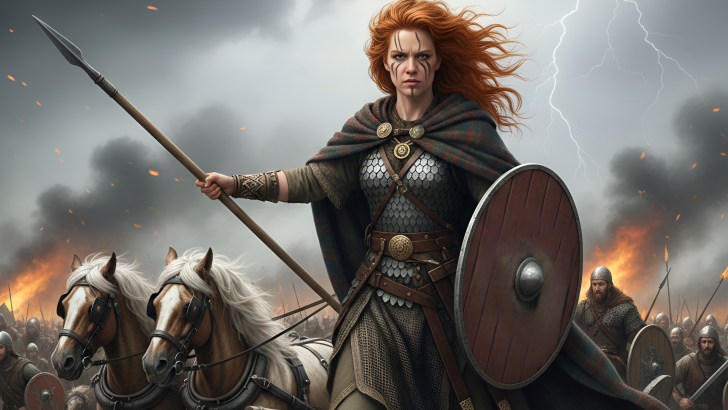
Boudica is one of the most powerful and inspiring figures in ancient history.
She was a Celtic queen who led a massive uprising against Roman rule in Britain during the first century.
At a time when Rome controlled much of the known world, her rebellion shook the empire and showed the strength and determination of local tribes.
Although her revolt was eventually defeated, her story has been remembered for nearly two thousand years.
She became a symbol of resistance, courage, and leadership in the face of injustice.
These five facts reveal how Boudica rose to power, led a fierce rebellion, and earned her place as one of history’s most legendary warrior queens.
1. She Became Leader After Roman Mistreatment of Her Family
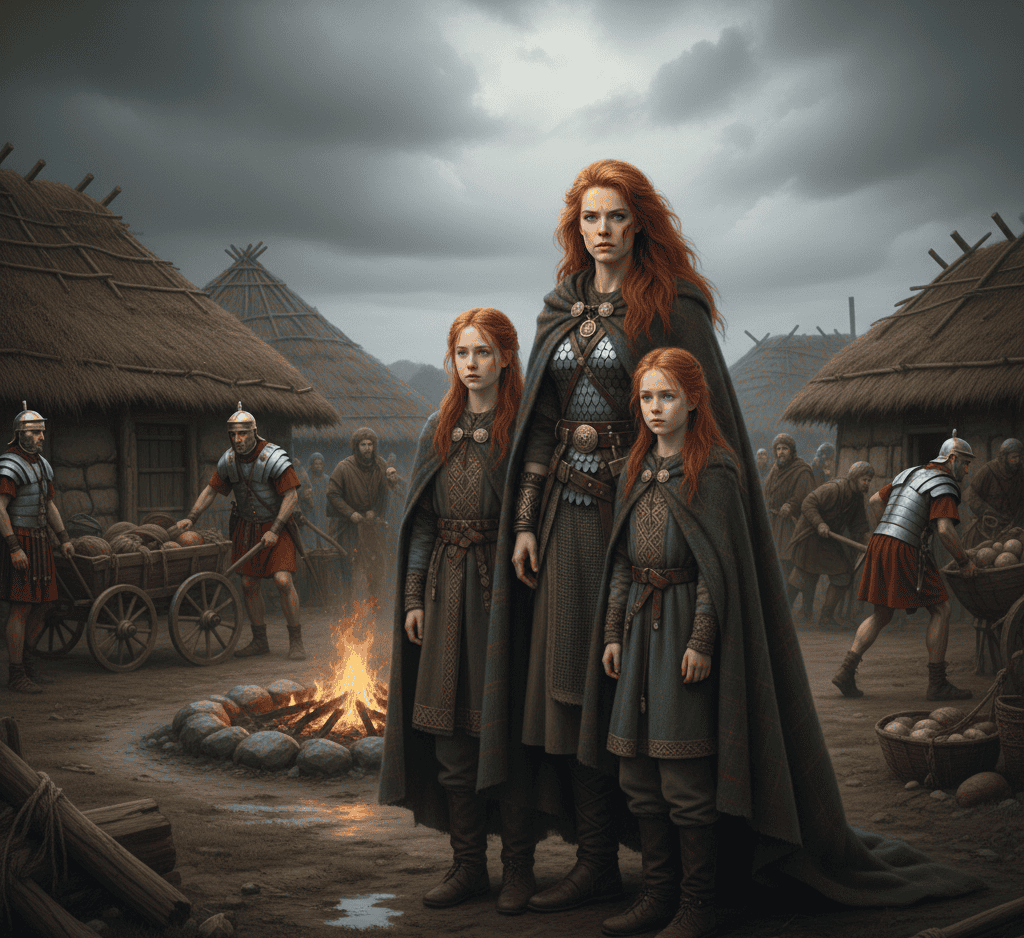
Boudica was the wife of Prasutagus, the king of the Iceni tribe in eastern Britain.
When he died, he left his kingdom jointly to his daughters and the Roman emperor, hoping this would protect his family and land.
According to historical accounts, Roman soldiers publicly flogged Boudica and assaulted her daughters.
They also seized property from tribal leaders and treated the Iceni people harshly.
This brutal treatment caused anger and humiliation, not only for Boudica but for many local tribes who were already unhappy with Roman rule.
Rather than accept this injustice, Boudica stepped forward to lead a revolt. Her personal suffering became the spark that united different tribes against a common enemy.
By turning grief and anger into action, she transformed from a queen into a resistance leader, inspiring thousands to fight for their freedom and dignity.
2. She United Several Tribes Into a Powerful Force
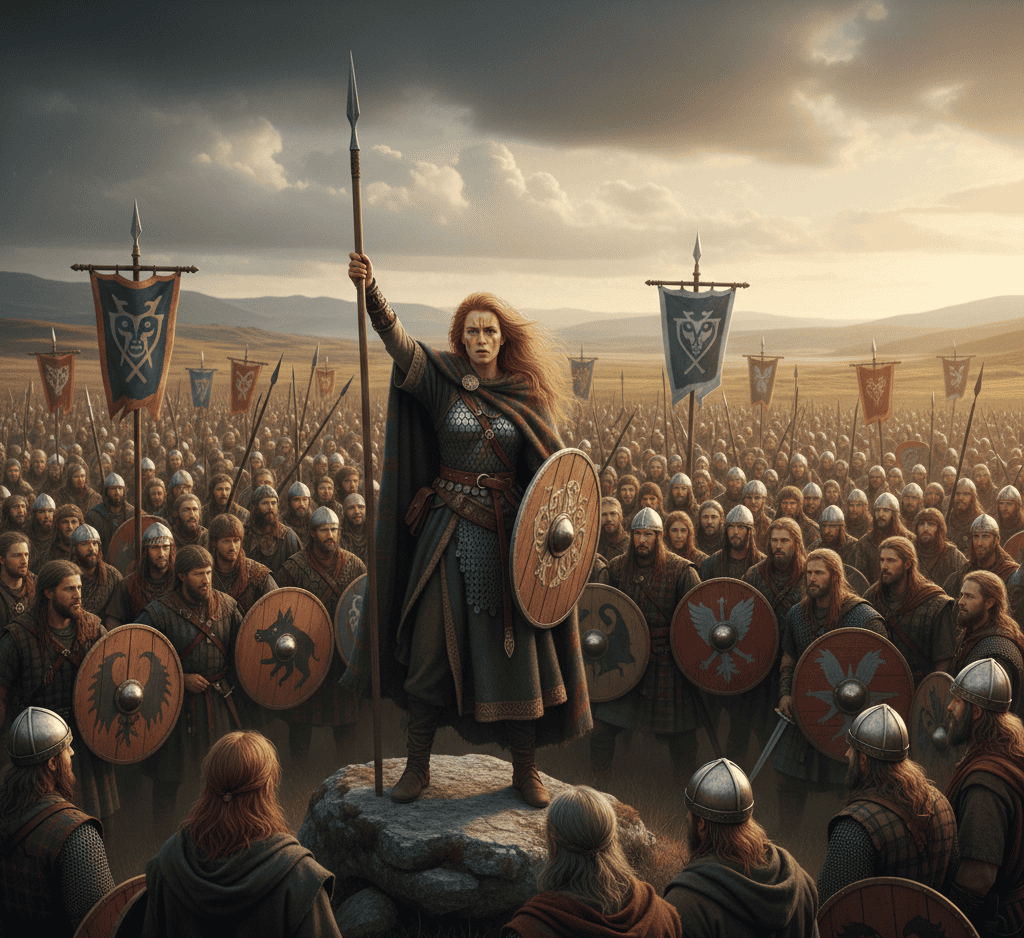
One of Boudica’s greatest strengths was her ability to bring together different British tribes that did not always cooperate.
Many groups had their own leaders, traditions, and rivalries, but resentment toward Roman control gave them a shared purpose.
Boudica traveled and spoke to tribal warriors, calling for unity and resistance. Ancient sources describe her as a powerful speaker who inspired courage and determination among her followers.
Her leadership helped form a large fighting force, possibly numbering tens of thousands.
This was a remarkable achievement in a region where tribal divisions were common.
By uniting these groups, she created a rebellion strong enough to challenge Roman authority directly.
Her success showed not only her personal bravery but also her political skill and understanding of the need for cooperation.
For a time, her growing army became one of the most serious threats Rome faced in Britain.
3. Her Forces Destroyed Major Roman Cities
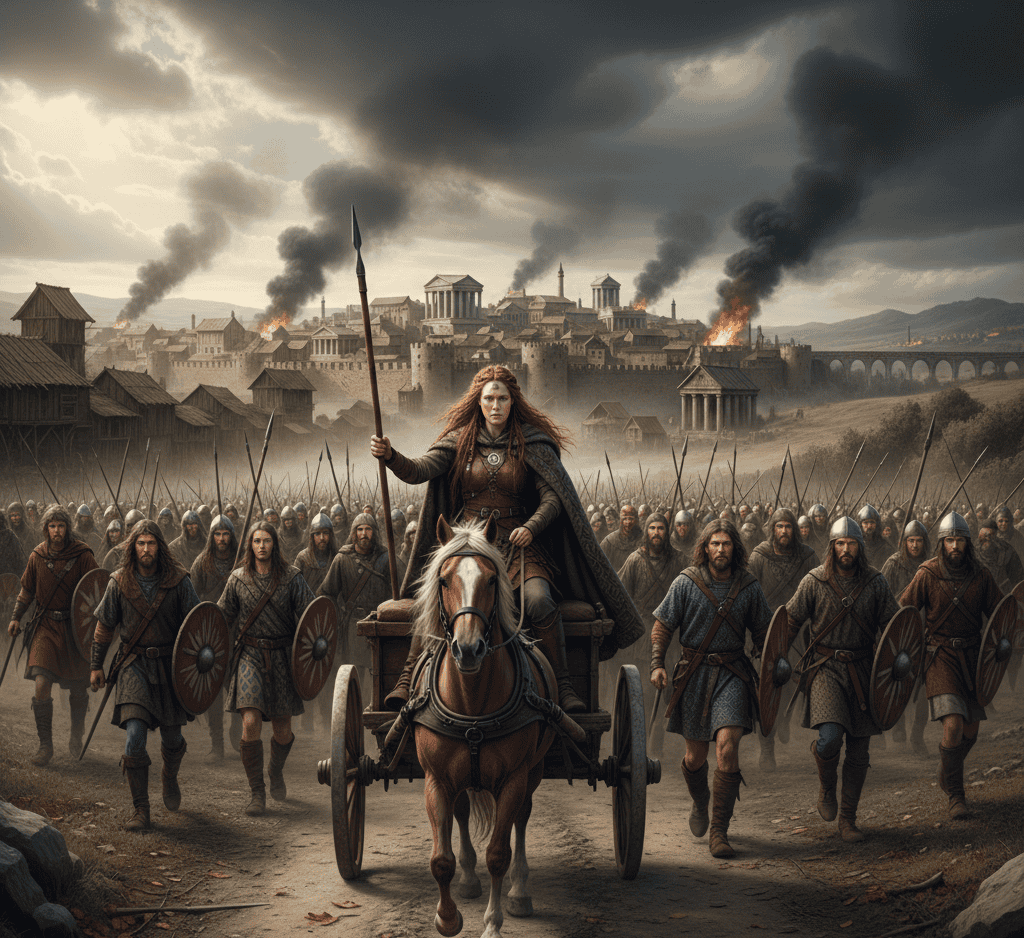
Boudica’s rebellion began with a series of rapid and devastating attacks on Roman strongholds.
Her forces first targeted Camulodunum, a Roman settlement and symbol of imperial power. The city was overwhelmed and destroyed.
The rebels then moved on to Londinium, an important trading center, and later to Verulamium.
Both cities were burned, and Roman control in the region collapsed temporarily.
These victories shocked Roman leaders and showed that their authority in Britain was not secure.
The speed and intensity of the attacks created fear throughout the province. Historical accounts describe widespread destruction and heavy Roman losses during this period.
For a brief time, it seemed possible that the rebellion might drive the Romans out entirely.
These early successes made Boudica famous as a fierce and effective military leader who could challenge even the strongest empire of her time.
4. The Revolt Ended in a Final Battle Against Roman Discipline
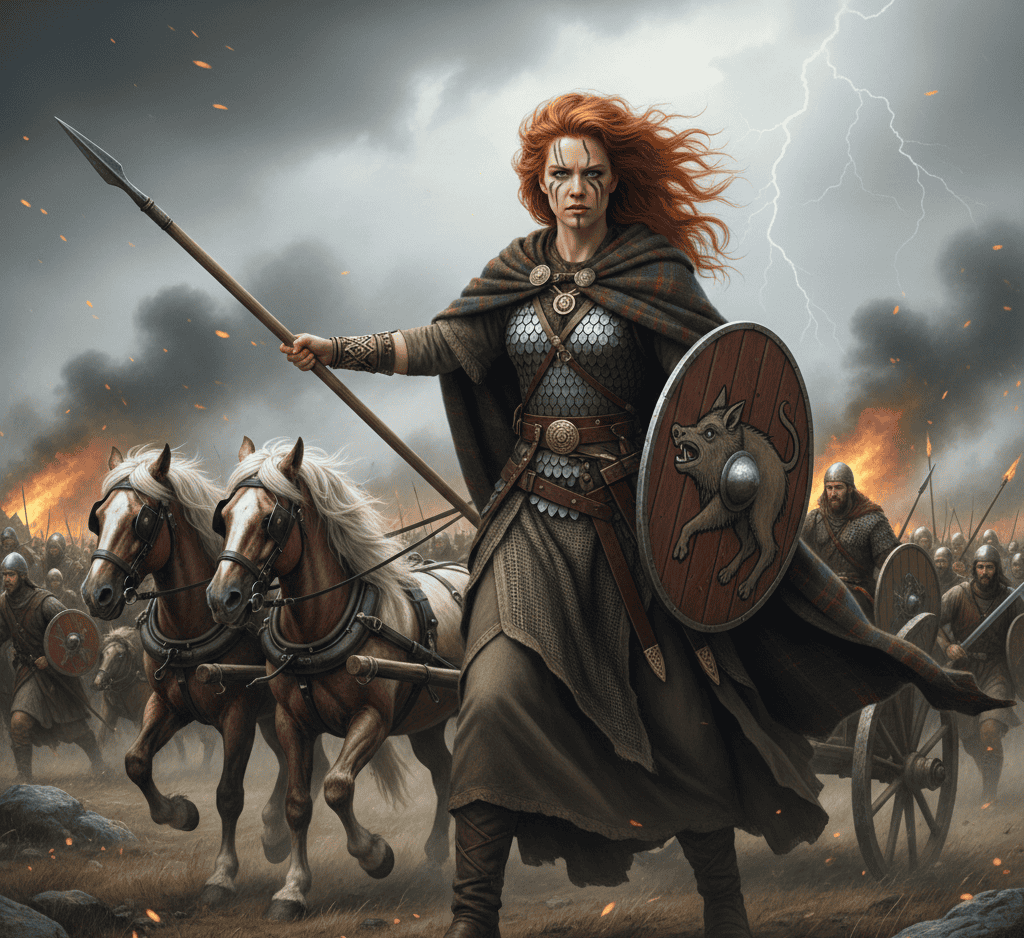
Despite her early victories, Boudica’s forces eventually faced the full strength and organization of the Roman army.
The Roman governor, Gaius Suetonius Paulinus, gathered experienced troops and chose a battlefield that limited the rebels’ advantage in numbers.
Roman soldiers were highly trained and fought in tight formations with strong discipline.
In the final battle, this organization and strategy overcame the larger but less structured British force.
The defeat was devastating for the rebellion. Ancient sources suggest that many warriors and civilians were killed as the Roman army restored control.
Although the uprising ended in defeat, the scale of the conflict showed how serious the challenge had been.
The battle demonstrated the difference between tribal warfare and the professional military system of Rome, bringing an end to one of the most dangerous revolts the empire faced in Britain.
5. She Became a Lasting Symbol of Courage and Resistance
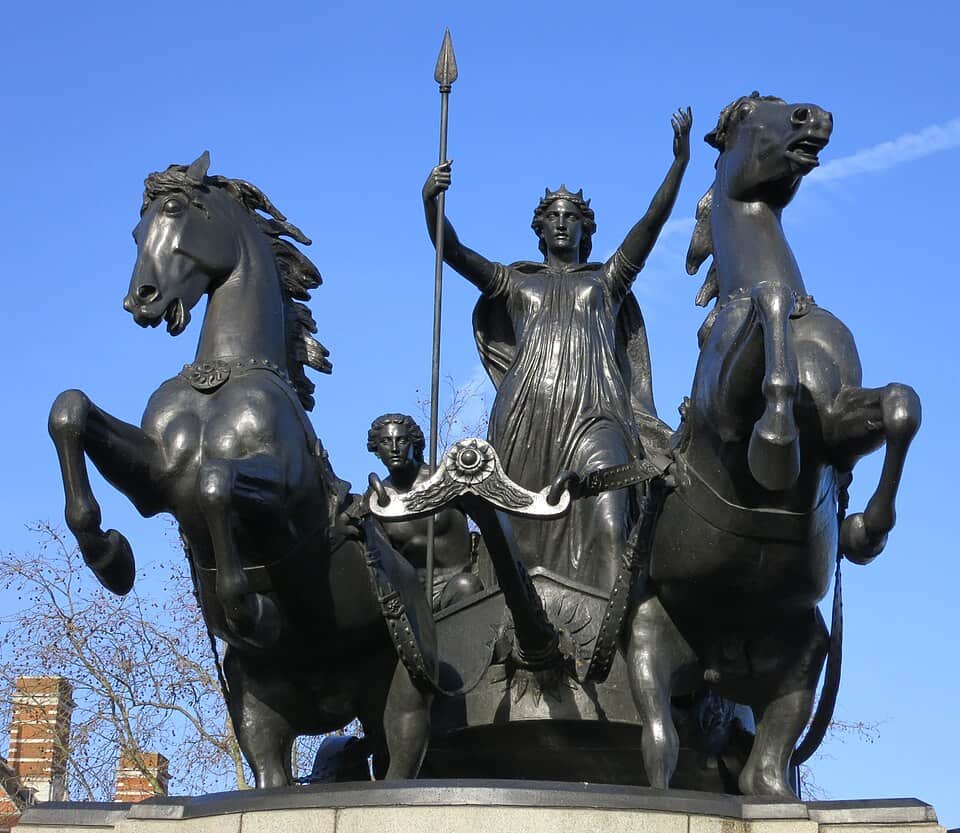
After the defeat, the exact details of Boudica’s death are uncertain. Some historical accounts suggest she took her own life to avoid capture, while others say she died from illness.
Regardless of how her life ended, her story did not disappear. Roman historians recorded her rebellion, and later generations remembered her as a symbol of resistance against oppression.
In Britain, she came to represent national pride, independence, and the strength of a leader who refused to submit to injustice.
Statues, books, and cultural works have kept her memory alive for centuries. Today, Boudica is remembered not for her defeat but for her courage to stand against overwhelming power.
Her leadership, determination, and refusal to accept humiliation ensured that her name would remain one of the most powerful symbols of resistance in ancient history.

私は生まれたときから、常に神との強いつながりを感じていた。作家として、また指導者として、私の使命は、人々が最も暗い時代に愛と幸福と内なる強さを見つけるのを助けることである。