
The comforting answer is はい.
The Bible gives us a powerful glimpse of angels watching over children. Christian tradition then takes that glimpse and fills in some of the details—but not every church draws those details the same way.
1. Jesus Gives Us the Famous Line
Most of the belief begins with one sentence from Jesus.
In Matthew 18, he brings a child into the middle of his disciples and tells them to become like children themselves.
Then he gives them a warning.
“See that you do not despise one of these little ones,” he says, because “their angels in heaven” always look upon the face of his Father.
That’s far more specific than a statement about angels helping humanity. Jesus speaks of 彼らの angels, linking the little ones on Earth with heavenly beings who remain in God’s presence.
And notice what he’s trying to change.
The disciples are arguing about importance. Jesus places a child—someone with almost no social power in that world—at the center and tells the adults that heaven sees this person differently.
The child they could overlook is represented before God.
2. But “Little Ones” Isn’t Quite That Simple
The child in front of Jesus is real. But as the passage continues, “little ones” starts reaching beyond literal children.
Jesus speaks of “little ones who believe in me,” language many biblical scholars understand as referring to vulnerable or childlike disciples.
So Matthew 18:10 isn’t a neat technical explanation of how guardian angels are assigned.
Jesus doesn’t tell us when the angel arrives, whether every person receives exactly one, or whether that angel remains for life.
The passage is warning us not to confuse vulnerability with insignificance.
But the child doesn’t disappear from the meaning. The meaning expands. And anyone the world treats as small can still have astonishing weight in heaven.
3. Scripture Gives Us a Pattern

Matthew’s Gospel doesn’t stand alone.
Psalm 91 says God commands his angels to guard a person wherever they go.
But the psalm speaks of angels in the plural. It promises divine protection without handing each person the name of one permanent companion.
Then the Book of Tobit turns that protection into a story.
Young Tobiah begins a dangerous journey beside a stranger who calls himself Azariah. Only later does the traveler reveal that he’s Raphael, one of the angels standing before God.
Raphael has accompanied the young man, protected him, guided his marriage, and helped bring healing back to his family.
In Acts 12, the early Christians even hear that Peter is standing outside and respond, “It is his angel.”
Put those passages together and a pattern appears. Angels guard, guide, accompany, and represent human beings.
But what we don’t get is an explanation of who belongs to whom.
4. Early Christians Gave a More Direct Answer

Christian tradition eventually became more definite than the biblical wording.
Saint Jerome wrote that the dignity of every soul was so great that each person received an angel to guard them from birth.
Centuries later, Thomas Aquinas examined the question in detail.
In his discussion of guardian angels, he concluded that every human being has an individual guardian—and that the guardianship begins at birth, not baptism.
This means the angel isn’t earned by becoming Christian, behaving well, or reaching an age when the child can understand faith. The care begins with the human life itself.
Aquinas was building a theological conclusion from scripture, earlier Christian teaching, and the belief that God’s providence reaches individual people.
The tradition looked at the scattered biblical clues and answered the question scripture never answers in one sentence.
Yes. One child, one guardian.
5. Christian Traditions Don’t All Draw the Same Line
The Catholic Church teaches this openly.
The Catechism of the Catholic Church says that “from infancy to death” human life is surrounded by the watchful care and intercession of angels.
Orthodox Christianity expresses the belief through prayer and worship.
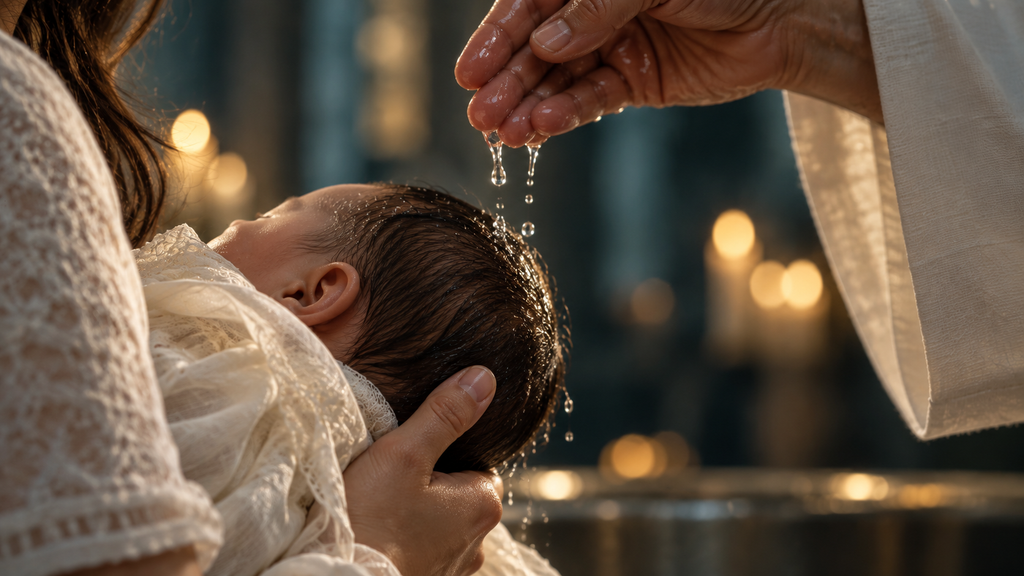
Prayers surrounding childbirth ask God to encircle the mother and newborn with angels, while the baptismal service asks him to assign the newly baptized person an “angel of light.”
Many Protestants stop one step earlier.
They affirm that angels minister to believers, just as Hebrews 1 says, but don’t treat a permanent one-angel-per-person assignment as something the Bible clearly establishes.
So Christians broadly agree that God sends angels to help human beings.
But the disagreement begins when we try to describe the details.
6. An Angel Isn’t an Invisible Force Field

This is the difficult part of the belief, especially when the question comes after a child has been hurt.
If children have guardian angels, why aren’t they protected from every illness, accident, cruel adult, or devastating loss?
Christian teaching has never promised that an angel makes a person untouchable.
Even Psalm 91, the great song of angelic protection, includes God saying, “I will be with him in distress.” Not there will be no distress. The promise is presence inside it.
Aquinas also argued that guardians don’t prevent every hardship or every wrong decision.
Their work belongs to divine providence, which means guiding a person toward God—not controlling every event around them.
And Matthew 18 never lets adults hand their own responsibility to an invisible protector.
Jesus doesn’t say children have angels, so you can worry less about them. He says they have angels while warning adults not to despise, mislead, or harm them.
7. So, Do Children Have Guardian Angels?
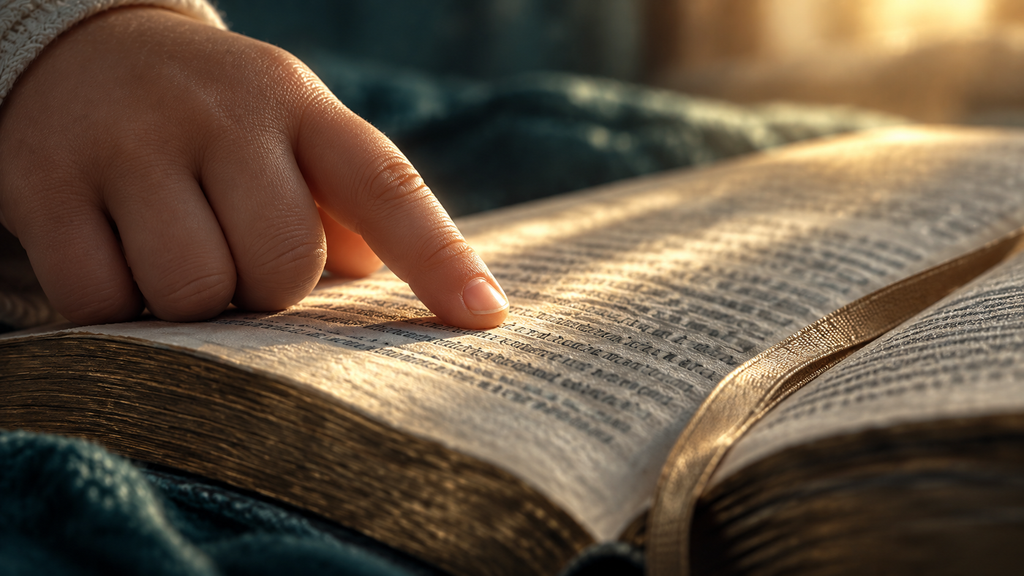
Within Catholic teaching, the answer is yes. Every child has a guardian angel from birth.
Orthodox tradition also places guardian angels close to children, especially through the prayers of baptism, while recognizing angelic care around human life from its earliest moments.
But if you’re asking only what the Bible states explicitly, the answer is a bit more complex.
Scripture shows angels guarding people. It gives us children and “little ones” whose angels stand before God.
It shows an angel accompanying a young person through danger. But it never pauses to explain that every child receives one specific angel at birth.
Still, that doesn’t empty the belief of its beauty.
The strongest shared claim remains extraordinary enough: children aren’t spiritually invisible.
Heaven doesn’t measure their importance by their size, their age, their understanding, or the attention adults choose to give them.
A child can be overlooked by a room full of people.
But never by God.
