

Norse mythology is filled with gods famous for war, thunder, magic, death, and dangerous adventures. Forseti stands apart from them.
Rather than defeating giants or traveling through dangerous realms, Forseti is associated with justice, reconciliation, and the peaceful settlement of disputes.
His role reflects another side of Norse society, one where words, laws, agreements, and negotiation could be just as important as strength.
Forseti appears only briefly in the surviving Old Norse sources, leaving much about him mysterious.
Here are ten things to know about Forseti, the Norse god of justice.
1. Forseti Was the Son of Baldr and Nanna

Forseti belonged to an important divine family. His father was Baldr, the beloved son of Odin and Frigg, famous for his beauty, goodness, and tragic death.
His mother was Nanna, who died from grief after Baldr’s death in the account given by Snorri Sturluson.
Forseti therefore belonged to the younger generation of the Æsir. Interestingly, surviving mythology says very little about his relationships with his famous parents.
There are no lengthy stories describing Forseti growing up or accompanying Baldr on adventures.
Instead, he appears as an established divine figure with his own hall and responsibilities.
2. His Name Is Connected With Presiding and Authority

Forseti’s name provides an important clue about his role. It is generally understood in connection with the idea of a presiding figure.
That meaning fits his association with judgment and dispute settlement.
Norse communities placed great importance on assemblies where legal disagreements and community matters could be discussed.
The famous thing, or þing, served as an important political and legal institution across the Norse world.
Forseti’s name therefore would have carried meaningful associations with leadership and judgment.
He was not a ruler who simply demanded obedience through strength. His authority came from his ability to hear disagreements and bring them toward settlement.
3. Forseti Lived in a Shining Hall Called Glitnir

Forseti’s home was called Glitnir. The name itself is connected with brightness or shining.
Grímnismál, a poem preserved in the Poetic Edda, describes Glitnir as a remarkable hall with silver supports and a roof shining with gold.
This brilliant setting creates an interesting contrast with the darker locations found elsewhere in Norse mythology.
Forseti’s hall is not a battlefield or mysterious underworld. It is a place associated with order.
According to the Prose Edda, Forseti sits in Glitnir and settles disputes. Glitnir gives Forseti an impressive home worthy of his divine authority.
4. He Was Famous for Settling Disputes

Forseti’s defining ability was resolving disagreements. That detail makes Forseti unusual.
The Prose Edda describes him as someone who settles disputes among those who come before him.
Even more remarkably, those who leave his presence are said to depart reconciled.
A judge can decide that one person wins and another loses. Forseti’s role seems to go further by restoring peace between opposing sides.
This makes him a divine figure of reconciliation as much as judgment.
In societies where family feuds could become extremely dangerous, reaching an acceptable settlement could prevent further conflict.
Forseti represents the possibility that serious disagreements do not always need to end with violence.
5. Forseti Represented a Peaceful Side of Norse Culture

Popular culture often portrays the Viking Age almost entirely through warriors and raids. The historical reality was much more complicated.
Norse societies also needed laws, negotiations, trade agreements, property rules, marriages, inheritance customs, and ways of settling disputes.
Forseti fits naturally into this world. His presence in mythology reminds us that strength alone could not maintain a functioning community.
People needed ways to handle disagreements without constantly turning them into violent feuds. Legal assemblies played an important role in this process.
Although we should be careful about treating a mythological god as direct evidence for everyday legal practice, Forseti’s character reflects the cultural importance of order and settlement.
Even a mythology famous for Ragnarök had room for a god whose greatest power was making peace.
6. He Was Different From Tyr

Forseti and Tyr can both be connected with ideas involving law and justice, but they represent different aspects of these concepts.
Tyr is an older and much more complex deity associated with law, oaths, courage, and warfare.
His most famous myth involves sacrificing his hand so the gods can bind Fenrir. Forseti, meanwhile, is primarily described as a resolver of disputes.
Tyr’s mythology emphasizes courage, obligation, and keeping order even when doing so requires sacrifice.
Forseti’s role emphasizes reconciliation. The difference shows that justice could involve more than one quality.
Sometimes justice requires someone willing to enforce an agreement. At other times, it requires someone capable of helping enemies reach peace.
7. Very Few Myths About Forseti Survive
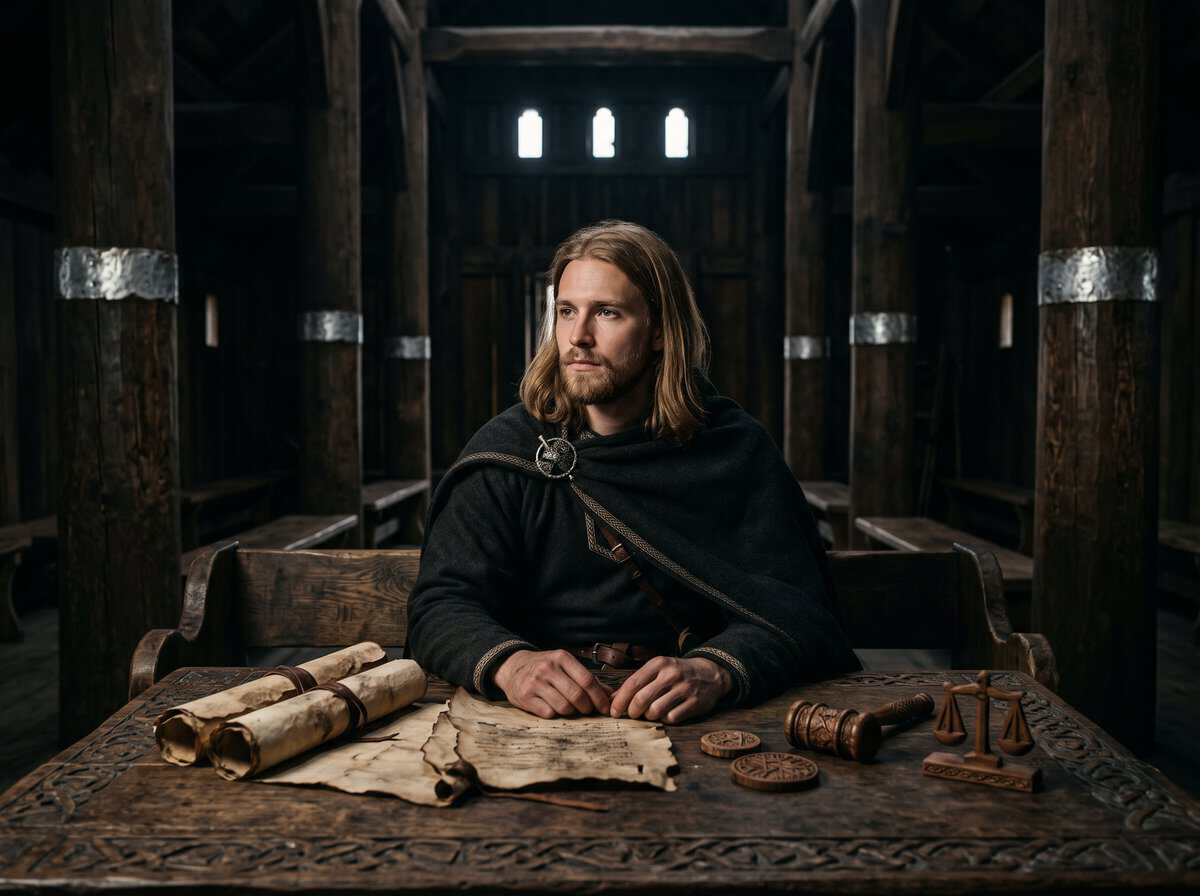
One of the greatest mysteries surrounding Forseti is how little we actually know about him.
He appears in important medieval Icelandic sources, but no surviving long myth places him at the center of an adventure.
We do not have a story describing a famous case he judged. There is no detailed account of his interactions with Odin, Thor, or Loki.
We are given his parents, his hall, and his role, but little more. This may mean that stories about Forseti were lost.
It could also mean that he never occupied the same level of widespread mythological importance as figures such as Thor.
What survives may represent only a small fragment of what people once knew about him.
8. Forseti May Have Connections With the Frisian Fosite

Scholars have long discussed a possible relationship between Forseti and a deity called Fosite associated with the Frisians.
The eighth-century writer Alcuin tells a story involving an island sacred to Fosite, where a holy spring and strict rules were observed.
Later sources associate the island with the name Fositesland. The similarity between the names Forseti and Fosite has encouraged theories that they may reflect related Germanic religious traditions.
However, the exact relationship remains uncertain. We cannot simply assume that every story about Fosite also belonged to the Norse Forseti.
Still, the possible connection is fascinating because it suggests that a related divine figure may once have been known beyond Scandinavia.
9. Forseti’s Justice Focused on Reconciliation

One of the most appealing features of Forseti is the type of justice he represents. His goal is not described as punishment.
Instead, those who approach him with disputes are reconciled. That makes his justice surprisingly constructive.
Rather than asking only who deserves blame, Forseti’s role suggests another question: how can peace be restored?
This distinction matters because punishment and reconciliation are not always the same thing.
A conflict may technically be decided while resentment continues for generations. A genuine settlement attempts to prevent that cycle.
Forseti therefore represents patience, listening, fairness, and the ability to find common ground.
Among gods who frequently solve problems with weapons, his approach feels remarkably different.
10. Forseti Remains One of Norse Mythology’s Most Mysterious Gods

Forseti never became as famous as Thor, Odin, Loki, or Freyja. Perhaps that is exactly why he remains so interesting.
His surviving description gives us just enough information to understand his importance while leaving countless questions unanswered.
What disputes did he settle? Were there once myths explaining how he became associated with reconciliation?
Did people invoke him during actual legal proceedings? How widely was he worshipped?
The surviving sources cannot answer all of these questions. Yet Forseti’s central idea remains remarkably clear.
In a mythological world filled with feuds, monsters, battles, and approaching destruction, there was also a shining hall where disagreements could supposedly end in peace.

私は生まれたときから、常に神との強いつながりを感じていた。作家として、また指導者として、私の使命は、人々が最も暗い時代に愛と幸福と内なる強さを見つけるのを助けることである。