

In the New Testament, Jesus makes a surprising choice when he begins gathering his closest followers.
Instead of choosing highly educated religious leaders or scholars, he calls ordinary fishermen to become his disciples.
These men were simple workers, people who spent their days by the Sea of Galilee catching fish to survive.
At first, this decision might seem unusual. You would expect a teacher to choose the most knowledgeable students.
But the story shows a different kind of wisdom. In Christian teaching, this choice is often seen as intentional and meaningful.
In this article, we explore five simple but powerful reasons why fishermen were chosen instead of religious scholars, and what that choice means for people today.
1. Fishermen Lived Simple and Honest Lives

Fishermen in ancient Galilee lived very simple lives. They worked long hours on the water, often in difficult conditions, just to provide food for their families.
They were not wealthy or highly educated, but they were hardworking and practical. This mattered in the calling of Jesus because he was building a group of followers who could understand everyday struggles.
Simple lives often leave less room for pride and competition. Fishermen were used to teamwork, patience, and persistence, all qualities needed for discipleship.
Unlike scholars, they were not focused on status or public recognition. This made them open to a new way of thinking.
Their simplicity was not a weakness, but a strength. It allowed them to listen, learn, and grow without needing to protect their reputation or position in society.
Many people see this as a reminder that leadership often grows from ordinary environments, where character is shaped slowly through daily work.
Responsibility and real-life challenges often matter more than formal recognition or academic achievement alone in many everyday situations.
2. They Were More Open to Change
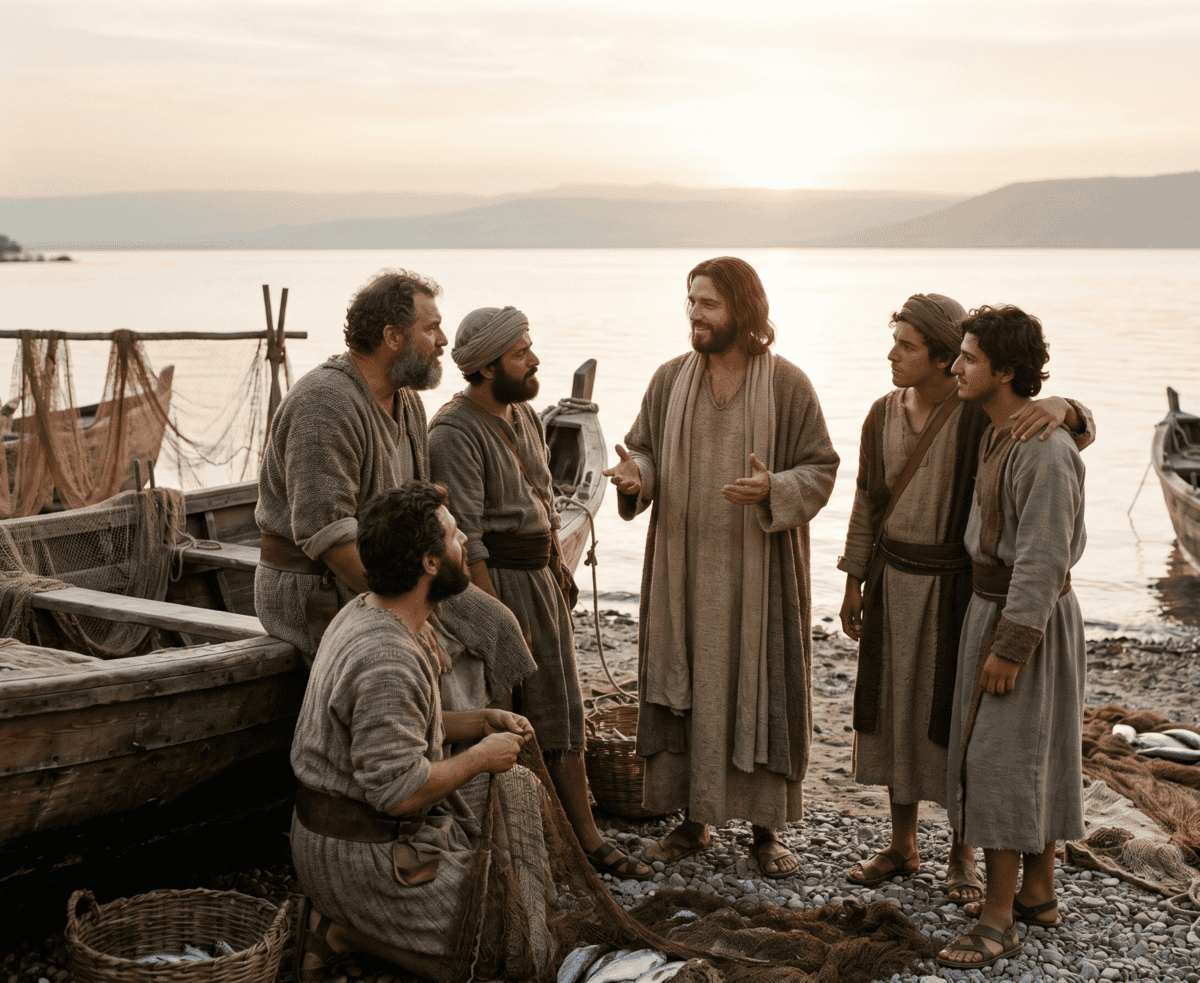
One important reason Jesus may have chosen fishermen is that they were more open to change. Religious scholars of that time often had strict views and long traditions they followed carefully.
Their identity was tied to their knowledge and interpretation of religious law. Fishermen, on the other hand, had no such status to protect.
When Jesus called them, they were able to leave their boats and follow him immediately. This shows a willingness to trust and step into the unknown.
Change is often difficult for people who feel comfortable in their position. But the disciples showed flexibility and courage.
In this sense, their openness made them ideal for a journey that would completely change their lives and the message they would carry into the world of Jesus Christ himself.
Change often requires humility and courage, especially when it means leaving comfort behind and trusting a new path without knowing the outcome, which is exactly what these early followers demonstrated in their response to the call
3. Their Work Taught Patience and Persistence

Fishing is not an easy job. It requires long hours, patience, and the ability to wait without giving up. Sometimes fishermen worked all night and caught nothing.
Other times, they would suddenly have a successful catch. This rhythm of waiting and trying again shaped their character.
In Christian teaching, these qualities are important for spiritual life. Following Jesus was not always easy or immediate.
It required endurance, even when things were unclear. Fishermen were already familiar with the effort that does not always bring quick results.
This made them strong candidates for discipleship. Their daily work had already taught them how to keep going, even when success was uncertain.
These qualities are often seen as essential in spiritual growth as well, because they help people stay committed during slow progress, repeated effort, and moments when results are not immediately visible.
4. Jesus Focused on the Humble, Not the Powerful

Another key idea is that Jesus often focused on humility rather than status. Religious scholars of the time were respected and held authority in society.
Choosing them might have made his movement look powerful or elite. Instead, Jesus chose ordinary people like fishermen.
This sends a clear message that spiritual value is not based on education, wealth, or position. In the teachings of Jesus, humility is often more important than pride.
By choosing fishermen, he showed that anyone can be called, regardless of background. This made his message more accessible to everyday people who may have felt overlooked or unimportant in society.
This approach highlights how spiritual teaching often values inner character over external status, suggesting that openness and willingness to learn matter.
5. Their Lives Reflected the Message of Transformation

Fishermen were also a powerful symbol of transformation. They began as ordinary workers, but they were later described as “fishers of men,” meaning they would help bring people into a new way of life.
This change in role reflects the larger message of Christianity, which is about transformation and renewal.
The disciples’ journey shows that people are not fixed in one identity. They can grow, learn, and become something new.
Through their time with Jesus, these fishermen became leaders of a global movement. Their story continues to inspire because it shows that change is possible.
This message continues to resonate today because many people relate to the idea that change is possible at any stage of life.
Growth often begins with simple decisions to listen, follow, and trust the process over time.

私は生まれたときから、常に神との強いつながりを感じていた。作家として、また指導者として、私の使命は、人々が最も暗い時代に愛と幸福と内なる強さを見つけるのを助けることである。