
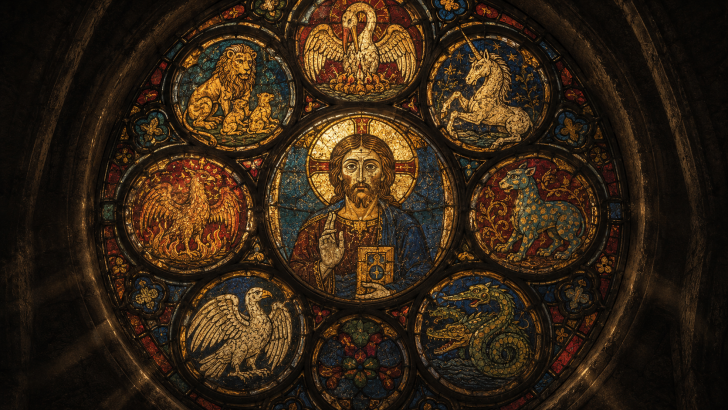
In medieval art, Christ didn’t always appear in human form.
He could be a pelican tearing open its breast, a unicorn dying in a maiden’s lap, or even a serpent bursting through a crocodile.
Many of these images came from bestiaries, books that treated animals as part of a world filled with spiritual meaning.
Within their pages, the story of Christ could be found almost anywhere.
1. The Pelican Wounded Itself to Save Its Young
The medieval pelican was nothing like the bird we know today.
According to the legend repeated in bestiaries, a pelican’s young attacked their parent or were killed after provoking it. Three days later, the mother returned and pierced her own breast.
Her blood fell onto the dead chicks and brought them back to life.
Some versions focused on the young being revived, while others described the pelican feeding them directly from the wound.
The pelican’s blood recalled Christ shedding his own blood to save humanity. The image also became connected with the Eucharist, in which wine represented Christ’s blood.
This symbol eventually moved far beyond the pages of bestiaries. Pelicans appeared above altars and on objects used in worship.
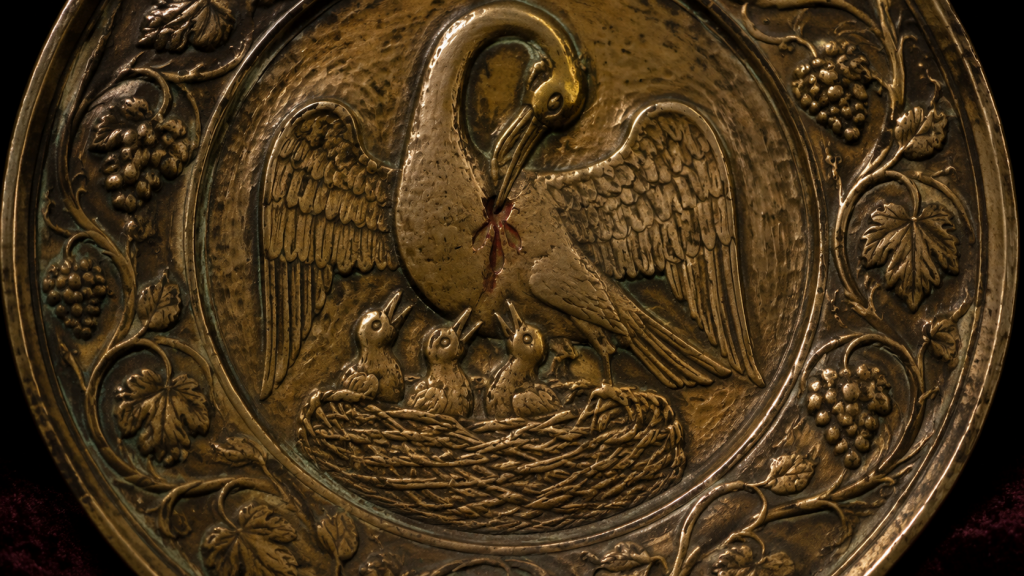
A fifteenth-century brass plate now held by the Metropolitan Museum of Art places the bird at its center. She bends her long neck toward her breast while three chicks wait beneath her.
Grapevines surround the scene, strengthening its connection with sacrificial blood and the wine of Communion.
2. The Lion Brought Its Cubs Back to Life
The lion carried several meanings in medieval Christianity, and not all of them were tame.
The lion could represent power, danger, royalty, or the Devil. But one particular story turned the lion into an image of Christ.
Bestiaries claimed that lion cubs were born dead. They remained lifeless for three days until their father approached and breathed, roared, or licked them awake.
The third day gave the story its Christian meaning. The cubs’ return to life echoed Christ rising from the tomb.
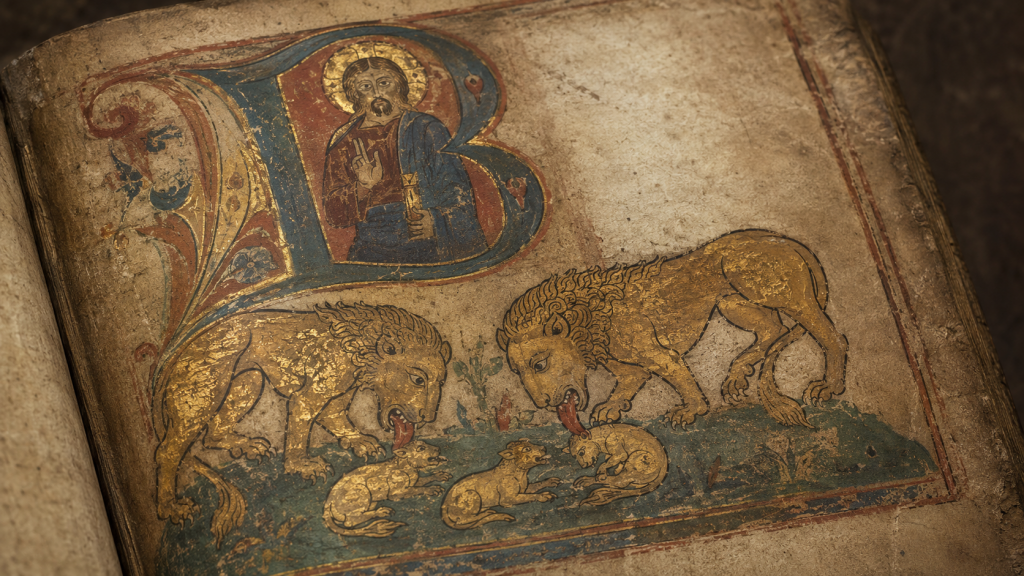
の中で Worksop Bestiary, made in England around 1185, the connection is very clear.
A figure of Christ appears inside the large decorated initial that opens the bestiary. Beneath him, two adult lions lean over their cubs and lick them back to life.
Other pieces of lion lore carried possible Christian meanings as well. The lion was said to sleep with its eyes open, suggesting a body at rest while a divine nature remained awake.
But it was the image of life returning on the third day that gave the animal its strongest connection with the Resurrection.
3. The Unicorn Was Captured by a Virgin
Before the unicorn became a gentle creature of modern fantasy, its medieval story was far more bloody.
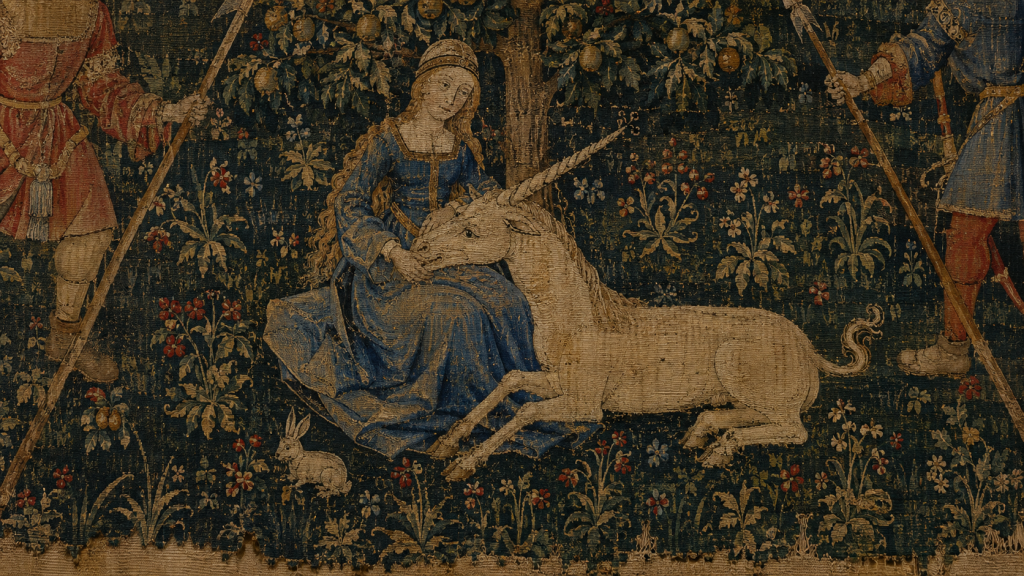
Bestiaries described it as so fierce that no hunter could capture it by force. The only solution was to place a virgin alone in the forest.
The unicorn would approach her, lower its head, and rest in her lap. Once it had become calm and vulnerable, the hunters could emerge and kill it.
Christian writers transformed the strange hunting story into an account of the Incarnation.
The maiden represented the Virgin Mary. The unicorn represented Christ, who entered the world through her and accepted the vulnerability of a human body.
Its capture and death could then point toward the Passion.
An English manuscript known as the Ashmole Bestiary, made around 1210–20, shows the entire sequence in one compact scene.
The unicorn lies against the maiden while a hunter drives a weapon into its body.
The symbolism, however, wasn’t universal. Unicorns could also represent purity, medicine, courtly love, or secular romance. Even the famous Unicorn Tapestries support several possible readings.
But inside the bestiary tradition, the animal resting in the virgin’s lap could become Christ entering the world that would eventually kill him.
4. The Phoenix Returned After Three Days
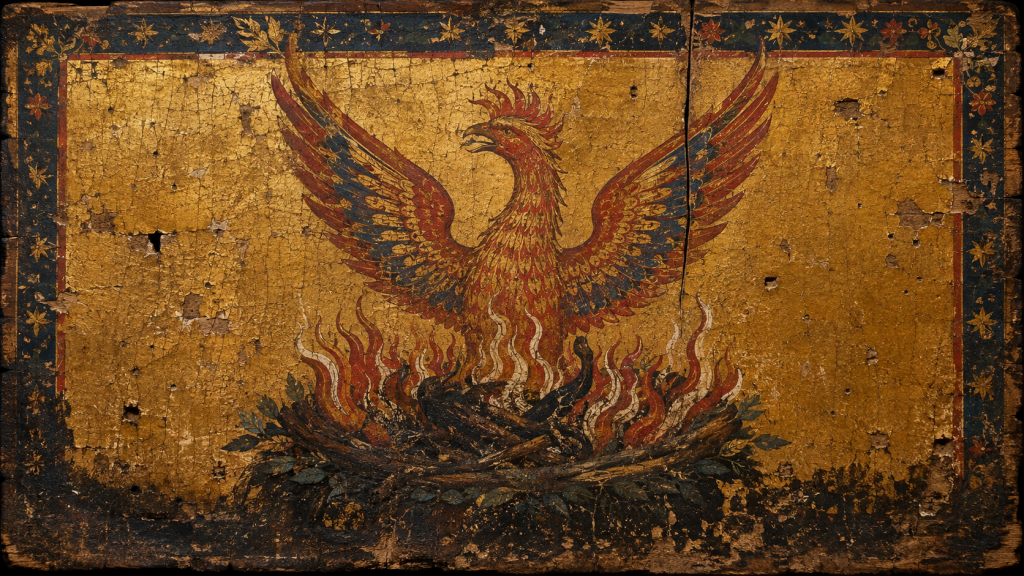
The phoenix already had a long life in ancient stories before Christian writers gave it a new meaning.
Medieval accounts described an aging bird gathering fragrant plants and spices. It prepared its own funeral place, entered the fire, and allowed its old body to burn.
Then life appeared among the ashes. The details changed between versions, of course.
Sometimes a new phoenix emerged immediately. In other accounts, the process unfolded over three days.
について Worksop Bestiary shows the story in two stages. On one side, the phoenix gathers sweet-smelling materials for its funeral pyre. On the other, it rises from the flames.
Unlike the lion cubs, which needed their father to restore them, the phoenix passed through destruction and emerged renewed. Fire stripped away its old form.
That made the bird useful as an image of resurrection and eternal life. It suggested that death could be a passage rather than a disappearance.
5. The Panther Awoke With Irresistible Breath
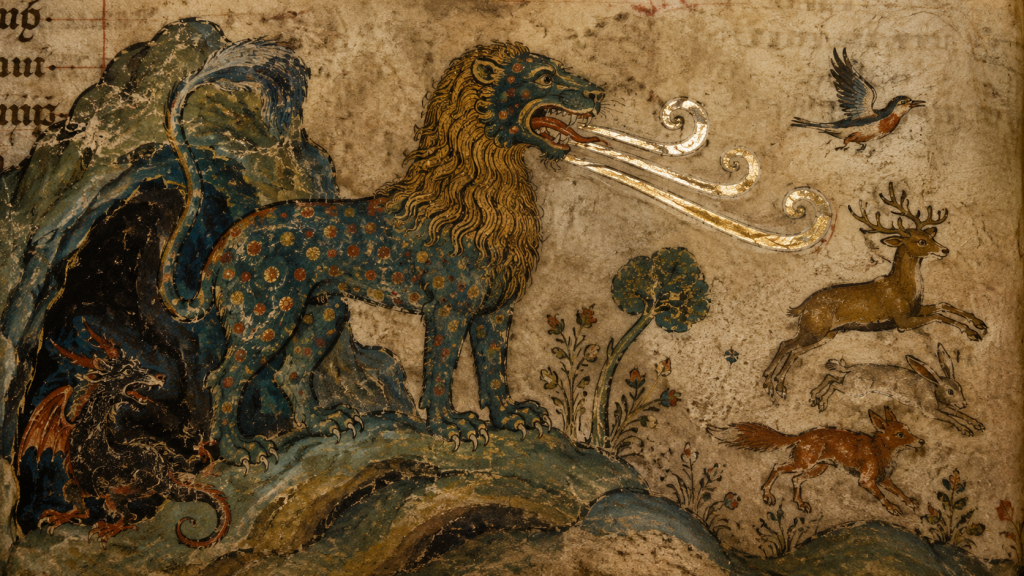
Maybe the strangest feline associated with Christ was the panther.
In medieval bestiaries, it was described as a gentle, beautifully colored creature with only one enemy: the dragon.
After eating, the panther entered its den and slept for three days. When it awoke, it released a powerful roar accompanied by an unbelievably sweet scent.
Animals came from near and far to follow it. The dragon alone fled into a hole, terrified by the sound and unable to bear the fragrance.
Bestiary writers identified Christ directly as the true panther.
The animal’s three-day sleep represented his time in the tomb. Its awakening recalled the Resurrection, while the creatures drawn by its sweet breath represented people responding to Christ’s words.
The dragon, a familiar image of the Devil, retreated before him.
A richly painted panther appears in the Aberdeen Bestiary, produced in England around 1200. The creature looks more like a colorful medieval invention than any wild cat.
But that visual strangeness suited the story perfectly. This was a creature whose voice could call the world toward it while driving evil underground.
6. The Caladrius Carried Sickness Toward the Sun
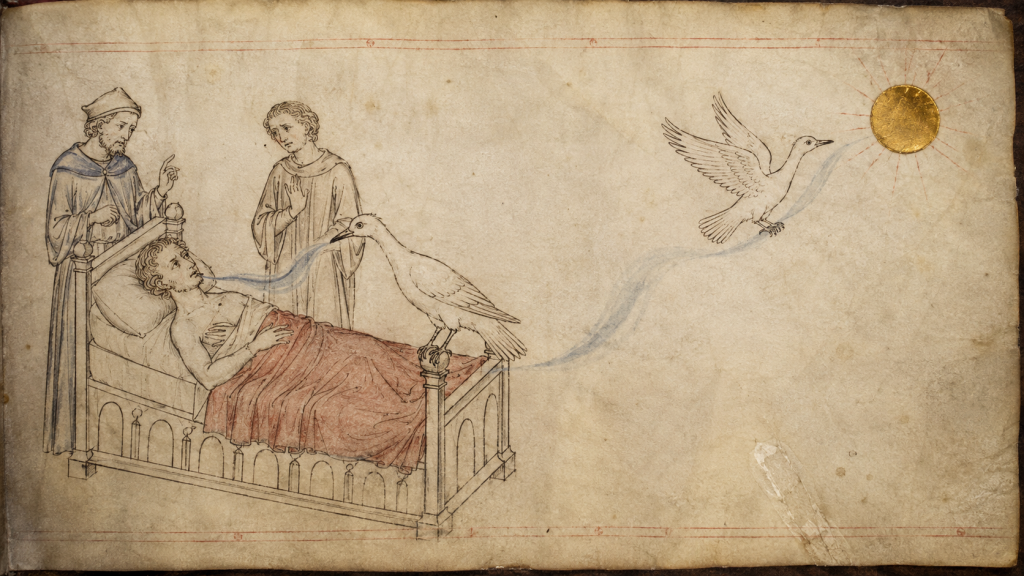
The caladrius was a pure white bird said to live in the courts of kings.
Its most important ability appeared when someone became seriously ill.
The bird was brought before the patient and placed close enough to see their face. When it turned away, the person was expected to die.
But when the caladrius looked directly at them, there was still hope.
The bird drew the illness into its own body and flew upward toward the sun. The heat burned the sickness away, healing both the patient and the bird.
Christian interpretations compared the white caladrius with the sinless Christ. The bird took another creature’s suffering into itself, carried it upward, and destroyed it through contact with heavenly light.
An illumination in the Worksop Bestiary shows the caladrius facing a sick man in bed. Other people gather around and watch the bird, waiting for its movement to reveal what will happen.
7. The Hydrus Defeated Death From Inside the Monster
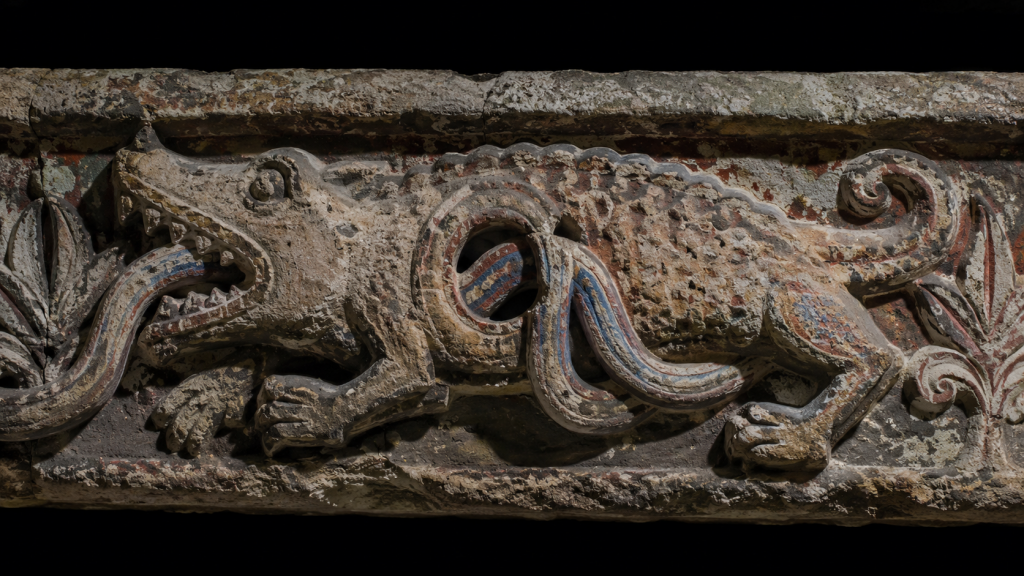
The hydrus didn’t heal anyone or return peacefully from a fire.
It killed a crocodile from the inside.
Bestiaries described it as a water serpent living along the Nile. When it encountered a crocodile, the hydrus rolled in mud to make its body slippery.
It then allowed the crocodile to swallow it.
Once inside, the serpent tore through the crocodile’s body and emerged alive from its side, leaving the larger animal dead behind it.
Writers compared the mud covering the hydrus with the human flesh taken on by Christ.
By entering the monster, the creature seemed to enter death itself. But its violent escape represented Christ breaking free and defeating the power that had tried to contain him.
について Worksop Bestiary shows the hydrus disappearing into the crocodile’s mouth. The image is strange, cramped, and almost gruesome.
Yet it captured something central to the medieval Christian story. Victory didn’t come from avoiding the monster. It came from entering its body and destroying it from within.
