
Parenting is one of the most challenging roles of our lives. We need all the help we can get, and the Bible offers some very useful advice.
These biblical lessons have helped generations raise their children into good and faithful pessoas.
Here are 6 ways to approach parenting intentionally and be the exact kind of parent your kids need.
1. Teach Your Child the Right Way to Live

Proverbs 22:6 says, “Train up a child in the way he should go; even when he is old, he will not depart from it.”
This biblical lesson is a promise that your influence will stick with your child.
They might stray and make mistakes, naturally, but if taught early, they will always find their way back to the right path.
If you don’t teach them, someone else will: the world, their peers, the street, or social media. You should be their first and most important teacher.
Show them how to live with integrity and kindness. Talk about right and wrong, and share your own struggles.
When they make mistakes, remind them of God’s grace.
Your words and actions might not take immediate effect; they’re planted seeds that need time to grow.
Stay consistent and allow God to guide them.
2. Share Biblical Wisdom Daily with Them
Deuteronomy 6:7 tells us, “You shall teach them diligently to your children, and shall speak of them when you sit in your house, and when you walk on the road, and when you lie down, and when you get up.”
This means faith isn’t just for Sundays; it’s for everyday life.
Parenting biblically means finding ways to talk about God when you have breakfast with your kids and when you take them to school.
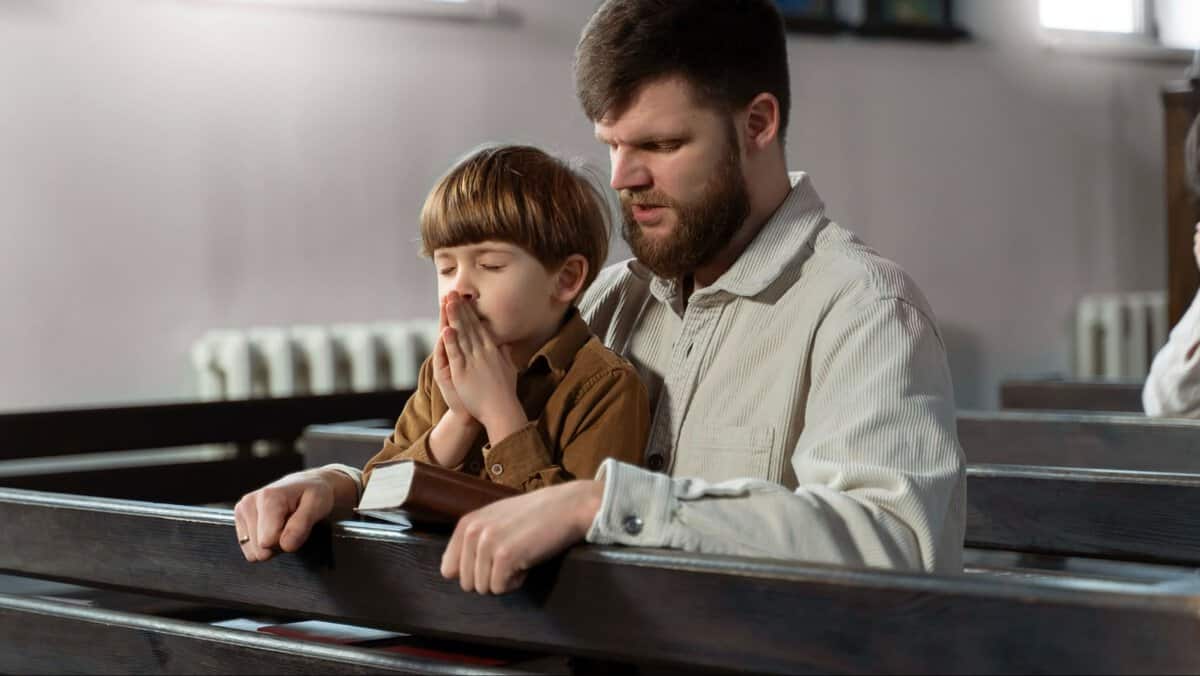
Read Bible stories together, memorize verses, and allow them to see you praying.
Don’t make God’s word a boring lecture, but a natural part of your conversations.
The more they see faith in action, the more it will become real for them.
3. Don’t Postpone Correcting Your Child

Proverbs 19:18 says, “Discipline your son while there is hope; don’t set your heart on being the cause of his death.”
This verse sounds intense, but it simply means that loving your child isn’t the same as spoiling them. Ignoring bad behavior just sets them up for failure.
Being a biblical parent means setting boundaries and offering guidance.
When you do discipline your child, do it with love, not anger. Explain why their actions were wrong and help them understand the consequences.
If you let them get away with everything now, they’ll struggle later.
By correcting, you’re shaping their character and raising them to become responsible adults.
4. Teach Through Self-Control

Ephesians 6:4 says, “Fathers, do not provoke your children to anger, but bring them up in the discipline and instruction of the Lord.”
Don’t push your kids to resentment with harsh words and unrealistic expectations. Your impatience or hypocrisy can wound them deeply.
Instead, show self-control. A biblical parent is humble enough to apologize when they’re wrong.
When your children mess up, give them some grace. Watching you, they learn how to handle frustration and conflict.
If you want them to be kind, forgiving, and patient, be like that yourself.
A biblical parent creates an environment where children feel safe, instead of being scared of triggering a reaction.
Your example is the most influential teacher.
5. Be an Example of Faith

Joshua 24:15 declares, “But as for me and my household, we will serve the Lord.”
Your kids are always watching; they learn from your priorities and how you treat others.
Should they see you chasing ambition and stepping over others to reach your goals, or should they see you live out the biblical truth?
You can’t and shouldn’t force faith on them, but you can show them what it looks like to trust God daily.
When facing troubles, let them see you turning to God instead of complaining.
Your home should be a place where God is honored, not just in words but in the way you live.
Your faithfulness leaves a legacy they won’t forget.
6. Teach Them to Respect Authority

Ephesians 6:1-2 says, “Children, obey your parents in the Lord, for this is right. Honor your father and mother, which is the first commandment with a promise.”
Respect for authority starts at home.
If kids aren’t taught to honor their parents, they’ll struggle with teachers and bosses, and also God.
A biblical parent teaches their child that authority means trusting those whom God has placed above them. But this goes both ways.
As a parent, you also need to show respect for your children; listen to them carefully and treat them with dignity.
Teach them that authority comes with responsibility, and to recognize the difference between control and genuine guidance.
Through learning to respect authority, they learn to respect God.

A little Aquarius, devoted to writing and embroidery. Through my writing, I hope to empower readers to align with their true selves and navigate life’s mysteries with confidence.