
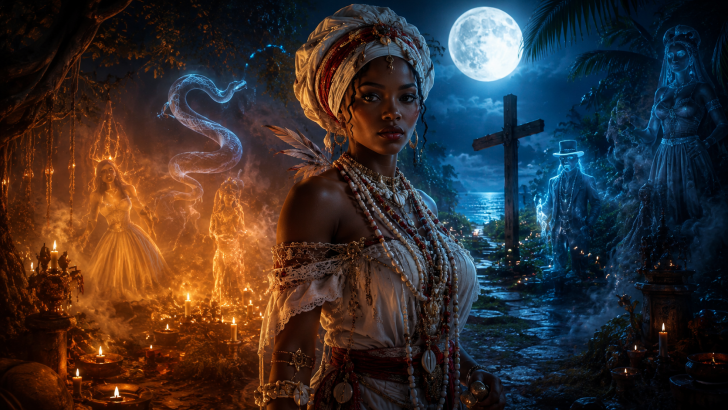
In Voodoo, spirits known as Loa are central to how the unseen world interacts with human life. These beings are not distant or unreachable figures.
Instead, they are believed to move through everyday experiences, emotions, crossroads, storms, relationships, and moments of change.
Their origins come from West African spiritual traditions that blended with Caribbean culture, especially in Haiti, creating a rich system of belief shaped by history, survival, and identity.
Each Loa carries a distinct personality, symbolic meaning, and spiritual responsibility. Some are protectors, some guide love and emotion, while others govern death, wisdom, or transformation.
Rather than being abstract ideas, they are seen as active forces that respond to music, prayer, offerings, and ritual practice.
Here are ten powerful Voodoo spirits and what they are traditionally believed to represent.
1. Papa Legba – The Gatekeeper Between Worlds
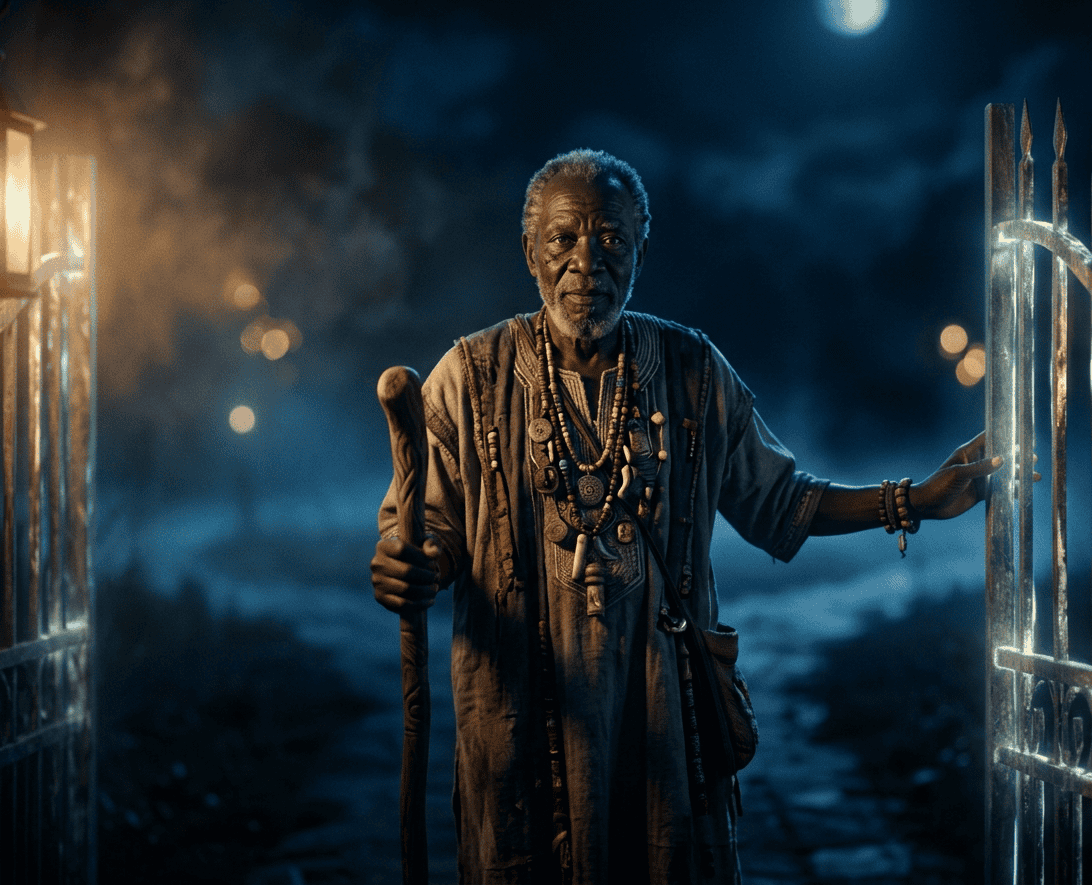
Voodoo places Papa Legba at the threshold between the human world and the spirit realm.
He is the first spirit called in many rituals because he is believed to open spiritual pathways and allow communication with other Loa.
Crossroads, gates, doors, and transitions are closely linked to his presence, symbolizing moments where one phase of life ends, and another begins.
He is often described as an old man walking with a cane, representing wisdom gained through time and experience.
Without his blessing, spiritual messages are believed to remain blocked or unheard.
His role reflects the idea that communication, timing, and spiritual access must be aligned before deeper forces can be reached.
2. Erzulie Freda – Spirit of Love, Desire, and Emotion
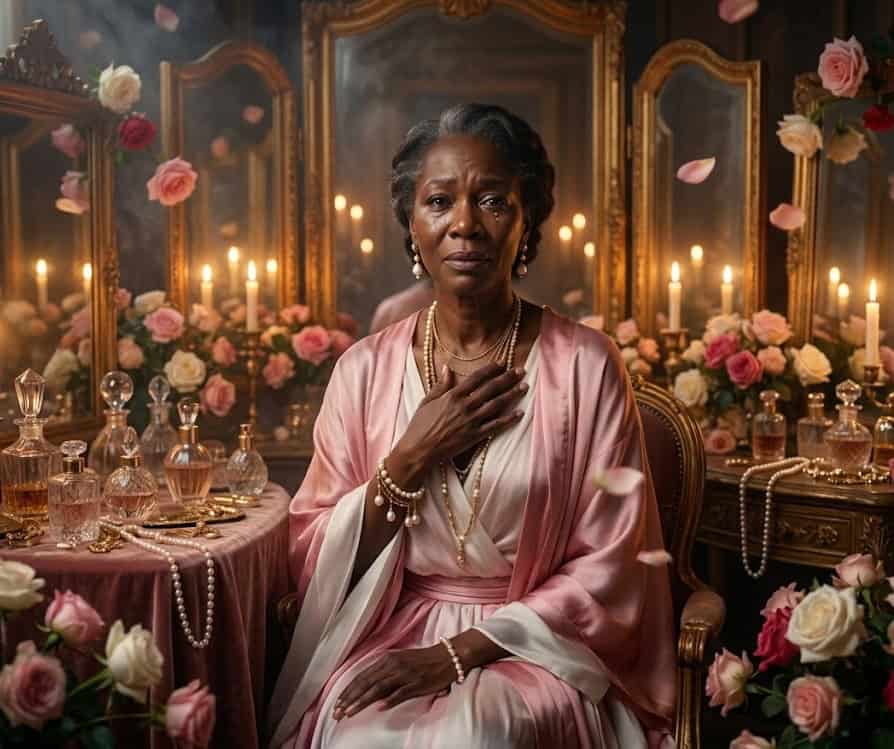
Erzulie Freda represents love in its most emotional and complex form.
She is connected to romance, beauty, luxury, longing, and emotional vulnerability within Voodoo tradition.
Her presence is often connected to feelings of attraction, heartbreak, and deep emotional sensitivity.
Perfume, mirrors, fine jewelry, and soft colors are associated with her symbolic energy.
She is sometimes described as graceful and elegant, yet emotionally fragile, reflecting how love can feel both joyful and painful at the same time.
Her energy highlights emotional desire not as something simple, but as a powerful force that can shape decisions, relationships, and personal identity in unexpected ways.
3. Baron Samedi – Guardian of Death and Transformation
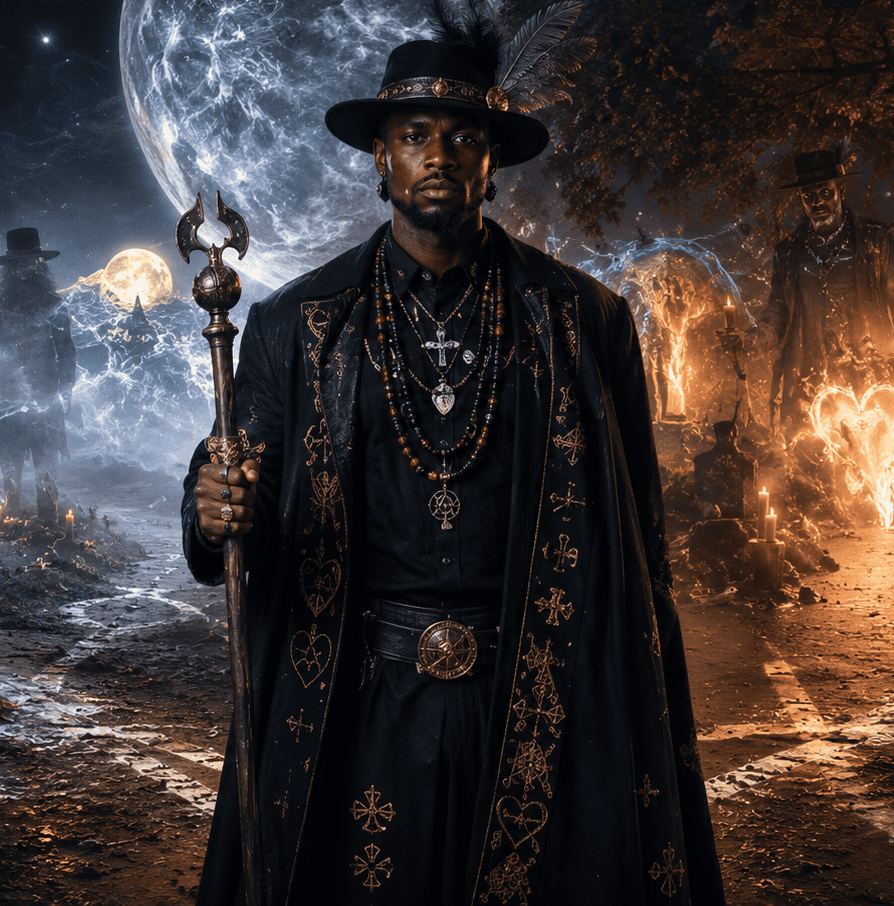
Baron Samedi stands at the boundary between life and death.
He is one of the most recognizable Loa, often depicted with a top hat, dark glasses, and skull imagery.
Graveyards, coffins, and burial rituals are closely tied to his symbolism.
He is believed to oversee the journey of souls after death and ensure proper transition into the spiritual world.
Despite his dark appearance, he is also associated with humor, irony, and life energy, showing that death is not viewed as purely tragic or frightening.
His presence reflects the belief that endings are also transformations, where life continues in another form rather than simply disappearing.
4. Maman Brigitte – Protector of Graves and Justice
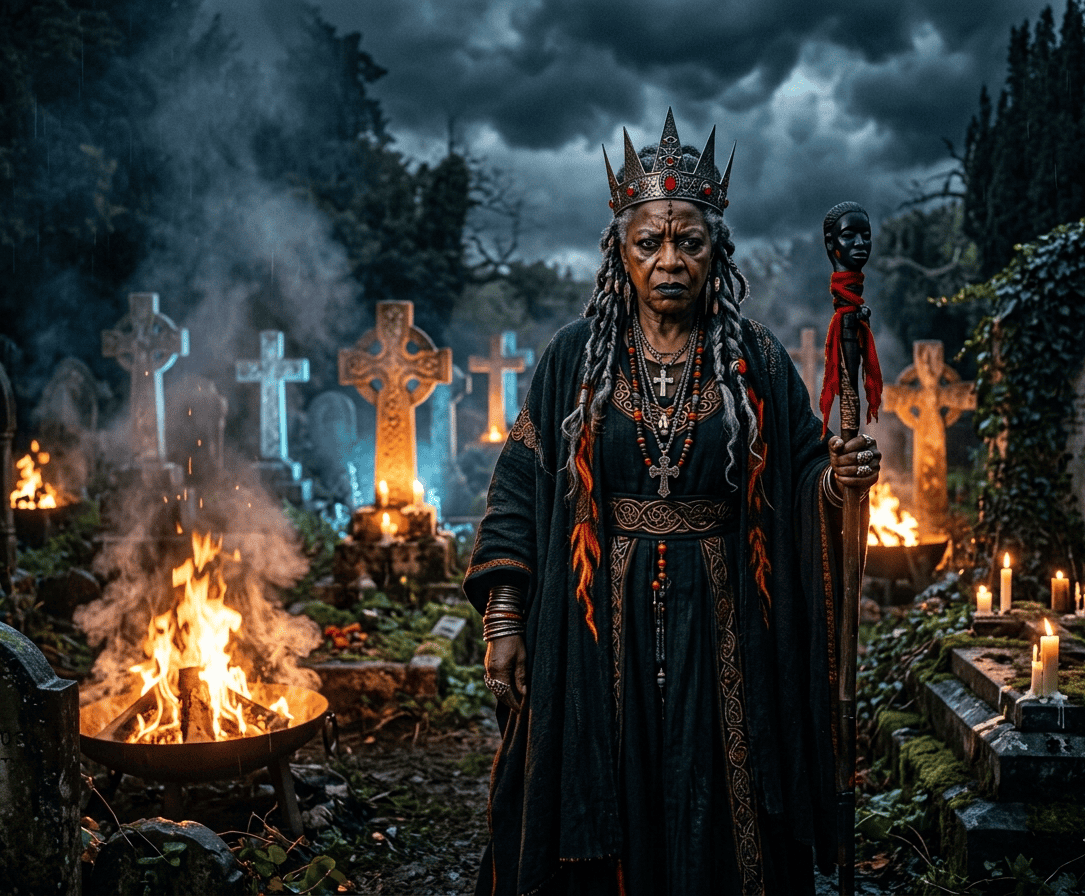
Maman Brigitte is a fierce and protective spirit connected to death, justice, and healing.
She is often seen as the companion of Baron Samedi and is linked to the protection of graves and sacred resting places.
Some traditions connect her symbolism to both African and Celtic influences that merged through cultural history.
Fire, rum, and crosses are often associated with her presence.
She is known for her strong personality and willingness to defend fairness, especially for those who have suffered injustice.
Her energy represents emotional strength, protection of the vulnerable, and the belief that justice continues beyond physical life and into the spiritual realm.
5. Damballa – Ancient Spirit of Creation and Peace
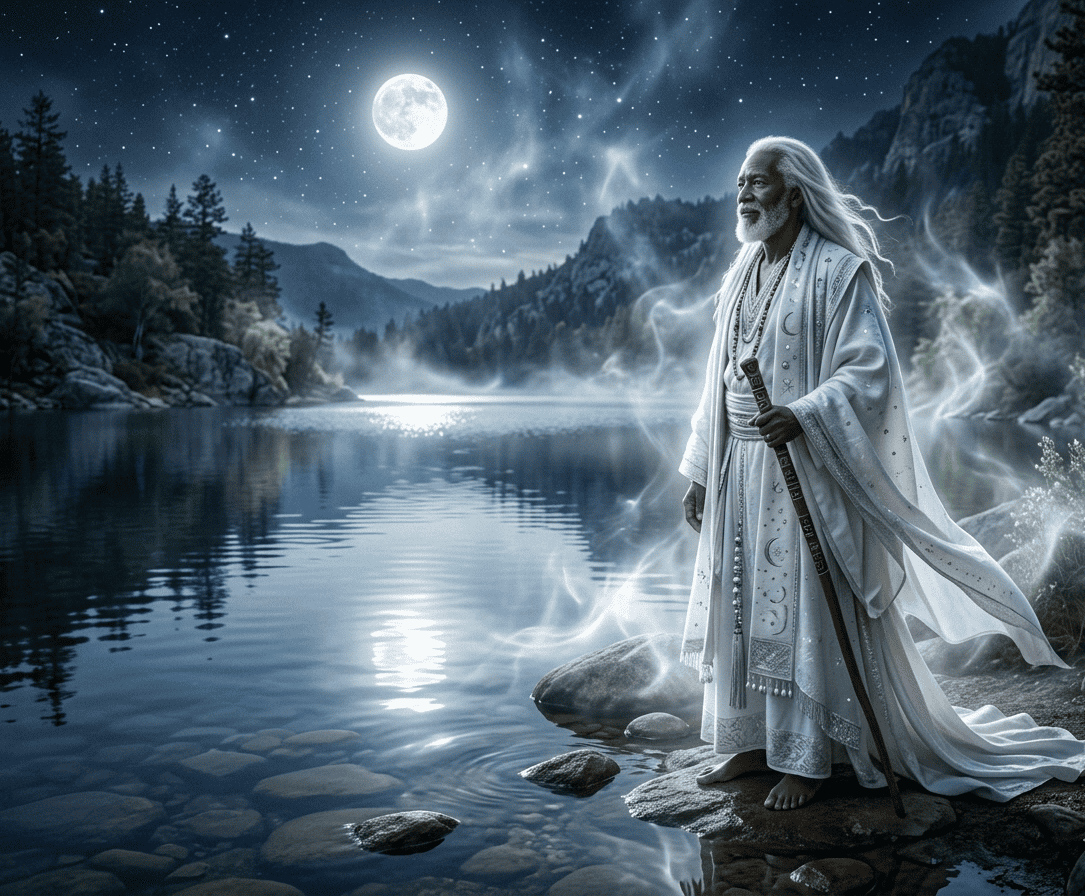
Damballa is considered one of the oldest and most peaceful Loa in Voodoo tradition.
He is associated with creation, purity, wisdom, and the original force of life itself.
The serpent is his most common symbol, representing cycles of renewal, balance, and cosmic continuity.
His energy is calm, silent, and distant from human conflict, often described as existing above ordinary emotional struggles.
White offerings and quiet rituals are traditionally linked to his presence.
He reflects the idea that before chaos, emotion, and struggle, there is a pure creative force that holds everything in balance and sustains existence itself.
6. Ogou – Spirit of War, Iron, and Discipline
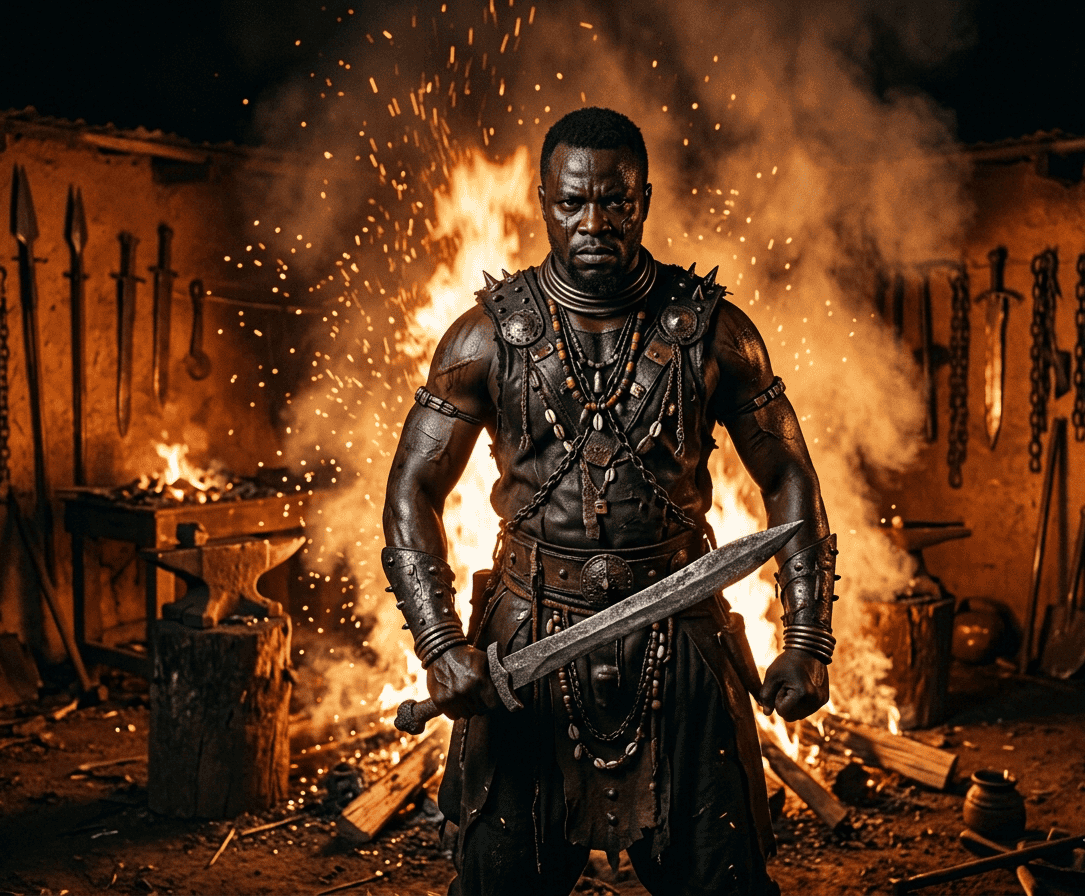
Ogou represents strength, leadership, strategy, and survival through struggle.
He is often associated with iron tools, weapons, and fire, symbolizing human power and determination.
His presence is connected to courage during conflict and the ability to face hardship without retreating.
In spiritual tradition, he is seen as a protector of justice through action rather than passive intention.
His energy radiates discipline, structure, and the ability to turn pressure into strength.
Ogou’s symbolism also highlights the idea that leadership often requires sacrifice, endurance, and the willingness to confront difficult situations directly.
7. Ezili Dantor – Fierce Mother and Protector
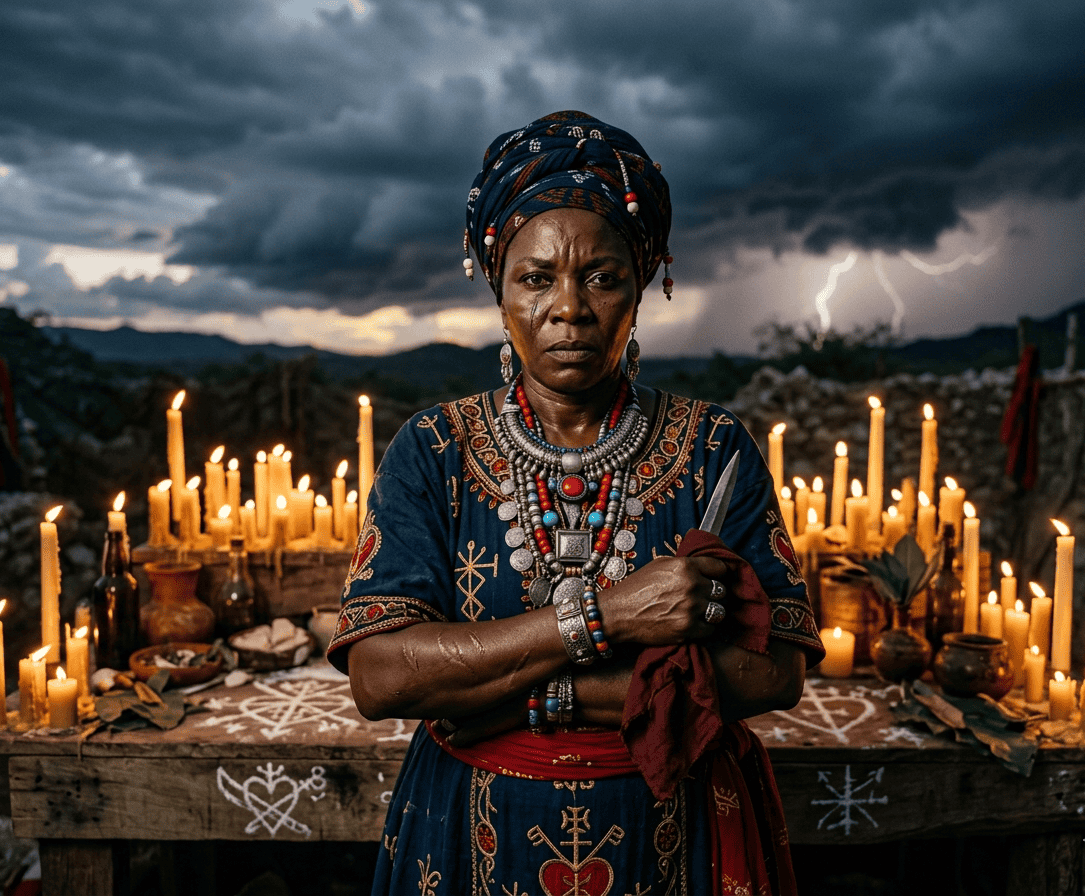
Ezili Dantor is a powerful maternal spirit known for protection, loyalty, and emotional intensity.
She is often linked to motherhood, survival, and resilience during hardship.
Her imagery is sometimes connected to struggle, strength, and deep emotional bonds between parent and child.
She is not gentle in a fragile sense, but fiercely protective when danger threatens loved ones.
Her presence shows that love can become powerful enough to defend, fight, and endure even the most difficult circumstances.
She represents emotional strength shaped through struggle and the determination to protect what matters most at any cost.
8. Agwé – Spirit of the Ocean and Journeys
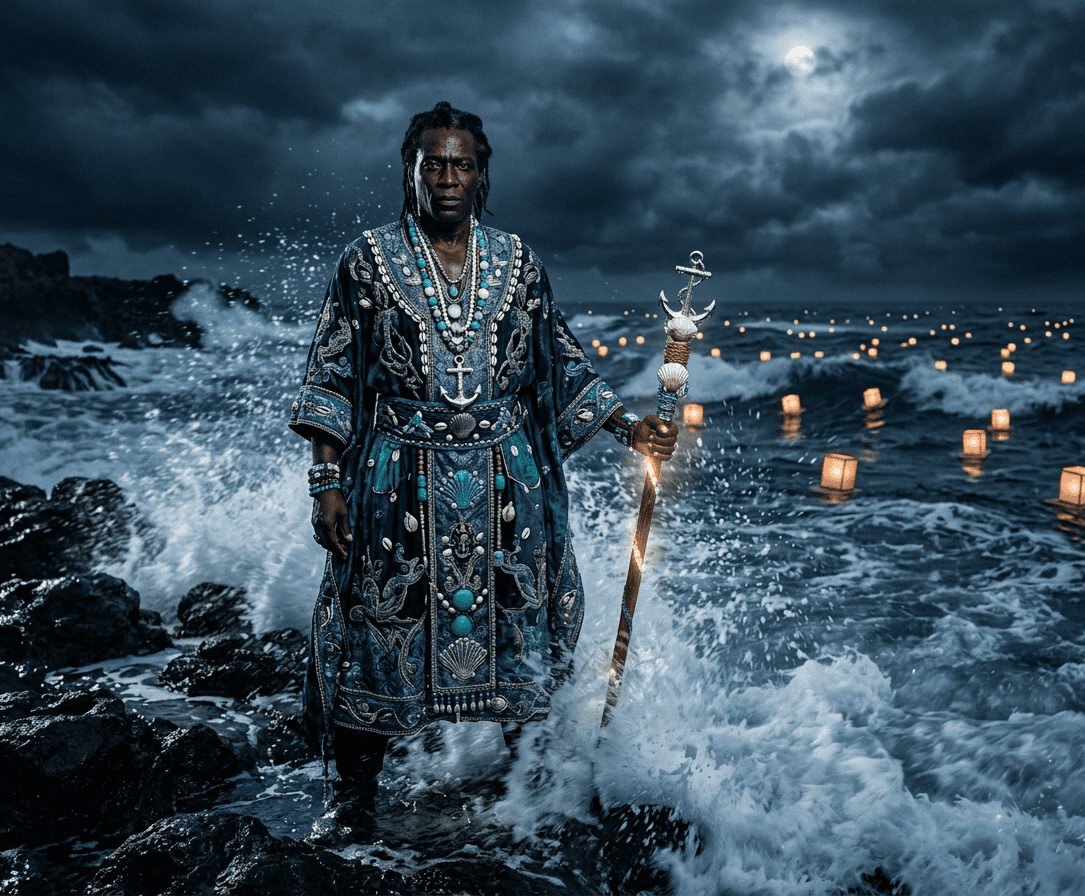
Agwé governs the sea, navigation, travel, and the mysteries of water. Ships, fish, shells, and coastal winds are often connected to his symbolism.
He is believed to guide sailors and protect those whose lives depend on the ocean.
His energy reflects both calm waters and unpredictable storms, showing the dual nature of the sea itself.
He represents movement, emotional depth, and journeys that lead far beyond familiar territory.
Agwé’s presence highlights how water is seen not just as a physical element, but as a spiritual force connected to transition, distance, and emotional flow.
9. Loko – Keeper of Sacred Knowledge and Tradition
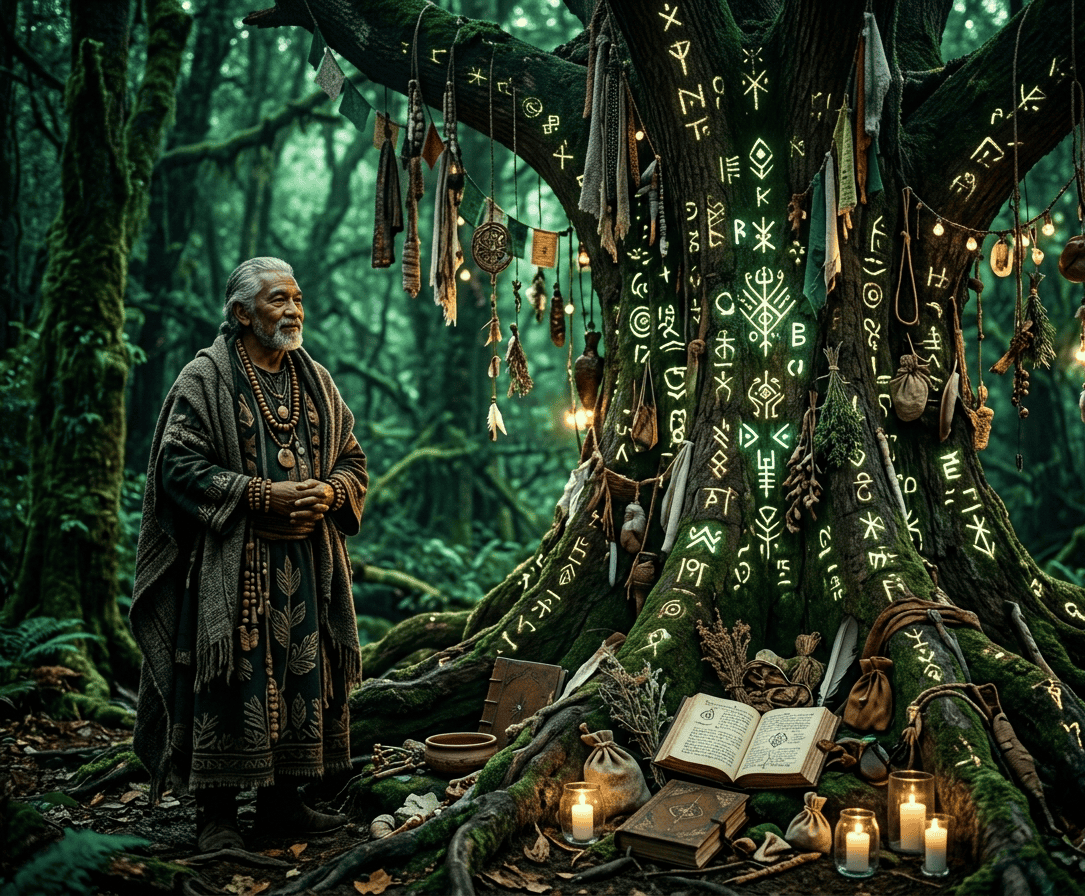
Loko is associated with wisdom, healing, spiritual order, and sacred knowledge.
He is often considered the guardian of priests, rituals, and spiritual teaching within Voodoo tradition.
Trees, especially sacred ones, are strongly linked to his presence as symbols of life and continuity.
His energy reflects stability, learning, and respect for ancestral practices.
Loko represents the importance of preserving tradition while guiding new generations into spiritual understanding.
He shows that knowledge must be protected and passed down carefully to maintain balance within both spiritual and human communities.
10. Ayizan – Spirit of Initiation and Spiritual Beginnings
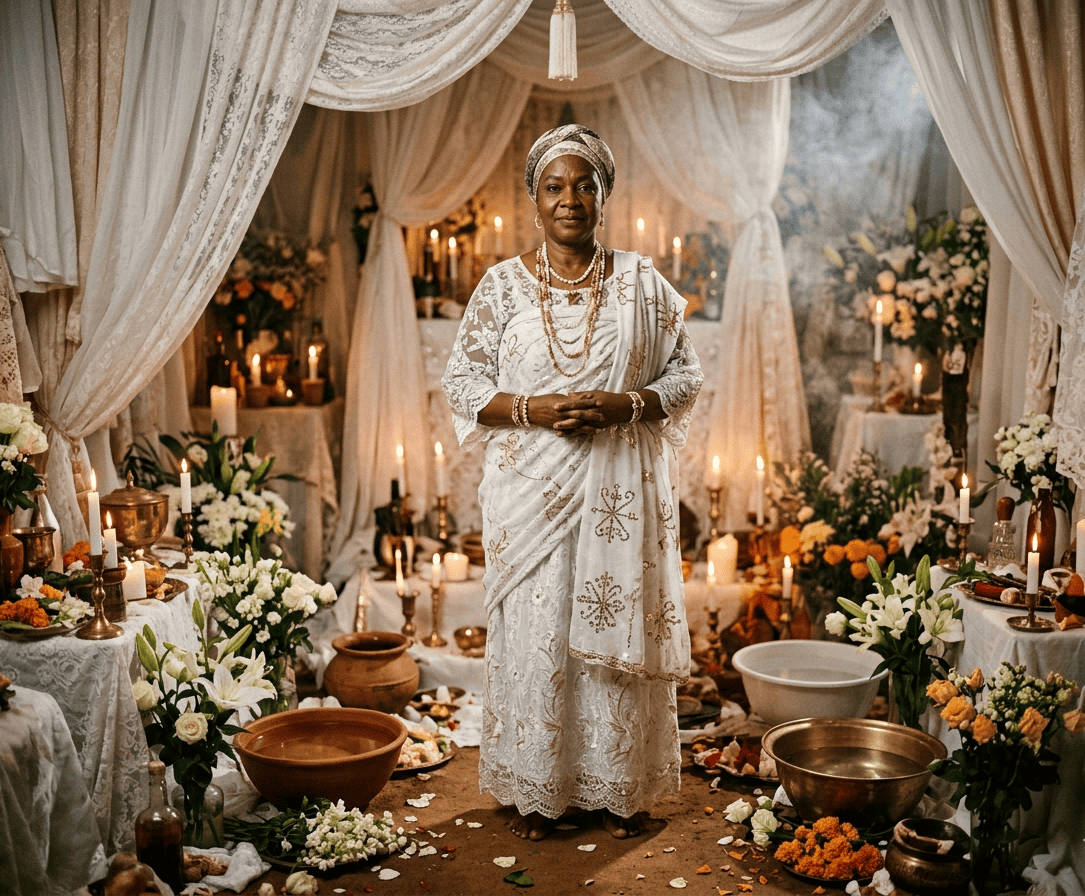
Ayizan is connected to purification, initiation, and the first steps into spiritual knowledge.
She is associated with marketplaces, public spaces, and moments where transformation begins.
Her presence symbolizes cleansing, preparation, and readiness for deeper spiritual understanding.
White cloth, ritual washing, and sacred ceremonies are often linked to her energy.
She represents the moment when someone steps away from ordinary life and enters a path of spiritual awareness.
Ayizan’s symbolism explains how the spiritual journey begins with preparation, humility, and openness to change before deeper wisdom can be reached.

Sempre senti uma forte ligação com o Divino desde o meu nascimento. Como autora e mentora, a minha missão é ajudar os outros a encontrar o amor, a felicidade e a força interior nos momentos mais sombrios.