
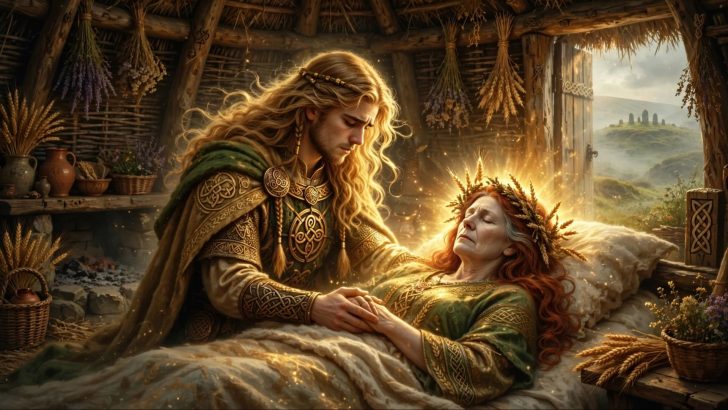
As late summer starts to appear more golden, we’re standing at the threshold of Lughnasadh.
This fire festival is the beginning of the harvest season, and we celebrate it at the beginning of August.
We all know how this festival is celebrated, but what do we truly know of Lugh, the deity at the center of it all?
Let’s explore how the ancients perceived him and what’s left of his worship in our day!
1. The Patron of Arts
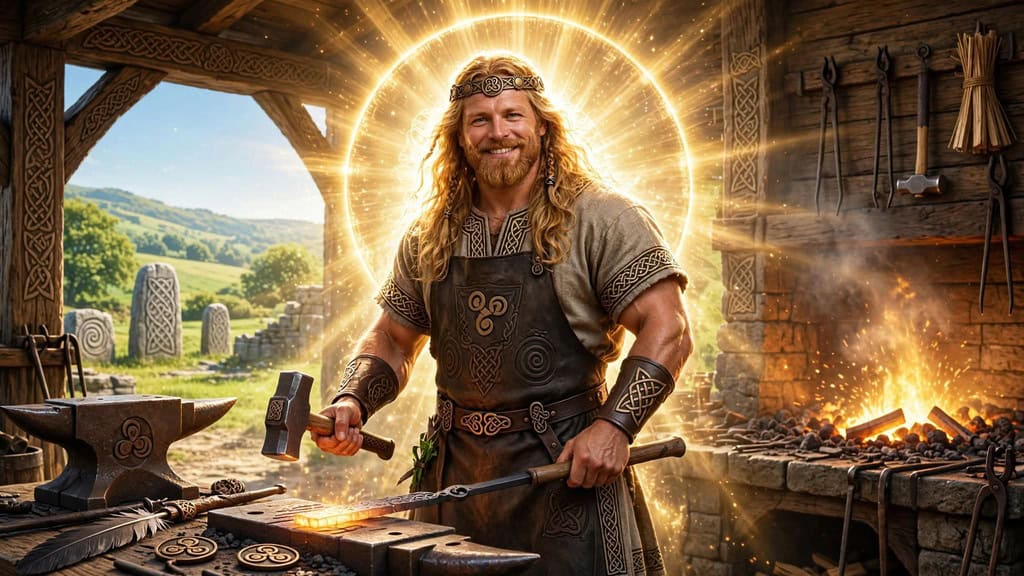
Lugh Lámfada (Long Arm), as the deity is known far and wide, is one of the most beloved figures in Celtic mythology. He is the patron of all arts and crafts.
Most gods govern one to three things, but he was a blacksmith, a bard, a warrior, a healer, a magician, and a scholar.
When he first arrived at the gates of the Tuatha Dé Danann, the gatekeeper tried to turn him away, saying the tribe already had a master for every skill.
To this, Lugh said, “Then ask me if I have them all.”
He is the embodiment of human potential and an inspiration to those who can’t commit to just one talent in their lifetime.
So, how is any of this connected to harvest, except his name is literally in the name Lughnasadh?
2. The Sun King and Harvest Lord
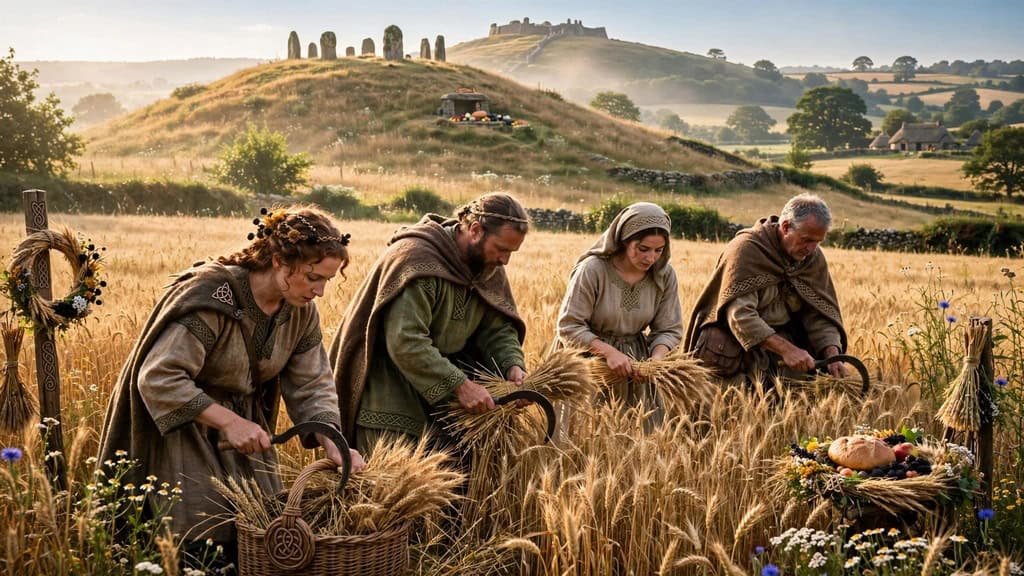
While historians still can’t agree whether Lugh was an actual sun god or a deity of lightning and storms, his connection to summer is undeniable.
As the Sun King, his power allows the crops to flourish. Lughnasadh marks the beginning of the harvest season, when the first grains are ready to be cut.
It’s a time when we celebrate the peak of summer before the days get shorter again.
Lugh represents that spark of the universe that makes golden wheat come from the earth.
He is also the deity who reminds us of the results of our hard work!
3. How the Celts Celebrated Lugh
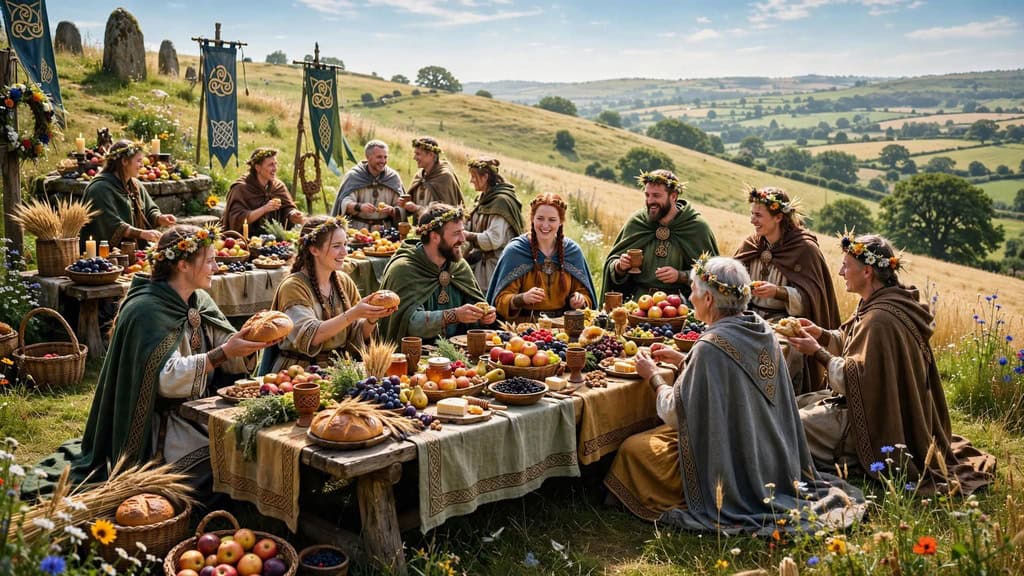
The ancient Celts, particularly in Ireland, revered Lugh.
Like most other cultures of the time, they were agrarian. Their survival depended on the mercy of the elements.
And Lughnasadh was a month-long communal event that involved physical competitions, feasting, matchmaking, and trade.
These gatherings happened on hilltops, bringing scattered tribes together to unite in gratitude. Surviving the winter required community effort.
By celebrating Lugh, they were also celebrating their own skills and the connection to the land that fed them.
It was a pause before the hard work of the final harvest began.
4. The Origin Myth
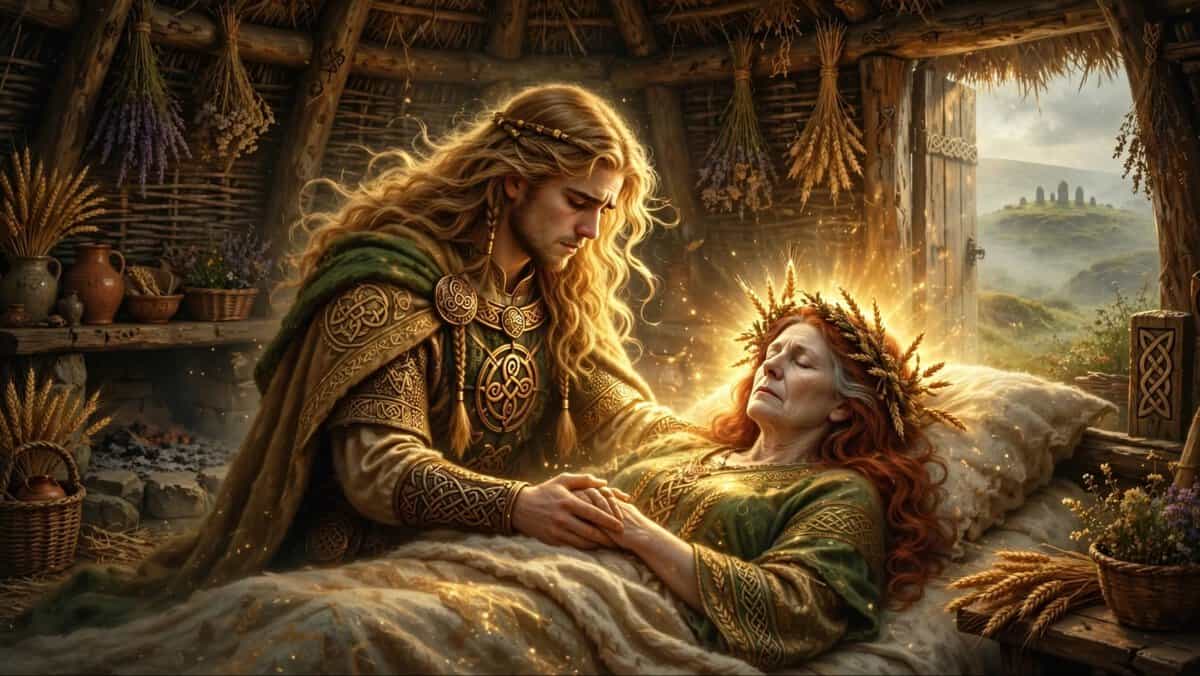
The myth behind Lughnasadh gives the festival its emotional weight. The festival actually wasn’t named to honor Lugh, but his foster mother, Tailtiu.
According to legend, she cleared the plains of Ireland so that agriculture could begin, but the physical exertion killed her.
On her deathbed, she asked Lugh to host funeral games in her honor.
This lore tells us that Lughnasadh isn’t just a harvest feast. It honors hard work and sacrifice.
The earth gives us food, but it requires immense energy and, eventually, the dying back of the plant to provide the grain.
Lugh’s grief and gratitude for his mother mirror our gratitude for the earth.
It’s a reminder that abundância always comes with a cost.
5. Modern Rituals

The communal celebration of Lughnasadh isn’t available to all of us anymore, but this actually gives us the freedom to incorporate it in our lives in a way that suits us best.
Many people focus on doing crafts because Lugh is the master of all arts.
The celebration can be turned into a day devoted to your favorite hobby, while the results of your work can be offered to Lugh as a sacrifice.
You can start by lighting a candle and meditating upon the skills you’ve been working on since the last Lughnasadh.
Remember how your skills have evolved and the challenges you overcame.
Then, sit down and create something that you can devote to Lugh, to harvest, to summer.
6. The Grain Blessing
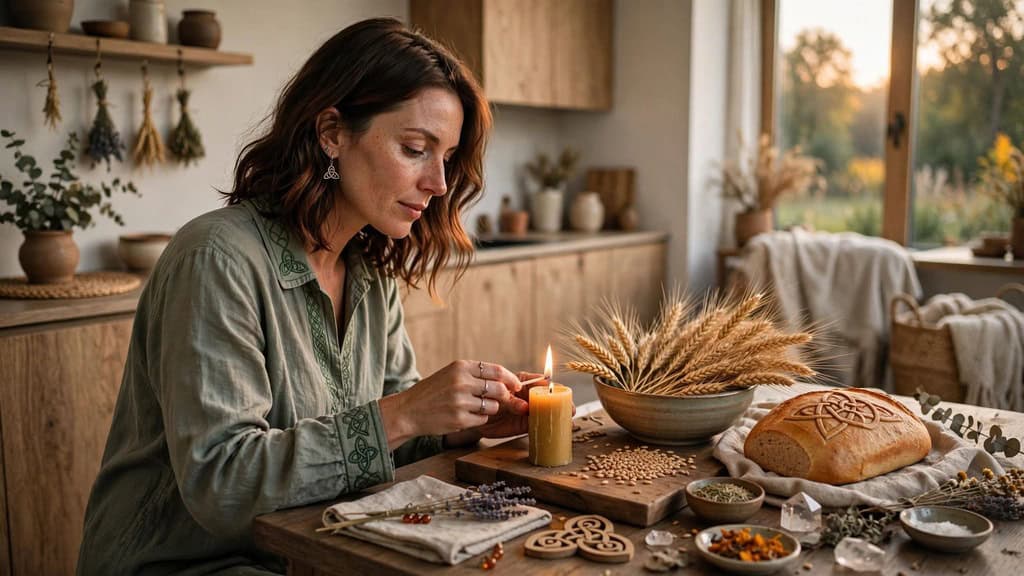
This ritual is closely connected to the spirit of Lughnasadh.
Lugh is the Lord of Harvest, and we still depend on grain for our diet.
So, you can grab a bowl of oats or wheat, light a candle, and hold the grains in your hands.
Reflect on the time and force it takes for this small grain to grow out from a seed and become something that sustains life.
Express gratidão for the grain and everything else you have.
You might end your meditation by feeding half the grains to birds, as a way to give something back to nature. Keep the rest on your altar until Mabon.
This small ritual connects you to the ancient farmers who honored the sacred cycle of giving and receiving.
7. Releasing Scarcity
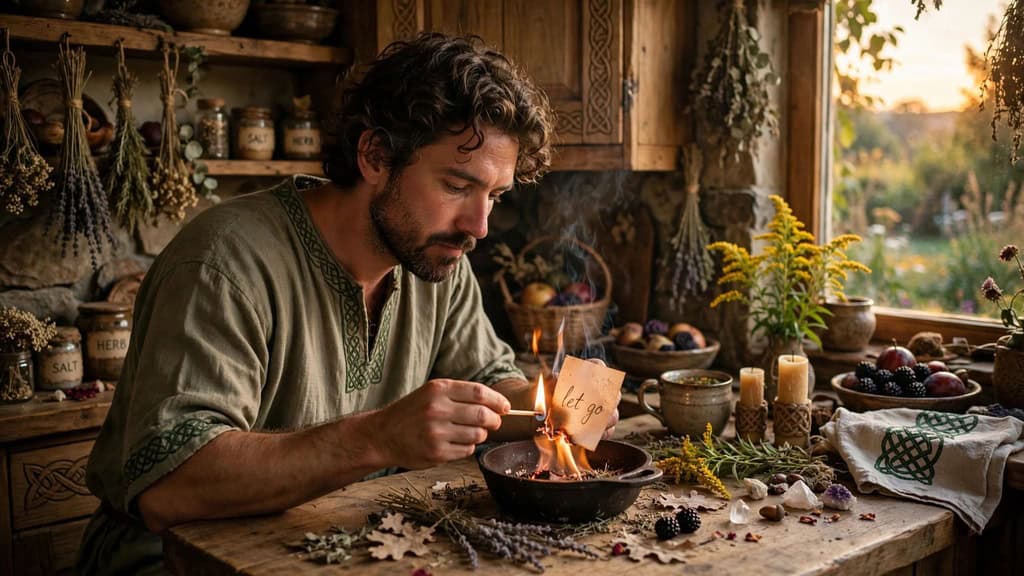
Lughnasadh celebrates all kinds of abundance, including the abundant mindset. If you wish to honor the festival, make a scarcity release ritual.
Comece por escrever os seus biggest fears about not having enough. Then, on another paper, write your vision of prosperity.
Safely burn the first paper and watch your fears turn to nothing.
Take a coin and wrap it in the paper that contains your vision. It symbolizes the health and abundance that are already on their way.
You’ll also want to keep this paper safe until the fall equinox.
By letting go of scarcity, we come closer to Lugh’s golden generosity!
8. The Lammas
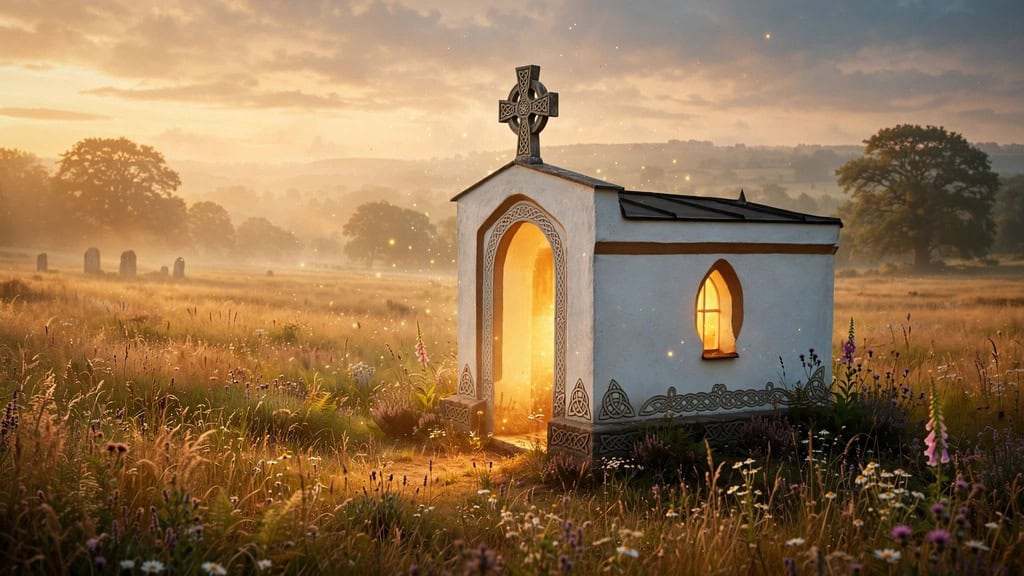
You might be surprised to learn just how much of Lugh’s cult survived in Christianity.
The Church couldn’t erase Lughnasadh, as it was too ingrained in the existing culture. Instead, it absorbed it.
The festival was Christianized into Lammas, which means Loaf Mass.
Early Christians continued the ancient tradition of baking bread from the first harvested grain and bringing it to church to be blessed.
The skills and crafts of Lugh were attributed to patron saints, and the communal gatherings, the bonfires, and the blessings all preserve his cult!

A little Aquarius, devoted to writing and embroidery. Through my writing, I hope to empower readers to align with their true selves and navigate life’s mysteries with confidence.