
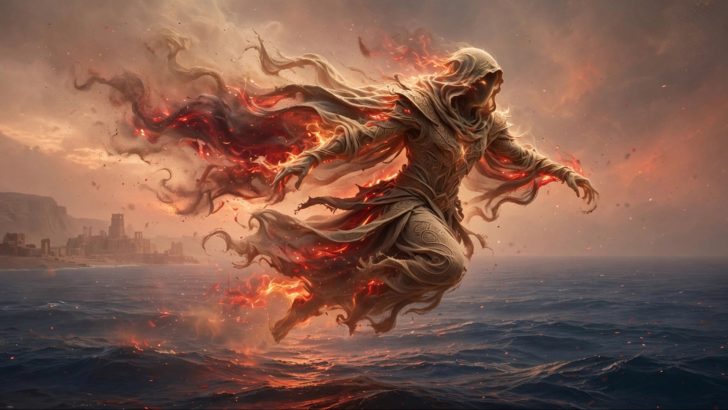
The jinn are mentioned throughout the Alcorão, but they’re also part of the pre-Islamic Arabian tradition.
These beings are present in spiritual beliefs today, belonging to a category of their own.
They’re not angels, demons, nor humans, but separate creations with livre arbítrio, personality, tribes, and even their own religions!
So, let’s explore whether the jinn are evil beings, and their connection to Satan, three wishes, and curses.
1. The Jinn Were Created Before Humanity
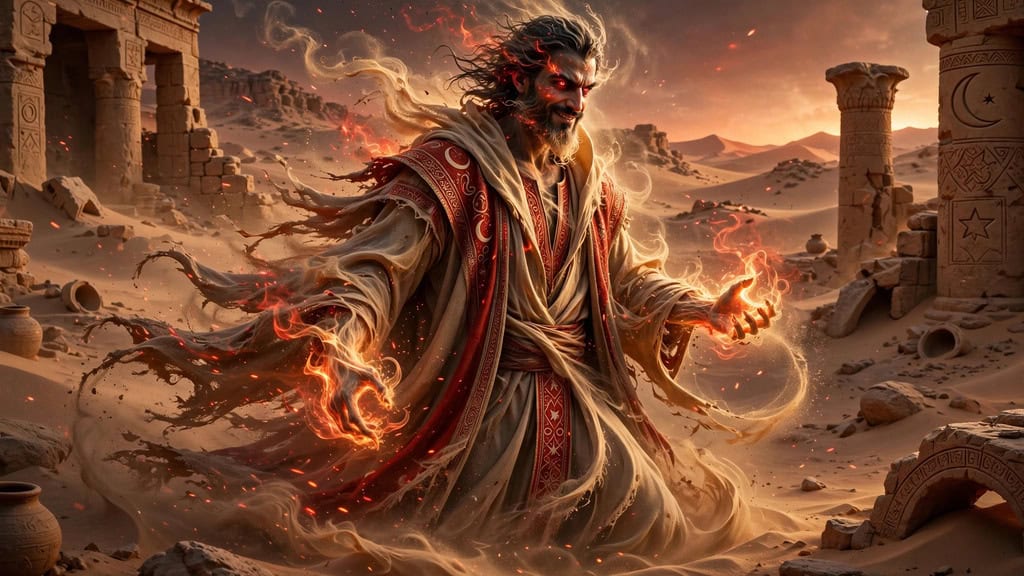
According to Islamic tradition, the jinn came before Adam.
Before the first man was shaped from clay, these beings already walked the earth, described in the Quran as having lived and ruled long before we existed.
They had their own civilizations and conflicts, and later tradition describes angels being sent to earth to solve these disputes; all before Adam’s creation was even announced.
This timeline matters because it shows us that they weren’t conceived as minor beings, but the first dwellers of the earth!
They were intelligent and had free will, just like us.
2. Made by God, With Purpose
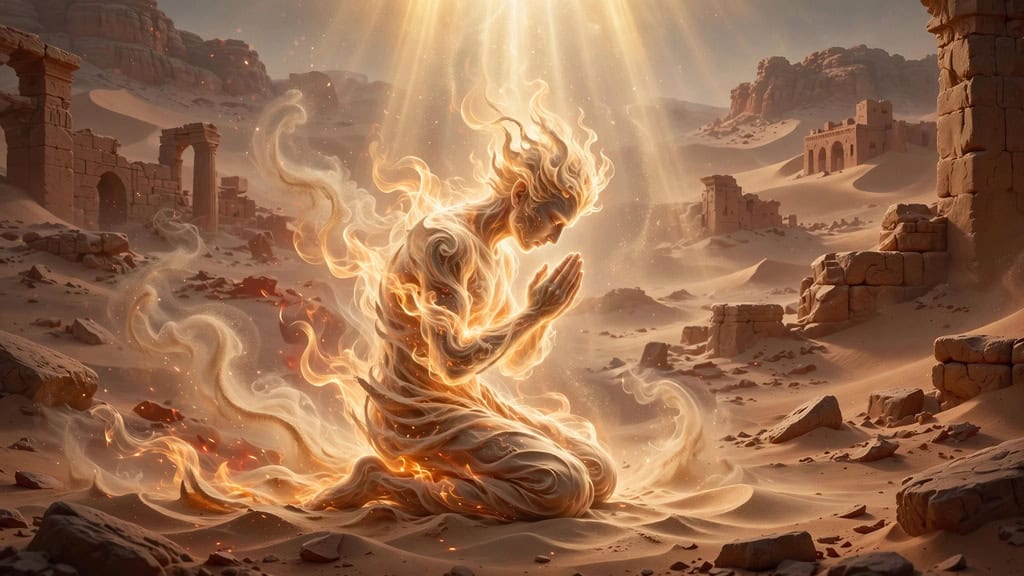
In Islamic belief, the jinn were intentionally created by God, just like angels and humans.
Their main purpose, much like our own, was to worship and know their Creator. So, they weren’t made to serve people, cause mischief, or grant wishes.
They were made as spiritual beings with their own connection to the divine. They’re capable of belief, disbelief, worship, and sin, just like us.
This completely separated them from angels, who have no free will and exist only in obedience.
Os seus livre arbítrio is exactly why we can’t simply categorize them as good or evil. Some choose to be righteous, while others don’t.
3. Formed From Smokeless Fire
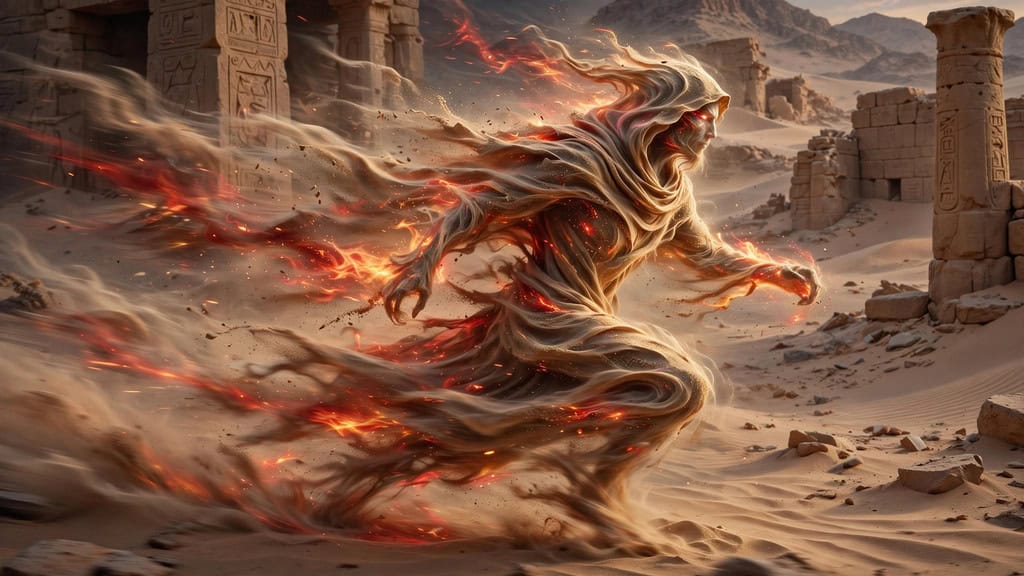
The humans were shaped from clay, angels from light, and the jinn from the smokeless fire. This is sometimes translated as the fire of a scorching wind!
It’s imagined as pure heat, inherently invisible to us.
This origin is part of why they’re typically described as invisible to the human eye.
It also connects to many of their abilities described in folklore, like shape-shifting, incredible speed, appearing and disappearing, and having a volatile nature.
These traits constantly appear in their lore, since they’re shown as creatures that are capable of elegance and intelligence, but who can also be incredibly destructive.
The properties of fire are obvious in these descriptions, as it’s a source of warmth and survival, but can also be hazardous if mishandled.
4. Refusing to Bow Before Humans
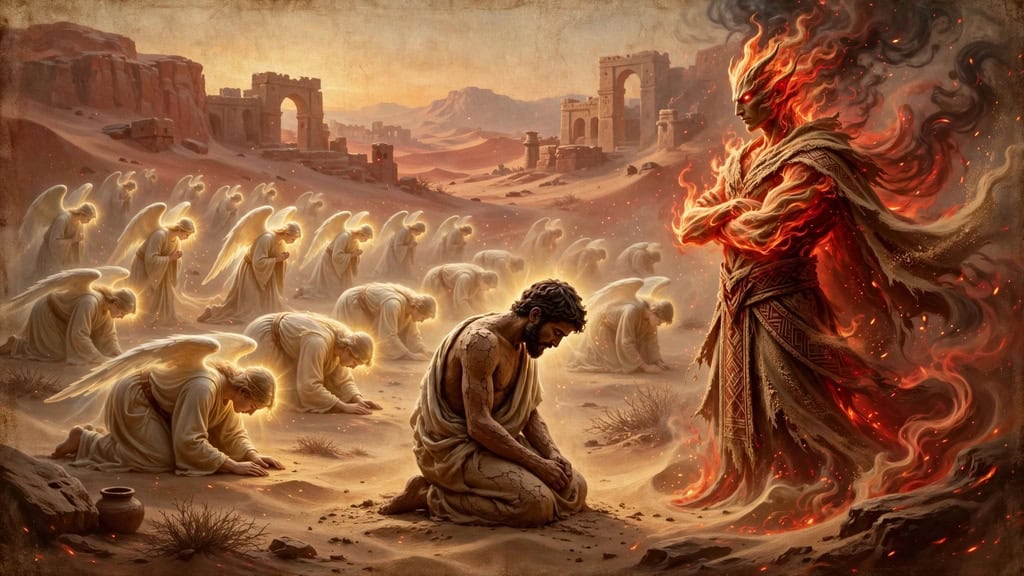
Finally, we come to the part where they become connected to Satan or Shaytan.
It’s a very familiar story: God commanded his angels to bow to the newly created Adam, but one of them refused. His name was Iblis.
Now, Iblis wasn’t an angel, but a jinn who was elevated among them because of his devotion, but his pride led him astray.
He argued he was superior to Adam since he was made of fire while Adam was made of clay, and so he fell from grace.
From that moment on, Iblis became known as Shaytan. He was cast out and given permission to tempt and mislead humanity until the end of time.
So, in Islamic belief, Shaytan isn’t a fallen angel, but a fallen jinn.
His refusal to bow to Adam reflected on his entire kind, making them dangerous and evil in our eyes.
5. Why They Are Dangerous
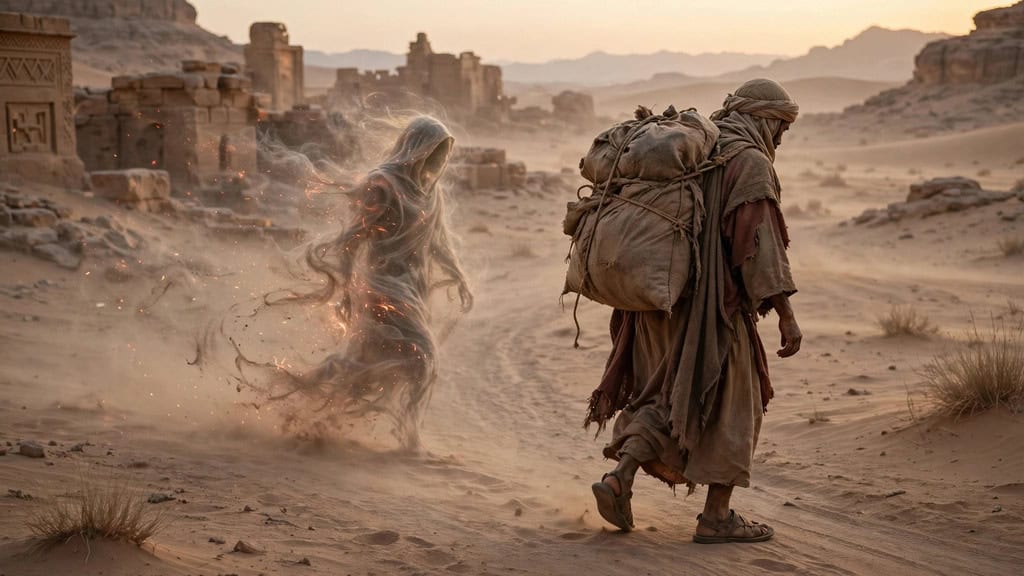
The danger associated with these beings comes from a few consistent beliefs.
First, they’re capable of possessing and influencing humans, whispering thoughts, provoking fear or illness, or even causing erratic behavior.
Throughout history, the jinn were commonly blamed for mental illness that people of the past couldn’t explain.
Second, they’re invisible and can take various forms, but encountering one unknowingly is considered truly dangerous.
It’s believed that they’re found in graveyards, ruins, empty places, and, for some reason, bathrooms.
Third, some of them are described as evil and cruel, tormenting humans for their own reasons.
There’s also the risk that you could disrespect them unknowingly. Spilling hot water or disturbing certain places could provoke their anger and make you a target.
We’re not at war with these beings, but our coexistence has to be carefully controlled because we can’t predict the outcome.
6. Are They the Genies from the Lamp?
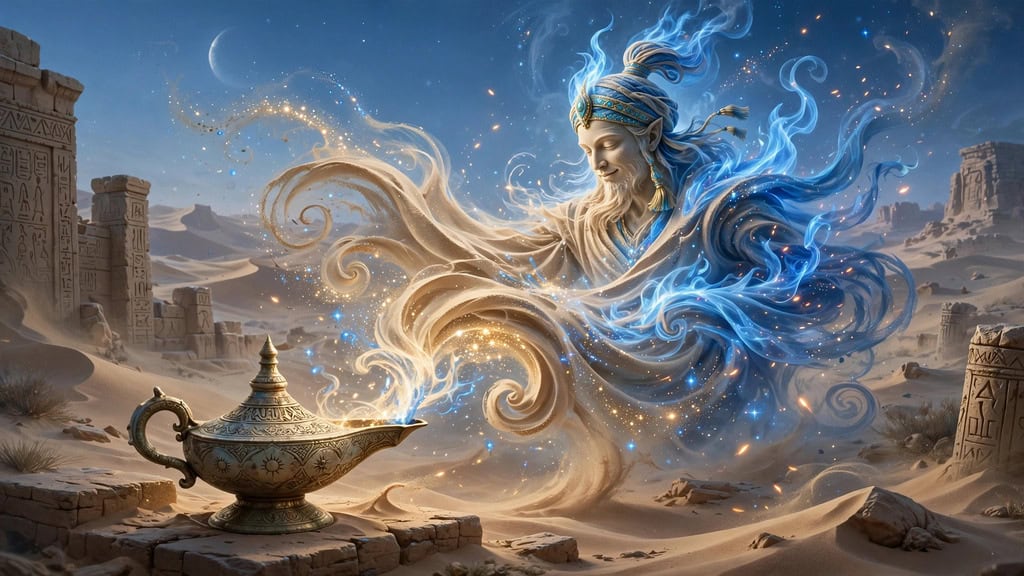
The word genie does actually come from jinn. It was absorbed into European languages through the French colonialists, who had the chance to hear Arabian stories.
However, the genie that lives in a lamp and grants wishes is a Westernized ideia, popularized through One Thousand and One Nights.
Later, it was made famous by Hollywood.
In Islamic tradition and Arabian folklore, these beings were never bound to lamps or obligated to grant wishes. In fact, they would never serve human masters.
So, while there’s a linguistic connection, that’s where all similarities end.
7. They Can Be Benevolent
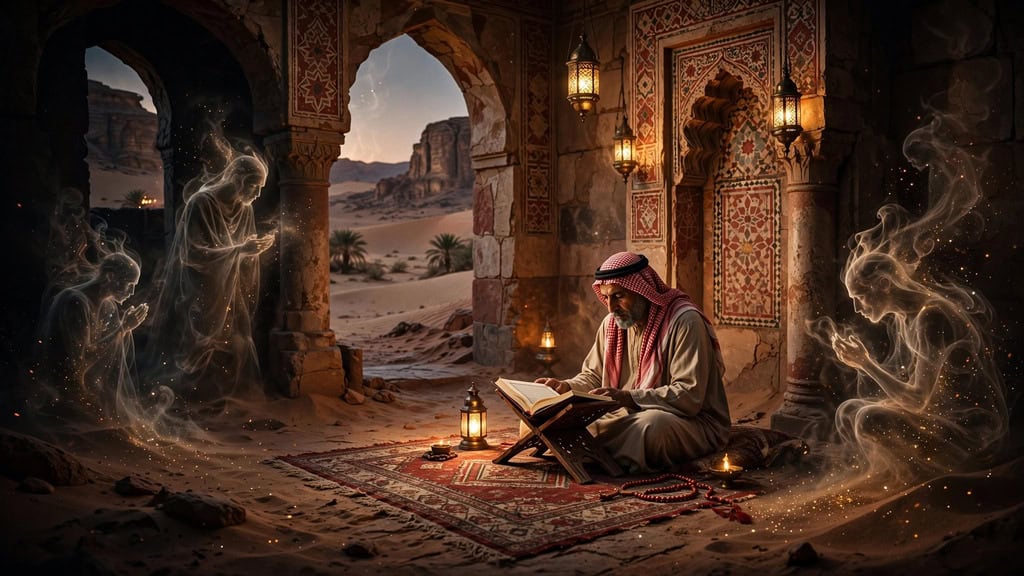
Despite their dark reputation, the jinn aren’t necessarily evil.
The Quran even includes an entire chapter, Surah Al-Jinn, describing a group of them listening to the Quran and choosing to believe.
This confirms that they can be righteous and moral, just like we can.
As I mentioned before, their free will determines whether they’re religious, kind, deceptive, cruel, or gentle. They completely mirror our own nature.
Some folk traditions even describe them attaching themselves to certain families and places and protecting them!
8. Legendary Jinn and Their Powers
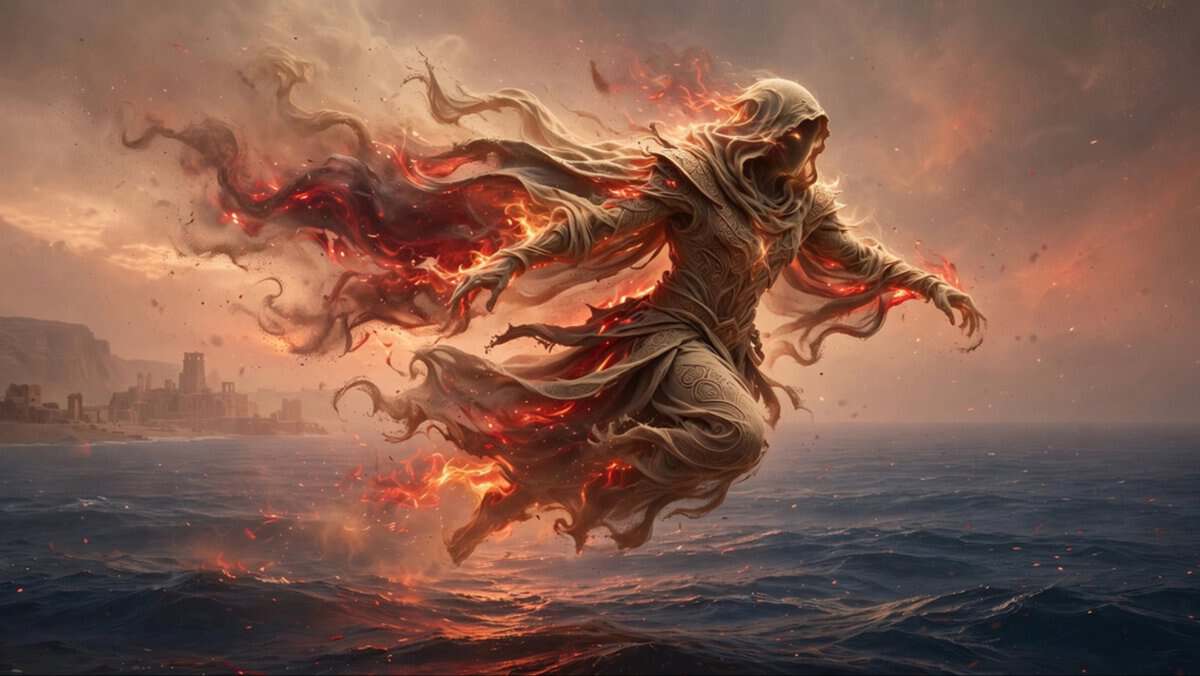
Islamic tradition offers an entire cast of jinn, each with its own reputation.
O Ifrit is probably the most recognizable. They are associated with fire and are very powerful. They’re also proud and are described in the Quran as part of the story of Solomon.
O Marid is another kind. They’re typically connected to the sea and vast open spaces. They’re boastful, powerful, and difficult to control.
O Si’lat are a shape-shifting kind. They’re often presented as women, known for their deception.
O Qareen are companions who are said to be assigned to each human at birth, whispering doubts and temptations throughout their life. So, like guardian angels, but bad.
Ghouls are separate creatures, but they’re also connected to this lore. They consume corpses and change their shape, and are typically found in graveyards.
9. Curses and Black Magic
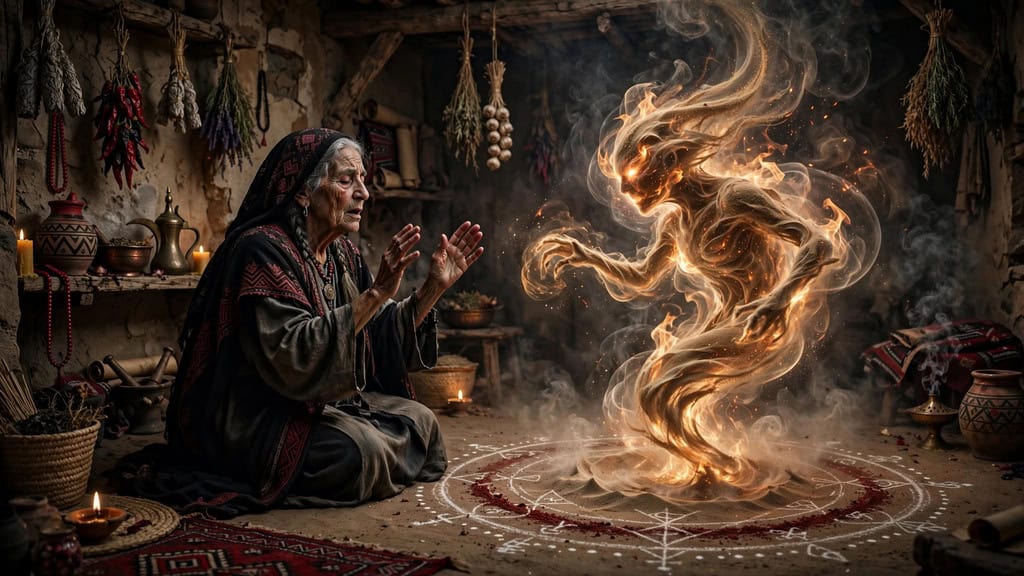
This is where the folklore gets scary.
In the Middle East and North Africa, black magic (sihr) works by summoning and binding a jinn, and bargaining so they would do your will.
Practitioners are said to use incantations, talismans, buried objects, and offerings to command illness, misfortune, breakup, or even possession of their target.
This belief system treats sihr as genuinely dangerous, specifically because it isn’t just symbolic intention.
It involves actual entities that have the power to make all these terrible things happen.
Sihr is a forbidden practice, just like black magic is forbidden in the West, but that doesn’t mean people don’t reach for it.
People frequently protect themselves by invoking the name of God throughout the day, saying Bismillah.
It’s done when entering a home, a bathroom, before meals, or when you have a negative thought.

A little Aquarius, devoted to writing and embroidery. Through my writing, I hope to empower readers to align with their true selves and navigate life’s mysteries with confidence.