
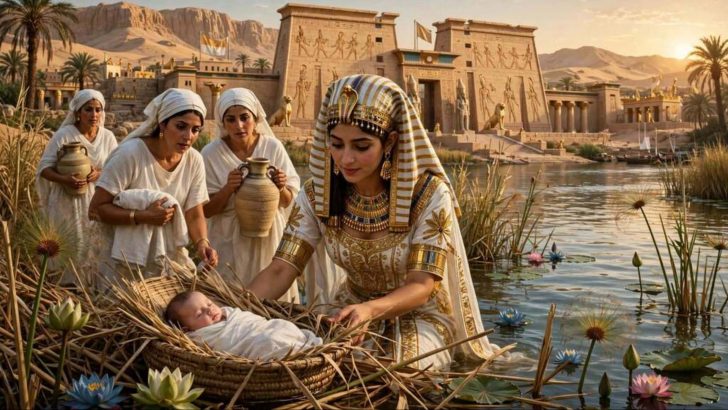
O story of Moses begins with the Pharaoh’s daughter, who takes pity on an innocent baby despite her father’s direct orders to kill all Hebrew boys.
Her name was Thermuthis.
However, Thermuthis wasn’t just someone’s daughter, savior, or wife. She was potentially a ruler of Egypt who left behind an incredible legacy!
1. Who Was Thermuthis?
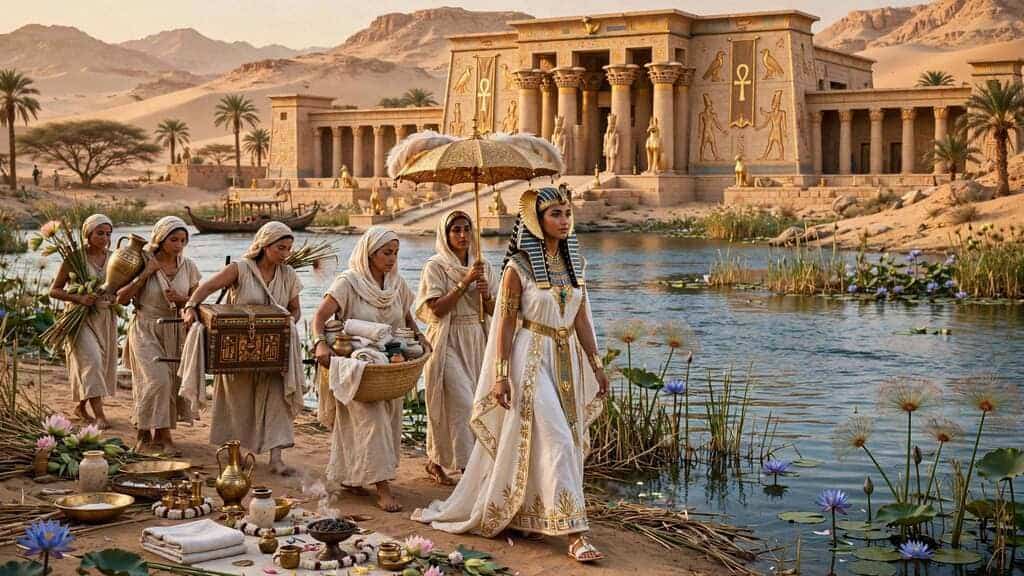
The name Thermuthis doesn’t actually appear in the Bible. It comes from Flavius Josephus’ book, Antiquities of the Jews (1st century).
Josephus calls her the daughter of the reigning Pharaoh, a woman without children of her own.
He describes her as walking along the Nile with her attendants when she discovered something strange floating in the water.
In Jewish rabbinic tradition, she goes by the name Bithiah or Bityah, which means daughter of god. That name shows up in 1 Chronicles, in a genealogy list.
Only later, Jewish sages connected her to the woman who saved Moses from the Nile.
So, depending on the source you choose to read, you can find this Egyptian princess under two names.
2. Finding Moses
Exodus 2 contains one of the most famous biblical stories.
Pharaoh had ordered every Hebrew baby boy killed at birth, worried the Israelites were growing too powerful in Egypt.
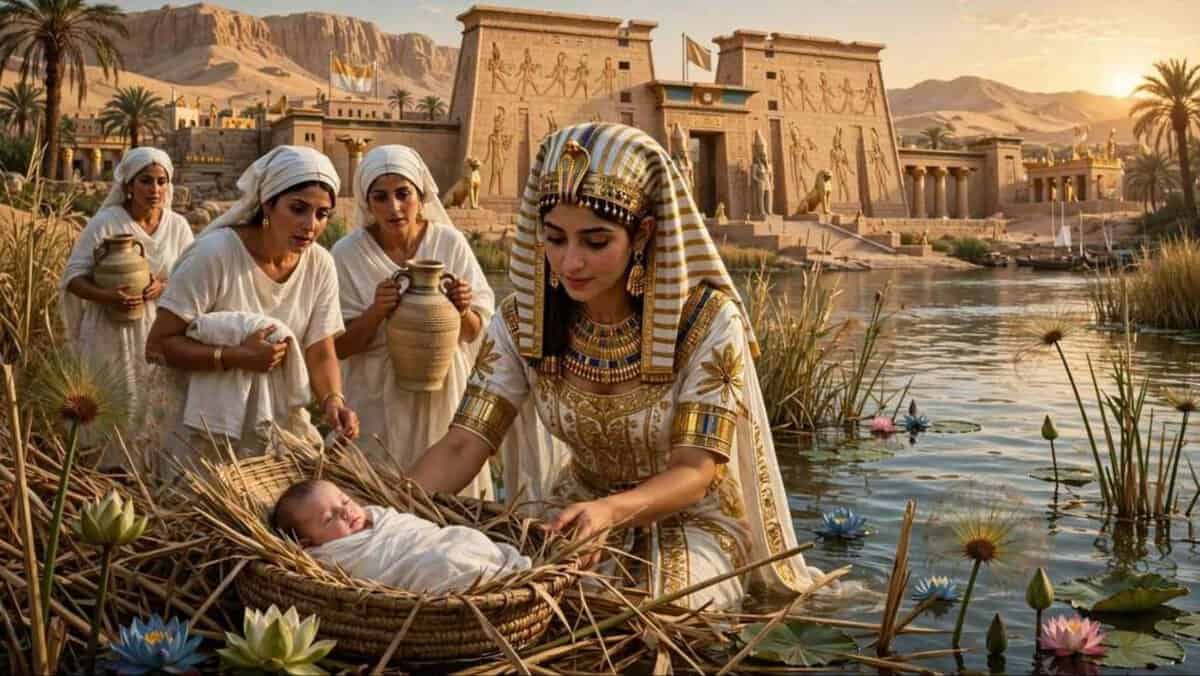
One mother took her chances. She hid her son for three months, then built a small basket, sealed it with tar, and set it afloat along the riverbank.
Then Pharaoh’s daughter arrived to bathe. Some sources claim that she frequently washed herself in the Nile to symbolically purify herself from Egyptian religion.
She noticed the basket and opened it to find a crying baby.
Thermuthis instantly knew that the baby boy was Hebrew, but her compassion won.
Without her kindness, there would be no Moses, no Exodus, and no nation breaking the chains of slavery.
What Thermuthis did was open defiance of a royal decree, issued by her own father.
Jewish tradition doesn’t downplay the risk either. Some sources describe her reaching out to grab the basket and being protected in the act.
Though she was an heir, she wasn’t a prophet or a general, so under the law, that decision simply wasn’t hers to make.
3. Raising Moses as Her Own
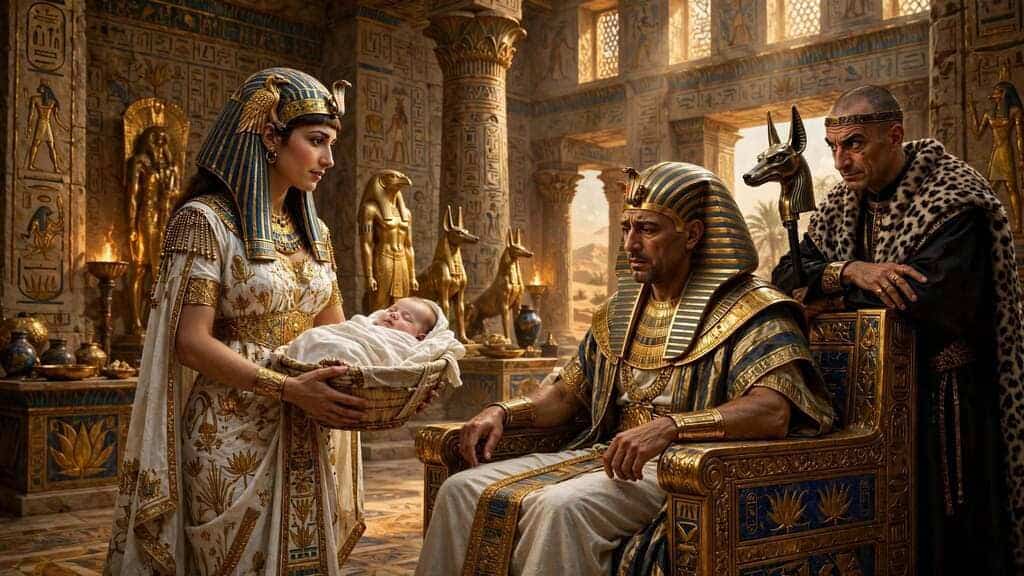
Once she decided to keep the baby, Thermuthis didn’t do it halfway. Exodus says that he became her son.
She named him Moses, explaining that she had drawn him out of the water, which is what the name means in Hebrew.
Josephus describes how she presented the baby to her father, who was delighted, even though a priest warned that the child could one day threaten Egypt’s throne.
The princess shielded him from harm, insisting that he would stay with her as her own child. Interestingly, the same source notes how Moses’s birth mother was unknowingly hired as his wet nurse.
So, Moses was raised by two mothers, existing between two identities from the very beginning!
Thermuthis turned a Hebrew baby boy into a prince of Egypt, with full rights and protection.
4. An Education Fit for a Prince
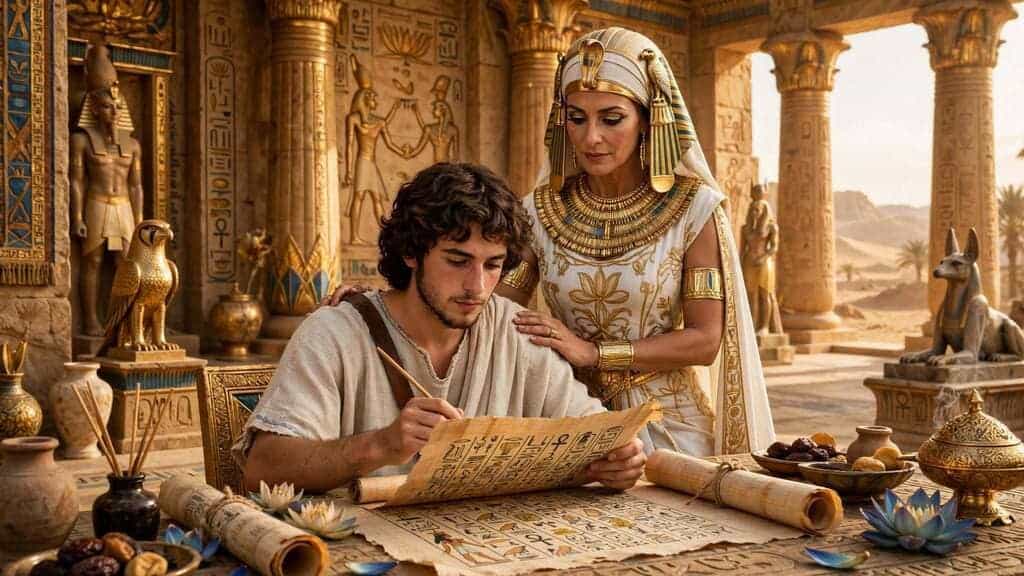
Growing up in the palace meant Moses received an elite education, the kind almost nobody of his birth could ever dream of!
The Book of Acts describes Moses as trained in all the wisdom of the Egyptians, skilled in both speech and action.
Egyptian royal education covered administration, law, rhetoric, military strategy, and religious knowledge.
He possessed all the knowledge to lead a kingdom and rule a nation.
Josephus also spoke of Moses commanding an Egyptian military campaign and protecting Egypt’s southern border.
All of this puts in perspective just how much Thermuthis did for Moses and his whole people!
Thanks to her, his leadership wasn’t improvised. It rested upon a foundation that she created for him.
5. Her Empathy for the Hebrews
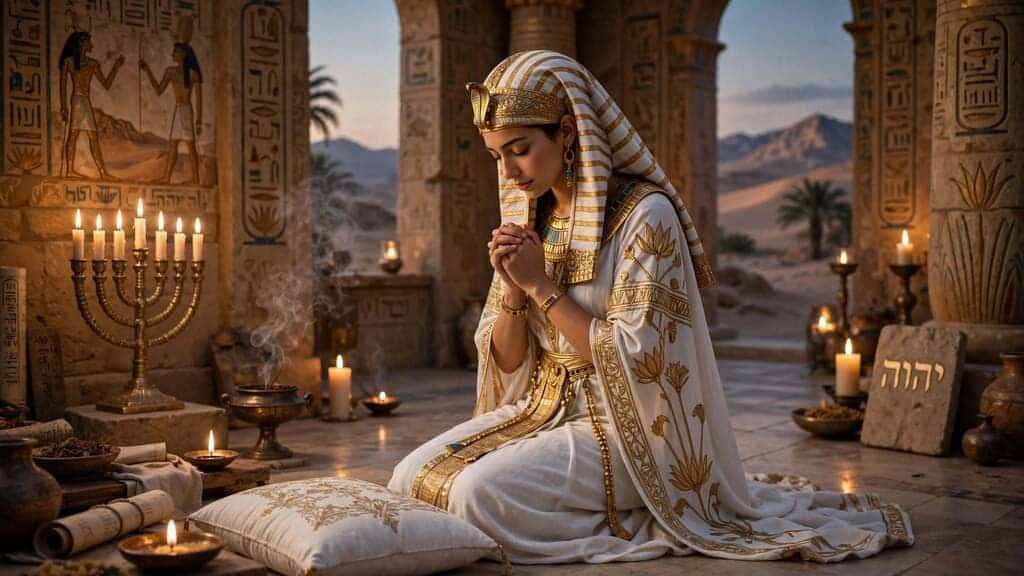
Thermuthis’s compassion didn’t end with Moses.
Both scripture and later Jewish tradition suggest she sympathized with the Hebrew people throughout her life.
It’s also said that she turned away from Egyptian idols and toward the One God, which could be why she was given the name Bityah.
Some traditions even count her among the righteous converts, people born outside Israel who chose its faith anyway.
If that were true, then she would be for Judaism what the Emperor Constantine was for Christianity, and deserves just as much recognition.
It’s also likely that her attitude allowed Moses to take care of his community because she had her protecting him.
6. Was She a Ruling Monarch?
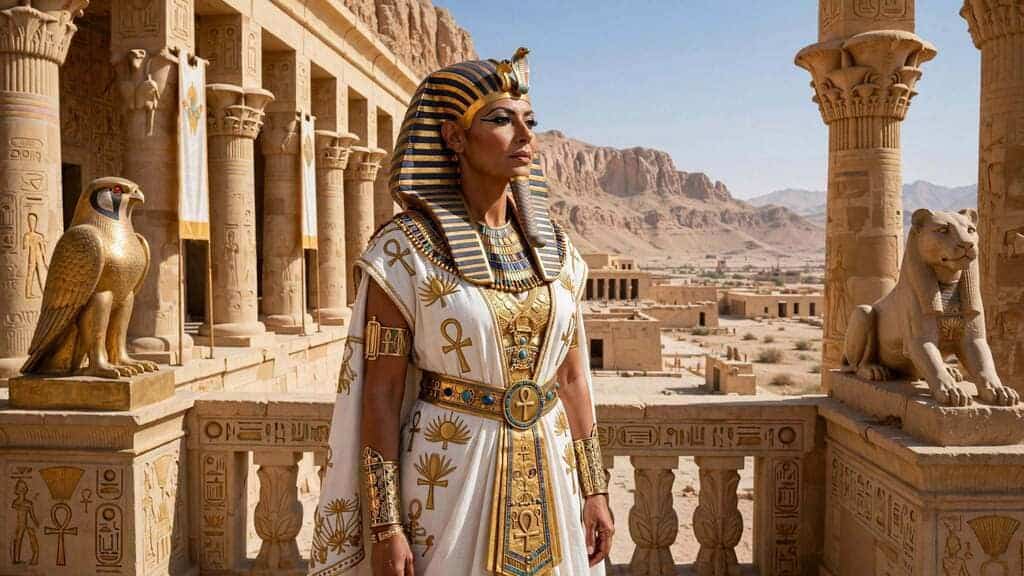
Neither Exodus nor Josephus ever claimed that Thermuthis was a pharaoh herself, just that she was a princess.
However, a separate historical theory connects her to Hatshepsut, one of the only women to rule Egypt as pharaoh in her own right, around the fifteenth century BC.
Hatshepsut’s real reign is well documented. She took power after her husband’s death, ruled as regent for her young stepson, then declared herself pharaoh. She even wore the ceremonial false beard!
Egypt was peaceful and prosperous under her rule, and she even built one of the most striking temples in Egyptian history at Deir el-Bahri.
Mainstream Egyptologists don’t accept the theory that she and Thermuthis could be the same person, but it’s still debated because there’s no proof that they weren’t, either.
7. Her Successor Turned on Israel

If Thermuthis really was Hatshepsut, then the pharaoh who ruled after her should be Thutmose III, her nephew and stepson.
He spent years in her shadow, and so after her death, he removed her name from all the monuments across Egypt and reinstated forced labor upon the Hebrew people.
He’s the pharaoh of the Exodus, the one Moses confronted. His army was destroyed at the sea while chasing the fleeing Israelites out of the country.
The same ruling family produced numerous tyrants, one compassionate princess, and then another tyrant.
Again, this connection rests on a disputed timeline, not any confirmed theory.
8. Her Story, In and Out of Scripture
No Bíblia, Thermuthis is unnamed but unmistakable. Her act of compassion set the entire liberation story in motion.
Outside the Bible, Josephus gave her a name, a personality, and a backstory involving palace intrigue.
Then, Jewish rabbinic tradition renamed her, calling her Bityah. It painted her as a righteous convert, even counting her among the handful of people who have entered paradise in this life.
Then, there’s the historical theory that connects her to Hatshepsut, one of the most powerful queens in history.
Even though she’s rarely at the center of this story, she remains unforgettable.

A little Aquarius, devoted to writing and embroidery. Through my writing, I hope to empower readers to align with their true selves and navigate life’s mysteries with confidence.