
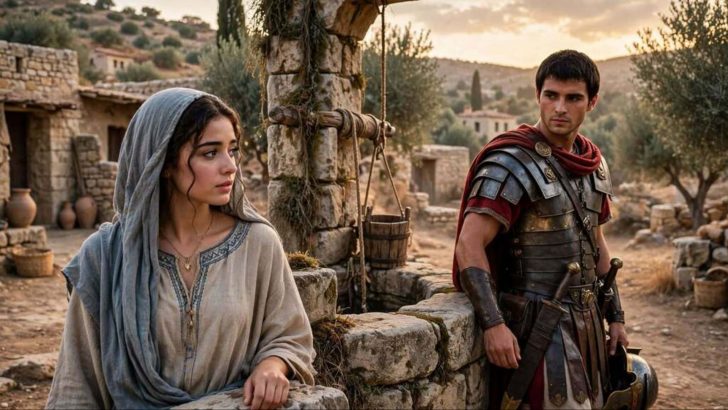
I recently came upon an ancient gossip that’s nothing short of blasphemous: Mary, mother of Jesus, wasn’t pregnant by the Holy Spirit, but by a very real Roman man.
Typically, when the miraculous birth é denied, skeptics only question the probability of such a thing; they rarely provide us with a name.
In this case, Celsus, one of the oldest and harshest critics of Christianity, gave us a name in his text, The True Word.
The name was Pantera.
1. How Skeptics View the Virgin Birth

Many people remain skeptical of the idea that Mary became pregnant with the Holy Spirit, and not only because it was miraculous.
The main reason is that only two of the four Gospels even mention it.
Mark, John, and even Paul’s letters, which were written earlier than any Gospel, say nothing of the divine conception.
You’d think that something like that would be the first thing they’d all want to bring up. To historians, this is a serious gap.
Skeptics also point to a translation issue in the Old Testament prophecy that Matthew leaned on.
The original Hebrew word almah simply means young woman, but in Greek, it was translated as parthenos, meaning virgin.
That single word could have influenced the entire belief.
Besides, virgin births weren’t at all uncommon in old pagan myths.
Demigods and heroes were constantly said to have been born of virgins, simply because this quality made them stand out among mortals even more.
This could mean that the virgin birth was simply a popular storytelling formula rather than an actual phenomenon.
2. Virgin Births Before Christ
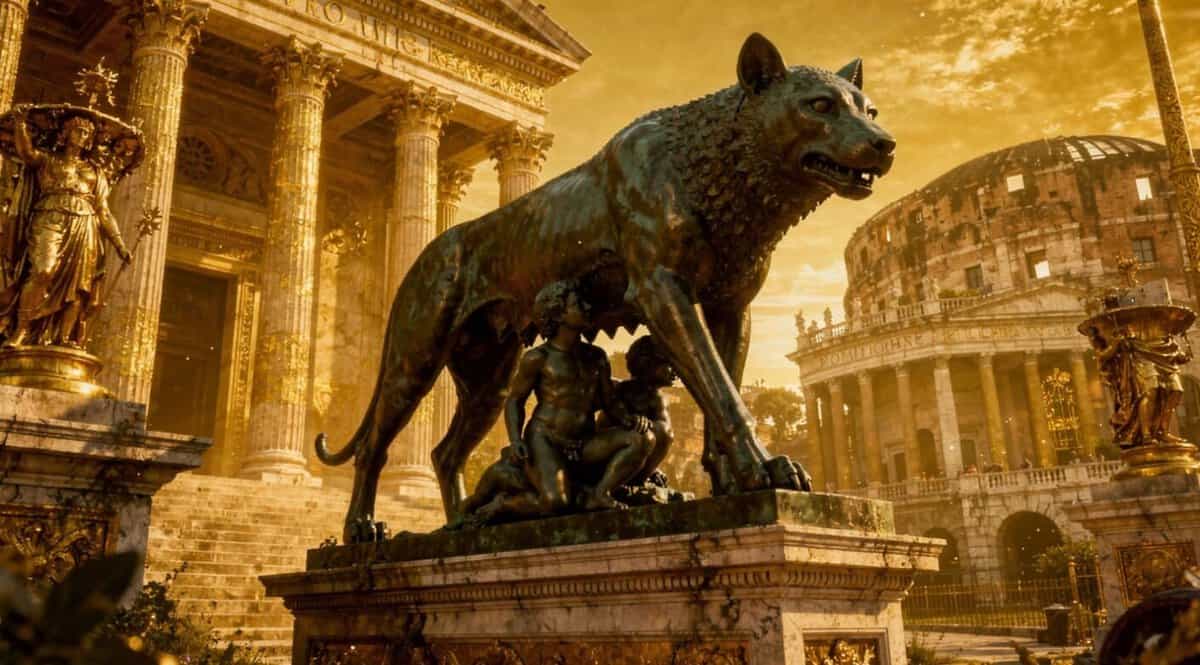
Ancient mythology is filled with miraculous conceptions that predate Mary and Jesus by centuries.
Perseus was supposedly conceived when Zeus visited Danaë as a shower of golden light. Isis magically conceived Horus after her husband Osiris died.
Buddhist tradition claims that Queen Maya dreamt of a white elephant and conceived the Buddha miraculously.
Persian tradition also speaks of Zoroaster this way.
Even Rome’s own founding myth claims that Romulus and Remus were born of a virgin priestess and Mars.
Alexander the Great‘s mother reportedly said that Zeus had visited her in the form of a serpent.
All of these beliefs make it clear that a virgin birth was a common way to elevate someone into a legend, not a literal truth.
3. Joseph’s Dilemma

According to the Gospel account, Joseph came home to find Mary visibly pregnant, and he knew for a fact that the child wasn’t his.
In the small community and the time they lived in, this was the biggest scandal anyone could imagine.
Joseph reportedly considered quietly ending the engagement since he didn’t want to publicly shame her.
However, an angel appeared to him in a dream and explained everything: not only was his wife faithful, but she was such a pure soul that God chose her as the mother of Christ.
Joseph was convinced and comforted by this, so he married Mary and raised the child as his own.
It’s a beautiful story of faith and trust.
But skeptics have a different take.
They focus on the fact that the situation would have been shameful for both Joseph and Mary, so it was expected of them to construct a story to save face.
4. Who Was Pantera?
So, where does a Roman soldier fit into any of this?
No 2nd century, the Greek philosopher, Celsus, wrote The True Word, in which he claimed that Mary had been thrown out by Joseph for adultery.
He cited a Jewish source and claimed that her lover was a Roman soldier named Pantera.
The True Word has been lost, but we know all of this because it was included in the rebuttal Against Celsus, by a Christian scholar named Origen.
Origen quoted specific paragraphs from The True Word so he could argue against them, and funnily enough, the slander against the Virgin Mary survived thanks to him.
Around the same time, rabbinic literature made similar claims. They sometimes called Jesus Yeshu ben Pantera.
5. Archaeology Proved He Existed
This is where the story stops being just a hateful rumor and gets more believable.
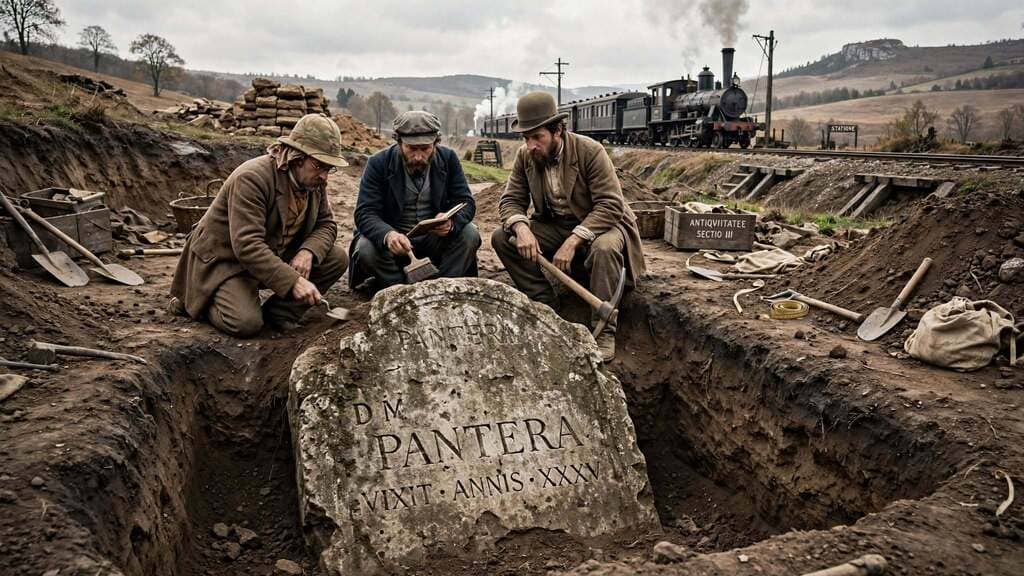
In 1859, railway workers were digging near Bingerbrück, Germany, when they found a set of Roman tombstones.
One belonged to a soldier named Tiberius Julius Abdes Pantera, born around 22 BC in today’s Lebanon.
His tombstone reveals that he served for forty years as an archer in a Roman military unit that used to be located in Judea. Later, it moved through Dalmatia and up to the Rhine.
Even more strangely, the timeline fits really well with Mary’s pregnancy and the birth of Jesus.
It’s very rare for an ancient rumor to have any concrete evidence to back it up, so Pantera’s tombstone produced many more skeptics.
6. Why Some Believe He Was Jesus’s Biological Father

Put all these pieces together, and you can see why some people find it easy to believe the rumor.
The Roman military unit was stationed in Judea at the right time. And both Jewish and Greek sources connect the man named Pantera to Mary and Jesus.
The theory was important enough for an ancient Christian scholar to devote an entire text to arguing it.
And despite censorship attempts, it has stuck around for nearly two thousand years.
Most rumors eventually fade away, so why didn’t this one?
7. Historians Push Back on This Slander of Mary

Still, mainstream historians mainly reject this theory as nothing but a rumor.
For one, Pantera was a common name among Roman soldiers, and it was found on several tombstones.
It’s also suspected that Yeshu ben Pandera might not have even been a reference to Jesus Christ because it’s often dated centuries after He lived.
Most historians agree that Celsus included the rumor in his text because it was essentially anti-Christian propaganda.
There’s also a linguistic wordplay that suggests Pantera might have been a jab aimed at Mary.
It could be a twist on the word parthenon (virgin), so instead of Jesus being the son of virgin, he’s called the son of Pantera.
None of this means that all historians believe in the miraculous conception; they simply reject the idea that a Roman soldier Pantera was Jesus’s real father.
8. Between Myth, Slander, and Faith

So, where does this leave us?
Sure, historians don’t believe that Pantera was necessarily the one who fathered Jesus Christ, but honestly, there’s no proof that he didn’t, either.
The truth is, we don’t know. Maybe Pantera was a real man, and maybe he even had a connection with Mary.
Maybe his name was just a result of a pun someone made to offend Mary in Greek.
Or, it could all just be a simple rumor that circled the small community faced with the claims of a divine conception.
For believers, this doesn’t affect the spiritual meaning of the virgin birth. And for skeptics, it’s just another proof of how human and messy those early stories about Jesus were.
Whatever really happened two thousand years ago, this mistério is too fascinating to be forgotten anytime soon.

A little Aquarius, devoted to writing and embroidery. Through my writing, I hope to empower readers to align with their true selves and navigate life’s mysteries with confidence.