
Some mountains seem to pull the sky down around them.
They rise above pilgrim roads, old forests, and entire belief systems, carrying stories far older than modern climbing.
And at these seven peaks, the highest point is not always the point.
1. Mount Kailash Is Meant to Be Circled, Not Conquered
At Mount Kailash, the journey goes around—not up.
The 6,638-meter peak in western Tibet is sacred to Hindus, Tibetan Buddhists, Jains, and followers of Bon.
The same summit carries a different meaning in each faith, but all four treat it as far more than a difficult piece of rock.
Pilgrims complete a roughly 52-kilometer circuit around it, known as a kora or parikrama. The route crosses thin air and a pass above 5,600 meters. But reaching the summit is not part of the ritual.
Climbing permission is not given, and there is no recognized ascent. The old tradition is to circle Kailash on foot.
The respectful act is to move around the mountain, look toward it, and leave its upper slopes alone.
2. Machapuchare Was Left 150 Feet Short
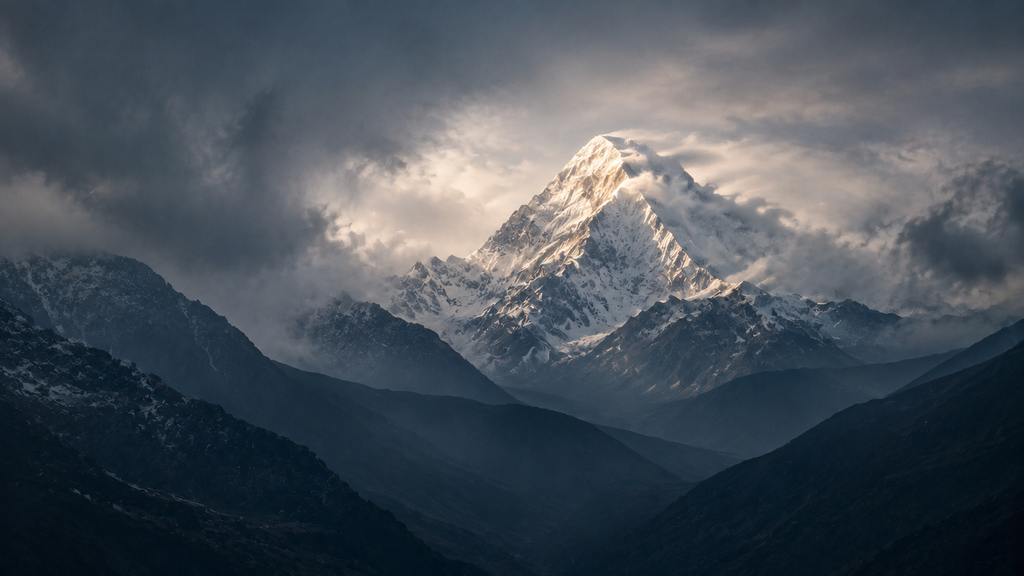
Machapuchare looks almost designed to tempt climbers. Its twin summit creates the famous “fishtail” shape above Nepal’s Annapurna region, dominating views from around Pokhara.
But the mountain is officially closed.
The closest confirmed attempt came in 1957. A British team led by Jimmy Roberts received special permission to climb, with the understanding that the true summit would remain untouched.
Wilfrid Noyce and David Cox made it to within about 150 feet of the top—and then turned around.
They were close enough to finish. But they kept their word. The American Alpine Club’s account still describes how difficult it was to get that far.
Machapuchare is sacred to local communities and is often connected with the Hindu god Shiva. Nepal has not opened it to later expeditions, and the country’s tourism board describes climbing as prohibited.
Its best-known ascent story is really a story about stopping.
3. Bhutan Closed Gangkhar Puensum Completely
Gangkhar Puensum rises to about 7,570 meters in Bhutan, near the border with Tibet. Guinness World Records lists it as the highest unclimbed mountain on Earth.
And barring a major policy change, it will stay that way.
Several expeditions tried and failed to reach the summit during the 1980s. Then Bhutan changed the rules.
In 1994, the country banned climbing on mountains higher than 6,000 meters out of respect for spiritual beliefs. In 2003, it stopped mountaineering altogether.
High peaks are seen as homes of deities and spirits, and not empty spaces waiting for somebody to plant a flag.
Even the name carries that feeling. Gangkhar Puensum is commonly translated as “White Peak of the Three Spiritual Brothers.”
This is not just a mountain that defeated every team. It belongs to a country that decided getting to the top was not worth disturbing what people believe lives there.
4. Wollumbin’s Summit Track Is Closed
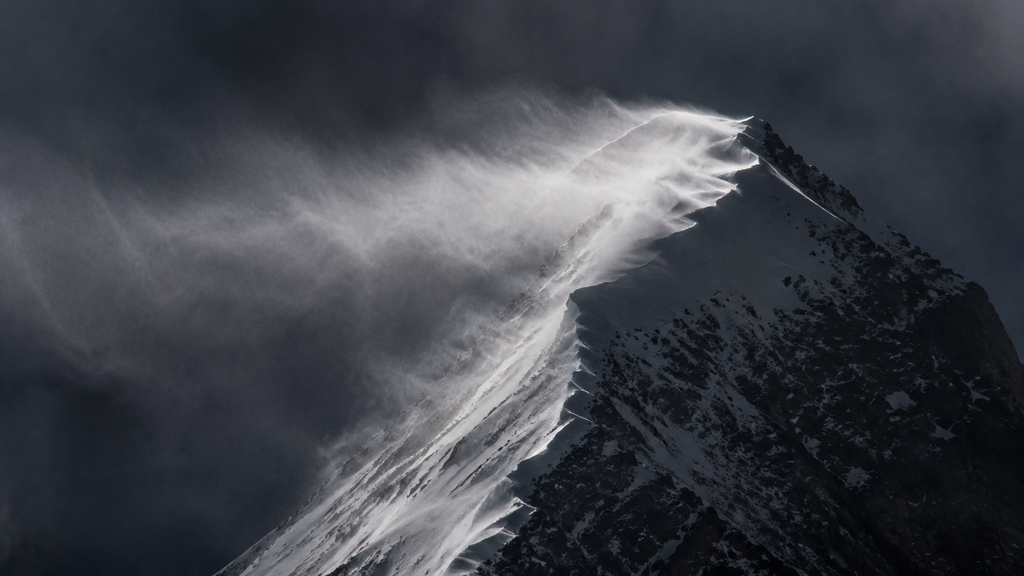
Wollumbin, also called Mount Warning, rises from the green landscape of northern New South Wales, Australia.
Its summit is sacred to the Bundjalung people, and the area was declared an Aboriginal Place in 2014.
The summit track and summit are closed until further notice, and penalties can apply to anyone who ignores the closure.
Wollumbin is highly significant to Aboriginal people, and guests are asked to respect their wishes and not climb.
But staying off the summit does not mean pretending the mountain is not there.
Nearby Border Ranges and Nightcap national parks offer wide views of it. A lower track and some visitor facilities remain open too.
Wollumbin can still be seen and appreciated—just without treating its most sacred place like another lookout to check off a list.
5. Mount Ōmine Still Bars Women
The restriction at Mount Ōmine in Japan is different from the others. It doesn’t apply to everyone.
Women are still told not to enter the sacred route leading to Ominesan-ji temple.
A sign at the trailhead marks the boundary, while men continue toward a summit that has served as a Shugendō training site for around 1,300 years.
Shugendō is a mountain-based religious tradition built around demanding physical practice. The rough route, steep rocks, and isolation are part of the training.
And yes, the ban on women remains controversial, but the restriction is still there, and Japan’s official tourism site states it directly.
There is also a nearby alternative with a very different rule. Mount Inamuragatake welcomes both women and men and is recognized as an official Shugendō training site for women.
Two sacred peaks, close together—and two completely different ideas about who may climb.
6. Khangchendzonga Keeps Its Final Few Feet
Khangchendzonga, on the border of Nepal and the Indian state of Sikkim, is the world’s third-highest mountain. It has been climbed many times, but its true summit has traditionally been left alone.
That custom began with the first ascent in 1955.
Joe Brown and George Band reached the top ridge after promising Sikkim’s ruler that they would not step on the highest point.
They stopped about five feet below it. A second pair arrived the next day and did the same.
Khangchendzonga is understood as the home of a guardian deity. UNESCO describes the surrounding landscape as a sacred hidden land in Buddhist tradition and as Mayel Lyang to the Lepcha people.
The Indian side is closed to climbing, while expeditions still approach from Nepal. And not everyone has respected the final-step tradition.
The boundary may be only a few feet wide, but it is anything but small.
7. Taranaki’s Summit Is Not a Pedestal
New Zealand’s Taranaki Maunga comes with one of the most specific requests on this list.
The climbing route remains open, and the Department of Conservation gives detailed advice for reaching the crater and summit area.
But climbers are asked not to stand directly on the summit peak. Camping, cooking, toileting, and littering there are also off limits.
For Taranaki Māori, the mountain is a mauri, or life force, and a spiritual tupuna—an ancestor.
In 2025, New Zealand formally recognized the mountain and surrounding landscape as a legal person called Te Kāhui Tupua.
You can climb high and cross the crater. But when you arrive, the respectful move is to stand beside the top, not on it.
