
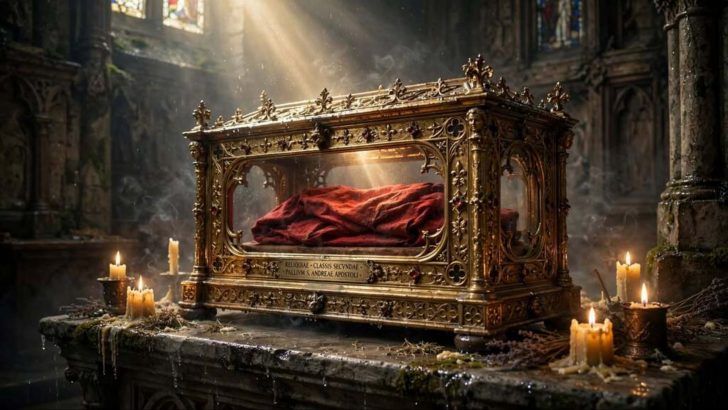
Relics have been treasured since the earliest days of the Church.
They are sacred objects connected to the saints. They represent the saints’ union with Christ and the miracles they performed through Him.
The Church organizes relics into three classes, and each one reveals how important an object was to the saint.
1. First Class Relics: Parts of the Saint’s Body
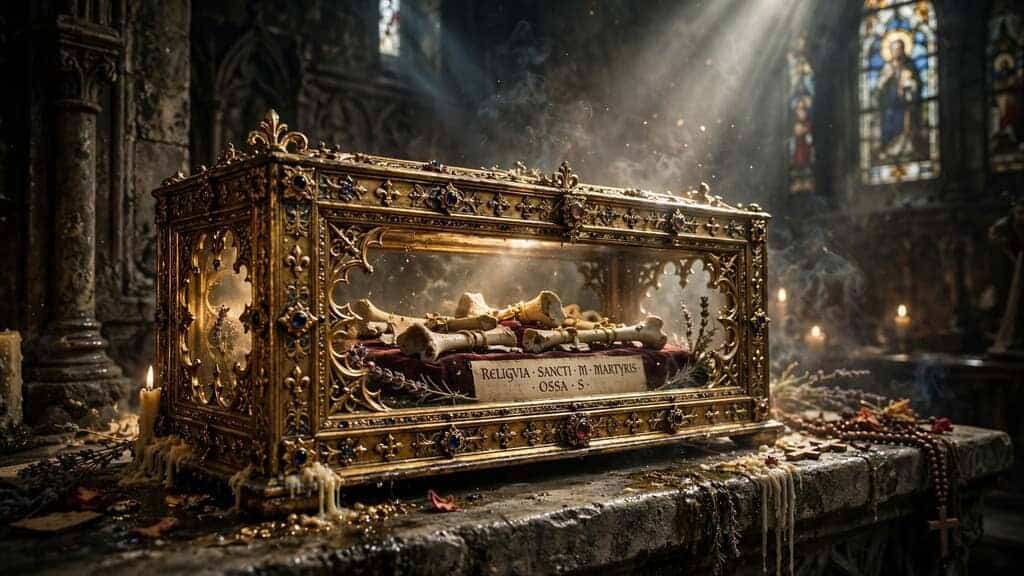
First class relics are the highest category, and they’re the actual remains of the saint’s body.
They’re the first because nothing about them is symbolic or borrowed.
They’re parts of the saint’s own corpo that worked and suffered for faith.
Another reason these remains are so important is that they root the devoted spirit into something tangible. After all, the saints served God in real flesh and blood.
Every hour of their holy lives lived through that body, which is why certain denominations consider them carriers of God’s will, and not idols.
These are the relics of a life given completely to Christ!
2. The Most Precious Form
As I already mentioned, the importance of a relic is determined by how closely it was related to the saint, and it doesn’t get closer than this.
Second and third class items are connected to a holy person through something else: an object or a contact.
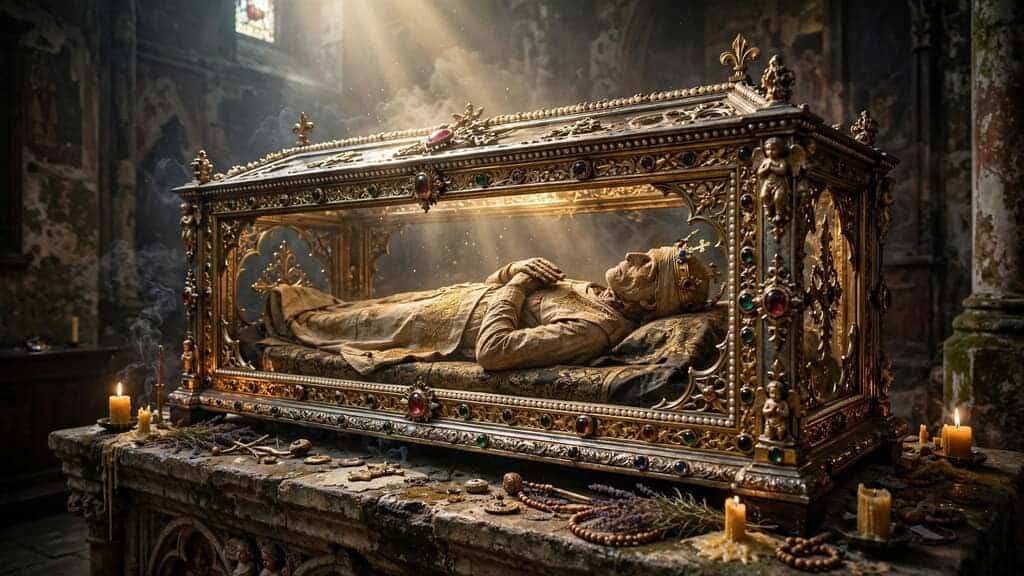
Usually, first class relics are kept in beautiful reliquaries in major monasteries and churches.
The cases where the remains are kept are often very ornamental, decorated with gold, and crowned with a cross.
The cross is a crucial detail because it confirms that the saint’s holiness comes from Christ, not any personal power.
Christians who believe in saints do so with Christ in mind. Every praise and honor of the saint is ultimately given to Him.
So, when you look at them, don’t just settle for seeing embalmed remains. Look beyond that: parts of a real person touched by His Grace.
3. Bones, Hair, and Blood
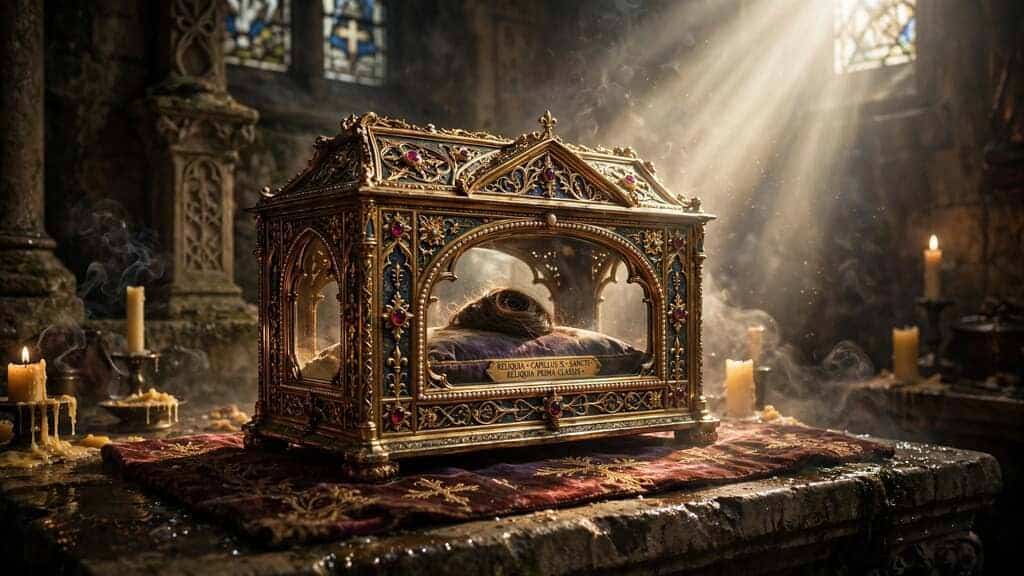
So, what does a first class relic actually look like?
It can be subtle, like a preserved lock of hair ou fragments of bone. These are, by far, the least perplexing holy remains.
It can sometimes border on grotesque, especially if you’re unused to seeing such holy objects.
Skulls, blood, embalmed hands and even whole bodies are also encountered, though rarely.
Many saints and martyrs have endured a terrible fate because they refused to give up Christ.
Also, many of them lived in ancient times, and the early Middle Ages, so smaller fragments were all that could be saved.
Historical wars and conquests also led to the destruction or theft of major saint remains.
4. Second Class Relics: Articles Used by the Saint
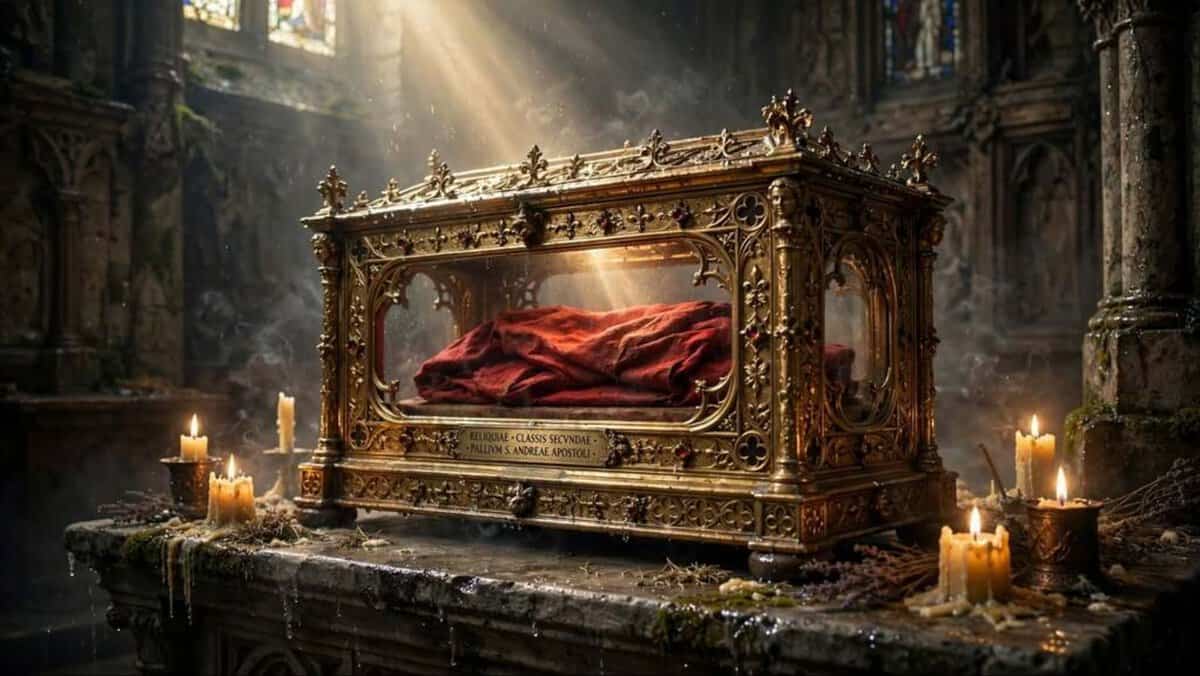
Second class relics are easier to digest because they’re material objects that belonged to the saint or were used by them during their lifetime.
It’s the items they held, wore, carried, or relied on day after day.
Though they’re inanimate objects, they carry the marks of the person who used them. Much like our favorite books and sweaters carry a piece of us.
Now imagine an object that someone clung to as they pursued holiness, typically their whole lives. Every crease tells the story of devoção e sem fim oração.
This is what makes these items so touching.
5. The Objects That Witnessed Holiness
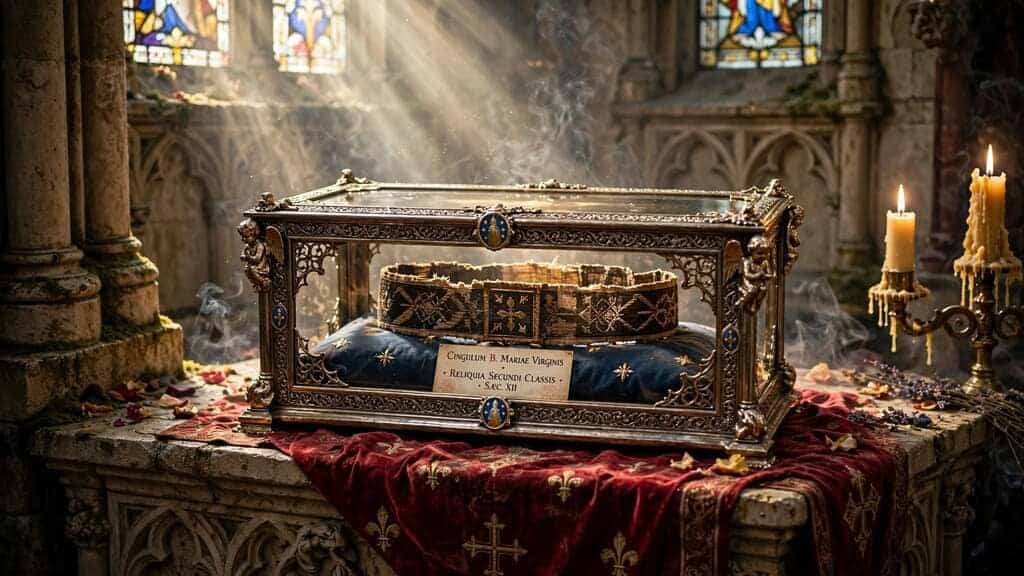
These objects are important because the Church sees them as direct witnesses to the saint’s santidade.
Each article testifies that a holy life was led.
This also ties to the holiness of the objects that belonged to Jesus Christ. Anything that His hand touched is considered holy by association.
This very concept is applied to saints.
Through the saint, Christ’s love and inspiration have touched these objects, which is why they’re holy.
6. Clothing, Books, Rosaries, and More
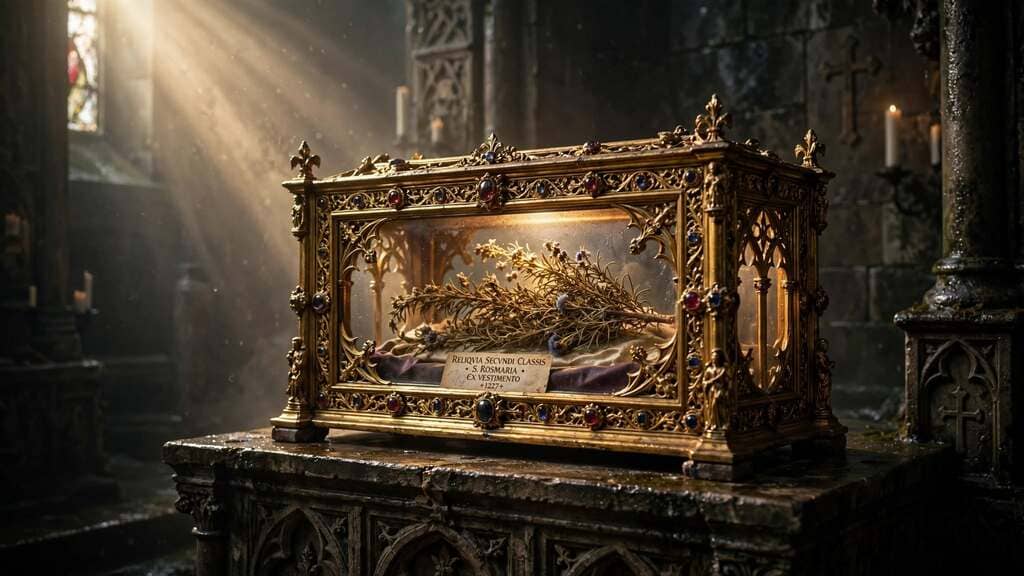
So, what exactly counts as a second class relic?
Clothing is a major one.
It can be a simple piece of clothing that the saint wore daily, especially if they were ascetic, though there are also ceremonial robes if the saint in question was an important presence in the Church.
A livro is another. A worn-out Bible speaks of the saint’s devotion to living a godly life.
There are also various other personal objects, such as a ring ou um walking stick!
You might notice how ordinary all of these items are. None of them are dramatic, but they all point to a life devoted to Christ.
That’s the message these objects leave us with.
7. Third Class Relics: Objects Touched by a Relic
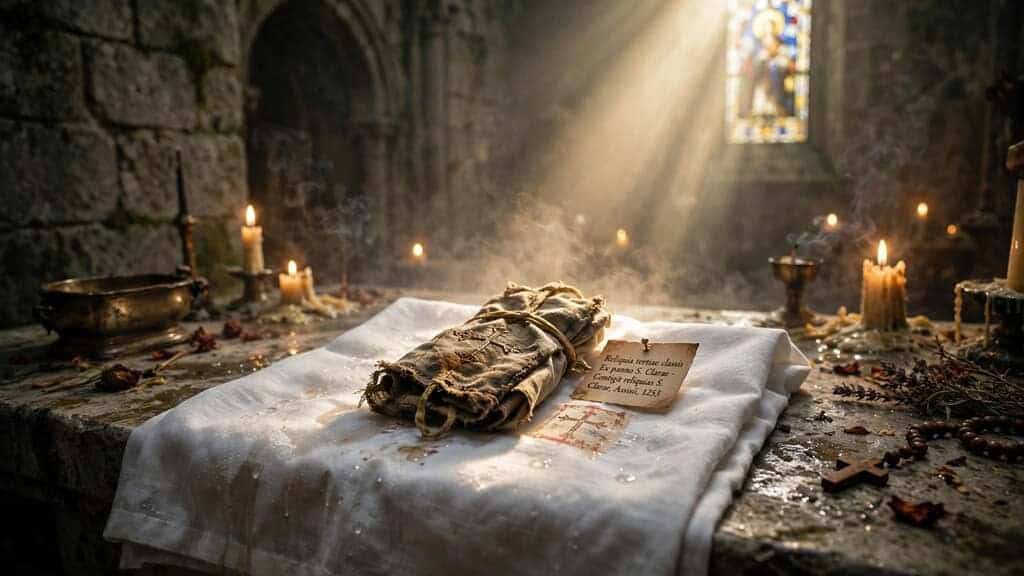
Third class relics are much more accessible and ordinary.
These are items that have been in contact with a first or second class relic, and so they share the holiness.
For instance, just a couple of months ago, the Belt of the Blessed Virgin Mary was brought to Belgrade, Serbia, prompting people from all over the country to come pay their respects and pray.
The Belt has been placed on a white fabric, which, by association, became holy itself.
Countless people have been able to take a tiny piece of this fabric home, to keep it for protection.
This helps them feel as though the saint is with them throughout the day, hearing their prayers and mediating between them and God.
8. Not the Relic Itself
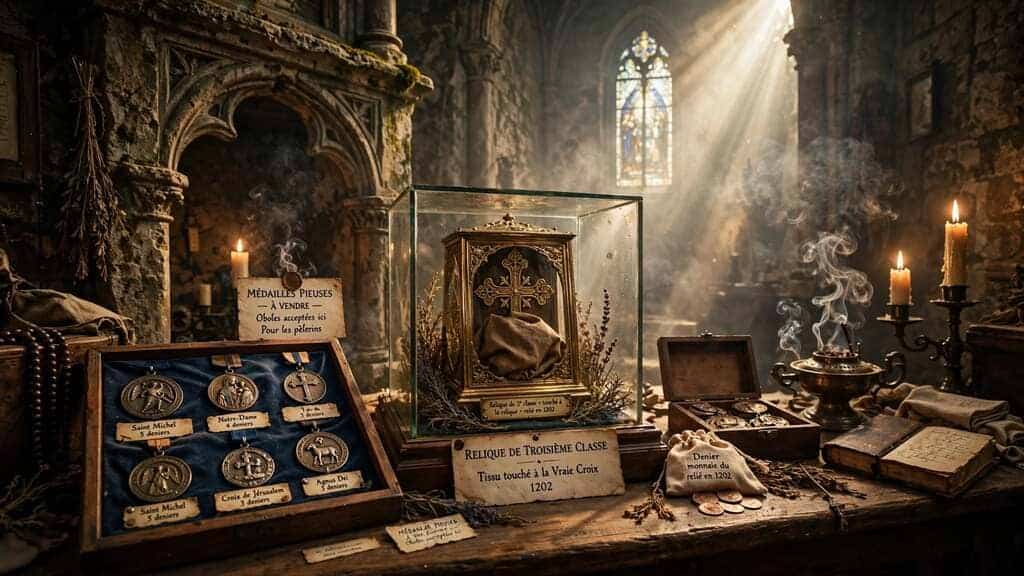
The Church takes this distinction very seriously.
Third class relics aren’t ancient; they haven’t been used by the saint. Typically, they’re ordinary objects, such as the backing fabric I mentioned earlier.
All the meaning these objects carry comes from contacto with something holy.
Third class meant that the items are the furthest from the saint, but that’s not a bad thing because it means that they’re closer to us.
Precisely because they’re holy only through contact, believers are allowed to keep them.
9. Cloths, Papers, Medals, and Crosses
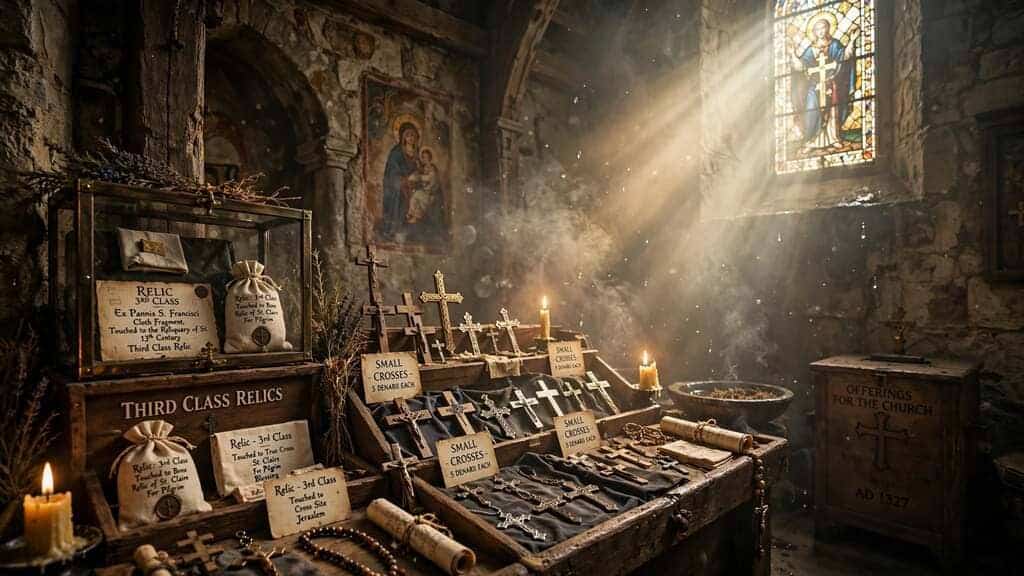
We already went over one type of a third class relic. Some others might include papers that touched a major relic, medals, or small crosses.
These are all humble things that help us feel actually connected to the saint.
All three classes exist for a reason, and the denominations that venerate saints take them seriously.
They’re not memorabilia or idols, but witnesses to God’s power to inspire a holy life.

A little Aquarius, devoted to writing and embroidery. Through my writing, I hope to empower readers to align with their true selves and navigate life’s mysteries with confidence.