
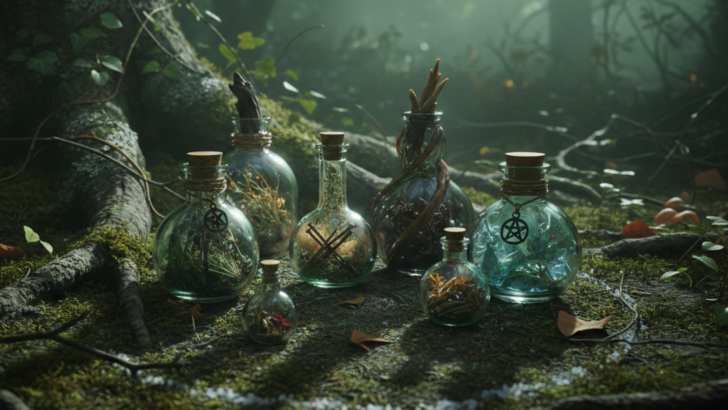
If you think old American houses only hide squeaky floorboards and forgotten family heirlooms, think again.
Some hide something far stranger. Deep under doorsteps, beneath fireplaces, or tucked inside walls, archaeologists keep discovering mysterious glass bottles filled with strange ingredients.
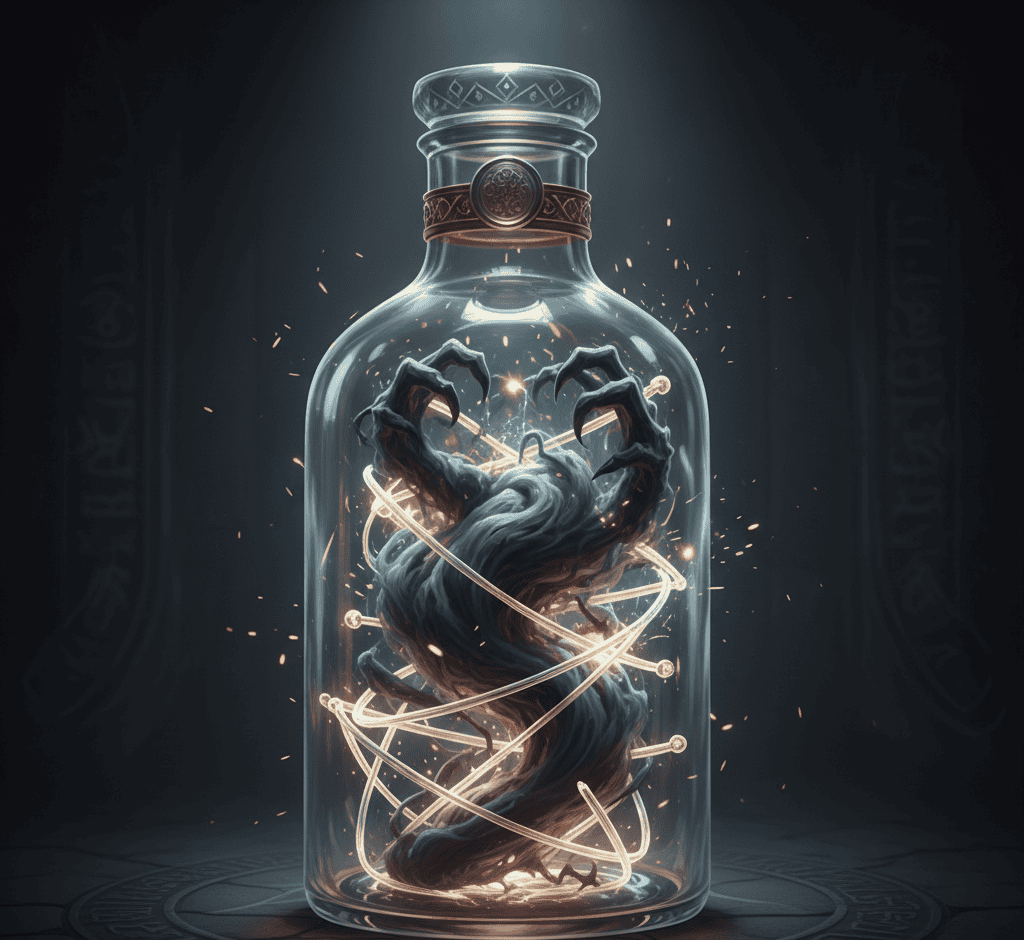
Nails. Hair. Pins. Rolled up papers. Even urine. These are witch bottles, protective charms carried from Europe to the early American colonies.
They were never meant to be seen by the living. Their job was simple. Trap evil. Stop the curses. Guard a home from the unseen.
Today, we dig through history and explore why early settlers made these bottles, what they put inside them, and how these hidden spells reveal the fears and beliefs of a world long gone.
Old World Magic Brought to the New
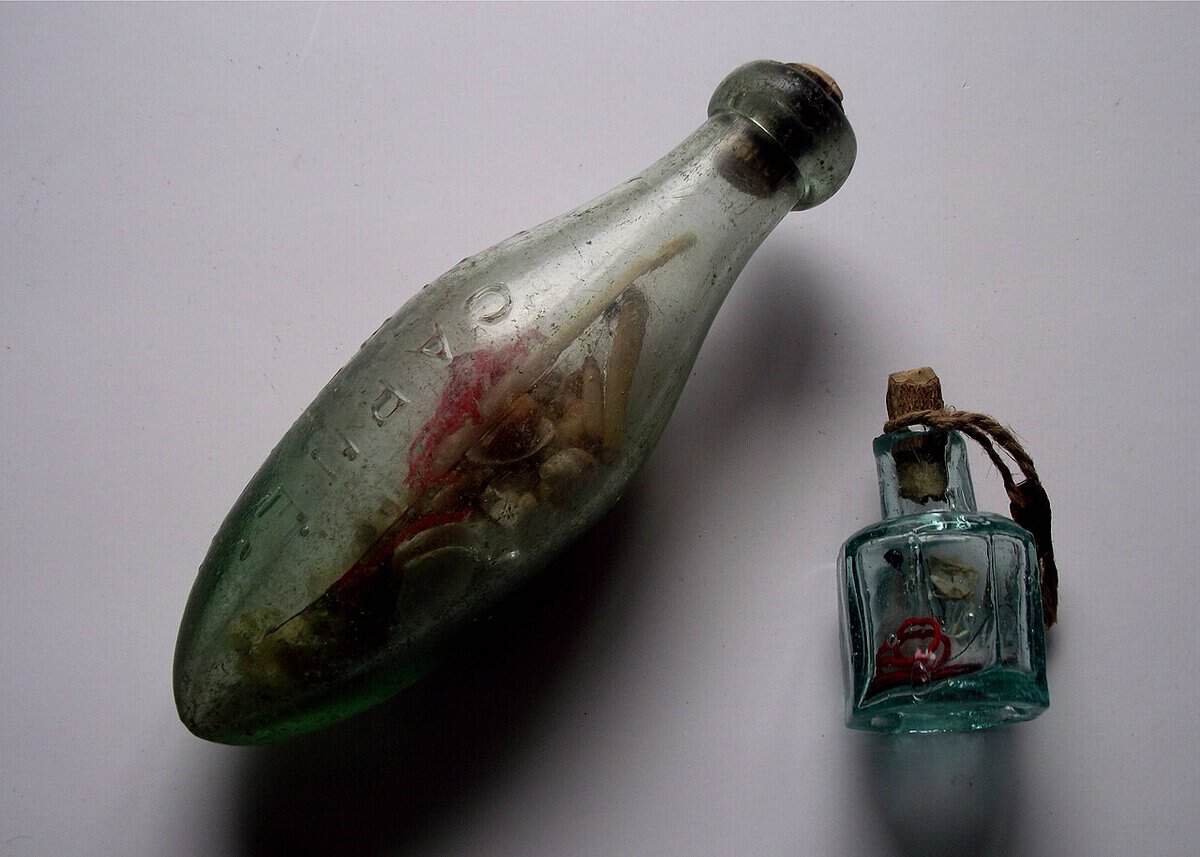
Witch bottles did not begin in America. They had deep roots in England, where superstition and folk magic were a normal part of everyday life.
People believed curses could travel through the air or slip under doors like a draft. They worried about witches sending sickness, bad luck, or strange accidents.
And because no one had modern science to explain these events, people turned to protective charms.
When English settlers crossed the ocean and built new homes in an unfamiliar world, their fears followed them.
The forests were dark and filled with unknown creatures. Winters were harsh. Illness spread quickly. Every shadow looked suspicious.
So the settlers used the magic they understood. They made witch bottles and buried them in their foundations.
As long as the bottle stayed hidden, they believed no curse could enter the house.
These bottles were not decorations. They were weapons in the battle against the supernatural.
What Settlers Put Inside a Witch Bottle
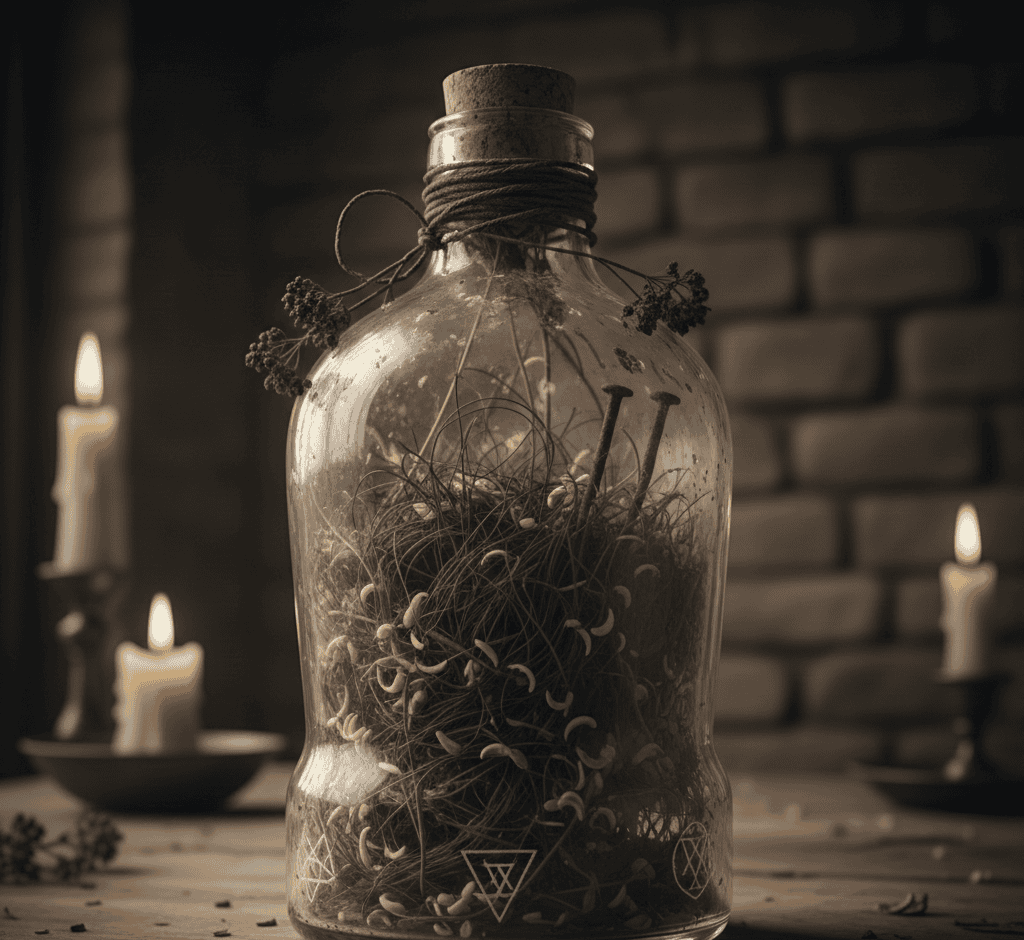
Witch bottles were never random collections of items. Every ingredient had meaning. Iron nails and pins trapped harmful magic.
Hair or nail clippings created a link to the homeowner. Liquid inside the bottle mixed with personal materials, confused or blocked a curse.
Some bottles contained red thread or cloth for protection. Others held ashes or herbs believed to stop evil spirits.
The strangest ingredient was urine, and it was also the most common. People believed a curse needed a target, and by adding their own bodily fluid, they made the bottle irresistible to the harmful magic.
The curse would attack the bottle instead of the person. Once inside, the nails and pins would “stab” or weaken the evil until it died.
As strange as it sounds today, this was considered powerful folk magic. It blended fear, hope, and belief in forces that could not be seen.
Settlers were practical people, and if a charm promised protection, they used it.
Some witch bottles were simple clay jugs. Others were delicate blue or green glass. Regardless of shape or material, all served the same purpose. Keep danger out.
The Houses That Still Guard Their Secrets
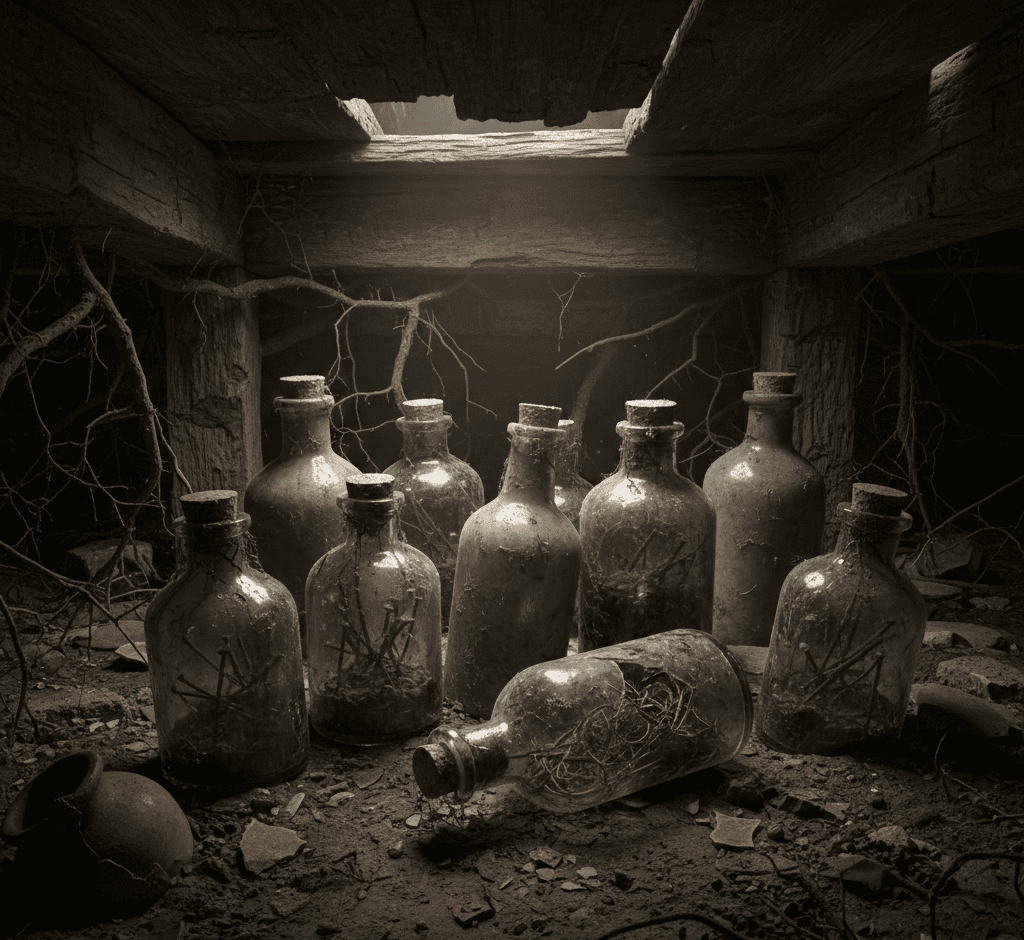
Modern archaeologists have discovered witch bottles in surprising places. Some were found under colonial homes during renovations.
Others sat inside old chimneys where they rested for hundreds of years. One bottle discovered in Virginia contained pins, nails, and a mysterious liquid.
Another found in Pennsylvania held dozens of rusted objects packed tightly together. Each discovery gives researchers a glimpse into the fears and beliefs of early settlers.
What makes these finds even more fascinating is how carefully they were hidden. People placed bottles at spots where they believed evil entered a home.
Under the front door. Beneath a hearth. Behind walls near windows. These locations acted like spiritual gateways. The bottle served as both shield and trap.
Many bottles stayed hidden simply because no one wanted to disturb them. Families moved out. New families moved in.
Houses were rebuilt or expanded. The land changed, but the bottles stayed buried. For centuries, they did their silent work.
Finding one today is like finding a message from a world where the supernatural was not just possible. It was expected.
The Legacy of Witch Bottles Today
Even now, witch bottles continue to spark curiosity. Historians see them as evidence of early American superstition.
Folklorists view them as precious examples of folk magic. Homeowners sometimes keep discovered bottles in place rather than remove them.
Some fear that breaking them might invite bad luck. Others simply respect the history they represent.
In recent years, modern practitioners of folk magic have revived the tradition. They make new witch bottles using updated ingredients and different intentions.
Some use them for protection. Some for luck. Some for emotional healing. The spirit of the practice lives on, though in gentler and more symbolic forms.
Witch bottles remind us that the past never disappears. It hides in basements, under floorboards, and behind walls, waiting to be found.
They also remind us that people throughout history shared the same desire. To feel safe. To protect their homes. To guard their families from harm, even if the danger was invisible.

Sempre senti uma forte ligação com o Divino desde o meu nascimento. Como autora e mentora, a minha missão é ajudar os outros a encontrar o amor, a felicidade e a força interior nos momentos mais sombrios.