

Long before humans looked up at the stars and imagined stories among the constellations, there was Baraqel, an angel said to have taught the first people how to read the heavens.
In mystical and apocryphal texts, Baraqel is described as a teacher, a guide, and a messenger who brought cosmic knowledge to humanity.
His lessons went beyond simple observation. He showed humans how the stars, planets, and celestial cycles influence life on Earth, offering a system of understanding that linked the heavens to human fate.
Baraqel’s story is rarely told in mainstream religious texts, yet he remains a figure of fascination for scholars, mystics, and those curious about the roots of astrology.
The Gift of the Stars
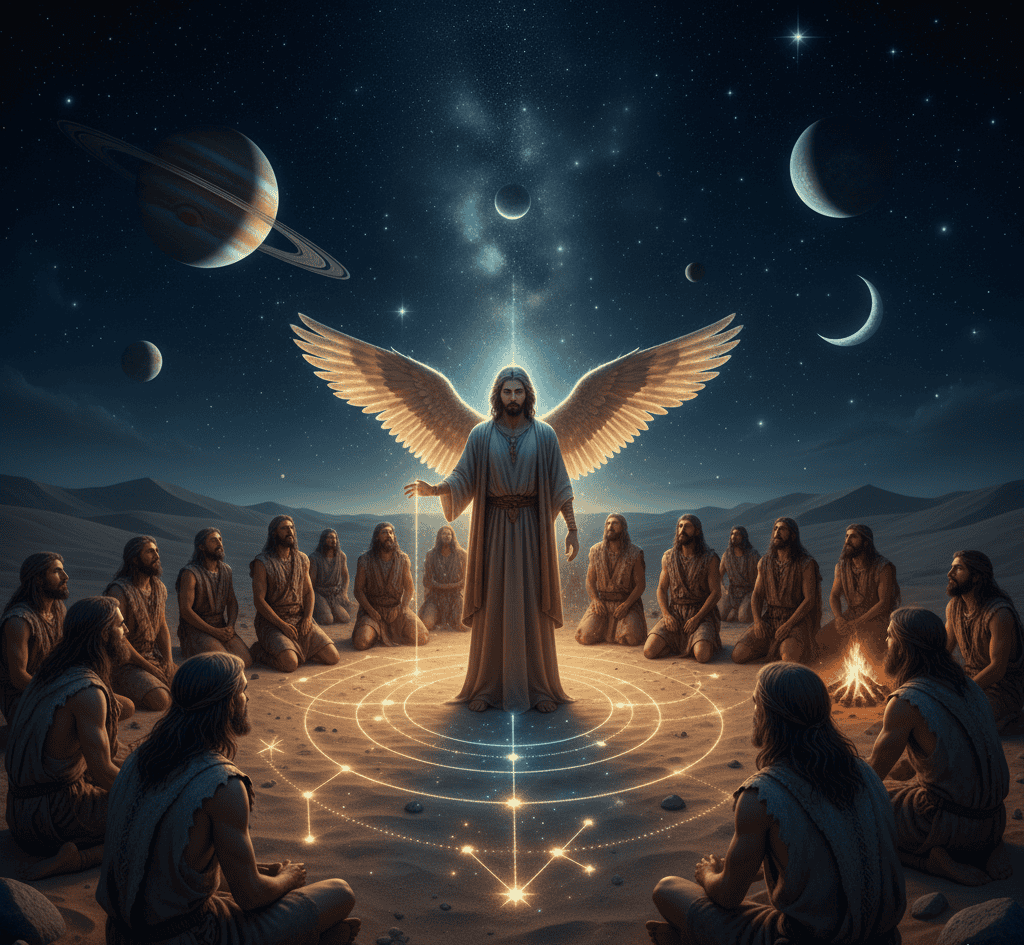
According to legend, Baraqel was one of the angels assigned to watch over human development.
Unlike many angels who delivered divine messages or enforced cosmic law, his mission was educational.
He introduced humans to the patterns of the sky, explaining that the movements of planets and stars were not random.
They followed divine order, and by studying them, humans could gain insight into time, seasons, and personal destiny.
Baraqel’s teachings were considered revolutionary. Humans had observed the stars for survival, tracking seasons for planting and harvesting.
Baraqel went further, revealing patterns that connected individual lives to the cycles of the heavens.
Ancient texts describe him drawing intricate diagrams in the sand, showing the relationship between celestial movements and human events.
His lessons combined mathematics, observation, and spiritual wisdom, forming the foundation of what later became astrology.
Mystics and researchers emphasize that Baraqel’s teachings were intended to empower humans, not to grant absolute control over fate.
Astrology, as he taught it, was a language of the cosmos, a way to interpret patterns rather than predict outcomes with certainty.
By understanding these connections, humans could live in harmony with natural rhythms and divine intention.
The Knowledge Before the Fall

Baraqel’s story is closely tied to the period before the fall of certain angels, often called the Watchers.
These beings were assigned to guide humanity, but some overstepped boundaries, sharing forbidden knowledge or taking human wives.
Baraqel, in contrast, is remembered as a benevolent teacher who acted within divine limits.
He instructed humans carefully, ensuring that knowledge was passed responsibly.
Some scholars believe that Baraqel’s teachings were overshadowed by the actions of the fallen angels.
While the Watchers introduced dangerous secrets that corrupted humans, Baraqel focused on knowledge that elevated rather than harmed.
Astrology became a tool for understanding the divine order, connecting humans to the cosmos without tempting them into rebellion.
In this way, Baraqel’s work contrasts sharply with the forbidden arts spread by other angels, highlighting the difference between guidance and interference.
Whistleblowers and mystical researchers suggest that fragments of Baraqel’s knowledge persisted in secret traditions.
Ancient civilizations, from Babylon to Egypt, preserved astrological systems that may have been inspired by his teachings.
Even as the fallen angels’ influence spread, Baraqel’s lessons survived, embedded in charts, symbols, and the enduring human fascination with the night sky.
Astrology as a Spiritual Language
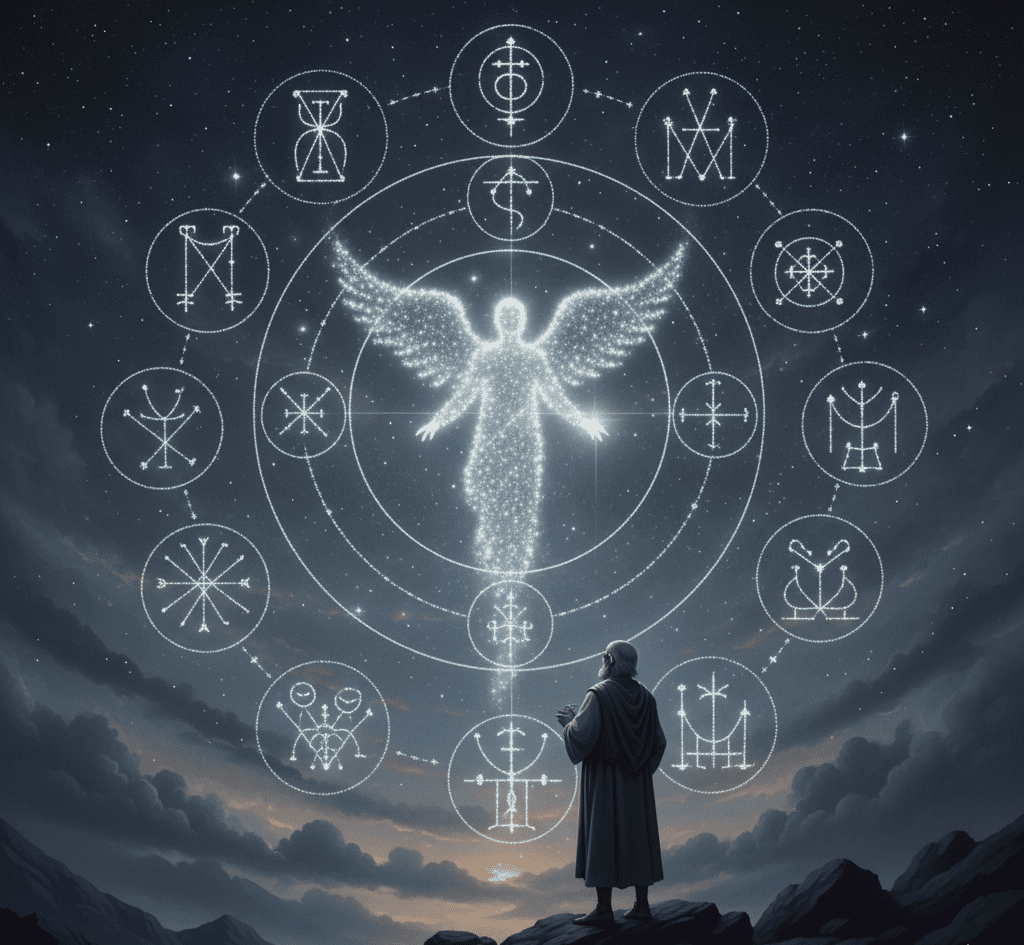
Baraqel’s approach to astrology was more than technical. He emphasized its spiritual dimension, teaching that the stars reflected divine patterns rather than simply predicting events.
Each planet, constellation, and movement had symbolic meaning, offering guidance for moral decisions, personal growth, and harmony with the natural world.
This perspective turned astrology into a form of communication between humans and the divine, a symbolic language through which the cosmos could teach and inspire.
Mystics who study Baraqel’s legacy argue that this method of teaching is consistent with angelic communication.
Just as angels often speak in symbols rather than words, astrology conveys guidance through patterns rather than direct instruction.
The stars are a message, a map, and a reminder that humans are part of a larger, interconnected reality.
In this sense, Baraqel’s gift was not merely practical knowledge, but a way to cultivate awareness, reflection, and respect for the order of the universe.
Some whistleblowers studying ancient texts suggest that Baraqel’s teachings were meant to balance human curiosity with caution.
He provided insight without empowering humans to break divine law. Astrology became a tool for understanding, not a weapon.
This distinction may explain why his legacy is often overlooked, overshadowed by stories of angels who tempted or corrupted humans.
The Lasting Influence of Baraqel

Even today, Baraqel’s influence can be felt in the widespread human fascination with the heavens.
Astrology continues to inspire millions, shaping personal reflection, cultural practices, and even scientific curiosity about the cosmos.
Whether interpreted as mystical, psychological, or symbolic, astrology remains a tool for connecting humanity to patterns beyond immediate perception.
Baraqel’s role as a teacher reminds us that knowledge can be empowering when delivered with responsibility and care.
In addition, Baraqel’s story highlights the importance of intention behind knowledge. Angels, as messengers and guides, do not simply provide information.
They teach, guide, and protect, ensuring that the gifts of learning are used wisely.
By studying the stars, humans are invited to participate in a dialogue with the universe, to observe patterns, and to reflect on their place in creation.
Baraqel’s legacy encourages humility, curiosity, and respect for both knowledge and cosmic order.
Some modern mystics believe that Baraqel’s teachings are still accessible through study, meditation, and observation.
The principles of astrology, when approached with reflection and ethical intention, echo the lessons he delivered.
They remind humanity that learning is a sacred process, that curiosity must be tempered with wisdom, and that the cosmos communicates in ways that are subtle but profound.
Ultimately, Baraqel represents the role of the angel as teacher, guide, and guardian of knowledge. His story challenges simplistic views of angels as messengers or warriors.
He demonstrates that divine guidance can be gentle, instructive, and transformative.
By teaching astrology before the fall, Baraqel connected humanity to the stars, offering insight, understanding, and a pathway to align with the natural and spiritual order of the universe.
His example continues to inspire those who seek knowledge not for power, but for wisdom, reflection, and a deeper connection to the cosmos.

Sempre senti uma forte ligação com o Divino desde o meu nascimento. Como autora e mentora, a minha missão é ajudar os outros a encontrar o amor, a felicidade e a força interior nos momentos mais sombrios.