

Among the many mysterious creatures described in the Bible, few are as fascinating as Behemoth.
Mentioned in the Book of Job, this powerful being is portrayed as enormous, untamable, and created by God as a display of divine strength.
Scholars, theologians, and curious readers have debated its identity for centuries.
Some believe it represents a real animal known in the ancient world, while others see it as a symbolic creature meant to demonstrate God’s unmatched power.
Over time, Behemoth has become a figure of legend, inspiring art, literature, and theological discussion.
Whether viewed as literal or symbolic, the creature remains one of the most intriguing biblical mysteries.
Here are ten important things to know about the biblical Beast Behemoth.
1. Behemoth Appears in the Book of Job
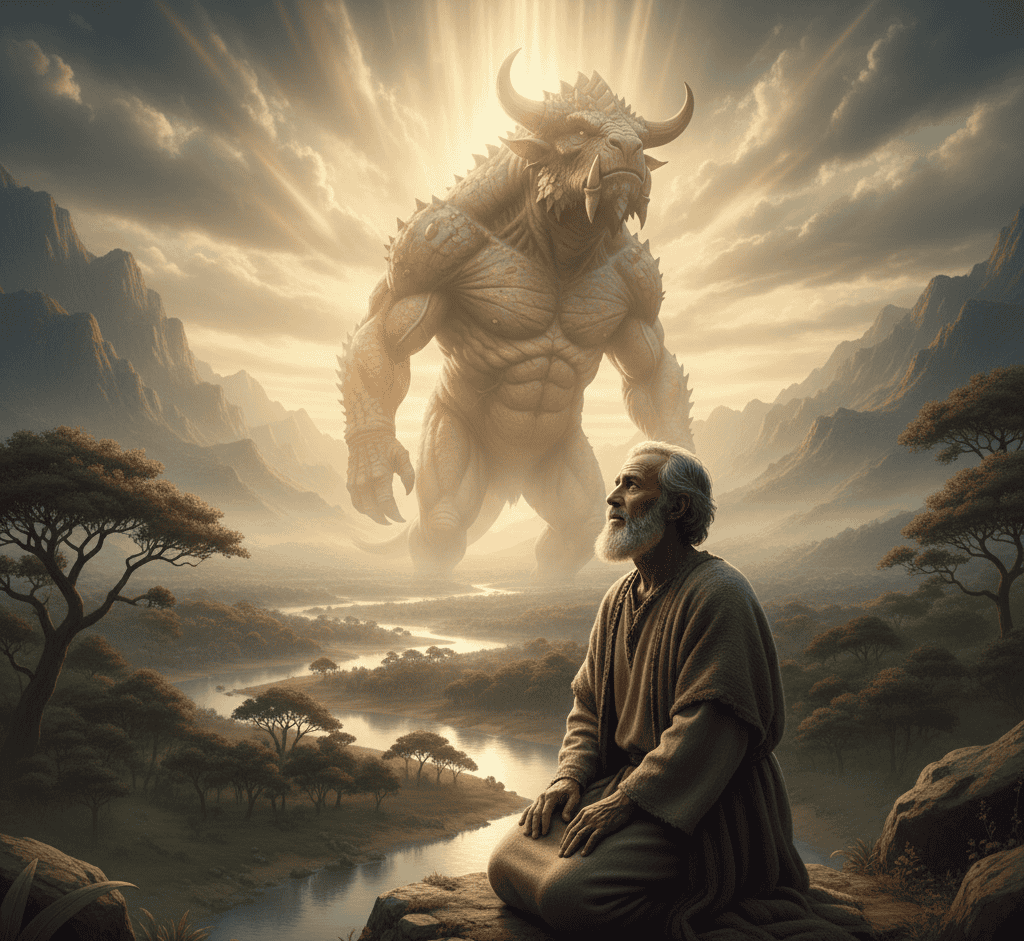
Behemoth is described in the Book of Job, specifically in chapters 40 and 41, where God speaks to Job about the wonders of creation.
The creature is introduced as one of God’s greatest works, powerful and beyond human control.
Its mention comes during a moment when God challenges Job’s understanding of the universe. By describing Behemoth, the text emphasizes divine authority and human limitation.
The creature is not presented as evil but as part of God’s creation. Its role in the narrative is to demonstrate strength and majesty that only the Creator fully commands.
2. The Name Means “Great Beast”

The word “Behemoth” comes from a Hebrew term that suggests a large or powerful beast.
Interestingly, the form of the word is plural in Hebrew, which some scholars interpret as a way of expressing greatness or intensity.
Rather than meaning multiple animals, it likely emphasizes the creature’s enormous size and power.
This linguistic detail adds to the mystery surrounding its identity. The unusual name contributes to the creature’s legendary status, making it stand out among other biblical animals.
Even its title alone suggests something far greater than an ordinary wild beast.
3. It Is Described as Extremely Powerful

The biblical description portrays Behemoth as having immense strength, particularly in its muscles and bones.
Its bones are compared to bronze, and its limbs to iron bars. These comparisons highlight durability and solid power rather than fragility.
The text emphasizes that no human can easily overpower or capture it.
This focus on physical strength reinforces the idea that Behemoth represents the limits of human control over nature.
The dramatic imagery makes the creature seem almost indestructible, adding to the awe inspired by its presence in scripture.
4. Some Believe It Was a Hippopotamus

One common interpretation is that Behemoth refers to a hippopotamus. The animal’s size, plant-based diet, and strength match parts of the biblical description.
The text mentions that it eats grass like an ox, which supports this idea. Additionally, the hippopotamus lived in regions familiar to the ancient Near East.
However, certain features in the passage do not perfectly match a hippopotamus, leading some scholars to question this identification.
While the hippo theory remains popular, it does not fully explain every detail in the description.
5. Others Suggest It Could Be an Elephant

Another theory identifies Behemoth as an elephant. Elephants are large, strong, and impressive animals known in the ancient world.
Their powerful bodies and thick limbs fit some aspects of the description in Job. However, like the hippopotamus theory, this explanation also has limitations.
Certain details in the text, such as references to habitat and tail description, do not clearly align with an elephant.
These uncertainties keep the debate alive among scholars and theologians who continue to examine the passage closely.
6. Some Interpret It as a Dinosaur

In more recent centuries, some readers have proposed that Behemoth could describe a dinosaur.
They point to the mention of a tail that “moves like a cedar,” suggesting something larger than the tail of a hippo or elephant.
This interpretation is popular among certain groups who believe the Bible may reference prehistoric creatures.
However, mainstream biblical scholarship generally views this claim as speculative.
The dinosaur theory reflects modern attempts to connect ancient texts with scientific discoveries, even though strong historical evidence for this link is lacking.
7. It Symbolizes God’s Creative Power

Many theologians believe Behemoth is less about identifying a specific animal and more about symbolizing God’s power.
In the context of Job, the creature demonstrates that humans cannot fully understand or control creation.
By presenting such a massive and untamable being, the text reinforces the theme of divine wisdom and authority.
Behemoth becomes a reminder of human limitations and the greatness of the Creator. This symbolic interpretation focuses less on biology and more on the message within the story.
8. It Is Paired with Leviathan

In the Book of Job, Behemoth is often mentioned alongside another mysterious creature called Leviathan.
While Behemoth is associated with land, Leviathan is connected to the sea. Together, they represent powerful forces within creation that only God can master.
This pairing strengthens the dramatic impact of the passage. The two creatures highlight different aspects of nature’s might and unpredictability.
Their combined presence adds depth to the message about divine control over all realms of existence.
9. Behemoth Is Not Portrayed as Evil

Unlike some mythological monsters, Behemoth is not described as wicked or destructive by nature. It is simply powerful and beyond human control.
This distinction is important because it shows that strength alone is not equated with evil in the biblical text.
Instead, Behemoth is part of the natural order established by God. Its existence reflects balance within creation rather than chaos.
This understanding helps clarify its role in the Book of Job as a teaching example rather than a villain.
10. The Mystery Continues to Inspire Debate

Despite centuries of study, the true identity of Behemoth remains uncertain. Scholars continue to analyze language, context, and historical background in search of clearer answers.
At the same time, readers from different traditions interpret the creature in ways that align with their beliefs.
Whether seen as a hippopotamus, elephant, dinosaur, or symbolic representation, Behemoth continues to spark curiosity.
Its powerful description ensures that it remains one of the Bible’s most intriguing creatures, inviting each generation to explore its meaning and mystery.

Sempre senti uma forte ligação com o Divino desde o meu nascimento. Como autora e mentora, a minha missão é ajudar os outros a encontrar o amor, a felicidade e a força interior nos momentos mais sombrios.