

The question of whether Jesus of Nazareth was a real person still gets raised periodically.
Some people believe He was the Savior, others believe He existed but wasn’t divine, and some even suggest He never existed!
Among historians, it’s treated as a fact that the preacher from Galilee truly existed, simply because the evidence is overwhelming.
Here are the accounts that prove Jesus Christ actually lived in the 1st century!
1. Tacitus Mentions Him
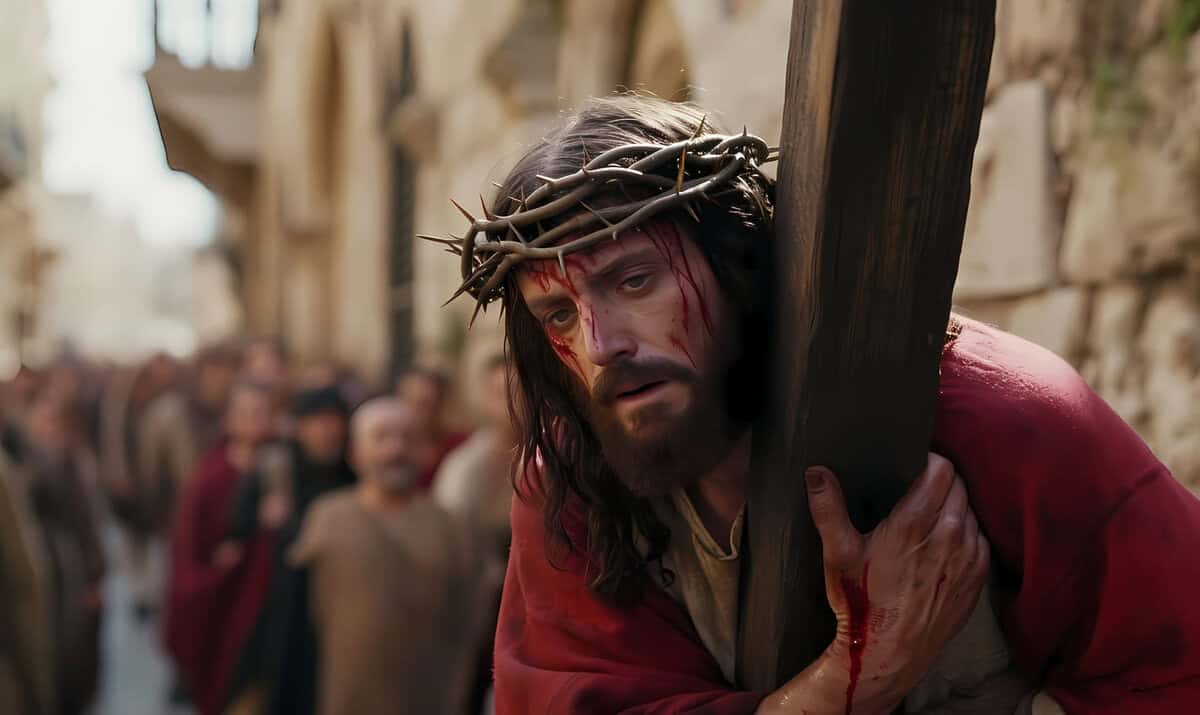
Tacitus is considered one of the most reliable Roman historians, and in his Annals (116 AD), he makes a reference to Jesus.
Historians treat this as one of the most important non-Christian sources.
Writing about the great fire of Rome in 64 AD, Tacitus describes how Emperor Nero blamed the Christians to avoid taking responsibility.
Tacitus explains how Christians owe their name to Christus, who suffered the extreme penalty at the hands of Pontius Pilatus.
Clearly, the execution of Christ is treated as a known fact.
Tacitus also describes Christianity as a superstitious cult, so he definitely had no interest in making up proof that Christ existed.
2. Josephus References Him Twice

Flavius Josephus was a first-century Jewish historian. In his work, he references Christ twice.
Around 93 AD, he described Him as a wise man who “worked surprising feats” and was crucified under Pilate.
Now, Josephus wasn’t a Christian, so he wouldn’t refer to Jesus as Christ, so using this name reveals later Christian editing.
Arabic and Syriac versions of the passage also lack these Christian additions.
These additions added some bias to the text, so not all historians accept the passage as legitimate.
However, Josephus’ other reference to Him is accepted as a fact; while describing the execution of James, he describes him as “the brother of Jesus who was called Christ.”
3. Paul’s Letters

Around 50 AD, before any Gospels were written, the Apostle Paul was writing letters to early Christian communities around the Mediterranean.
His letters are the earliest written Christian documents. They contain information about Jesus that Paul personally gathered from the people who knew Him.
In his letter to the Galatians, he describes how he went to Jerusalem to meet Peter and James, the Lord’s brother.
In his first letter to the Corinthians, Paul describes the Last Supper and seeing Christ after the resurrection.
He even lists individuals who had seen the risen Jesus, saying there were “more than five hundred brothers, many of whom are still alive.”
Paul’s personal contact with people who knew Jesus directly makes his letters especially valuable to historians.
4. Diverse Sources

When trying to verify ancient events, historians look for as many independent testimonies and sources as they can find.
When it comes to Jesus, there are countless unbiased sources coming from different communities and traditions.
The earliest Christian sources, Josephus, Tacitus, and some non-canonical texts, all confirm facts about His life.
They tell us that He was from Galilee, that he was baptized by John the Baptist, that he gathered disciples, and that he was crucified by Pontius Pilate.
These texts weren’t copies of each other, but independente claims, which is crucial.
Historians also agree that inconvenient and even embarrassing facts were included in these texts, which means their authors were most likely honest.
For instance, Galilee was considered unsophisticated by the people of Jerusalem, but it’s still mentioned everywhere as Jesus’s home.
Also, His connection to John the Baptist might have been controversial at the time because John baptized Him, which raised questions about authority.
5. Pliny the Younger

Pliny the Younger was a Roman administrator and letter-writer.
During his time, he wrote a letter to Emperor Trajan asking for advice on how to handle the growing Christian communities in his province.
These letters contain non-Christian descriptions of the religious practice.
Pliny describes how Christians met on Sundays at dawn, and they “sing hymns to Christ as to a god.” He also describes their moral codes and community meals.
He described the worship of a known figure, Jesus, about eighty years after the crucifixion.
Again, these letters were written by a Roman administrator. He didn’t rely on Christian sources, and he wasn’t sympathetic to their cause; he was opposed to it!
Still, he confirmed Christ’s influence in his province.
6. Suetonius Mentions Chrestus

Suetonius was a Roman biographer and historian who wrote Lives of the Twelve Caesars around 121 AD.
He wrote how the Emperor Claudius expelled the Jews from Rome around 49 AD because they were causing commotion at the incitement of Chrestus.
Other sources also mentioned the expulsion of Jews. However, historians are still debating whether Chrestus was actually Jesus.
It does sound a lot like “Christ,” but Chrestus was also a common slave name.
However, we also know that the early Christian movement created disruption among the Roman Jews during that time period.
7. Mara Bar Serapion
At the end of the 1st century AD, this Syrian philosopher wrote a letter to his imprisoned son.
In the letter, Mara speaks of several historical figures who were killed by their societies and whose legacies live on.
He asks what Athenians gained by killing Socrates and what Jews gained by killing “their wise king.”
He also highlights that after Socrates died, philosophy was banned in Athens, and after the wise king died, His kingdom was taken from the Jews!
This is one of the oldest non-Christian mentions of Jesus.
Mara clearly treats the crucifixion of Christ as a known historical fact.
8. The Pilate Stone

In 1961, during excavations of Caesarea Maritima in Israel, archaeologists found the Pilate Stone.
It’s a block of limestone with the Latin inscription, reading, “Pontius Pilatus, Prefect of Judaea.”
This discovery is extremely significant because, up until then, Pilate was only known from literary sources. Many historians questioned whether he was a real person or a metaphor.
The Pilate Stone provided physical evidence that he governed Judaea during the reign of Tiberius, exactly when Jesus was crucified.
Christ’s crucifixion under Pilate was one of the most consistent claims related to Him, and this discovery confirms it was true all along.
9. Nazareth Was a Real Town

For a time, skeptics claimed there was no evidence that a town called Nazareth even existed in the 1st century.
However, archaeological excavations have confirmed that the modern Nazareth was inhabited at the time.
There are remains of homes, agriculture, and burial sites.
In 2009, the remains of a 1st-century home were found beneath a convent in Nazareth. It was made of stone and mud, which was typical for peasant homes in Galilee.
The discovery itself didn’t prove that Jesus was from there, but it did remove one of the most common doubts: that His hometown wasn’t even real.
10. James, Jesus’s Brother

In 2002, a bone box used for burial was found in Jerusalem. The Aramaic inscription read, “Ya’akov bar Yosef akhui di Yeshua” (James, son of Joseph, brother of Jesus).
The Israel Antiquities Authority initially suspected that the inscription was forged, which started a long legal process.
While it’s still debated, the researchers claim that ancient patina on the box is consistent, so there’s no proof that it was ever tampered with.
If the box is truly authentic, then it proves what St. Paul wrote about James in his letters.
And even if we were to suspect that the inscription referred to some other James, the other two names are revealing.
11. Talmud Mentions Yeshu

The literature compiled in the centuries after Jesus contains multiple mentions of Yeshu, which are mainly interpreted as references to Jesus.
The Babylonian Talmud contains a passage that says “Yeshu was hanged on Passover Eve,” and that He practiced sorcery, leading Israel to heresy.
Jewish rabbis were naturally opposed to Christianity, but their records still serve to prove that Christ truly existed.
Though they rejected Him as the Jewish Messiah, they acknowledge His existence and execution.
Again, these hostile accounts are especially important because they’re unbiased.
12. Celsus Against Christianity

Celsus was a 2nd century Greek philosopher and a serious critic of early Christianity.
His work, The True Word, was written in 180 AD, though most of it is lost. It still exists in fragments thanks to the Christian writer Origen, who wrote a rebuttal, “Against Celsus.”
If you bother to read the text, you’ll see just how harsh Celsus was when he spoke of Christians and the Son of God.
He makes some excellent points and brings up earlier mythologies for comparison, but he never claims that Jesus didn’t exist.
In fact, he begins with the fact that He was a real person, a magician from Galilee who learned His powers in Egypt, and His followers claimed He had come back after death.
13. Lucian of Samosata

Lucian of Samosata lived in the 2nd century. He was a Greek satirist, targeting various religious and philosophical movements of his time.
In one of his works (The Death of Peregrinus), he describes a Christian convert and adventurer, and through him, Christian practice.
There are also references to Jesus.
Lucian says that Christians worship “a man who was crucified in Palestine because he introduced this new cult into the world.”
He also mentions their belief that their souls are immortal, trying to highlight how naive the religion is.
However, much like Celsus, he never doubts Christ’s existence.
If there was any room to argue that He didn’t actually exist, these pagan critics would definitely bring it up.
14. The Gospel of Mark
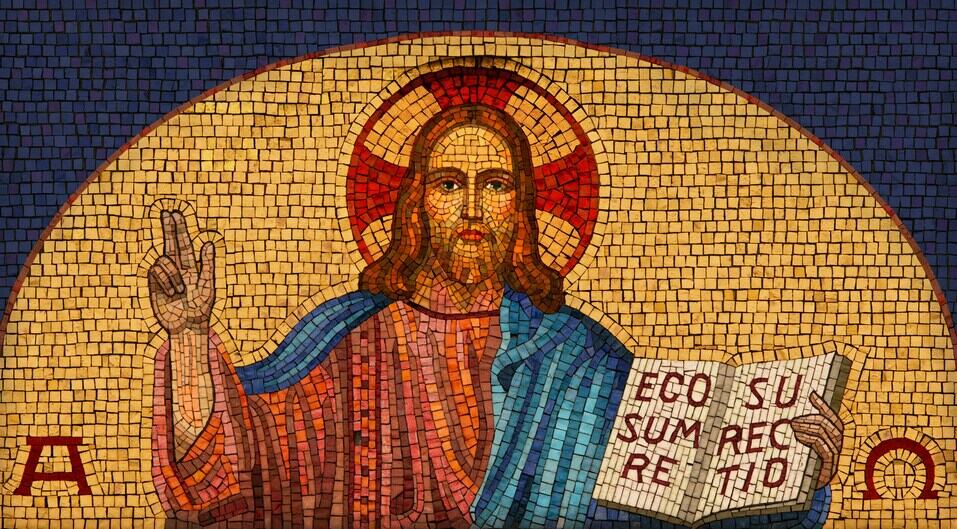
The Gospel of Mark is recognized as the earliest of the four canonical Gospels, written between 65 and 75 AD.
Mark’s Gospel is written in colloquial Greek, seemingly rushed, which suggests that he was writing down ongoing events rather than writing from memory.
It contains names of people and places, and other details that fit into the 1st century Judean life.
It also mentions some Aramaic phrases que Jesus used, como Talitha koum (Little girl, get up!).
Scholars who studied the Gospel agree that Mark wrote it in a way that reflects real memory about a real person.
15. A Lost Source

While studying the Gospels, many scholars noted that Matthew and Luke share a lot of material that never appears in Mark, even though his Gospel came first.
This might suggest that they were using a source that’s now lost.
This source was reconstructed from their writings, and it seems to include mainly sayings and teachings of Jesus Christ rather than retelling of events.
So, there was likely an oral tradition related to Christ by that time that Matthew and Luke relied on.
Multiple communities and groups were sharing stories of Christ in the decades after His death, which is taken as proof that He truly existed.
16. The Empty Tomb

The Gospel of Matthew tells us that the Roman authorities didn’t provide a body after Christ’s tomb was found empty.
Instead, they accused the disciples of stealing it!
Justin Martyr and Tertullian, both from the 2nd century, wrote about these accusations.
This means that both Christian and anti-Christian sources agree that the tomb was truly empty!
No one argues that the body was there or that it had been found. They had different theories as to what had happened to Christ’s body, but that’s another matter.
All of these claims are taken as indirect evidence that Jesus was indeed crucified, and a tomb was prepared for Him.

A little Aquarius, devoted to writing and embroidery. Through my writing, I hope to empower readers to align with their true selves and navigate life’s mysteries with confidence.