
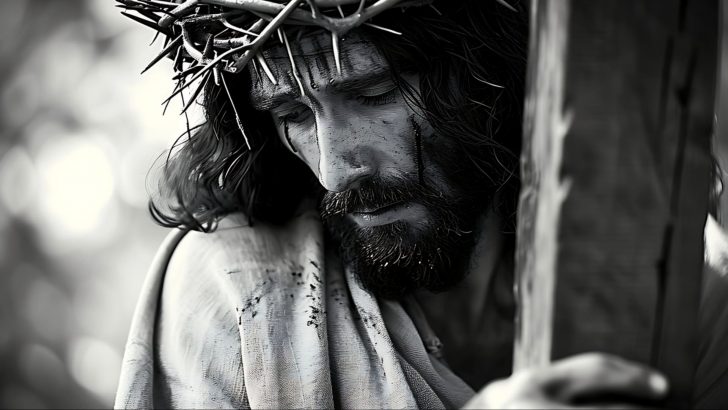
The final moments of Jesus Christ are undoubtedly the most emotional of all.
While enduring brutal unfairness and pain, He never cried out in anger.
Instead, He spoke seven times, and these words carried intention and forgiveness. They sum up the human experience through suffering, connection, doubt, and ultimately, surrender.
They speak of a son of man who fully embraced His divine purpose.
1. Jesus Asks for Mercy for His Torturers

The very first thing Jesus says while enduring agony is a prayer for the very people nailing Him to the cross: “Father, forgive them, for they know not what they do.”
With this, He sets the ultimate standard for mercy. He looks into the eyes of the Roman soldiers and sees ignorance, not malice.
He recognizes they are only doing as they were told, and this, to us, irrational empathy shows the power of the divine within Him.
His empathy is transformative, and it challenges all of us to look at those who hurt us and see their humanity.
Even in His darkest hour, Christ’s first instinct is love.
With these words, He makes us question how we see justice. They’re proof that forgiveness is the most powerful force in the universe.
2. He Offers Hope to Sinners
The second time Jesus speaks on the cross, He addresses the criminal hanging next to Him, a man who asked to be remembered in Christ’s Kingdom.
Jesus replied: “Truly, I say to you, today you will be with me in paradise.”
The man lived a life of crime and made terrible choices, but in that moment, he recognized the divine at his side.
Christ offers him immediate assurance. He offers grace freely, and we only need to be willing to receive it.
With these words, He confirms that we shall receive if we ask.
So, no matter your mistakes and past choices, if you turn to Him with honesty and humility, He will welcome you into His arms.
This short conversation defeats all the harsh dogma. It tells us that paradise isn’t a reward reserved for the perfect believers, but a refuge for all.
3. He Speaks on the Importance of Family

In the midst of His suffering, Jesus looks down and sees His mother Mary and His disciple John.
He says, “Woman, behold your son,” and to John, “Behold your mother.” This is such a human moment.
Even while dying for the world, He doesn’t forget about His mother and friends. These words suggest that losing Him won’t leave her without family, because John is her new son.
He encourages them and us to expand our understanding of family. It doesn’t only come down to blood and genetics.
With these words, Christ suggests that the bonds we form in spirit can be just as strong, if not stronger.
It’s also a lesson in how we should care for one another, especially during difficult times.
By looking out for His mother while suffering, Christ also reminds us that caring for our loved ones is necessary, even while we’re hurting, ourselves.
With a few short words, He teaches us about responsibility and altruísmo.
4. The Cry of Abandonment
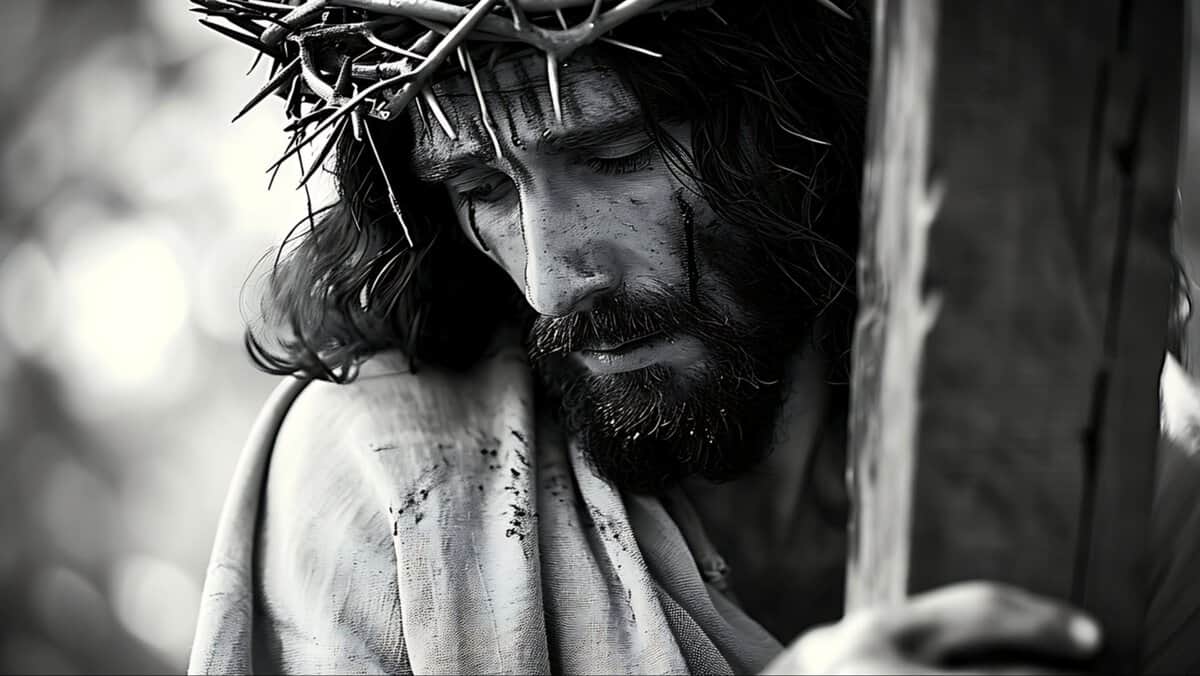
The most shattering one of His sayings is a brief moment of doubt brought on by the pain and suffering.
Jesus cries, quoting Psalm 22, “My God, my God, why have you forsaken me?”
With these words, He expresses a feeling of separation from the Father. For a moment, their unity is shattered, and Christ is left to feel the full weight of sin and isolation.
He truly understands what it’s like to be all alone.
As humans, we can empathize with this because we’ve all experienced moments when it feels like our prayers aren’t being heard.
Christ validates that feeling, and shows us that, sometimes, feeling dúvida and the need to questão what we believe is normal.
God isn’t afraid of our doubt.
Christ recognizes the depths of human despair and meets us there. This moment marks Him as completely human, just as He is completely divine.
5. Jesus’s Human Vulnerability

Jesus saying, “I thirst,” moves us in such a profound way because we can truly put ourselves in His shoes.
We might struggle with understanding unconditional empathy and selflessness, but the vulnerability of the body is well-known to us.
His pain becomes that much more real and palpable as we imagine Him hurting, starving, thirsty. He was flesh and bone, just like each one of us.
Of course, there’s also a spiritual side to these words. His thirst also represents a desperate longing for God.
It might also mean that after feeling separate from the Father, He thirsted for reconnection.
6. His Declaration of Victory

When Jesus said, “It is finished,” that wasn’t just relief that the torture was over.
In Greek, this was written down as “tetelestai,” which was a financial term meaning “paid in full.” It was also used in the military, so it could also suggest the completion of a task.
These words are interpreted as a victory cry, even though to the Romans and Jews Christ appeared defeated.
They thought they were removing a troublemaker, unaware that they helped Him fulfill His ultimate purpose. Every prophecy and sacrifice led up to that moment.
To some extent, these words were a sigh of relief, too. Finally, there was nothing left to pay or do. The cost of our sins was covered.
It’s a powerful moment of closure, suggesting that the new era can finally begin.
7. The Ultimate Surrender

With His last breath, Jesus prays, “Father, into your hands I commit my spirit.” This marks the full circle of desperation and doubt, and back to the trust He had expressed in the beginning.
After enduring the horror and feeling forsaken, Jesus chose to trust again.
He surrenders His life back into the care of the Father.
He also teaches us how we should face mortality. We can struggle to hold on and choose to be resistant to the inevitable.
Or we can place our trust in God and His grace.
He teaches us that surrender isn’t giving up, and it’s not weakness. It requires the kind of strength that’s hard to obtain, even for Him.

A little Aquarius, devoted to writing and embroidery. Through my writing, I hope to empower readers to align with their true selves and navigate life’s mysteries with confidence.