

Across cultures, religions, and centuries, people who come close to death often report strikingly similar experiences.
They speak of leaving their bodies, moving through darkness, feeling overwhelming peace, and encountering beings of light.
Many describe these beings as angels. What makes these stories so compelling is not just their emotional power, but their consistency.
People with no religious background describe the same figures as devoted believers. Children, adults, and the elderly tell stories that echo one another in tone and detail.
This has led researchers, doctors, and spiritual thinkers to ask a profound question.
Why do so many people see angels after near-death experiences, and what does it reveal about the boundary between life and whatever comes next?
The Brain Under Extreme Conditions
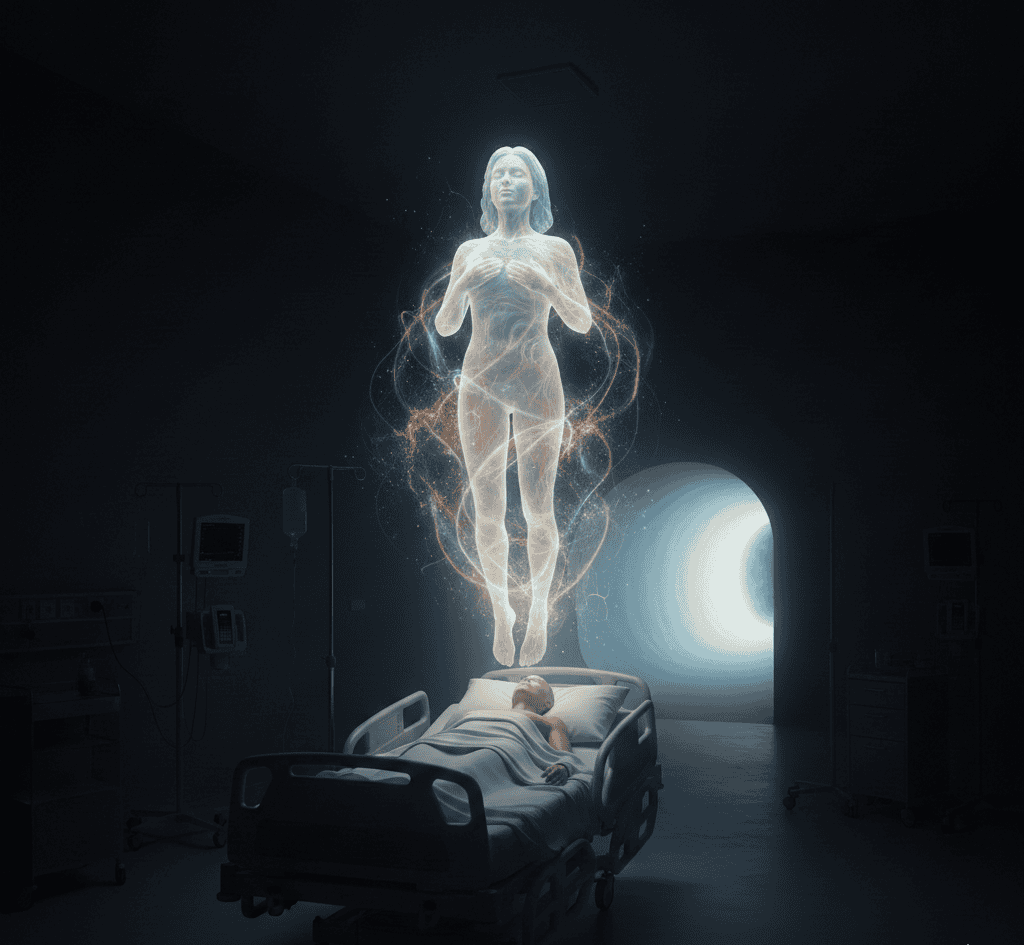
One explanation often offered comes from neuroscience. When the body is near death, the brain enters an extreme state.
Oxygen levels drop, stress hormones surge, and normal brain filters begin to loosen. Under these conditions, the brain may produce vivid experiences that feel more real than everyday life.
Some scientists believe angels appear because the brain is trying to make sense of a powerful internal event using familiar symbols of comfort and protection.
However, this explanation does not fully satisfy many researchers. Near-death experiences are not chaotic or dreamlike in the usual sense.
People often report sharp clarity, detailed memory, and logical sequences. They remember conversations, sensations, and emotions with unusual precision.
Some even recall events in hospital rooms they should not have been able to see or hear. These details challenge the idea that the experience is simply a hallucination.
Supporters of the neurological view still acknowledge something remarkable. The brain does not randomly create monsters or nonsense in these moments.
Instead, it produces figures associated with safety, guidance, and reassurance. Angels, regardless of belief system, represent guardianship and transition.
This suggests the brain may be wired to interpret the approach of death through symbols that reduce fear and prepare the mind for release.
Cultural Filters and Universal Patterns

Another reason angels appear in near-death experiences is the role of cultural interpretation. Humans understand the unknown by using familiar frameworks.
In Christian cultures, beings of light are called angels. In other cultures, they may be ancestors, spirit guides, or protective figures.
Despite different names, the descriptions are strikingly similar. They radiate light, communicate without words, and convey a sense of deep familiarity.
Researchers who study these patterns point out that the core experience remains the same, even when the label changes.
The being is loving, calm, and authoritative without being threatening. This suggests that the experience itself may be universal, while the interpretation is shaped by culture and personal belief.
Angels may not appear because someone believes in them, but because the human mind recognizes a guiding presence and assigns it a known form.
Children provide some of the strongest evidence for this idea. Young children with little religious education still describe beings of light who tell them it is not time to stay.
They often struggle to find words, using simple descriptions like glowing people or shining friends.
Later, adults may label these beings as angels, but the experience itself seems to arise before belief takes shape.
Angels as Guides Between Life and Death

Many spiritual traditions suggest that angels appear during near-death experiences because they serve as guides between worlds.
In these stories, angels are not there to judge or frighten. They are there to escort, protect, and explain.
People often report that the angel tells them they must return, or gently leads them back after showing them something important.
This guiding role appears again and again. Angels are described as knowing exactly what the person needs, offering reassurance without long explanations.
Communication happens instantly, through feeling and understanding rather than speech. This form of interaction feels deeply personal, as if the angel understands the individual completely.
Some researchers believe this experience reflects a transitional state of consciousness. As the mind detaches from the body, it encounters a structured process rather than chaos.
The presence of angels may represent an organizing intelligence that helps consciousness move safely through this transition.
Whether seen as spiritual beings or symbolic representations, angels provide continuity, preventing fear from overwhelming the experience.
Whistleblowers and alternative researchers have even suggested that angels could be interdimensional intelligences that interact with human consciousness at the moment it loosens from physical limits.
In this view, near-death experiences open a doorway where perception expands, allowing contact with beings that exist outside normal awareness.
What These Experiences Mean for the Living

Regardless of interpretation, near-death experiences often change people profoundly.
Those who see angels frequently return with reduced fear of death, increased compassion, and a sense that life has deeper meaning.
They describe feeling watched over, as if the boundary between worlds is thinner than once believed.
This transformation suggests the experience is not just a mental event, but something that reshapes identity and values.
Skeptics argue that such changes could result from the trauma of nearly dying. Yet many survivors insist the encounter felt more real than their physical life.
They describe the angelic presence as more solid, more knowing, and more loving than any human interaction.
For them, the question is not whether the experience was real, but how everyday life compares to it.
Angels appearing after near-death experiences may serve a psychological purpose as well. They help people integrate the idea of mortality without despair.
By framing death as guided rather than chaotic, the mind finds peace. This does not mean the experience is false.
It means it meets a deep human need to understand the unknown in a way that allows life to continue with meaning.
In the end, the question of why people see angels after near-death experiences may not have a single answer.
It may be a combination of biology, consciousness, culture, and something still unexplained.
Angels appear at the edge of life because that edge demands reassurance, structure, and understanding.
Whether they are messengers from beyond, expressions of the mind, or guides between dimensions, their presence carries the same message.
You are not alone, you are seen, and the journey does not end in darkness.

Sempre senti uma forte ligação com o Divino desde o meu nascimento. Como autora e mentora, a minha missão é ajudar os outros a encontrar o amor, a felicidade e a força interior nos momentos mais sombrios.