
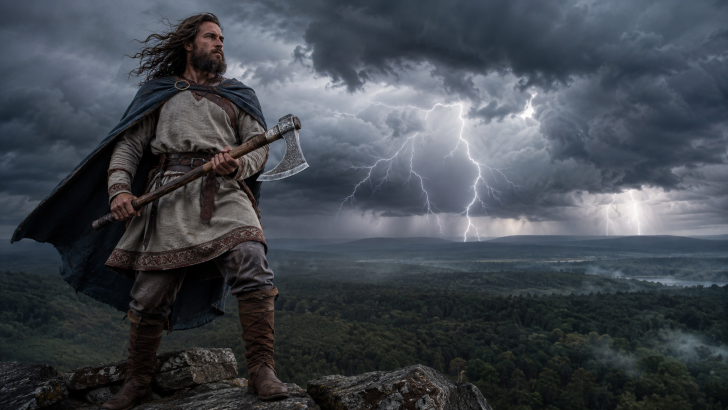
Thunderstorms must have been powerful experiences for early Slavic communities.
Dark clouds could suddenly cover the sky, lightning could strike forests and homes, and thunder seemed to shake the earth itself.
Without modern explanations for electricity and weather, these dramatic forces naturally became connected with supernatural power.
Among the most important divine figures associated with them was Perun. Perun was a Slavic god connected with thunder, lightning, warfare, weapons, authority, and the heavens.
Here are ten fascinating things about Perun, the Slavic god of thunder.
1. Perun Was the God of Thunder and Lightning
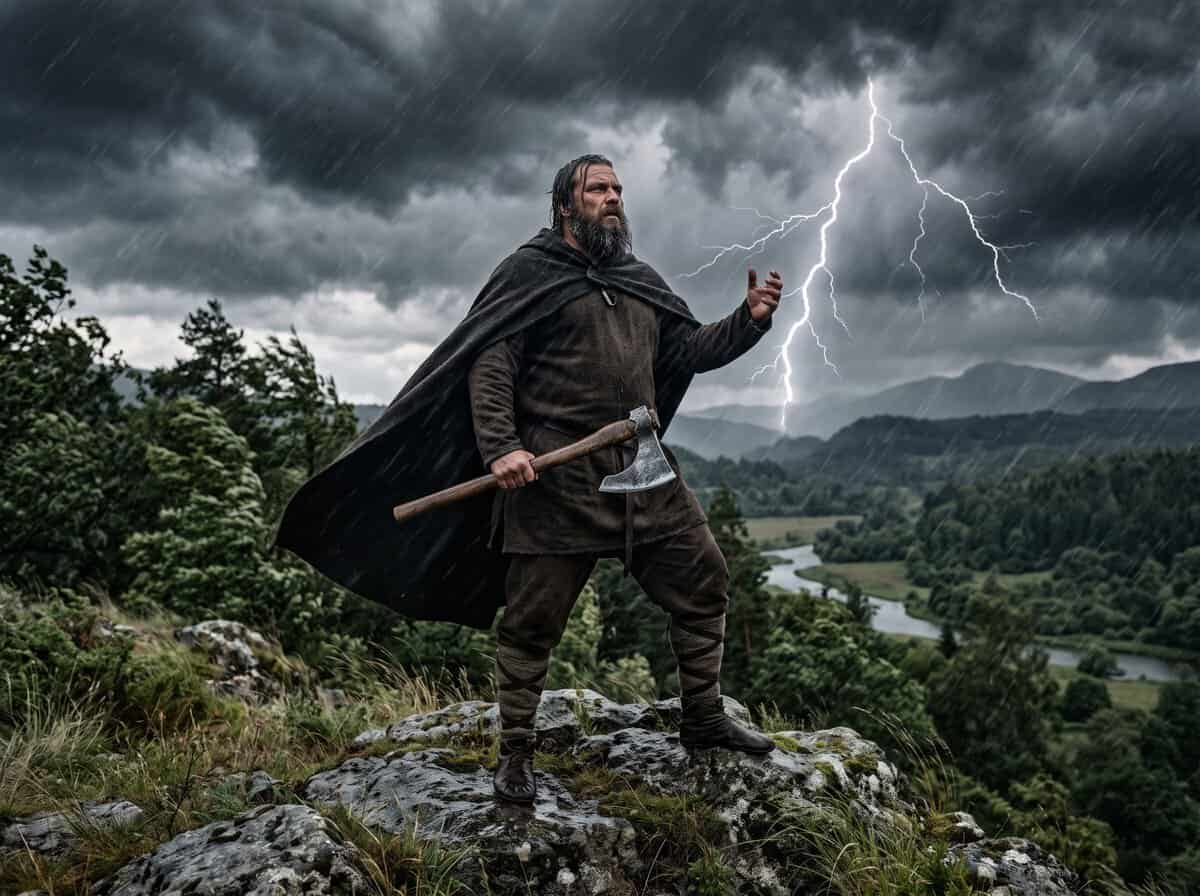
Perun’s strongest association was with storms. This immediately places Perun among a fascinating group of Indo-European thunder gods.
Thunder represented his tremendous power, while lightning could be understood as the heavenly weapon he hurled against his enemies.
The Greeks had Zeus. The Romans worshipped Jupiter. Norse tradition had Thor. Baltic mythology included Perkūnas.
Although these gods belong to different cultures and should not be treated as identical, their similarities have attracted considerable scholarly attention.
Perun represented the terrifying power of the sky itself. A thunderstorm demonstrated that forces existed far beyond human control.
2. Perun Was One of the Most Important Slavic Gods
Perun was not simply a minor spirit associated with bad weather. Historical evidence suggests that he held an important position, particularly among the East Slavs.
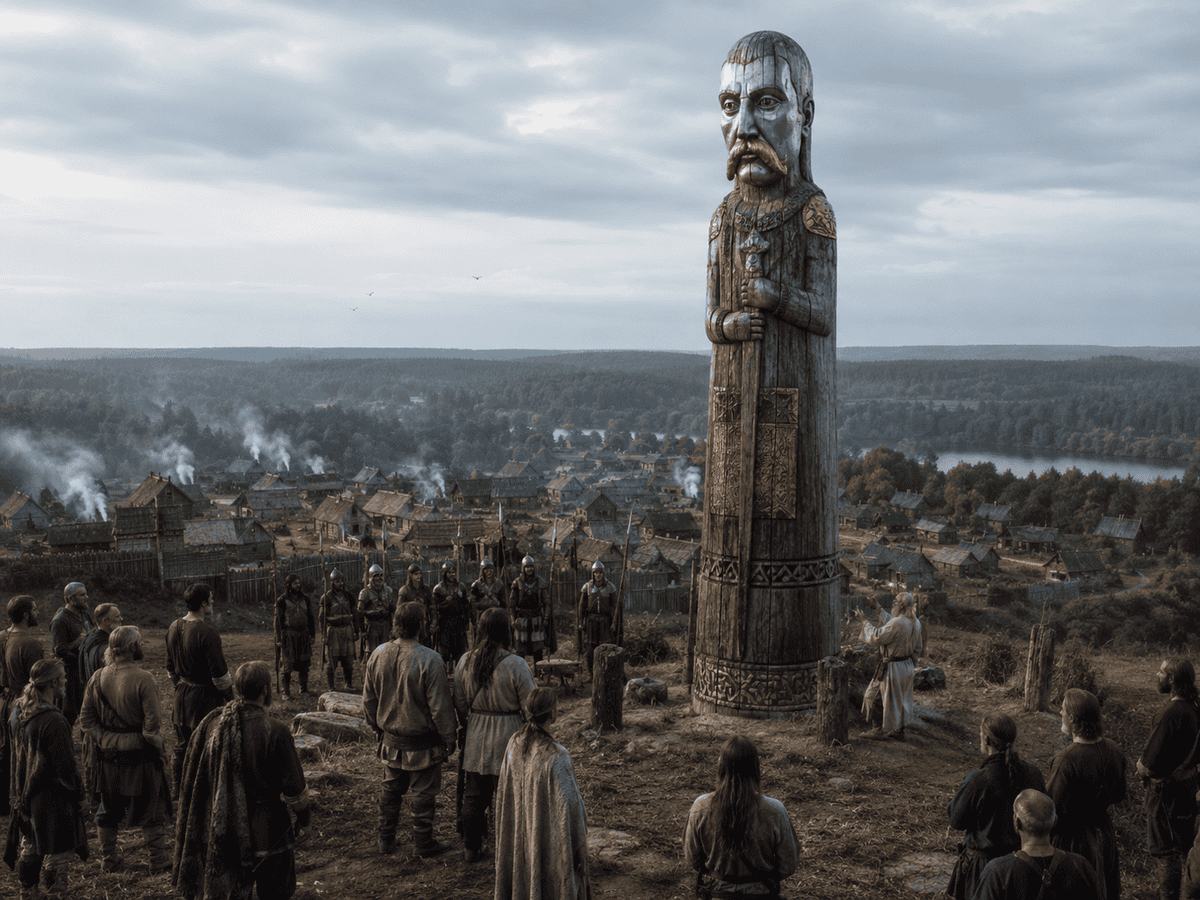
The Primary Chronicle describes Prince Vladimir of Kyiv establishing idols of several gods before the Christianization of his realm.
Perun appears prominently among them. His idol was reportedly made of wood with a silver head and golden mustache.
This description suggests a deity whose image was meant to communicate impressive authority.
While we cannot reconstruct every detail of his worship, his connection to political and military authority shows that Perun held an important position.
3. His Greatest Enemy Was Veles
One of the most famous ideas reconstructed from Slavic mythology is the cosmic conflict between Perun and Veles.
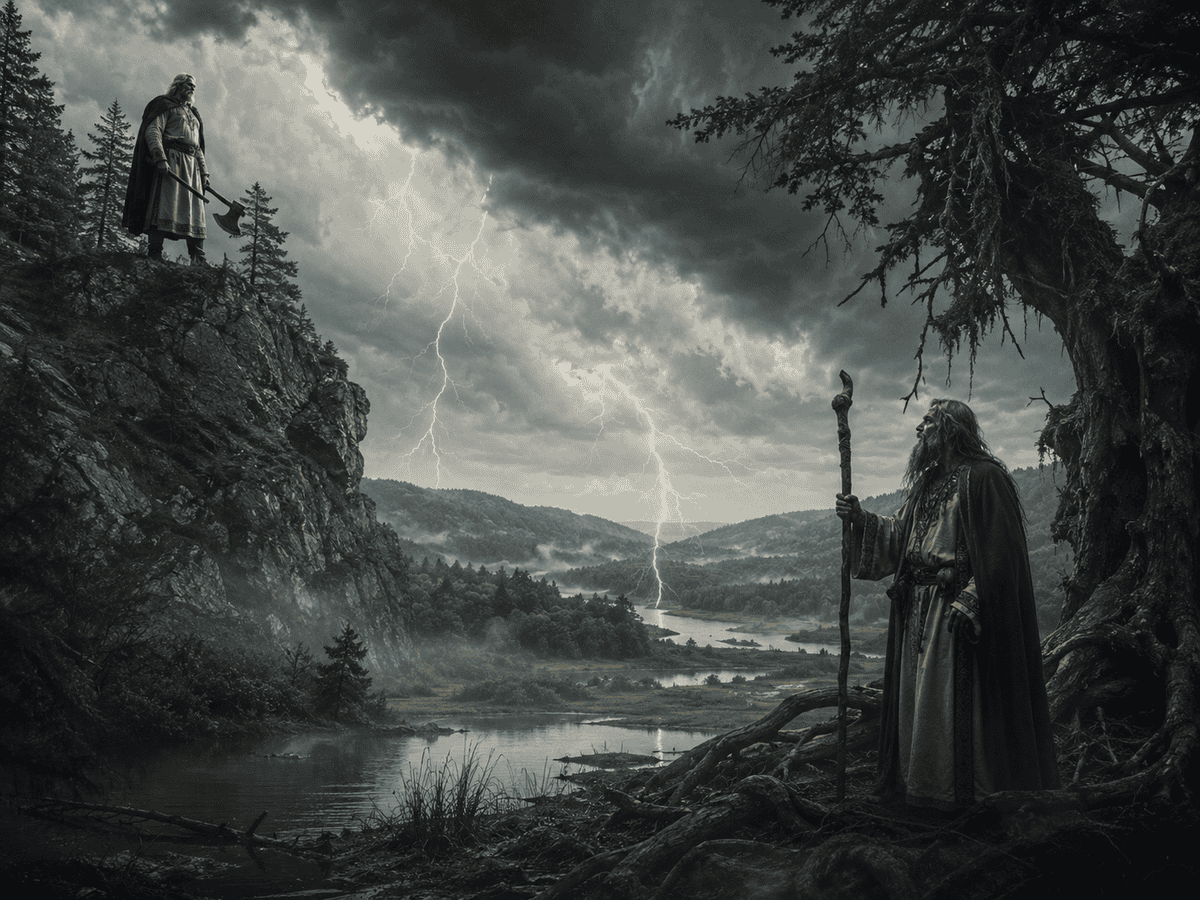
Perun belongs to the heavens and heights. Veles is associated with the earth, cattle, wealth, magic, and the lower world.
According to scholarly reconstructions based on later folklore and related traditions, Veles challenges Perun by stealing something valuable, sometimes imagined as cattle, people, or possessions.
Perun responds by attacking from the sky. His lightning strikes trees, rocks, and other places where Veles attempts to hide.
Eventually, Perun defeats or drives away his enemy, restoring cosmic order. The story provides a mythological explanation for thunderstorms.
Lightning striking different places could represent Perun searching for his escaping opponent.
4. The Oak Tree Was Strongly Associated With Perun
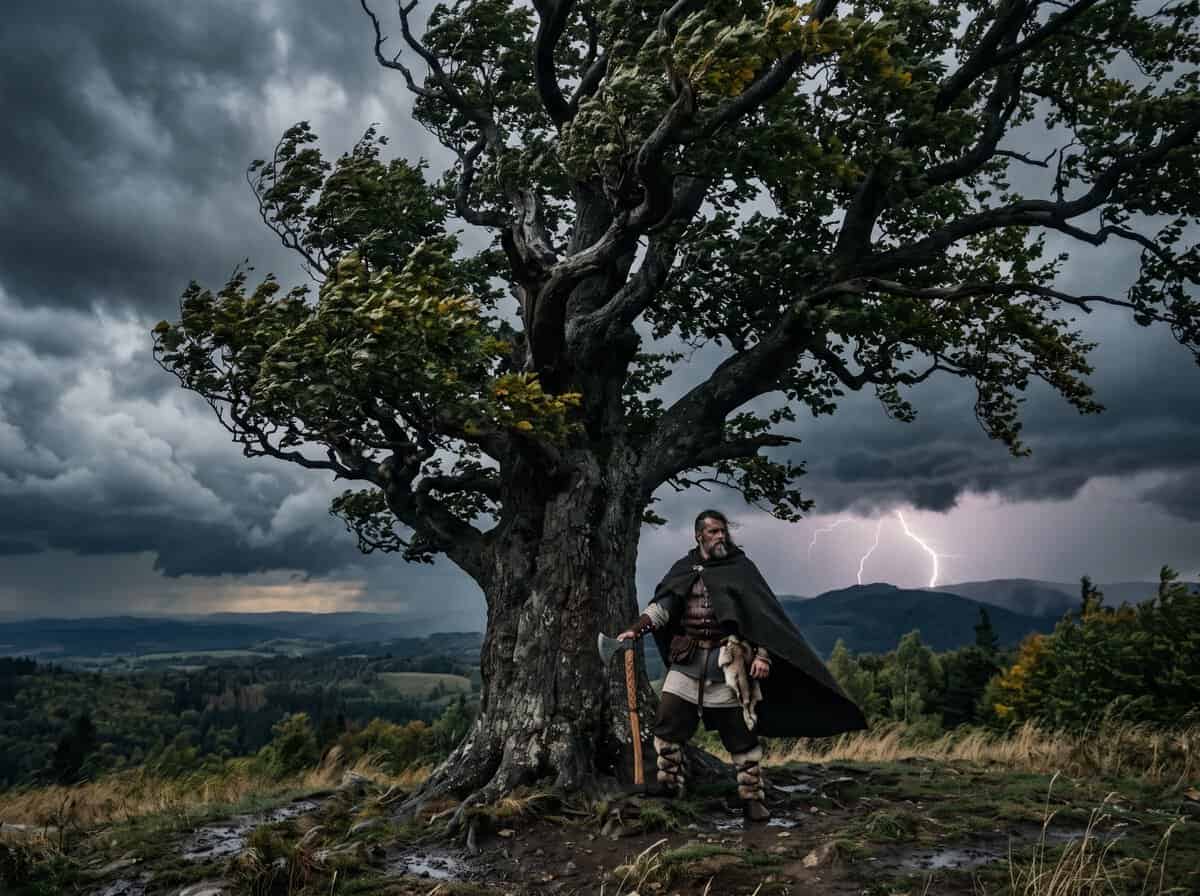
Among the natural symbols connected with Perun, the oak is one of the most important. Oak trees are enormous, long-lived, and physically impressive.
It is easy to understand why ancient people could connect them with a thunder god. The symbolism fits his character perfectly.
A massive oak standing above surrounding vegetation could appear almost like a natural pillar connecting the earth with the stormy heavens.
Even after Christianization, certain customs involving sacred trees continued in Slavic regions, demonstrating how deeply older relationships between religion and landscape could survive.
5. Perun Was Closely Connected With Warriors
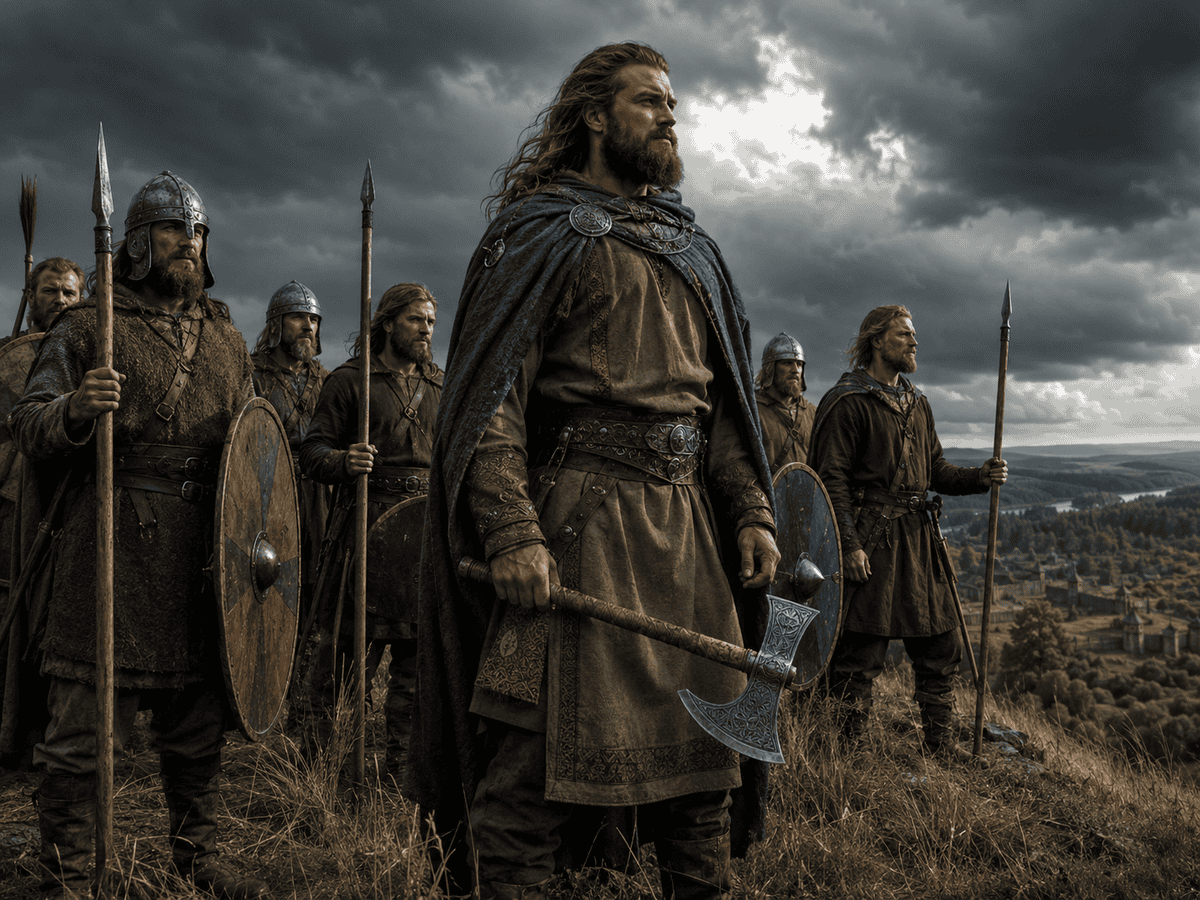
Thunder was not Perun’s only domain. He was also strongly associated with warfare. This connection makes sense.
Lightning resembles a supernatural weapon striking from the sky, while thunder sounds like an enormous battle taking place above the earth.
Warriors could therefore look toward Perun as a powerful divine figure connected with courage, weapons, victory, and military authority.
The political importance of Perun among the elite of Kyivan Rus’ strengthens this association.
Princes and warriors had particular reasons to respect a god whose power represented strength and the enforcement of order.
Perun was not necessarily a god of uncontrolled violence. His military character was connected with authority and protection.
6. Perun Was Connected With Oaths and Justice
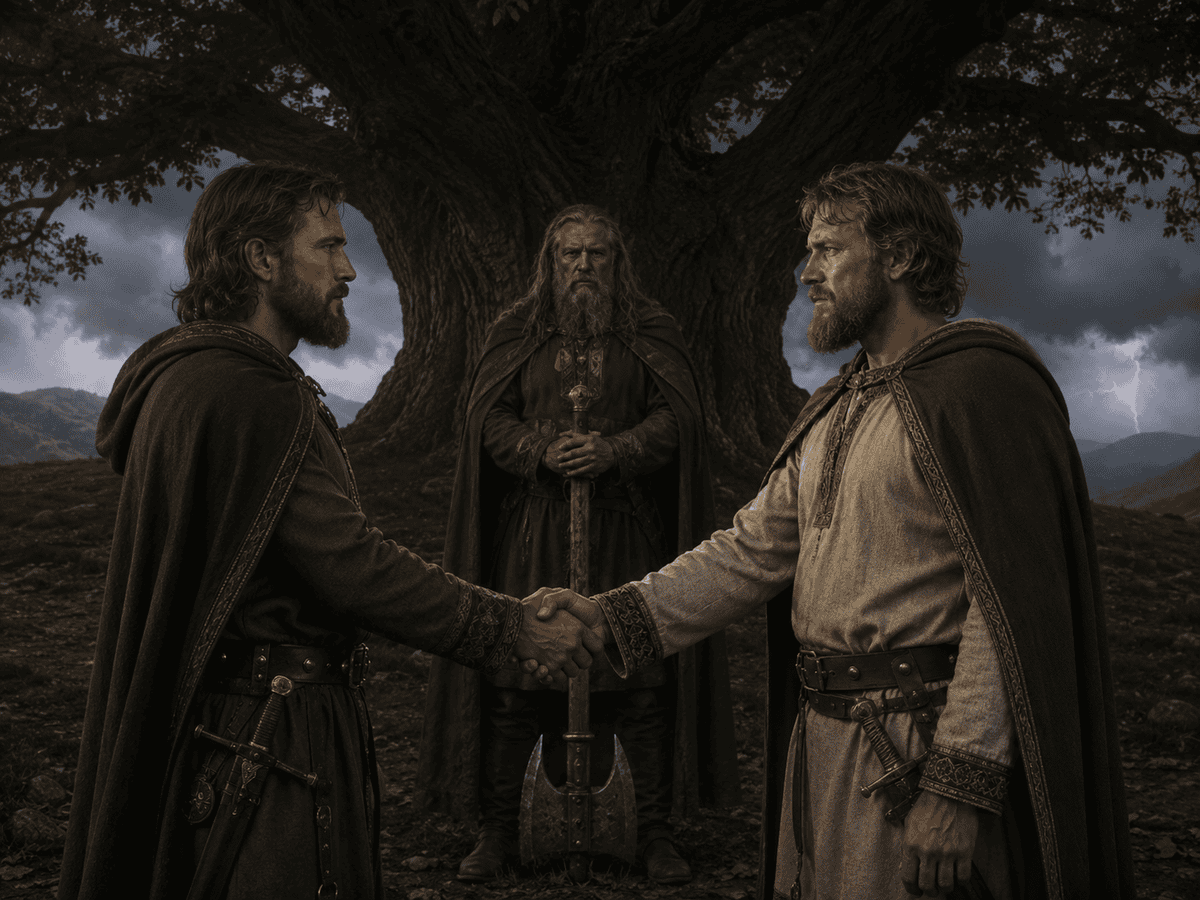
One of the most interesting aspects of Perun is his relationship with promises.
Breaking an oath was extremely serious in societies where agreements depended heavily upon personal honor and reputation.
Invoking a powerful god made the promise even more dangerous to violate. Perun’s association with the sky and lightning made him an intimidating guardian of such agreements.
Someone who broke a sacred oath could symbolically place themselves beneath the judgment of the thunder god.
This gives Perun a role extending beyond storms and warfare. He could represent order itself. Words mattered. Promises mattered.
A society needed people to trust agreements, particularly when rulers, warriors, merchants, and neighboring communities dealt with one another.
7. His Weapons Were Imagined in Different Forms
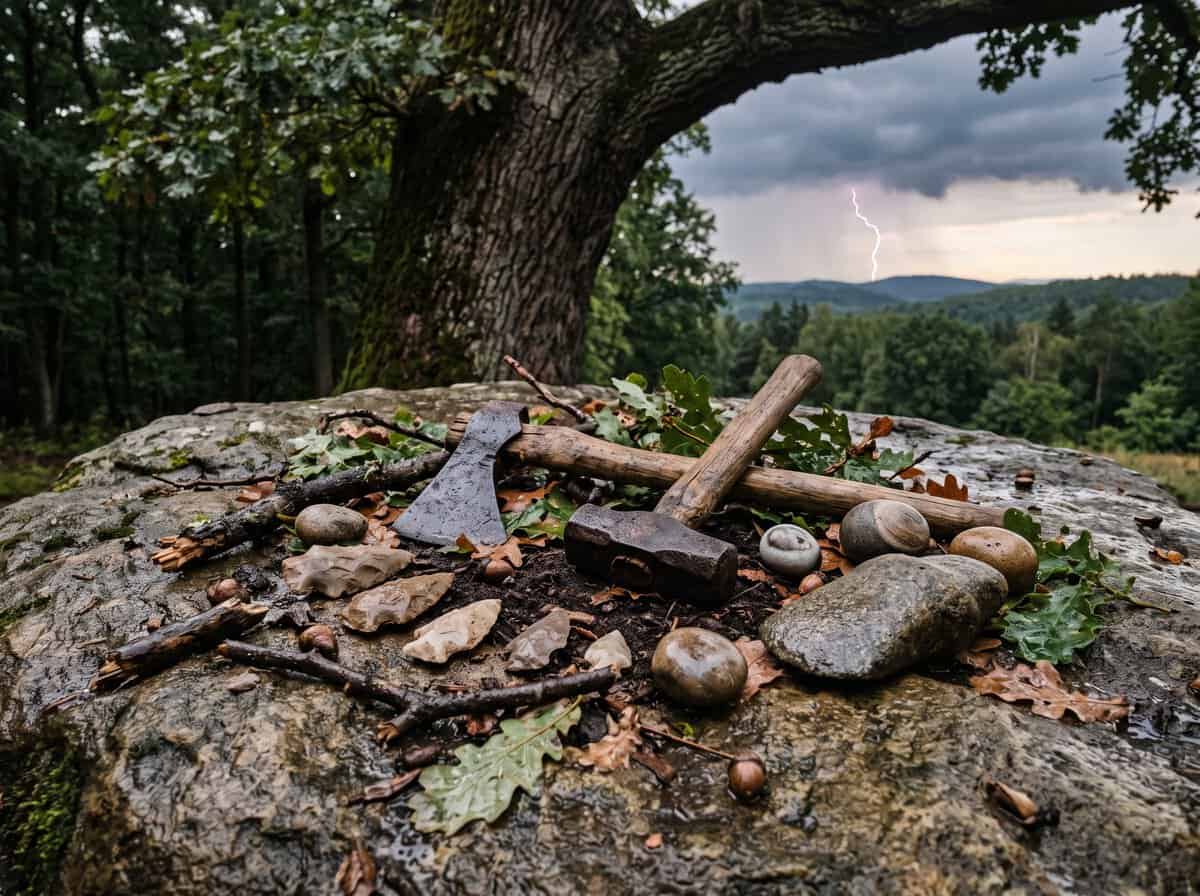
What exactly did Perun throw when lightning crossed the sky? Different traditions provide different possibilities.
He is commonly associated with axes, hammers, arrows, stones, and other projectile weapons in later folklore and scholarly reconstructions.
Archaeological objects and traditional beliefs involving so-called thunderstones have also been connected with thunder gods.
People sometimes interpreted unusual stones or prehistoric tools discovered in the ground as objects that had fallen from the heavens during thunderstorms.
Such objects could acquire protective or magical reputations. The basic symbolism is easy to understand.
Lightning appears suddenly, strikes with enormous force, and can split trees or damage buildings.
Perun therefore became not merely the god who created lightning. Lightning itself could be understood as evidence that the divine warrior was attacking something.
8. His Name May Be Connected With the Idea of Striking
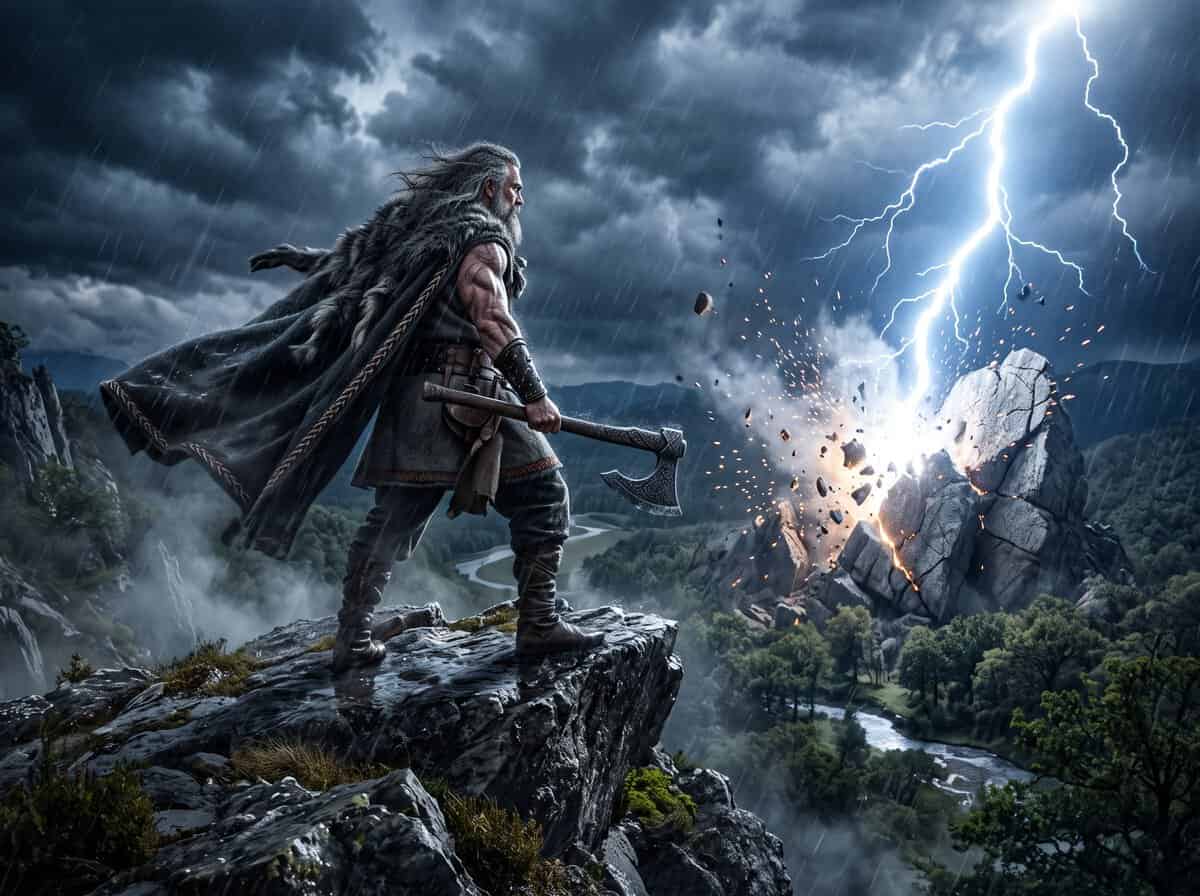
Perun’s name itself may preserve clues about his ancient character.
Linguists generally connect it with an old Indo-European root associated with striking or hitting.
These linguistic relationships suggest that the basic idea behind Perun may be extremely ancient.
Long before the medieval Slavic societies recorded by Christian writers, ancestral communities may already have imagined a powerful heavenly figure connected with storms and striking weapons.
However, mythology changes over time. The Perun worshipped by medieval Slavic peoples was shaped by their own languages, societies, landscapes, and religious traditions.
9. Perun’s Idol Was Dramatically Destroyed After Christianization
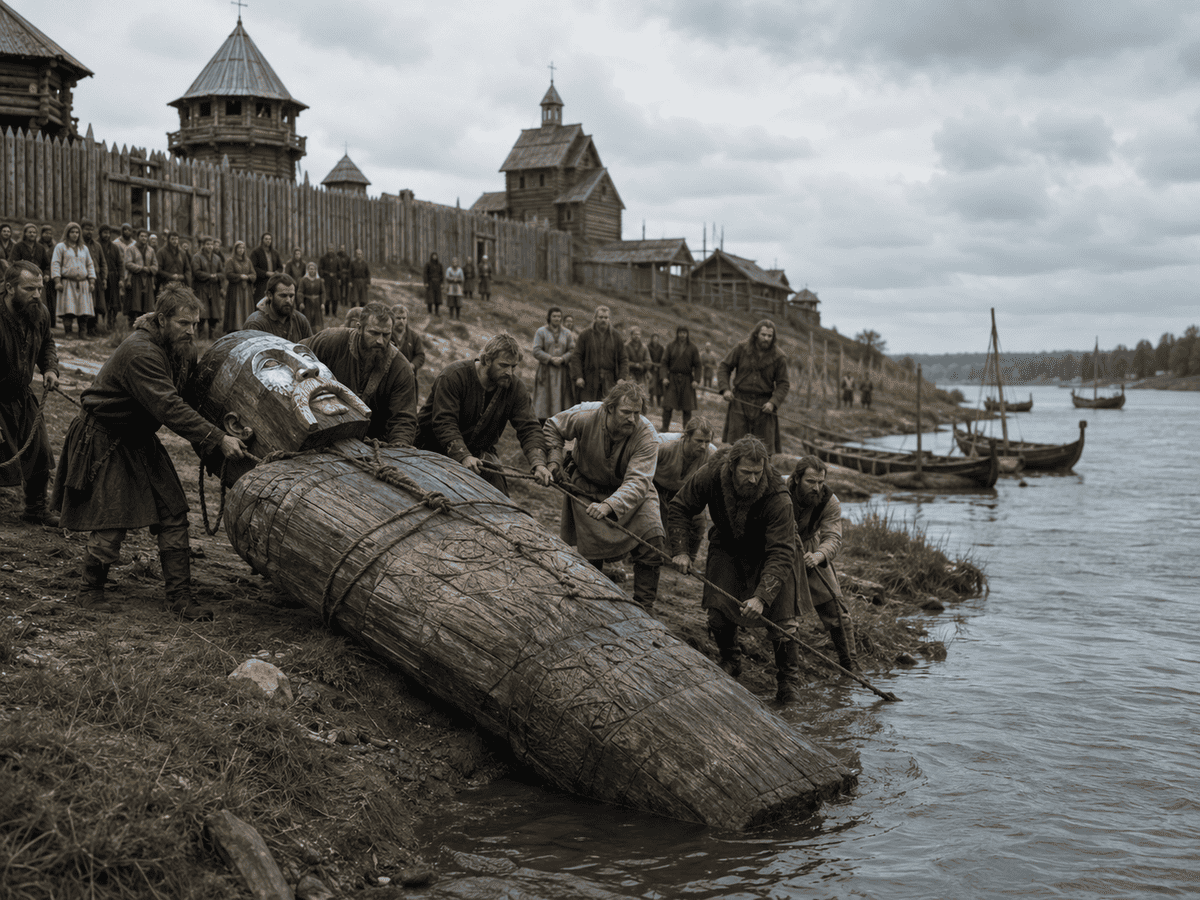
One of the most famous episodes involving Perun occurred when Prince Vladimir converted to Christianity in 988.
According to the Primary Chronicle, the idols of the old gods were ordered to be destroyed.
Perun received particularly dramatic treatment. His image was taken down, dragged away, beaten, and thrown into the Dnieper River.
The destruction carried powerful symbolism. Perun had previously represented divine authority connected with Vladimir’s rule.
Removing his idol publicly demonstrated that the religious order had changed. Yet destroying an official image did not instantly erase generations of belief.
Older customs, stories, symbols, and associations continued within folklore. Religious change was therefore more complicated than simply removing one statue.
10. Perun’s Thunder Never Completely Disappeared From Slavic Culture
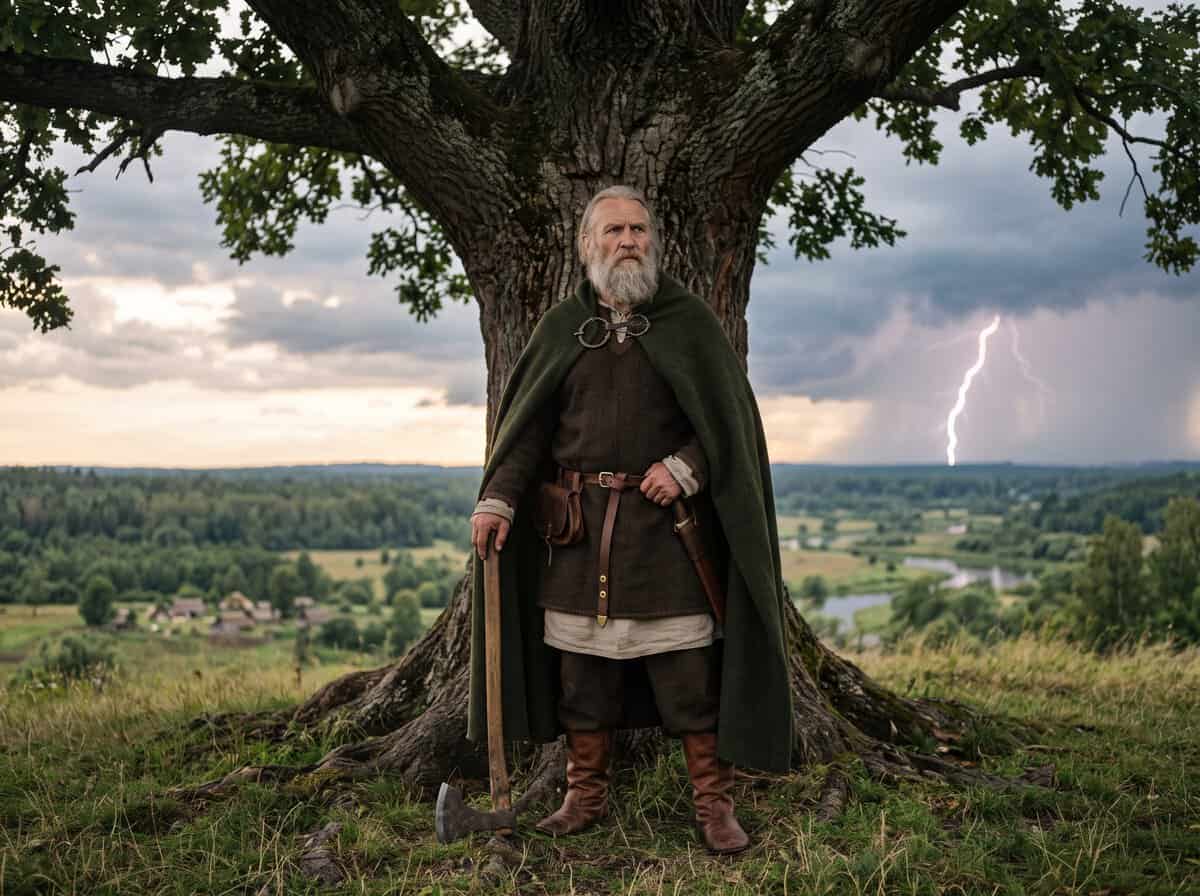
Christianization ended the official worship of Perun, but memories connected with the thunder god survived in different forms.
Place names, folklore, linguistic evidence, seasonal customs, and comparisons with later traditions have helped scholars reconstruct parts of his earlier importance.
Modern interest in Slavic mythology has made Perun even more recognizable. He now appears in novels, artwork, games, music, and modern interpretations of pre-Christian Slavic religion.
However, the historical Perun remains partly mysterious. We know that people invoked his name in oaths.
We know rulers honored him. We know he was strongly associated with thunder and political power.
Perun remains visible only in flashes, appearing through medieval records, fragments of folklore, and ancient linguistic connections.

Sempre senti uma forte ligação com o Divino desde o meu nascimento. Como autora e mentora, a minha missão é ajudar os outros a encontrar o amor, a felicidade e a força interior nos momentos mais sombrios.