

The name Jezebel has carried a powerful reputation for thousands of years. Some people hear it and immediately think of manipulation or rebellion.
Others think of a queen from the Bible whose story still sparks strong reactions today. But Jezebel is more than a dramatic name from the past.
She is a complex figure whose story has been interpreted in many different ways. In the Bible, she appears as a foreign queen with strong beliefs and a bold personality.
Over time, her name became a symbol in spiritual discussions about influence, pride, and the struggle between competing values.
Whether you read her story as history, theology, or symbolism, Jezebel remains one of the most talked-about women in Scripture.
Her story continues to raise questions about power, faith, and how one person’s choices can shape an entire nation for generations to come.
1. Jezebel Was a Real Queen in the Bible

Jezebel appears in the Old Testament as the wife of King Ahab of Israel. She was a Phoenician princess who came from a royal family and brought her own religious traditions with her.
When she married Ahab, she entered a kingdom that worshiped the God of Israel, but she remained devoted to Baal.
This created deep tension. Her story is dramatic because she was not a quiet figure standing in the background.
She was active, determined, and willing to use her influence to shape the kingdom around her. In many ways, she stepped into history with a strong voice and left a legacy that people still discuss today.
2. She Worshiped Baal

One of the most important parts of Jezebel’s story is her devotion to Baal, a deity worshiped in parts of the ancient Near East.
She supported the prophets of Baal and promoted those practices in Israel. This placed her in direct conflict with the prophet Elijah.
In the biblical narrative, this religious clash becomes a central theme. It is not simply about one woman’s beliefs. It is about two very different spiritual paths colliding in the same kingdom.
That conflict gave her story a dramatic tension that still makes these ancient chapters feel vivid and emotionally charged.
3. She Was Known for Her Strong Personality
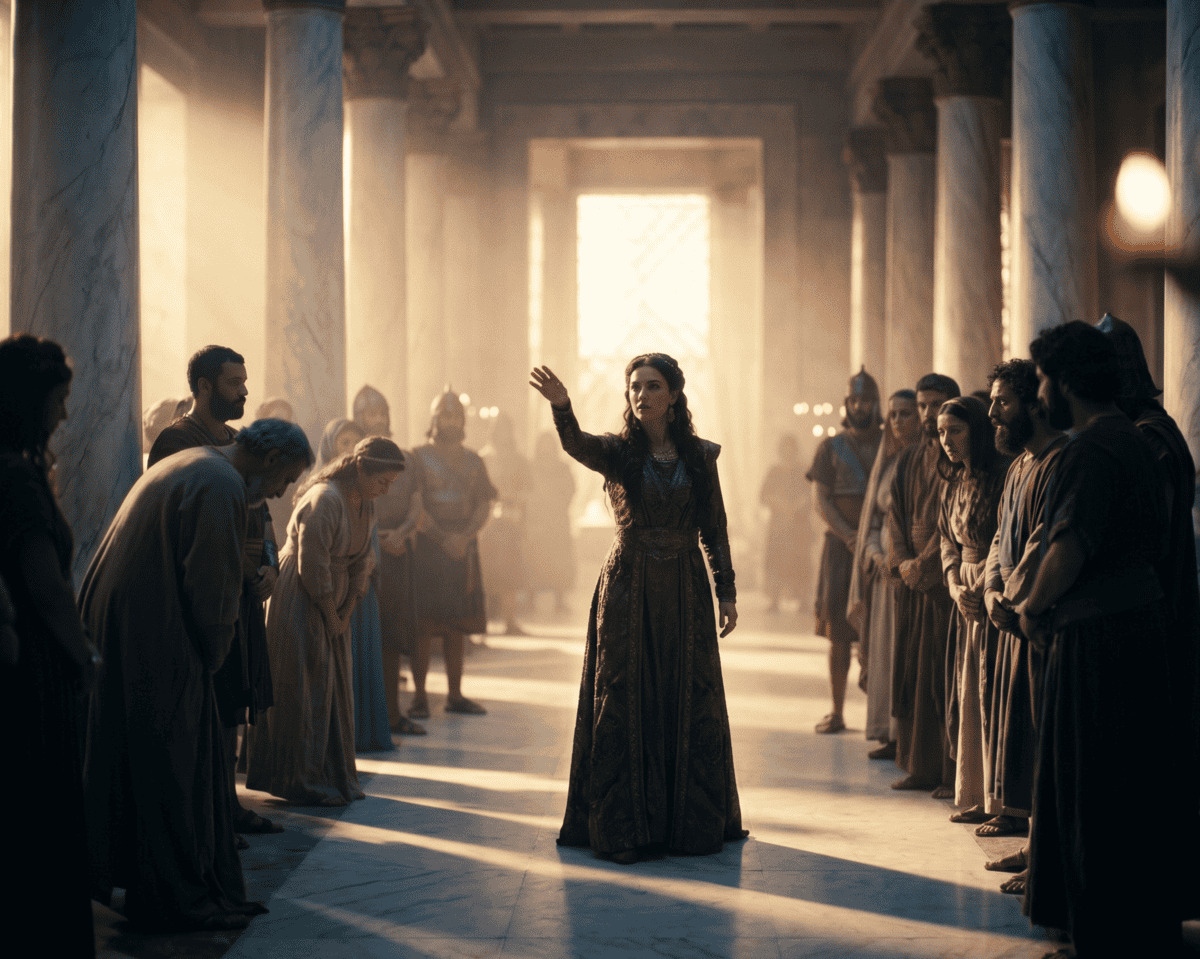
Jezebel is remembered as bold, confident, and determined. She was not afraid to act when she wanted something to happen.
This strong personality is part of why her story remains so memorable. In some interpretations, her determination is seen as dangerous because it was used in ways that harmed others.
In other readings, people note that strong women in ancient stories were often portrayed more harshly than men.
Her personality continues to spark discussion because it raises questions about power and influence. Love her or fear her, she was not someone people easily ignored or forgot.
4. The Story of Naboth’s Vineyard Defined Her Reputation

One of the most famous episodes involving Jezebel is the story of Naboth’s vineyard.
When King Ahab wanted a piece of land and was refused, Jezebel arranged for false accusations that led to Naboth’s death.
This event became a turning point in her biblical legacy. It is the story most often used to describe her as manipulative and ruthless.
The narrative shows how power can be misused when desire overrides justice. It also reminds readers how quickly ambition can turn into cruelty when conscience is pushed aside.
5. Elijah Confronted Her Influence

The prophet Elijah became one of Jezebel’s greatest opponents. After the dramatic contest on Mount Carmel, where Elijah challenged the prophets of Baal, Jezebel threatened his life.
Their conflict represents a larger struggle between opposing spiritual commitments. The story feels almost cinematic, with two determined personalities moving toward confrontation.
Elijah’s resistance made Jezebel a lasting symbol of spiritual opposition in biblical tradition. Their tension adds emotion and urgency to one of the most memorable stories in the Old Testament.
6. Her Name Became Symbolic

Over time, the name Jezebel took on symbolic meaning beyond the historical queen. In some Christian traditions, it came to represent manipulation, idolatry, and seductive influence.
This symbolic use appears in later religious writing, including the Book of Revelation. As a result, the name is often used to describe patterns of behavior rather than the person alone.
This transformation from individual to symbol is part of what keeps her story alive. Her name became larger than her life and took on a meaning that echoed through centuries.
7. Her Story Ends Dramatically

Jezebel’s death is one of the most memorable scenes in the Bible. After a political upheaval, she is thrown from a window and killed.
The story is intense and reflects the prophetic warnings given earlier in her life. In biblical storytelling, dramatic endings often reinforce moral themes.
Her downfall is presented as the consequence of years of corruption and conflict. It is a striking conclusion to a powerful and controversial story. Even her final moments feel larger than life, matching the force of her personality.
8. She Represents the Misuse of Influence

Spiritually, Jezebel is often seen as a symbol of influence used in destructive ways. Influence itself is not bad. It can inspire, guide, and protect.
But when it is used to control, deceive, or harm others, it becomes dangerous. This symbolic interpretation is one reason her story still resonates.
It reminds readers to consider how power is used and what motives lie behind it. Her story asks a timeless question: what happens when influence is guided by selfish desire instead of wisdom?
9. Her Story Sparks Debate

Jezebel remains a debated figure. Some view her as a clear villain in the biblical narrative. Others argue that history and tradition may have amplified negative aspects of her story.
This ongoing discussion is part of what makes her so fascinating. She is not a one-dimensional character.
Her story raises questions about religion, politics, gender, and interpretation that still feel relevant today.
That complexity keeps readers returning to her story with fresh questions and new perspectives.
10. Her Legacy Still Influences Spiritual Conversations

Even now, the name Jezebel appears in sermons, books, and spiritual discussions. For some, it is a warning about pride and manipulation.
For others, it is a reminder of how stories evolve over time. Her legacy continues because the themes surrounding her are timeless.
Power, influence, faith, and personal responsibility are issues that every generation must wrestle with.
That is why Jezebel remains one of the most unforgettable figures in the Bible. Her story continues to challenge readers to reflect on how they use their own influence.

自出生以来,我一直感觉到自己与神灵有着紧密的联系。作为一名作家和导师,我的使命是帮助他人在最黑暗的时刻找到爱、幸福和内心的力量。