

Dogs have stood beside humans for thousands of years as companions, guardians, hunters, and protectors.
It is hardly surprising that ancient civilizations also imagined sacred and supernatural dogs serving gods, guarding magical places, and guiding souls between worlds.
Across mythology, divine dogs appear as loyal companions of deities, fierce protectors of sacred boundaries, and powerful symbols of loyalty and courage.
Some watched over the gates of the underworld. Others traveled with gods across the heavens.
A few were believed to protect entire kingdoms or accompany heroes on dangerous journeys.
Here are ten divine dogs from ancient mythology.
1. Cerberus Guarded the Gates of the Greek Underworld
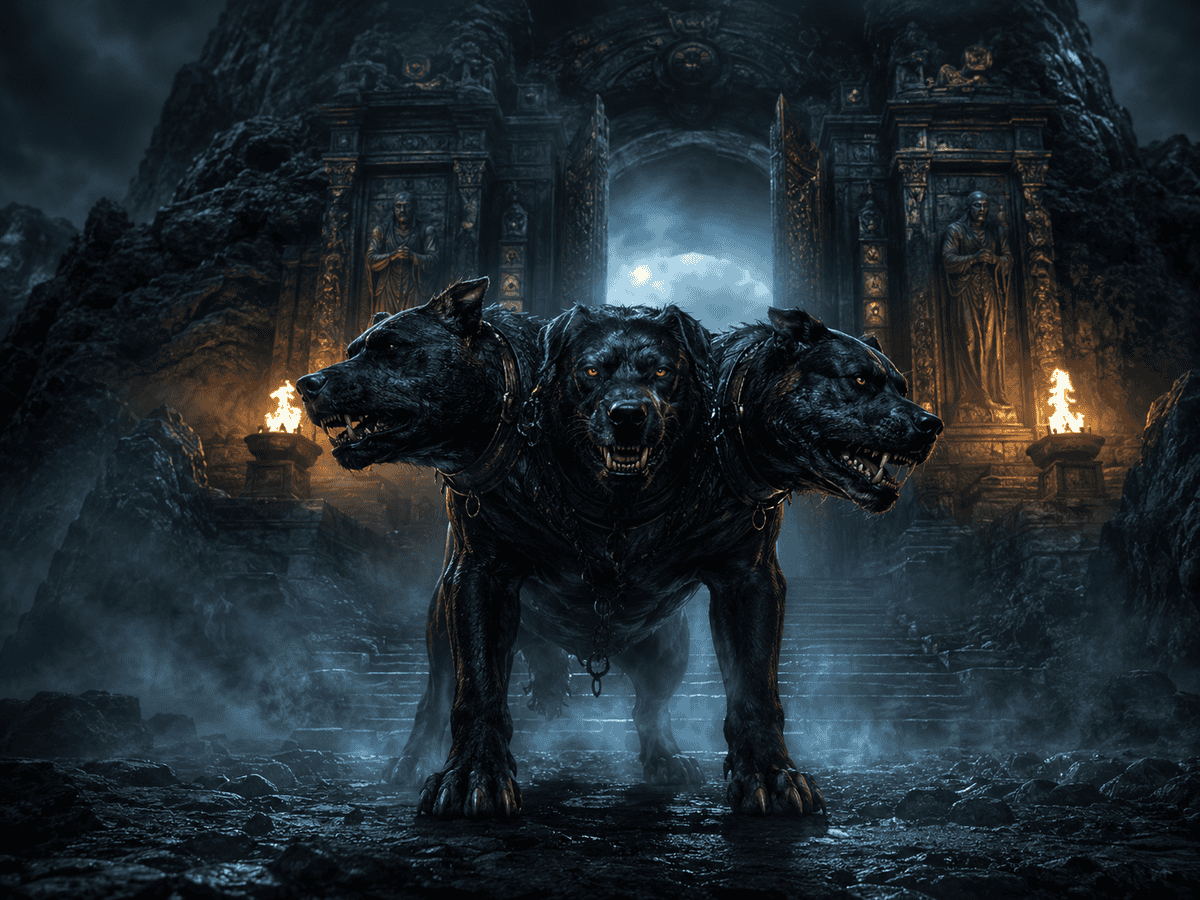
Perhaps the most famous mythical dog of all was Cerberus, the enormous guardian of the underworld in Greek mythology.
Usually described as having three heads, a serpent’s tail, and snakes growing from his body, Cerberus stood watch at the entrance to Hades’ kingdom.
His task was simple but important. He prevented the dead from escaping and stopped the living from entering without permission.
Despite his frightening appearance, Cerberus was not considered evil.
He was performing a necessary duty that maintained order between the worlds of the living and the dead.
Several heroes encountered him during their adventures, most famously Heracles, who captured Cerberus as part of his twelve labors.
The image of the three-headed guardian became one of the most recognizable symbols of Greek mythology.
2. Anubis Appeared With the Head of a Sacred Canine
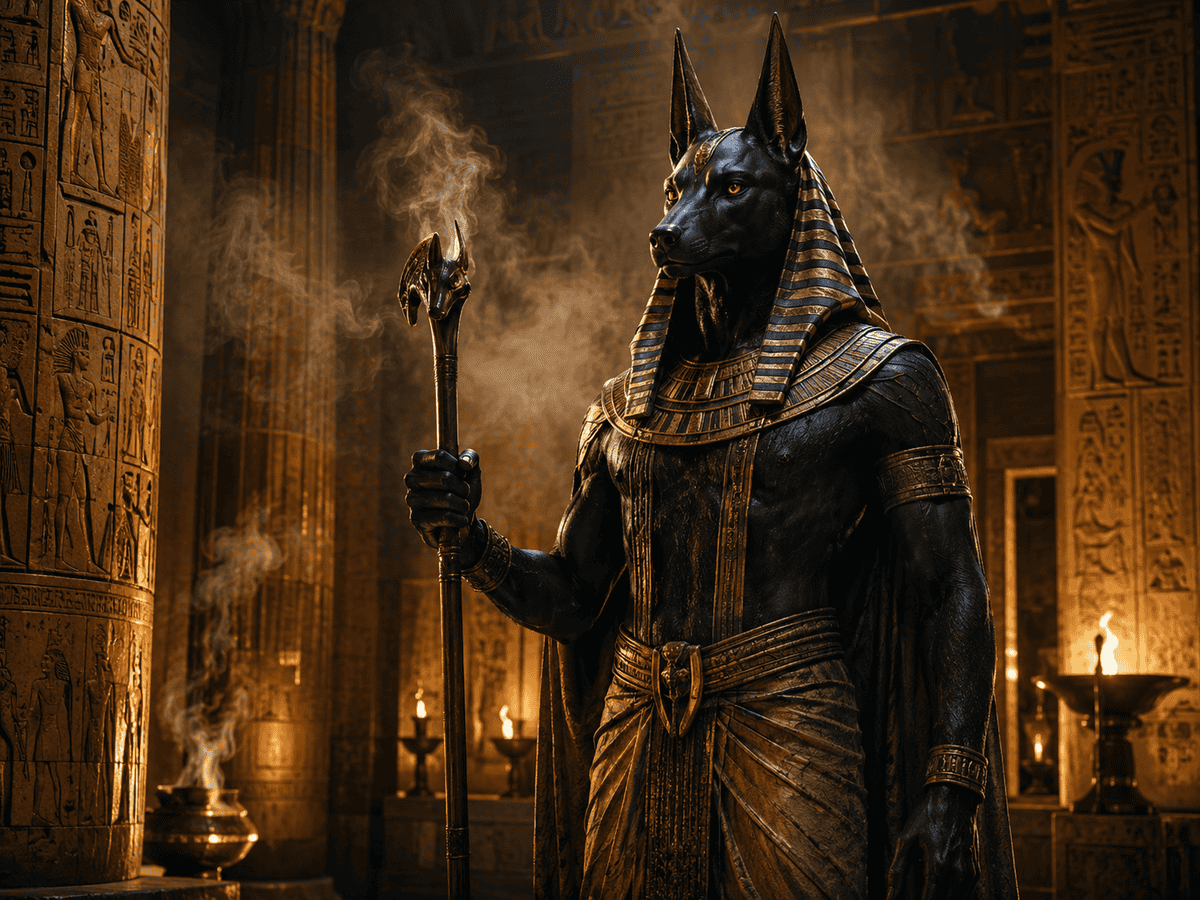
Although technically depicted with the head of a jackal rather than a domestic dog, Anubis belongs among mythology’s most important canine figures.
The Egyptian god was associated with embalming, mummification, and guiding souls through the afterlife.
Ancient Egyptians noticed that jackals often wandered near burial grounds.
Anubis watched over tombs and ensured that souls safely reached their destination.
He also played a role during the weighing of the heart, one of the most important moments in Egyptian beliefs about the afterlife.
His black coloration symbolized rebirth and the fertile soil of the Nile rather than death itself.
3. Garmr Was the Fearsome Guardian of Norse Hel
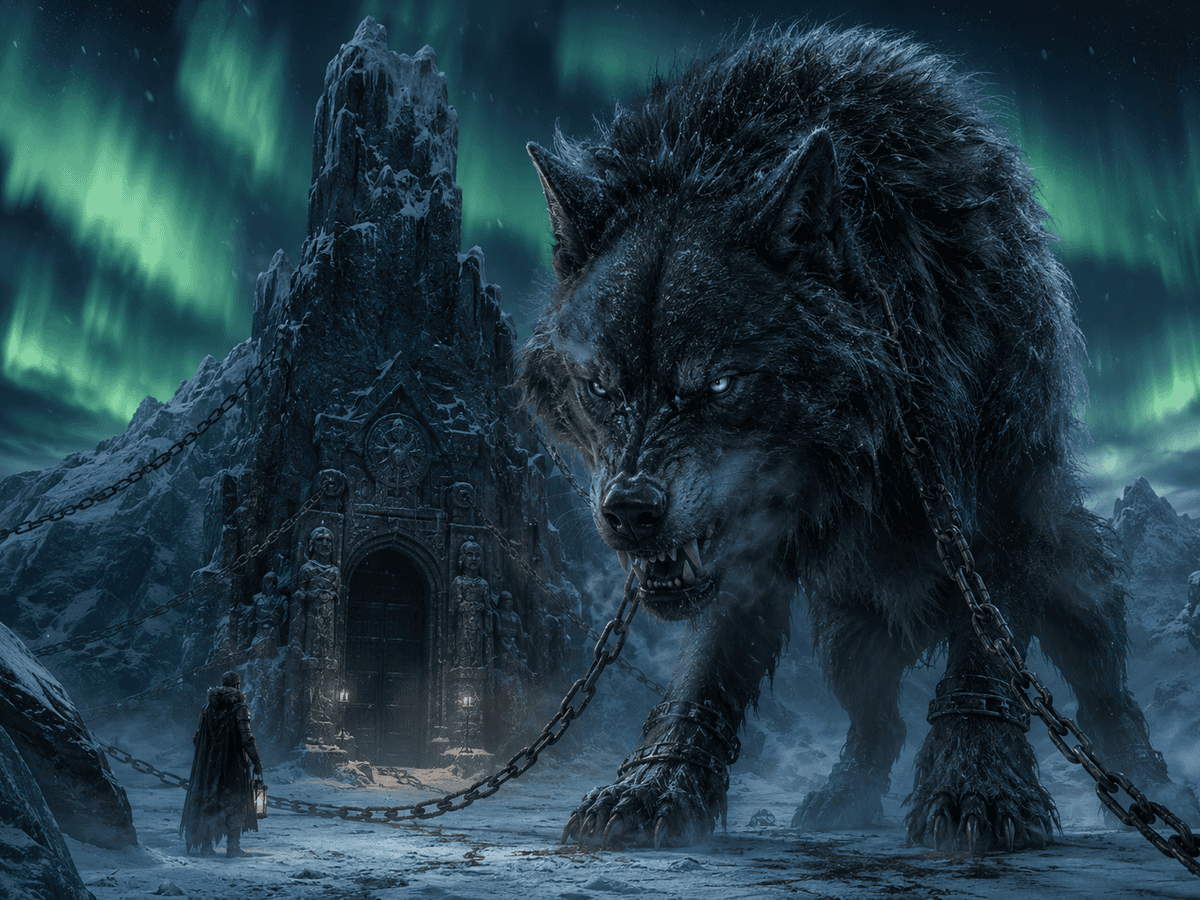
Norse mythology featured its own terrifying underworld guardian in the form of Garmr.
This enormous dog watched over Hel, the realm of the dead ruled by the goddess Hel.
Ancient texts describe him as chained near the entrance to the underworld, where he guarded the borders between worlds.
Unlike Cerberus, Garmr appears less frequently in surviving myths, which adds to his mystery.
According to prophecy, he would break free during Ragnarök, the final battle that would end the current age of the cosmos.
There he would fight the god Tyr in a deadly confrontation. Although fearsome, Garmr represented an important idea in Norse mythology.
4. Xolotl Guided Souls in Aztec Belief
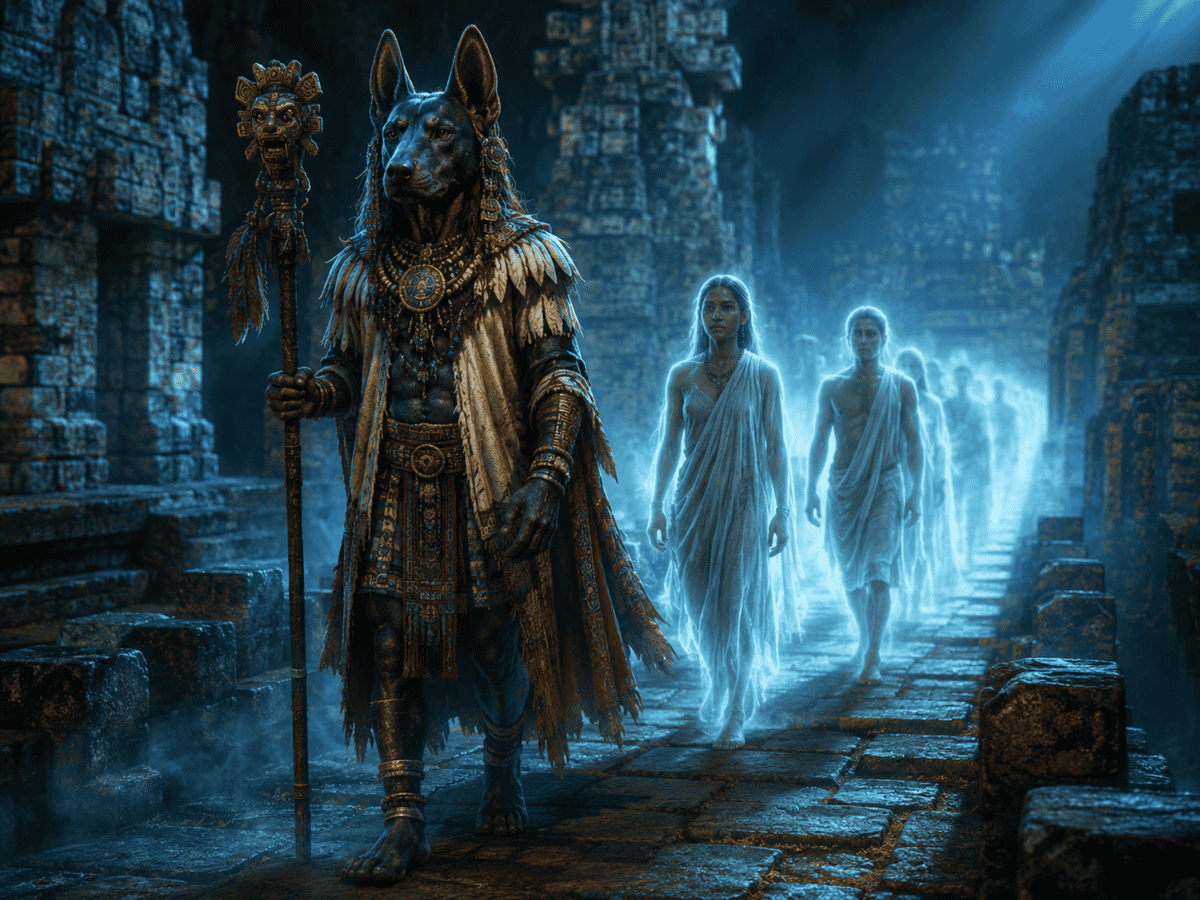
Among the Aztecs, the canine god Xolotl played an essential role in the journey of the dead.
Often portrayed with the head of a dog, Xolotl guided souls through the dangers of Mictlan, the Aztec underworld.
The journey was believed to be difficult and filled with obstacles. Without help, many souls might struggle to reach their final destination.
Dogs held an important place in Aztec society partly because of this belief. Some people were even buried with dogs that were thought to help guide them after death.
Xolotl himself was associated with lightning, fire, twins, and transformation. His role as a guide reflected the loyalty that dogs display toward humans.
5. Sarama Was the Divine Hound of the Vedic Gods
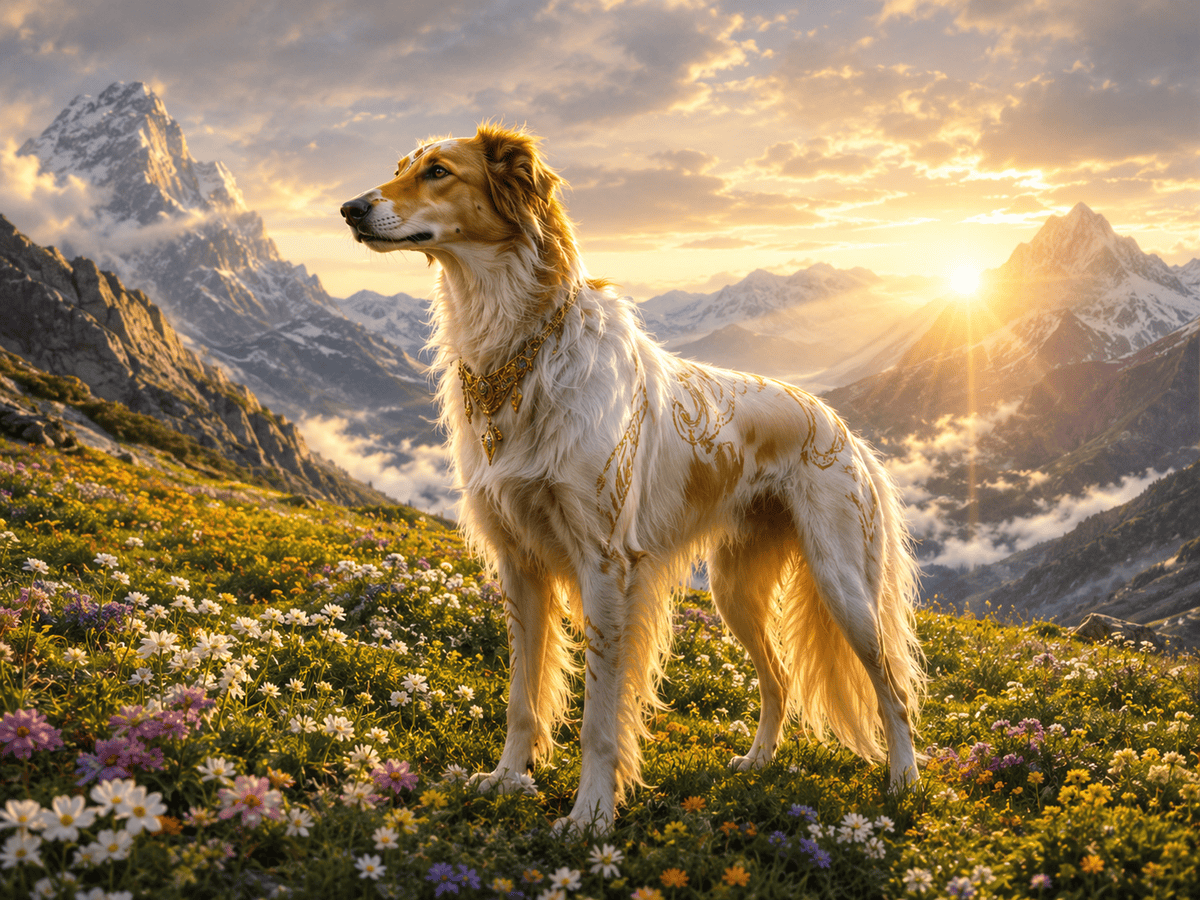
In ancient Indian mythology, Sarama was a sacred dog associated with the gods.
She served as the divine messenger and hunting hound of Indra, king of the gods in Vedic tradition.
One of her most famous stories involves tracking down stolen cattle hidden by supernatural beings.
Using intelligence and determination, Sarama successfully located the missing animals and returned the information to the gods.
Her actions made her a symbol of loyalty, persistence, and truth. Later traditions sometimes described her as the mother of all dogs.
Rather than being a frightening guardian, Sarama represented guidance and faithful service.
6. The Four-Eyed Dogs of Yama Guarded the Path of Souls
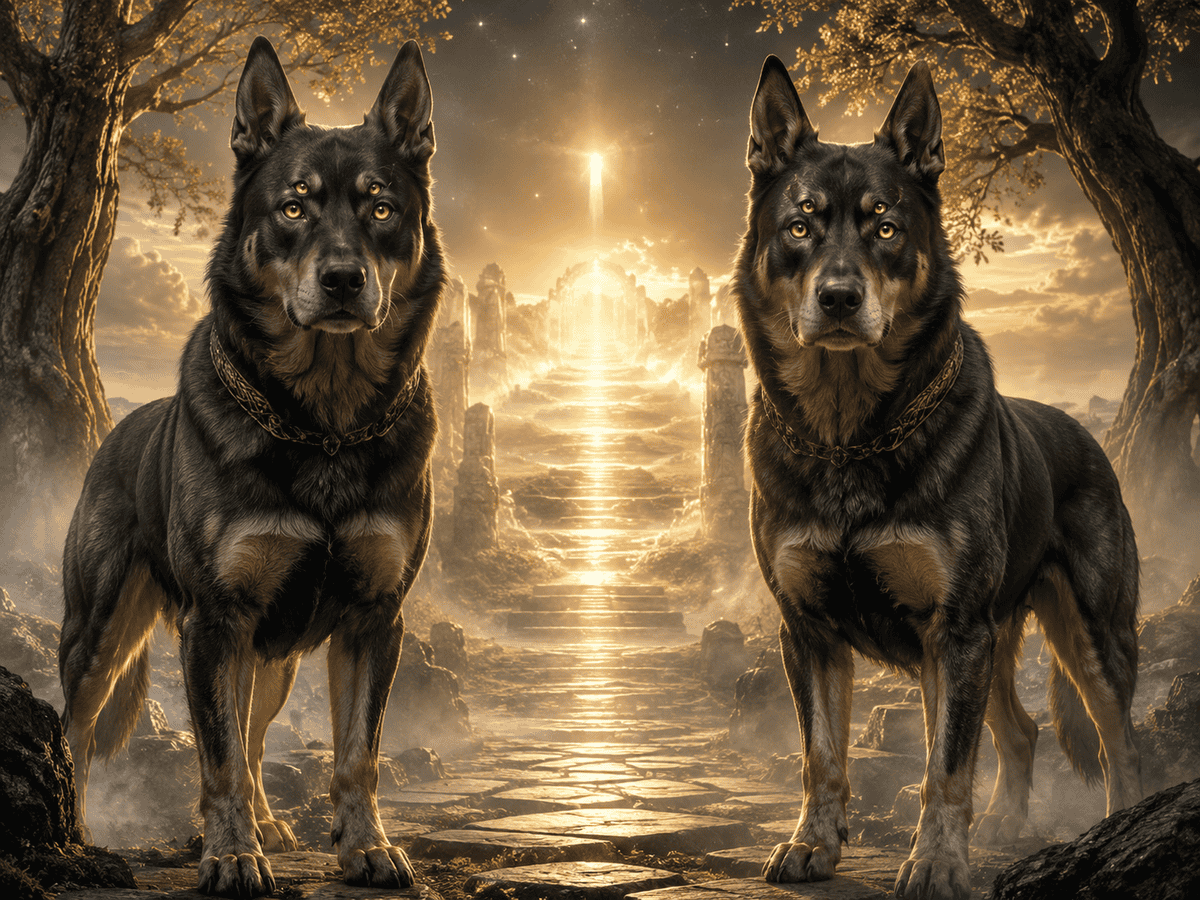
Another fascinating canine figure from Hindu tradition involves the dogs of Yama, the god of death.
These supernatural hounds were described as having four eyes and extraordinary abilities.
Their role was to watch over the road traveled by souls after death. They served as guardians, guides, and protectors of the sacred path.
The extra eyes symbolized their ability to see both the physical and spiritual worlds. Ancient texts describe them as vigilant beings who never failed in their duties.
Although associated with death, they were not viewed as cruel or malicious. Instead, they ensured that cosmic order continued properly.
7. Laelaps Was the Dog That Never Failed to Catch Its Prey
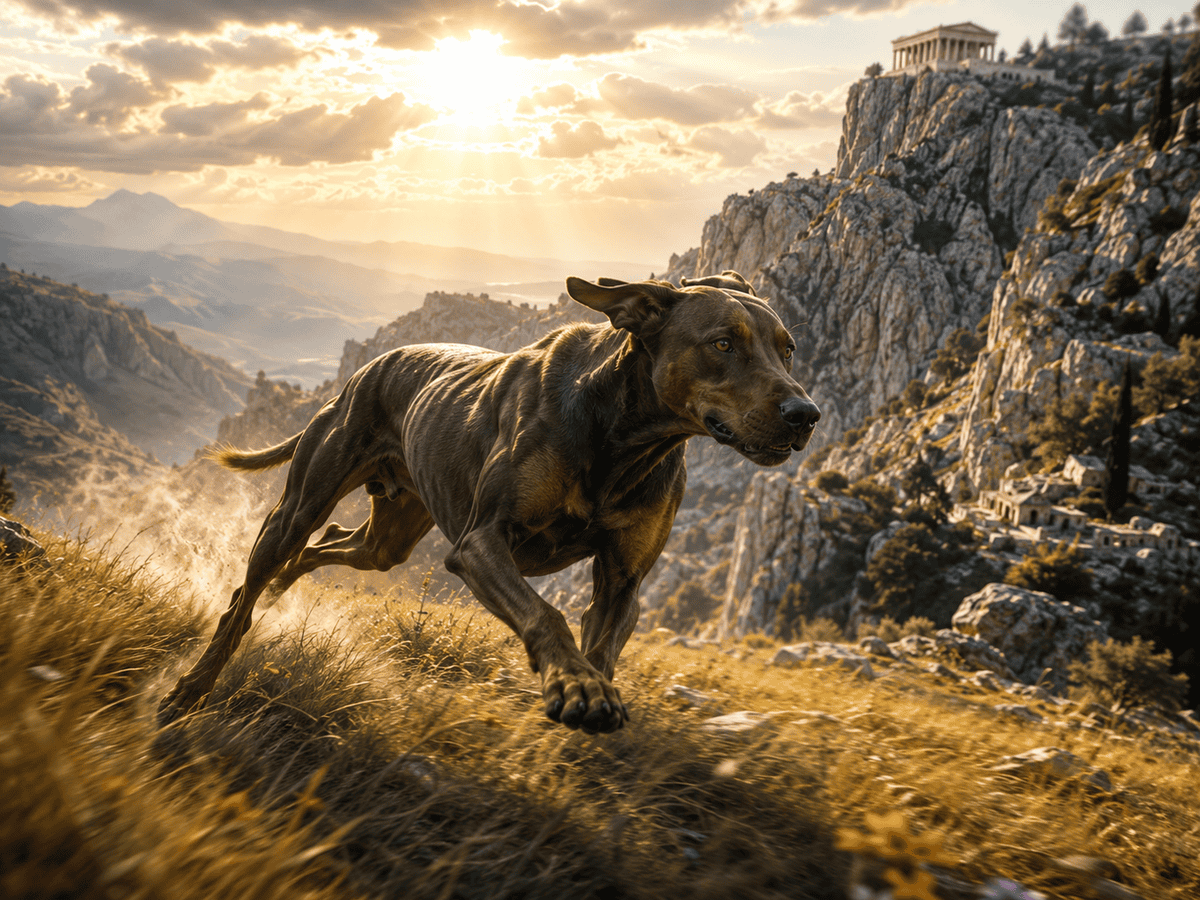
Greek mythology also included Laelaps, a magical dog gifted with an extraordinary ability.
No matter what creature it chased, Laelaps was destined to catch it. This made the dog one of the most perfect hunters in mythology.
Eventually, Laelaps was sent to hunt the Teumessian Fox, a creature destined never to be caught.
The impossible situation created a famous paradox. How could an unstoppable hunter capture an uncatchable prey?
According to some versions of the story, Zeus solved the problem by transforming both creatures into constellations.
8. Cavall Protected Welsh Heroes and Kings
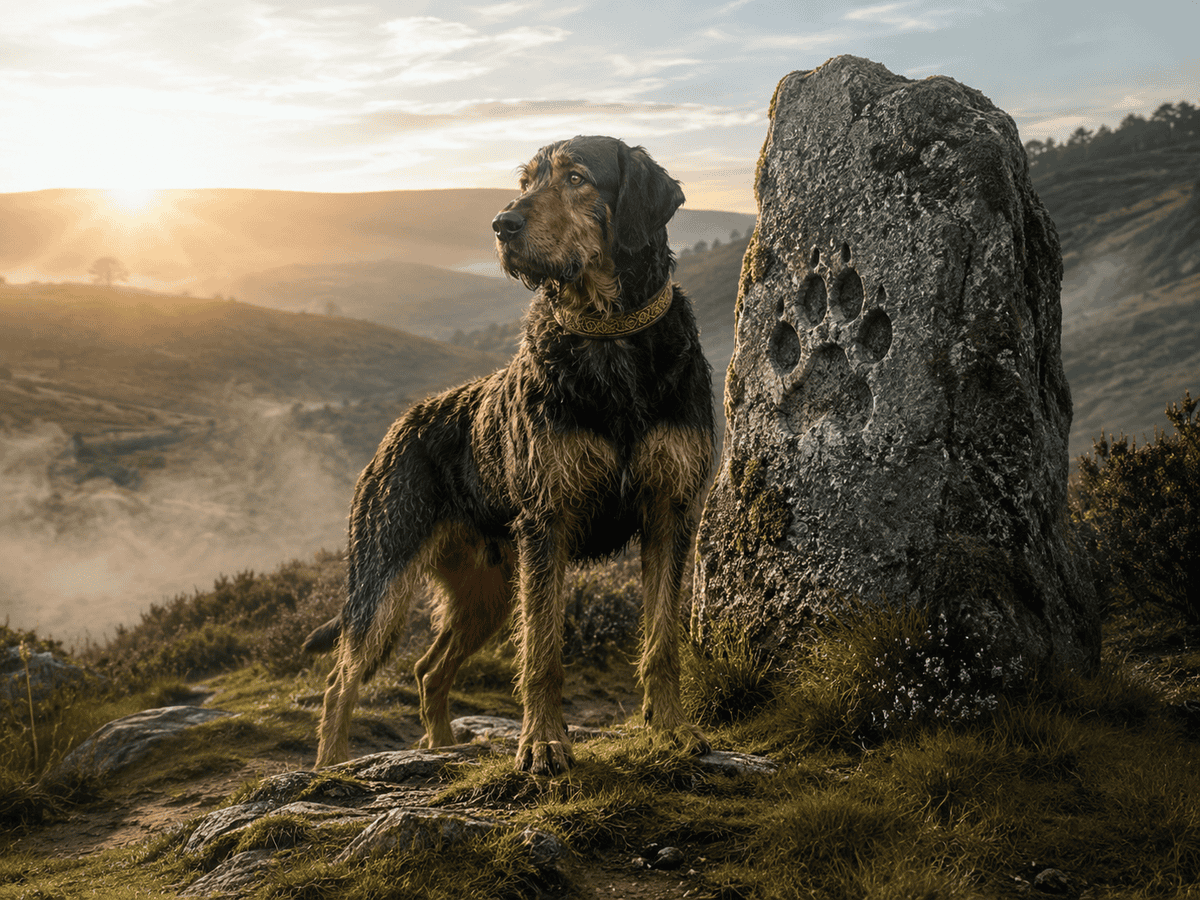
Welsh mythology tells of Cavall, the loyal hunting dog of King Arthur.
Although Arthur’s knights often receive more attention, medieval traditions remembered Cavall as one of the king’s most trusted companions.
One story describes the dog pursuing the monstrous boar Twrch Trwyth across Britain.
During the chase, Cavall left an enormous paw print upon a stone. The mark supposedly remained visible for generations.
His connection with Arthur helped elevate him from an ordinary hunting dog to a legendary figure associated with one of Britain’s greatest heroes.
9. The Cù Sìth Roamed the Highlands of Scotland
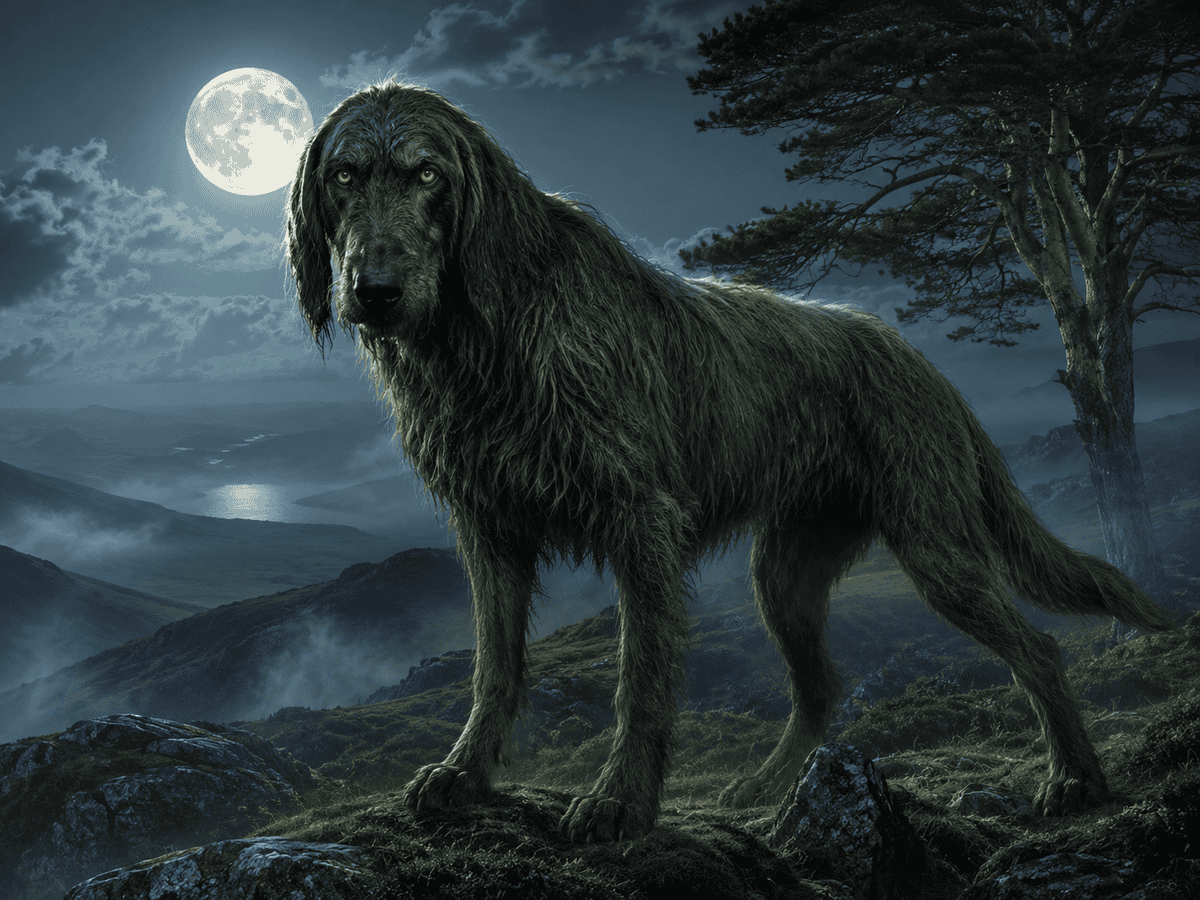
Scottish folklore introduced the mysterious Cù Sìth, a supernatural hound said to roam the Highlands.
Unlike ordinary dogs, this creature was often described as enormous and covered in green fur.
Some traditions viewed the Cù Sìth as a guardian of fairy realms and sacred places. Others believed it escorted souls into the afterlife.
Its terrifying bark was said to strike fear into anyone who heard it echo across the hills.
Despite its fearsome appearance, the creature was not always considered malevolent.
Many stories portrayed it as a protector that defended supernatural boundaries from intrusion.
10. Argos Became the Ultimate Symbol of Loyalty
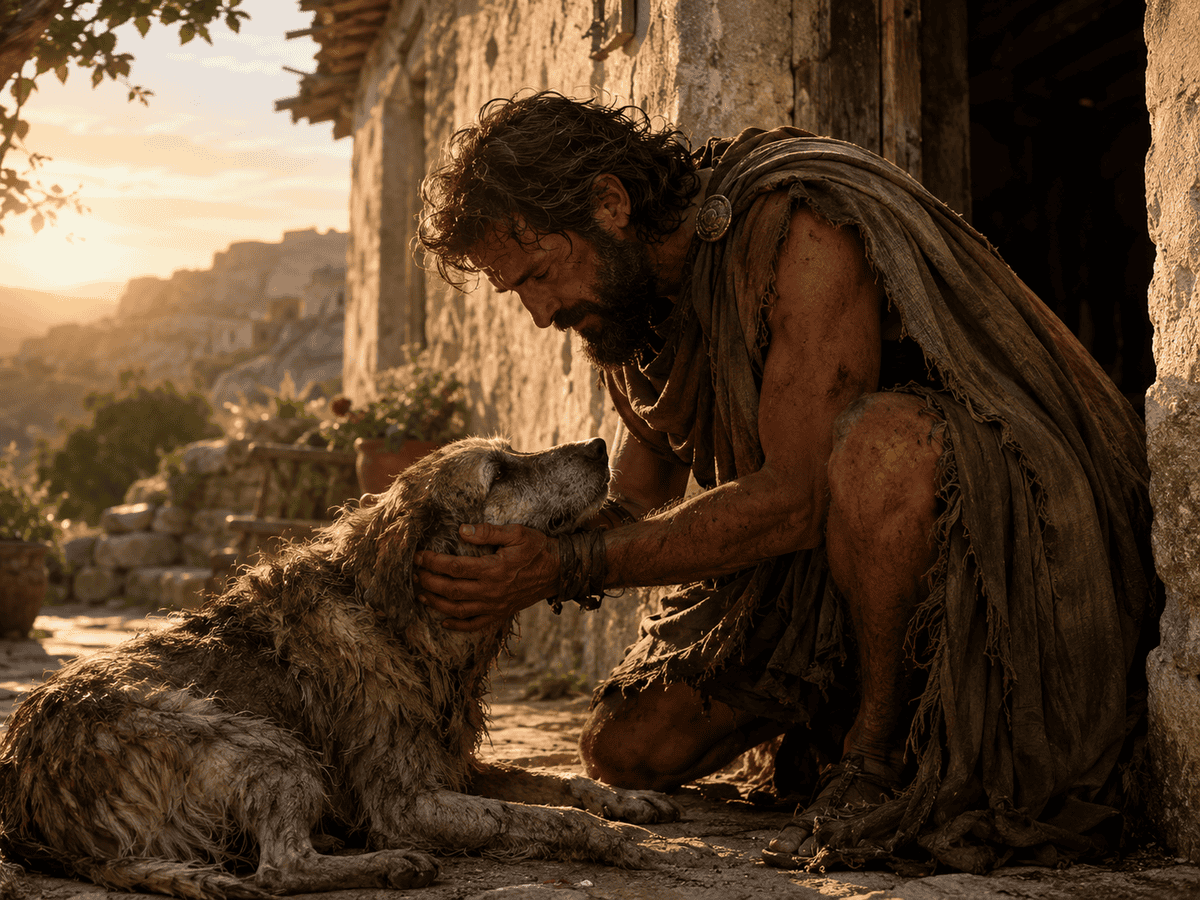
Unlike many mythical dogs, Argos was not a giant monster or divine guardian. Yet few canine figures became more beloved.
In Homer’s Odyssey, Argos was the faithful dog of Odysseus. After his master left for the Trojan War, Argos waited for his return for twenty long years.
When Odysseus finally came home disguised as a beggar, the aging dog recognized him immediately.
After seeing his master one final time, Argos peacefully died. His extraordinary loyalty elevated him into mythic memory.
For thousands of years, readers have remembered Argos as one of literature’s greatest examples of devotion and companionship.

自出生以来,我一直感觉到自己与神灵有着紧密的联系。作为一名作家和导师,我的使命是帮助他人在最黑暗的时刻找到爱、幸福和内心的力量。