
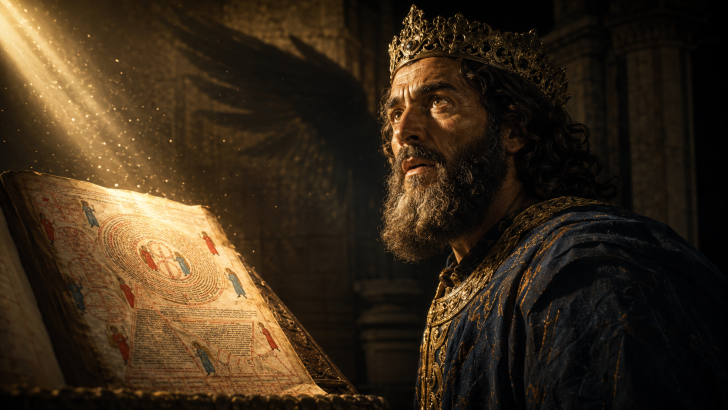
In the late twelfth century, a strange Latin work began circulating in northern Italy.
Called the Ars Notoria, it promised stronger memory, clearer speech, and mastery of difficult subjects through prayers and angelic help.
For readers facing years of expensive study, the offer was very compelling. But the more theologians studied the book, the less innocent it seemed.
1. The Book Claimed It Could Teach Almost Anything

ǞǞǞ Ars Notoria, or Notory Art, appeared around the same time that universities were becoming established across Europe.
Its promises were closely tied to that world.
The book claimed to help readers learn the seven liberal arts, the foundation of medieval education.
The curriculum began with language and argument before moving through mathematics, music, and astronomy.
From there, the practitioner could seek knowledge of philosophy and theology.
The book also promised to strengthen the abilities needed to learn in the first place. A person could ask for a better memory, clearer understanding, and greater eloquence.
Medieval education relied on listening, remembering, debating, and speaking well, so a poor memory could close doors long before a student reached the most advanced subjects.
ǞǞǞ Ars Notoria offered another path. Knowledge could be placed directly into the mind with divine help.
Still, this wasn’t presented as a trick. The process demanded patience, discipline, and careful preparation.
2. Its Secret Was Supposedly Revealed to Solomon
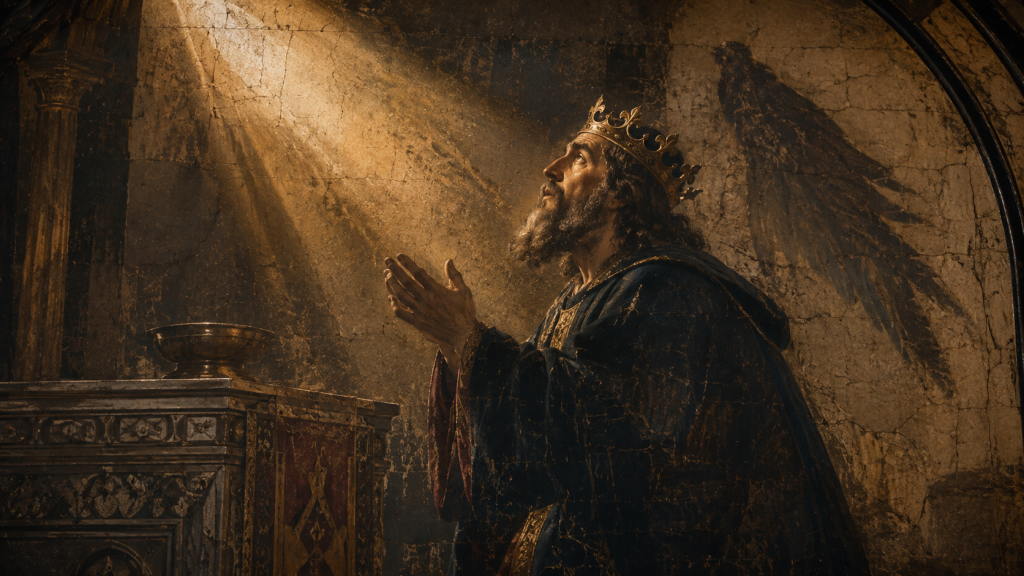
The authority behind the book was King Solomon, the biblical ruler famous for his extraordinary wisdom.
According to the Ars Notoria, Solomon’s knowledge came through a sacred method revealed by God.
One version says that an angel delivered the art to him at night while he prayed before the altar of the Temple.
That story explained how Solomon had learned so much. His wisdom had been given to him, and the book claimed to preserve the means by which others could receive a similar gift.
Later parts of the tradition linked the teachings with Apollonius of Tyana, an ancient philosopher who was said to have preserved or explained some of Solomon’s secrets.
None of these legendary figures wrote the medieval text.
Historians generally place its emergence in northern Italy, possibly around Bologna, during the late twelfth century. The earliest surviving manuscripts date from the thirteenth.
Attaching Solomon’s name gave the work a sacred past and an answer to the most obvious question: why should anyone believe that these prayers could open the mind?
Because, the book suggested, they had already done so for the wisest king who ever lived.
3. Reading the Words Was Only the Beginning
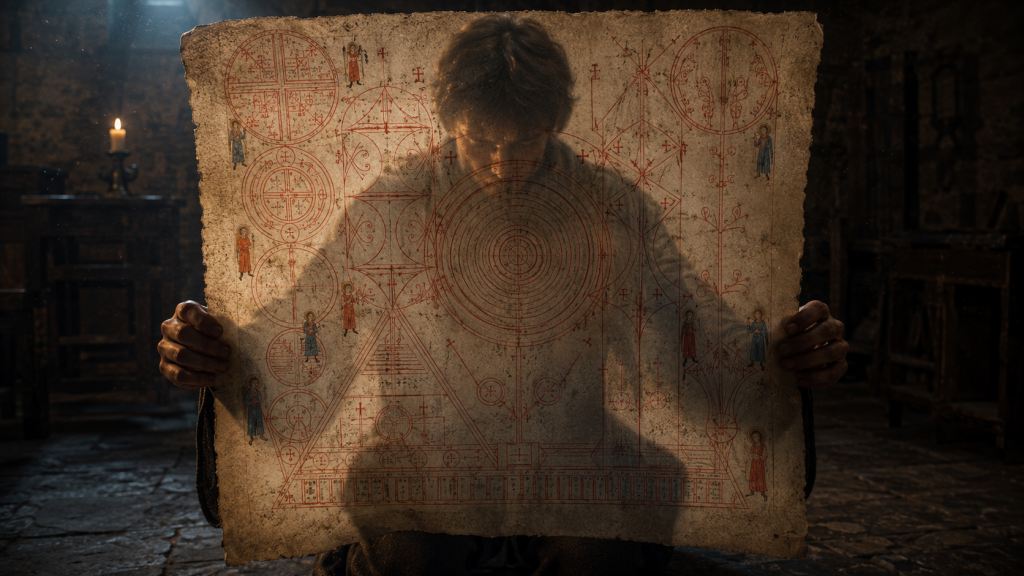
Owning the Ars Notoria wasn’t enough. Its reader had to follow a demanding religious routine.
The rituals changed between versions, but they could involve fasting and periods of abstinence.
Certain prayers had to be repeated at particular times, sometimes in connection with the Moon or the hours of Christian prayer.
Some passages sounded much like ordinary Catholic devotion. They called upon God, Christ, and the Holy Spirit while asking for mercy and a mind capable of receiving wisdom.
Other prayers were far stranger.
They included angelic names and long strings of words that readers were told came from ancient languages. Their meanings were often unclear, yet the words had to be spoken accurately.
Their power was believed to rest partly in their sound and sacred origin.
Later versions supplied more detailed instructions for using the material.
Earlier copies, however, could be surprisingly vague, leaving readers with prayers and figures but little explanation of how everything fit together.
This helped turn the Ars Notoria into a tradition. Scribes didn’t simply reproduce it. They added guidance, reorganized its contents, and adapted its methods.
4. The Strange Figures Were Part of the Ritual
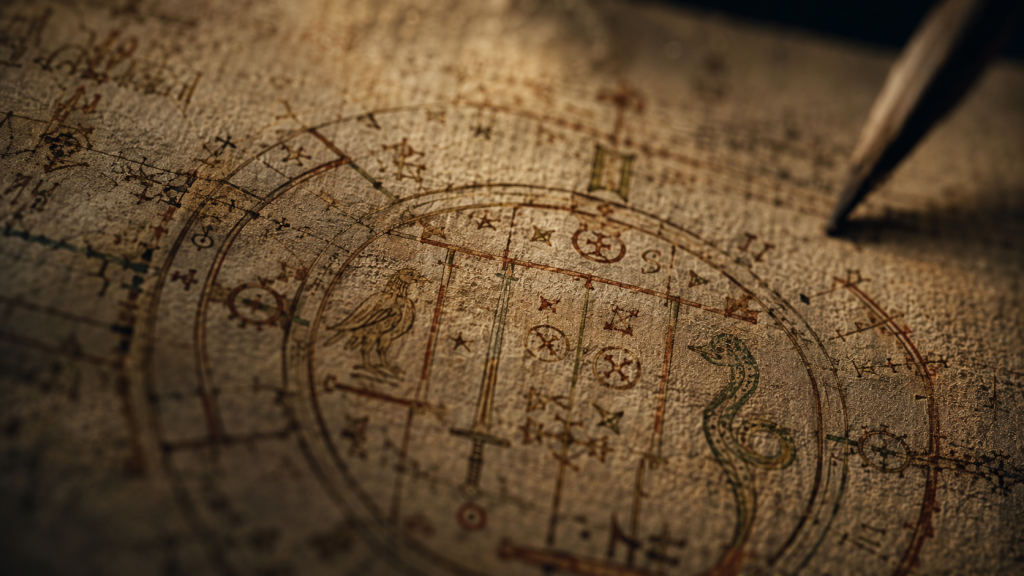
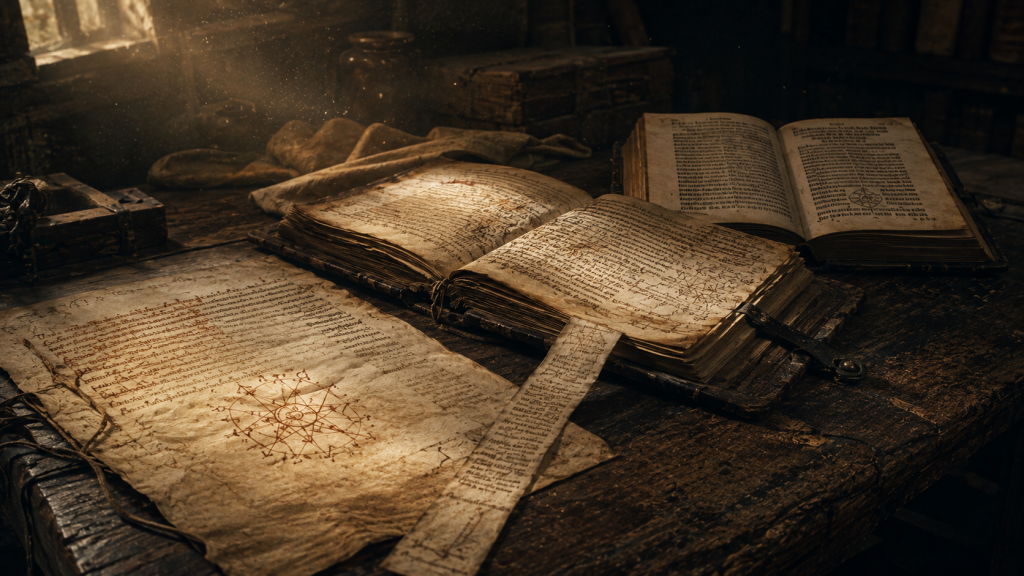
Some surviving manuscripts contain full-page figures known as notae.
They are made from circles, crosses, blocks of writing, and carefully arranged geometric forms. Lines divide the page into smaller spaces filled with names and symbols.
A thirteenth-century copy held by the British Library contains notae drawn in red and brown, with touches of green. Some include birds, serpents, swords, and the faces of hybrid creatures.
Individual figures were connected with different fields of knowledge. One might be used for grammar, while another belonged to rhetoric or geometry.
The most elaborate, however, were associated with theology.
Readers were expected to look at these figures while performing the appropriate prayers. Sight worked alongside speech, directing the mind toward the knowledge being requested.
But the diagrams weren’t charts that taught a subject in any normal way. Looking at the figure for geometry wouldn’t explain a proof.
Their purpose was ritual. The book treated them as sacred forms through which understanding could be received.
Exactly how medieval practitioners experienced them is much harder to know.
5. Its Readers Already Lived Around Books
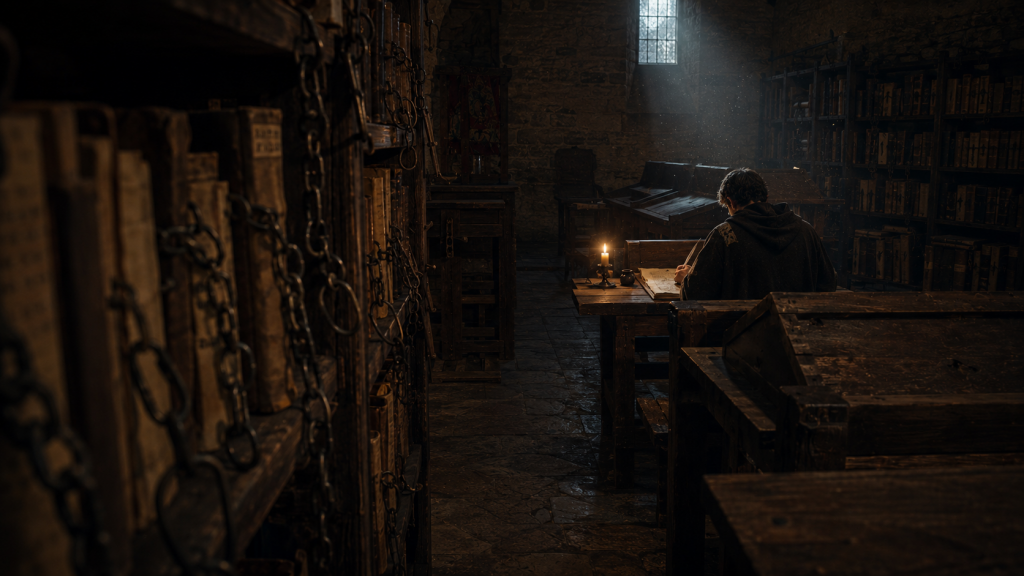
ǞǞǞ Ars Notoria was written in Latin and concerned itself with university subjects. Its likely audience included educated clerics, monks, and students.
That doesn’t mean historians know who used every surviving copy. Many manuscripts preserve no clear account of their owners or what happened when the book was opened.
One unusually revealing reader was John of Morigny, a French Benedictine monk who encountered the Ars Notoria while studying around the beginning of the fourteenth century.
John said that he was too poor to buy the books he needed. He had considered experimenting with necromancy, but a Lombard doctor directed him toward the Ars Notoria as a safer way to obtain knowledge without endangering his soul.
His story makes the book’s appeal easy to understand.
A medieval education took years. Manuscripts were expensive, and access to good teachers wasn’t guaranteed. Here was a work claiming that prayer could give a determined student what money and time had denied him.
John initially approached it as a holy book, but his opinion didn’t remain that way for long.
6. The Prayers Made Churchmen Uneasy
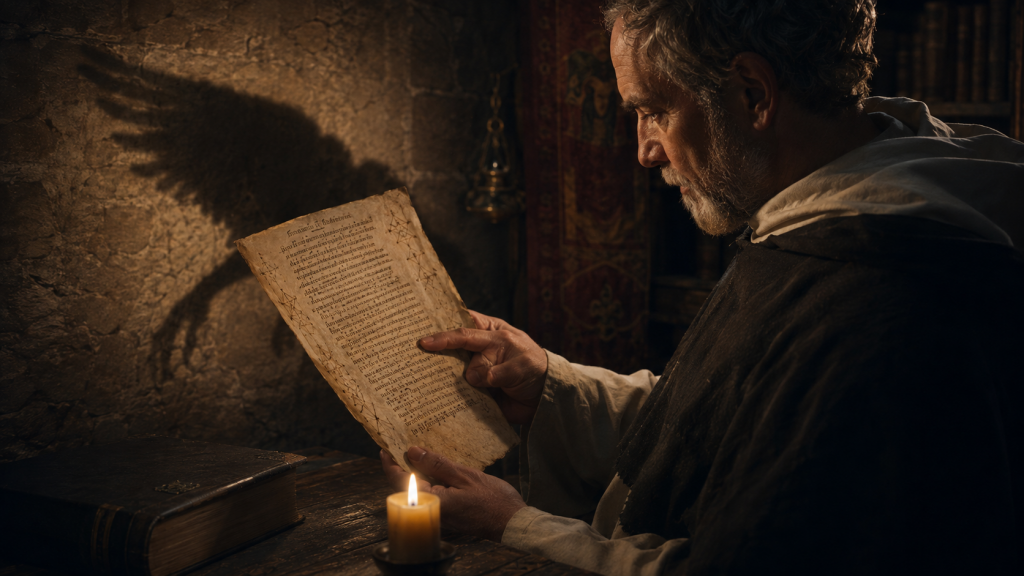
The problem was that nobody could be certain who was listening.
Many prayers in the Ars Notoria sounded Christian. The practitioner confessed sin, asked for mercy, and sought wisdom from God.
But critics distrusted the unknown words and unusual names woven through them. A reader might believe he was calling upon angels while unknowingly inviting something else.
Thomas Aquinas directly addressed the Notory Art in his Summa Theologiae. He rejected the idea that a set of rituals could guarantee divinely infused knowledge.
God could grant wisdom, Aquinas argued, but such gifts came according to God’s will. They couldn’t be produced through fasting, repeated phrases, or carefully drawn figures.
John of Morigny eventually reached his own frightening conclusion. He claimed that his experiments brought disturbing visions and that demons had hidden themselves inside the unfamiliar prayers.
Yet he never abandoned the hope of receiving knowledge through revelation. He created a new system of prayers that he believed had been approved by the Virgin Mary.
That work attracted suspicion as well. A copy was publicly burned in Paris in 1323.
7. The Book Survived by Refusing to Stay the Same
Condemnation didn’t bring the Ars Notoria to an end.
By the late fourteenth century, several versions were circulating across Europe. Some offered detailed instructions, while others preserved a shorter collection of prayers and figures.
Parts of the work were also lifted out and placed inside new texts. Authors shortened its rituals, rewrote its prayers, and created their own systems for acquiring knowledge.
The tradition continued long after the Middle Ages. A Latin version appeared in print during the seventeenth century, followed by an English translation published by Robert Turner in 1657.
By then, the Ars Notoria had passed through centuries of copying and revision. There was no single version that could represent the whole tradition.
Yet its central promise remained recognizable.
Learning was slow. Books were costly. Memory failed, and even years of study offered no guarantee of wisdom.
ǞǞǞ Ars Notoria offered the hope that knowledge could arrive another way—as a gift carried down through angels.
